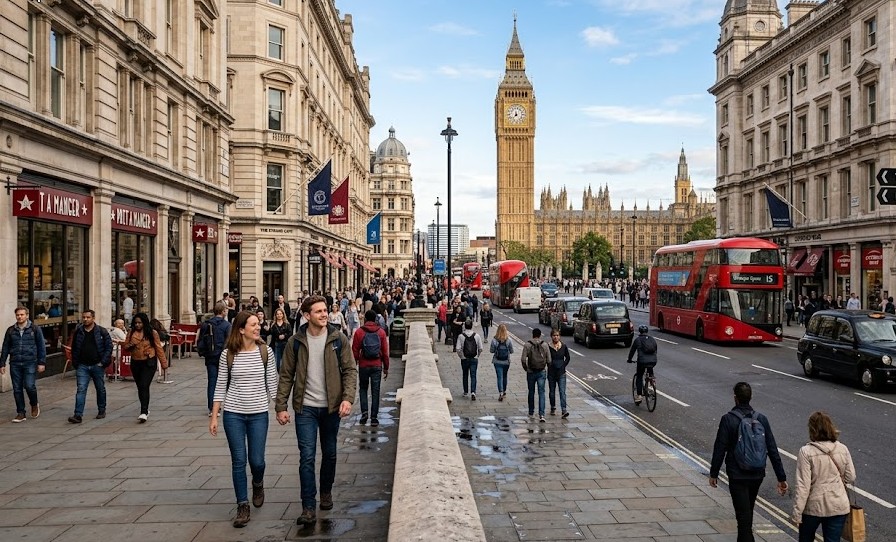
🏘 What Is an Urban Destination?
Urban destinations are towns and cities that attract tourists. They are the most visited type of destination in the world. Think London, Paris, New York, Tokyo, Dubai millions of people travel to these places every year, not just for one thing, but for everything. Shopping, history, culture, food, nightlife, business cities have it all.
Urban tourism is one of the fastest-growing sectors in global travel. Cities are attractive because they offer a huge variety of things to do and see, often in a small geographic area. You can visit a world-class museum in the morning, eat street food at lunch and watch a West End show in the evening all in the same city.
Key Definitions:
- Urban destination: A town or city that attracts tourists due to its cultural, historical, commercial or entertainment offerings.
- Urban tourism: Tourism that takes place in towns and cities, often involving sightseeing, culture, business or shopping.
- City break: A short holiday (usually 2–4 nights) to a city, typically for leisure or culture.
- Heritage tourism: Visiting places of historical or cultural significance, such as castles, museums or old quarters.
- MICE tourism: Meetings, Incentives, Conferences and Exhibitions a major form of urban business tourism.
🏢 Types of Urban Destinations
Not all cities are the same. Urban destinations come in many different forms and the type of city shapes the kind of tourists it attracts.
🏭 Capital Cities
Capital cities are often the most visited urban destinations. They tend to have national museums, government buildings, royal palaces and iconic landmarks. Examples include London (UK), Paris (France), Tokyo (Japan) and Washington D.C. (USA). These cities attract both leisure and business tourists in huge numbers.
🛒 Commercial Cities
Some cities are known primarily as centres of trade and finance. Dubai (UAE) and Singapore are prime examples they attract business travellers, luxury shoppers and tourists drawn by modern architecture and high-end experiences. They often have purpose-built attractions like the Burj Khalifa or Marina Bay Sands.
🏛 Historic Cities
Some cities are famous primarily for their history and heritage. Rome (Italy), Kyoto (Japan), Marrakech (Morocco) and Krakow (Poland) attract tourists who want to experience ancient architecture, UNESCO World Heritage Sites and traditional culture. Heritage tourism is the main draw here.
🎶 Cultural and Creative Cities
Cities like Vienna (Austria), New Orleans (USA) and Barcelona (Spain) are known for their arts, music, festivals and creative scenes. These cities attract tourists who are interested in experiencing local culture from flamenco dancing to jazz festivals to world-class opera.
📍 More Urban Destination Types
🏫 University Cities
Cities like Oxford and Cambridge in the UK attract tourists interested in academic heritage, beautiful college buildings and punting on the river. They blend history with a lively student atmosphere.
☕ Emerging Cities
Cities like Medellín (Colombia) and Tbilisi (Georgia) are growing fast as tourist destinations. Once overlooked, they now attract adventurous travellers seeking authentic, off-the-beaten-track urban experiences.
🏮 Gateway Cities
Some cities act as entry points to a country or region. Bangkok (Thailand) is a classic gateway millions pass through each year, many stopping for several days before heading to beaches or temples elsewhere in Southeast Asia.
🌟 What Makes Urban Destinations Attractive?
Cities offer an enormous range of attractions. This is one of the key reasons they appeal to so many different types of tourists from families to solo backpackers to business executives.
🏭 Built Attractions
Many of the world's most iconic tourist attractions are found in cities. These are purpose-built or historically significant structures that draw millions of visitors each year.
🏭 Iconic Landmarks
The Eiffel Tower (Paris), Big Ben (London), the Colosseum (Rome), the Statue of Liberty (New York). These landmarks are often the primary reason tourists visit a city and are central to the city's brand identity.
🎭 Museums and Galleries
The British Museum (London), the Louvre (Paris), the Metropolitan Museum of Art (New York). Many are free to enter, making them accessible to all tourists. The Louvre alone receives over 9 million visitors per year.
🎪 Entertainment Venues
Theatres, concert halls, sports stadiums and theme parks. London's West End and New York's Broadway attract theatre tourists from around the world. Major sporting events like the Premier League also draw international visitors.
🍽 Food, Shopping and Nightlife
Modern tourists don't just want to look at things they want to experience a city. Food tourism is booming. Tourists visit cities specifically to try local cuisine, visit food markets and eat at famous restaurants.
- Street food markets: Borough Market (London), La Boqueria (Barcelona), Tsukiji Outer Market (Tokyo)
- Shopping districts: Oxford Street (London), Champs-Élysées (Paris), Fifth Avenue (New York)
- Nightlife: Berlin is world-famous for its club scene; Ibiza Town attracts party tourists; Bangkok's Khao San Road is a backpacker hub
📍 Case Study: Paris, France The World's Most Visited City
Paris consistently ranks as one of the most visited cities on Earth, receiving around 44 million tourists per year (pre-COVID figures). It is a perfect example of a multi-attraction urban destination.
- Iconic landmarks: Eiffel Tower, Notre-Dame Cathedral, Arc de Triomphe, the Louvre
- Culture: Over 130 museums and galleries, world-class theatre and fashion
- Gastronomy: French cuisine is a UNESCO Intangible Cultural Heritage; Paris has more Michelin-starred restaurants than almost any other city
- Accessibility: Charles de Gaulle Airport is one of Europe's busiest; Eurostar connects Paris to London in just over 2 hours
- Economic impact: Tourism contributes approximately €21 billion to the Paris economy annually
- Challenge: Overcrowding at key sites (the Eiffel Tower queue can be hours long); pickpocketing is a persistent problem in tourist areas
📈 Economic Importance of Urban Tourism
Cities depend heavily on tourism for their economies. Urban tourism creates jobs, generates tax revenue and supports a wide range of businesses from five-star hotels to street food vendors.
💰 Direct Economic Benefits
- Jobs in hotels, restaurants, transport and attractions
- Revenue from entrance fees, tours and accommodation
- Tax income for local and national governments
- Foreign exchange earnings (especially from international tourists)
👥 Multiplier Effect
When tourists spend money in a city, that money circulates through the local economy. A tourist pays for a hotel room → the hotel pays its staff → the staff spend money in local shops → those shops pay their suppliers. This ripple effect is called the multiplier effect and means tourism's economic impact is greater than the initial spend.
📍 Case Study: Dubai, UAE A City Built on Tourism
Dubai is one of the most remarkable urban tourism stories of the 21st century. In the 1970s, it was a small trading port. Today, it is one of the world's top tourist destinations, receiving over 16 million international visitors per year.
- Attractions: Burj Khalifa (world's tallest building at 828m), Palm Jumeirah, Dubai Mall (one of the world's largest shopping centres), desert safaris
- MICE tourism: Dubai is a major conference and exhibition hub the Dubai World Trade Centre hosts hundreds of events annually
- Luxury tourism: Home to some of the world's most expensive hotels, including the Burj Al Arab (often described as the world's only 7-star hotel)
- Connectivity: Dubai International Airport is one of the world's busiest for international passengers; Emirates airline connects Dubai to over 150 destinations
- Economic strategy: Dubai deliberately diversified away from oil dependency by investing massively in tourism infrastructure
- Challenge: Sustainability concerns the city is built in a desert, water use is enormous and the carbon footprint of tourism is very high
⚠️ Negative Impacts of Urban Tourism
Urban tourism isn't all positive. When too many tourists visit a city, serious problems can develop for local residents and the environment.
🔴 Key Problems Caused by Urban Tourism
👑 Overtourism
When visitor numbers exceed what a city can comfortably handle. Streets become dangerously crowded, locals are pushed out by rising rents and the quality of the tourist experience declines. Venice and Amsterdam are classic examples.
🏠 Gentrification
Tourism drives up property prices and rents. Local businesses are replaced by tourist shops and restaurants. Residents especially lower-income families are priced out of their own neighbourhoods. This has been a major issue in Lisbon, Portugal.
🚨 Environmental Damage
Increased traffic, litter, noise and pollution. Historic buildings suffer from the sheer volume of visitors. Air quality in popular urban tourist areas can deteriorate significantly during peak season.
📍 Case Study: Venice, Italy Overtourism Crisis
Venice is arguably the world's most famous overtourism case study. The city receives approximately 30 million visitors per year, yet its resident population has fallen to just 50,000 people down from 175,000 in the 1950s.
- The problem: Cruise ships bring thousands of day-trippers who spend little money but cause enormous congestion. Narrow streets become impassable. Locals cannot afford to live there due to Airbnb-driven rent increases.
- Environmental impact: Cruise ship wakes damage the foundations of historic buildings. The lagoon ecosystem is under stress.
- Management responses:
- In 2024, Venice introduced a day-tripper entry fee of €5 on busy days the first city in the world to do so
- Large cruise ships were banned from the historic centre in 2021
- Turnstiles were installed at key entry points to manage crowd flow
- Tourists must book timed entry slots for the most popular areas during peak periods
- Exam point: Venice shows that even iconic destinations can be damaged by too much tourism and that management strategies must balance visitor revenue with resident quality of life.
🌟 Managing Urban Tourism Sustainably
Cities around the world are developing strategies to manage tourism more sustainably spreading visitors more evenly, protecting local communities and reducing environmental damage.
🟢 Key Management Strategies
- Visitor dispersal: Encouraging tourists to visit less well-known areas of a city, reducing pressure on honeypot sites. Amsterdam promotes cycling tours of residential neighbourhoods rather than just the canal centre.
- Timed entry systems: Popular attractions like the Acropolis in Athens and the Colosseum in Rome now require pre-booked timed tickets to manage visitor flow.
- Tourist taxes: Many cities charge a small nightly tax on accommodation. Amsterdam charges €3 per person per night. This revenue funds tourism management and local services.
- Regulating short-term lets: Cities like Amsterdam and Barcelona have placed strict limits on Airbnb-style rentals to protect housing for residents.
- Promoting off-peak travel: Marketing campaigns encourage tourists to visit in shoulder seasons (spring and autumn) rather than peak summer, reducing congestion.
- Sustainable transport: Investing in public transport, cycling infrastructure and pedestrian zones to reduce car traffic in city centres.
📍 Case Study: Amsterdam, Netherlands Fighting Overtourism
Amsterdam receives around 20 million visitors per year to a city of just 900,000 residents. The city has taken some of the most aggressive anti-overtourism measures in the world.
- Cruise ship ban: From 2026, large cruise ships will be banned from docking in the city centre
- Hotel moratorium: No new hotels are permitted to open in the city centre
- Airbnb restrictions: Short-term lets are limited to 30 nights per year per property
- Red Light District rules: Stag parties and pub crawls face restrictions; tourist behaviour in residential areas is actively policed
- Dispersal strategy: The city actively markets lesser-known areas and nearby towns like Haarlem and Leiden to spread the tourist load
- Slogan change: Amsterdam dropped its famous "I Amsterdam" slogan in 2018 because it was attracting too many visitors a remarkable decision for any city to make
📋 Butler's Tourism Area Life Cycle and Urban Destinations
Butler's Tourism Area Life Cycle (TALC) model can be applied to urban destinations just as it can to rural or coastal ones. Most major cities are in the maturity or stagnation stage, meaning they need to actively manage and reinvent themselves to stay relevant.
📈 Cities in Stagnation
Some cities that were once booming tourist destinations have seen visitor numbers plateau or decline. Blackpool in the UK is a classic example once Britain's most popular seaside resort, it has struggled to reinvent itself as tastes changed and cheap foreign holidays became available.
🚀 Cities in Rejuvenation
Bilbao in Spain is the world's most famous example of urban rejuvenation through tourism. Once a declining industrial city, the opening of the Guggenheim Museum Bilbao in 1997 transformed it into a major cultural destination this is known as the "Bilbao Effect". Visitor numbers increased by over 2.5 million in the first three years after opening.
💡 Exam Tip: The Bilbao Effect
The "Bilbao Effect" refers to the idea that a single iconic cultural building or attraction can transform a city's tourism fortunes. It is a concept used by urban planners worldwide. Cities like Glasgow (with the Burrell Collection), Liverpool (with its Albert Dock regeneration) and Abu Dhabi (with the Louvre Abu Dhabi) have all attempted to replicate this effect. In exam answers about urban regeneration or tourism development, referencing the Bilbao Effect with specific data will earn you top marks.
📚 Key Vocabulary Revision
📚 Core Terms
- Urban destination: A town or city attracting tourists
- Overtourism: Too many visitors causing harm to a place
- Gentrification: Rising costs pushing locals out
- MICE tourism: Business-related tourism
📈 Economic Terms
- Multiplier effect: Tourism spending circulating through the economy
- Tourist tax: A levy on accommodation to fund management
- Economic leakage: Money leaving the local economy (e.g. to foreign-owned hotel chains)
- Bilbao Effect: Regeneration through iconic cultural investment
🌿 Management Terms
- Visitor dispersal: Spreading tourists away from honeypots
- Carrying capacity: Maximum visitors a place can handle sustainably
- Timed entry: Pre-booked slots to manage visitor flow
- Rejuvenation: Reviving a declining destination
✅ Exam Technique: Urban Destination Questions
Common question types:
- "Describe the attractions of an urban destination you have studied." Name the city, give specific examples of attractions (not just "museums and shops") and include real data where possible.
- "Explain the negative impacts of tourism on an urban area." Use PEEL structure: Point, Evidence, Explain, Link. E.g. "Overtourism in Venice has caused the resident population to fall to just 50,000 (P+E), meaning local services such as schools and GP surgeries are closing as there are too few permanent residents to justify them (Explain), which shows that tourism can undermine the very communities that make a destination attractive (Link)."
- "Evaluate strategies used to manage tourism in urban destinations." Always discuss both the benefits AND limitations of each strategy. A tourist tax raises money but may deter lower-income visitors. Timed entry reduces crowding but requires digital access to book.
Golden rule: Always name a specific city, give specific data and link your answer back to the question wording.