🏭 Urban Destinations
Cities and towns. Think museums, galleries, restaurants, nightlife and history. Examples: London, Paris, Tokyo, New York.
Core appeal: Culture, business, shopping, entertainment.
Sign up to access the complete lesson and track your progress!
Unlock This CourseYou've already studied urban, rural, resort and coastal destinations separately. Now it's time to bring them all together. In your iGCSE exam, you'll often be asked to compare destination types not just describe them. That means explaining similarities, differences and which type might appeal more to a specific kind of tourist.
Think of it like comparing smartphones. Each one does roughly the same job, but they appeal to different people for different reasons. Destinations work the same way.
Key Definitions:
Before comparing them, here's a quick reminder of what each type offers. This is your reference point for the rest of this lesson.
Cities and towns. Think museums, galleries, restaurants, nightlife and history. Examples: London, Paris, Tokyo, New York.
Core appeal: Culture, business, shopping, entertainment.
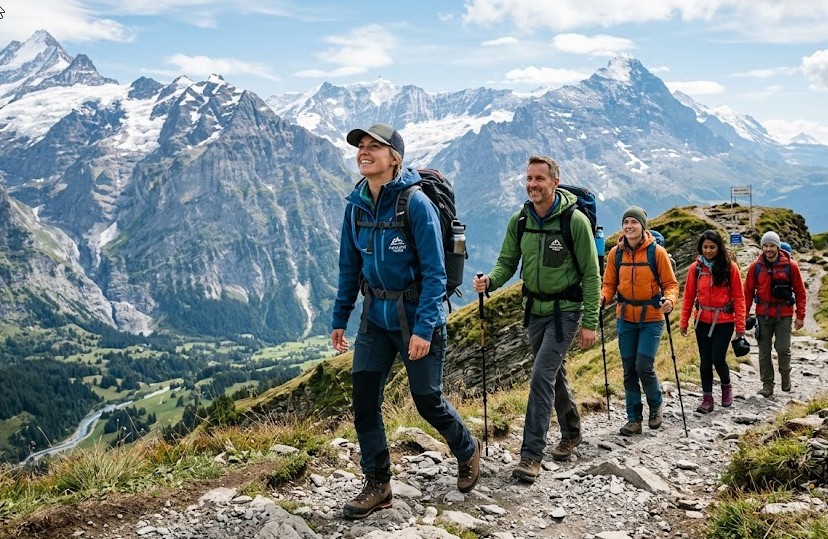
Countryside, mountains and lakes. Think hiking, wildlife, peace and quiet and local traditions. Examples: The Lake District, Swiss Alps, Plitvice Lakes.
Core appeal: Nature, escape, adventure, authenticity.
Purpose-built or developed for tourism. Think all-inclusive hotels, ski resorts and eco-lodges. Examples: Cancún, Val d'Isère, Lapa Rios.
Core appeal: Convenience, leisure, specific activities.
Beaches, seas and islands. Think sun, sand, snorkelling and seafood. Examples: Maldives, Blackpool, Dubrovnik, Palawan.
Core appeal: Relaxation, water sports, scenery, climate.
Different tourists want different things. A retired couple looking for culture will make very different choices from a group of university students after a party holiday. Understanding tourist motivation is the key to understanding destination appeal.
Geographers often use Maslow's Hierarchy of Needs or Plog's Psychographic Model to explain why tourists choose certain destinations. The table below links motivation to destination type.
Motivated by history, art and learning. They prefer urban destinations cities with museums, galleries, UNESCO sites and architecture. Example: Visiting the Louvre in Paris or the Colosseum in Rome.
Motivated by challenge, adrenaline and the outdoors. They prefer rural and resort destinations mountains, national parks and eco-lodges. Example: Trekking in Nepal or skiing in the Alps.
Motivated by rest, warmth and escape. They prefer coastal and resort destinations beaches, all-inclusives and island retreats. Example: A week in the Maldives or Tenerife.
In the exam, never just say "coastal destinations are popular." Always explain who they appeal to and why. For example: "Coastal destinations appeal to families with young children because they offer safe, shallow beaches, entertainment and warm weather all in one place." This kind of specific, linked answer earns higher marks.
Every destination type has things it does brilliantly and things it struggles with. Understanding both sides helps you write balanced exam answers.
New Zealand is a brilliant example of a country that offers all four destination types in one place. Auckland is a vibrant urban destination with restaurants, galleries and nightlife. The South Island's Fiordland is a stunning rural destination for hikers and wildlife lovers. Queenstown is a world-famous resort destination for adventure sports including bungee jumping and skiing. And the Bay of Islands offers beautiful coastal experiences with sailing, dolphins and beaches. New Zealand markets itself as "100% Pure" using its natural environment as its core appeal across all destination types. This makes it attractive to a very wide range of tourists.
One of the most important ways destination types differ is seasonality how much tourist numbers change across the year. This affects income, employment and sustainability.
Low seasonality. Cities attract tourists all year round. Business tourists travel in all seasons. Cultural events spread demand across the year. Christmas markets, summer festivals and autumn city breaks all help.
High seasonality. Mountain ski resorts are busy in winter and quiet in summer. Countryside destinations peak in spring and summer. This creates problems: seasonal unemployment and infrastructure that sits empty for months.
High seasonality. Beach destinations in temperate climates (like Blackpool) are almost entirely summer-dependent. Tropical destinations have more year-round appeal but still face wet seasons that deter visitors.
Destinations try to reduce seasonality by offering new activities in the off-season. For example, ski resorts in the Alps now promote summer hiking, mountain biking and wellness retreats to attract visitors in July and August. Coastal resorts in Spain promote cultural tourism and golf in winter. This is called product diversification adding new products to attract new markets.
Different destination types generate different amounts of income and distribute it differently among local people. This is a key theme in iGCSE Travel & Tourism.
Economic leakage happens when money spent by tourists leaves the local economy for example, when a tourist stays in a foreign-owned hotel and the profits go abroad. Different destination types suffer from this to different degrees.
Generally low leakage. Cities have diverse, locally-owned businesses restaurants, taxis, shops and markets. Tourists spend money across the whole city, benefiting many people.
Often high leakage. All-inclusive resorts owned by multinational companies keep profits abroad. Tourists may not leave the resort, so local businesses miss out entirely.
Can have very low leakage if managed well. Community-based tourism keeps money local. However, remote areas may lack the infrastructure to attract high-spending tourists.
In real life, destinations don't always fit neatly into one category. Many of the world's most successful destinations combine features of several types and that's exactly what makes them so appealing to such a wide range of tourists.
Cape Town is one of the world's most versatile destinations and a perfect example of a place that combines multiple destination types.
This combination means Cape Town appeals to cultural tourists, beach lovers, adventure seekers and luxury travellers all at once making it highly competitive in the global tourism market.
Bali is another destination that defies easy categorisation. It is simultaneously a coastal destination (Kuta and Seminyak beaches), a rural destination (Ubud's rice terraces and jungle), a resort destination (luxury spa resorts in Nusa Dua) and a cultural destination (Hindu temples, traditional dance and craft villages). Bali receives over 6 million international tourists per year. However, this success has brought serious overtourism problems traffic congestion, plastic pollution on beaches and rising costs for local people. Bali is now working on a tourism masterplan to spread visitors more evenly across the island and protect its cultural heritage.
When you're asked to compare destination types in the exam, use this simple framework to structure your answer. It works for any comparison question.
What does this destination offer? Who does it attract? What are its unique selling points?
What kind of tourism takes place here? Mass tourism? Eco-tourism? Cultural tourism? Business tourism?
Is it year-round or seasonal? How does this affect the local economy and employment?
How much money does tourism bring in? Is there economic leakage? Who benefits?
What are the negative impacts? Overtourism? Environmental damage? Social disruption?
What strategies are used to manage tourism sustainably? Are they working?
Examiners love to see proper comparison language. Instead of writing two separate descriptions, use words and phrases like: "In contrast to...", "Unlike urban destinations, coastal areas...", "Both resort and coastal destinations suffer from...", "However, rural destinations tend to...". This shows you are genuinely comparing, not just listing facts about each type separately.
This is a common exam debate. There is no single right answer but you need to be able to argue a case using evidence.
Sustainability means meeting the needs of tourists today without damaging the destination for future generations. Each destination type has different sustainability challenges.
Rural destinations especially those with well-managed national parks or community-based tourism often have the strongest sustainability record. Low visitor numbers, high spending per tourist and strong environmental protection can make rural tourism genuinely sustainable. Costa Rica is the global leader here: 25% of its land is protected and eco-tourism generates over $3 billion per year while preserving biodiversity.
Cities struggle most with overtourism. Venice, Barcelona and Amsterdam have all faced serious problems with too many tourists damaging quality of life for residents. However, cities also have the resources and infrastructure to manage tourism including tourist taxes, visitor caps and zoning laws. The key is political will and effective management.
Iceland is a fascinating case study in destination management. It combines rural, coastal and resort features volcanoes, glaciers, hot springs, the Northern Lights and dramatic coastlines. Tourist numbers grew from 500,000 in 2010 to over 2 million by 2018 a 400% increase in just eight years. This caused serious problems: overloaded roads in remote areas, damage to fragile lava fields and pressure on the capital Reykjavik. Iceland's response included: charging entry fees to popular natural sites, building new visitor centres to spread tourists away from hotspots and investing in sustainable transport. Iceland shows that even the most spectacular destinations need careful management when growth is too fast.
Appeal is not just about what a destination has it's also about accessibility, image, safety and value for money. These factors cut across all destination types.
How easy is it to get there? Direct flights, good roads and reliable public transport all increase appeal. Remote rural destinations may be stunning but hard to reach limiting their tourist numbers.
How a destination is perceived matters enormously. New Zealand's "100% Pure" campaign, Costa Rica's eco-tourism brand and Dubai's luxury image all attract specific types of tourists through powerful marketing.
Exchange rates, cost of living and what's included in the price all affect appeal. Budget tourists may prefer coastal resorts in cheaper countries; luxury tourists may seek exclusive island retreats regardless of cost.
Political stability and low crime rates are essential. Destinations perceived as unsafe even unfairly lose tourists quickly. Egypt's tourism dropped dramatically after political unrest in 2011, despite its incredible heritage.
Reliable, pleasant weather is a huge draw especially for coastal and rural destinations. Climate change is already shifting tourist patterns, with some Alpine ski resorts losing appeal as snowfall becomes less reliable.
The best destinations have something truly unique the Northern Lights in Iceland, the Great Barrier Reef in Australia, or the Carnival in Rio. A strong USP creates demand that no other destination can match.
Common question types:
Top tips: