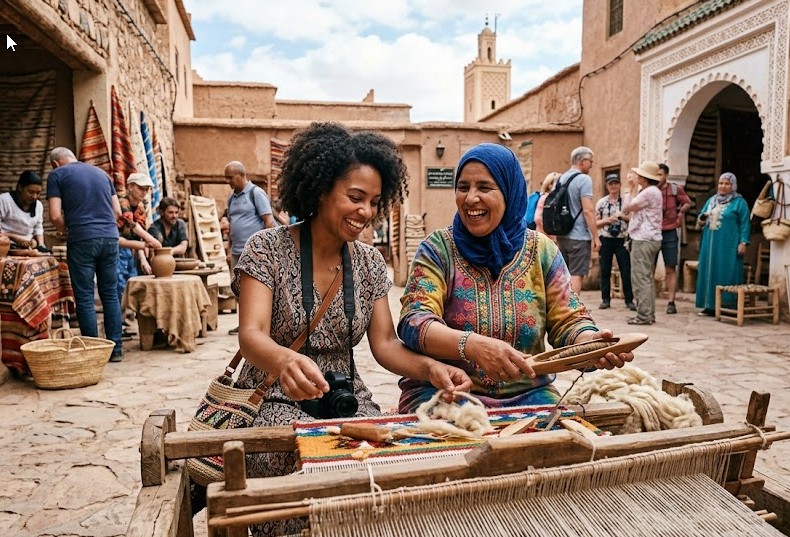
🌎 What is Sustainability in Tourism?
You've already looked at the different types of tourism. Now it's time to go deeper into one of the most important ideas in the whole Travel & Tourism course: sustainability. This word comes up constantly in your exam, so let's make sure you actually understand what it means not just memorise it.
Key Definition:
- Sustainable Tourism: Tourism that meets the needs of present tourists and host regions while protecting and enhancing opportunities for the future. In plain English: enjoy it now, but don't wreck it for everyone else later.
- Sustainability: The ability to continue something over a long period of time without causing permanent damage to the environment, economy or local communities.
- Sustainable Development: Development that meets the needs of the present without compromising the ability of future generations to meet their own needs. (This is the classic UN definition learn it!)
💡 Why Does This Matter for Your Exam?
The iGCSE Travel & Tourism syllabus specifically asks you to understand sustainability as a concept, not just a buzzword. You need to be able to define it, give examples and explain why it matters. Questions often ask you to evaluate whether a tourism development is sustainable or not so you need to know the characteristics of both!
♿ The Three Pillars of Sustainable Tourism
Sustainability in tourism isn't just about saving trees. It has three pillars think of them as three legs on a stool. If one leg breaks, the whole thing falls over. All three must be balanced for tourism to truly be sustainable.
🌿 Environmental
Protecting natural habitats, wildlife, landscapes and ecosystems. Reducing pollution, carbon emissions and waste. Avoiding damage to fragile environments like coral reefs, rainforests and mountains.
💰 Economic
Making sure tourism brings real money to local people not just big foreign companies. Supporting local businesses, jobs and fair wages. Ensuring tourism income stays in the local economy (called economic leakage when it doesn't).
👥 Social / Cultural
Respecting local cultures, traditions and ways of life. Making sure communities have a say in how tourism develops. Avoiding the destruction of local identity or the creation of a fake "tourist version" of a culture.
📋 Key Vocabulary: The Three Pillars in Detail
These terms come directly from the iGCSE syllabus. Make sure you can define each one and give an example.
- Environmental sustainability: Keeping natural resources and ecosystems healthy so they can be used and enjoyed in the future.
- Economic sustainability: Ensuring tourism generates long-term income for local communities without creating dependency or instability.
- Socio-cultural sustainability: Preserving the culture, heritage and social fabric of host communities so tourism doesn't destroy local identity.
- Economic leakage: When money spent by tourists leaves the local economy for example, when tourists stay in a foreign-owned hotel chain and the profits go abroad.
- Host community: The local people who live in a tourist destination.
🔍 Carrying Capacity A Key Sustainability Concept
One of the most important ideas linked to sustainability is carrying capacity. This is the maximum number of tourists a destination can handle before it starts to suffer damage to the environment, the local community, or the visitor experience itself.
Key Definitions:
- Carrying capacity: The maximum number of people that can visit a destination at one time without causing unacceptable damage to the physical, economic, social or cultural environment.
- Over-tourism: When too many tourists visit a place, exceeding its carrying capacity and causing serious problems for residents and the environment.
- Visitor management: Strategies used to control the number and behaviour of tourists to reduce negative impacts.
🚫 Signs That Carrying Capacity Has Been Exceeded
- Footpaths and trails are eroded and damaged
- Wildlife is disturbed or driven away
- Local residents feel crowded out of their own town
- House prices rise so locals can't afford to live there
- Litter, pollution and noise increase dramatically
- The quality of the visitor experience drops
✅ Visitor Management Strategies
- Limiting visitor numbers with timed tickets
- Charging entry fees to reduce demand
- Creating designated paths to protect sensitive areas
- Educating tourists about responsible behaviour
- Spreading tourism to less-visited areas (de-marketing)
- Banning certain activities in fragile zones
🏭 Case Study: Venice, Italy Over-Tourism Crisis
Venice is one of the world's most visited cities, attracting around 30 million tourists per year to a city where only about 250,000 people live. The problems are severe: cruise ships damage the lagoon ecosystem, house prices have pushed locals out (the resident population has halved since the 1950s) and the narrow streets become dangerously overcrowded. In 2024, Venice introduced a day-tripper entry fee of €5 on busy days a real-world example of visitor management. This case study is perfect for exam questions about carrying capacity and over-tourism.
📌 Characteristics of Sustainable Tourism
Your exam might ask you to describe or identify the characteristics of sustainable tourism. Here's what to look for:
✅ What Makes Tourism Sustainable?
🌿 Environmental Characteristics
- Small group sizes to reduce impact
- Use of renewable energy in accommodation
- Wildlife and habitat protection built into the tour
- Minimal waste and plastic use
- Carbon offset schemes offered
💰 Economic Characteristics
- Local guides and staff employed
- Locally owned accommodation used
- Local food and products sold to tourists
- Fair wages paid to workers
- Profits reinvested into the community
👥 Social Characteristics
- Community consulted before development
- Cultural traditions respected and celebrated
- Tourists educated about local customs
- Local schools or infrastructure supported
- Tourism doesn't displace local residents
❌ Characteristics of Unsustainable Tourism
Just as important you need to recognise when tourism is NOT sustainable. These are the red flags:
- All-inclusive resorts owned by foreign companies money leaves the local economy (economic leakage)
- Mass tourism with no visitor limits exceeds carrying capacity and damages the environment
- Destruction of natural habitats to build hotels or airports
- Exploitation of local culture turning traditions into a performance for tourists without community consent
- High carbon footprint long-haul flights with no offset, cruise ships burning heavy fuel
- Low wages for local workers while foreign investors take the profits
- Water and energy overuse golf courses in deserts, heated pools in hot countries
🏭 Case Study: Machu Picchu, Peru Managing a World Heritage Site
Machu Picchu is an ancient Inca citadel in the Andes mountains and one of the world's most iconic tourist destinations. By 2019, it was receiving over 1.5 million visitors per year far beyond what experts considered safe for the fragile site. Erosion of ancient stonework, litter and overcrowding became serious problems. Peru's government responded by introducing timed entry slots, a daily visitor cap and mandatory guides for all tourists. This is a brilliant exam example of carrying capacity, over-tourism and visitor management all in one place.
👥 Responsible Tourism vs Sustainable Tourism
These two terms are related but slightly different and your examiner will notice if you mix them up!
🌎 Sustainable Tourism
Definition: A long-term approach to managing tourism so that it remains viable and beneficial over time for the environment, economy and local communities.
Sustainable tourism is about planning and managing tourism at a destination level. It's what governments, tour operators and destination managers aim for.
👤 Responsible Tourism
Definition: Tourism that takes responsibility for its economic, social and environmental impacts often focused on the behaviour of individual tourists and businesses.
Responsible tourism is about individual choices what you do as a tourist to reduce your negative impact. Choosing a local guesthouse over a foreign chain, for example.
📋 More Key Definitions to Learn
These definitions are all on the iGCSE syllabus and could appear in your exam. Revise them carefully!
- Carrying capacity: The maximum number of tourists a destination can absorb without suffering unacceptable damage.
- Over-tourism: When visitor numbers exceed carrying capacity, causing damage to environment, culture or resident quality of life.
- Economic leakage: When tourist spending leaves the local economy, typically to foreign-owned businesses.
- Multiplier effect: When tourist spending circulates through the local economy, creating additional income and jobs beyond the initial spend.
- Visitor management: Techniques used to control tourist numbers and behaviour to protect a destination.
- De-marketing: Deliberately discouraging tourists from visiting a destination or area that is already over-crowded.
- Greenwashing: When a company falsely claims to be environmentally friendly to attract eco-conscious tourists.
- Carbon footprint: The total amount of greenhouse gases produced by a person's activities, including travel.
- Responsible tourism: Tourism where tourists and businesses take responsibility for reducing negative impacts.
- Heritage site: A place of cultural, historical or natural importance, often protected by UNESCO.
📌 Exam Tip: The "Evaluate" Question
A very common iGCSE question asks you to evaluate whether a tourism development is sustainable. To get full marks, you must discuss both sides the positive and negative impacts across all three pillars (environmental, economic, social). Then give a justified conclusion. Don't just list facts make a judgement!
Example question: "Evaluate the extent to which tourism in [destination] is sustainable." (8 marks)
Top tip: Use the three pillars as your paragraph structure. One paragraph per pillar, then a conclusion. Easy marks!
📋 Summary: Key Definitions at a Glance
Here's a quick-fire revision table of everything you need to know from this session. Cover the right-hand column and test yourself!
| Term |
Definition |
| Sustainable tourism |
Tourism that meets present needs without damaging future opportunities |
| Carrying capacity |
Maximum tourists a destination can handle without unacceptable damage |
| Over-tourism |
When visitor numbers exceed carrying capacity |
| Economic leakage |
Tourist money leaving the local economy |
| Multiplier effect |
Tourist spending circulating through the local economy |
| Visitor management |
Controlling tourist numbers and behaviour to protect a destination |
| De-marketing |
Discouraging tourists from overcrowded destinations |
| Greenwashing |
Falsely claiming to be eco-friendly to attract tourists |
| Responsible tourism |
Individual tourists/businesses taking responsibility for their impacts |
| Three pillars |
Environmental, economic and socio-cultural sustainability |
🎉 Well Done You Know Your Sustainability Definitions!
You've now covered all the key sustainability definitions and characteristics for your iGCSE Travel & Tourism exam. Remember: sustainability is about balance between enjoying tourism now and protecting destinations for the future. Use your three pillars, know your case studies (Venice and Machu Picchu) and always give both sides in an evaluate question. You've got this! 🌟