👥 Introduction to Social Factors Affecting Tourism Demand
We've already looked at how money and economics shape tourism. But people aren't just influenced by how much cash they have who they are, how they live and what's happening in society matters just as much. Social factors are all about people: their age, family, education, free time and the trends they follow.
Think about it your grandparents probably didn't go on gap years or book holidays through Instagram. But today, social media influencers can make a remote beach in Bali famous overnight. Society is always changing and tourism changes with it.
Key Definitions:
- Social factors: Influences on tourism demand that relate to people, society, culture and lifestyle rather than money or politics.
- Demographic change: Shifts in the make-up of a population, such as age, family size, or birth rates.
- Leisure time: Time that people have free from work or other obligations, which can be spent on activities like travel.
- Tourism demand: The desire and ability of people to travel to tourist destinations.
💡 Why Social Factors Matter
Social factors don't work alone they interact with economic factors all the time. A retired person might have lots of free time but a limited pension. A young professional might earn well but only get 25 days of annual leave. Understanding the social picture helps explain the full story of tourism demand.
👪 Demographic Changes and Tourism
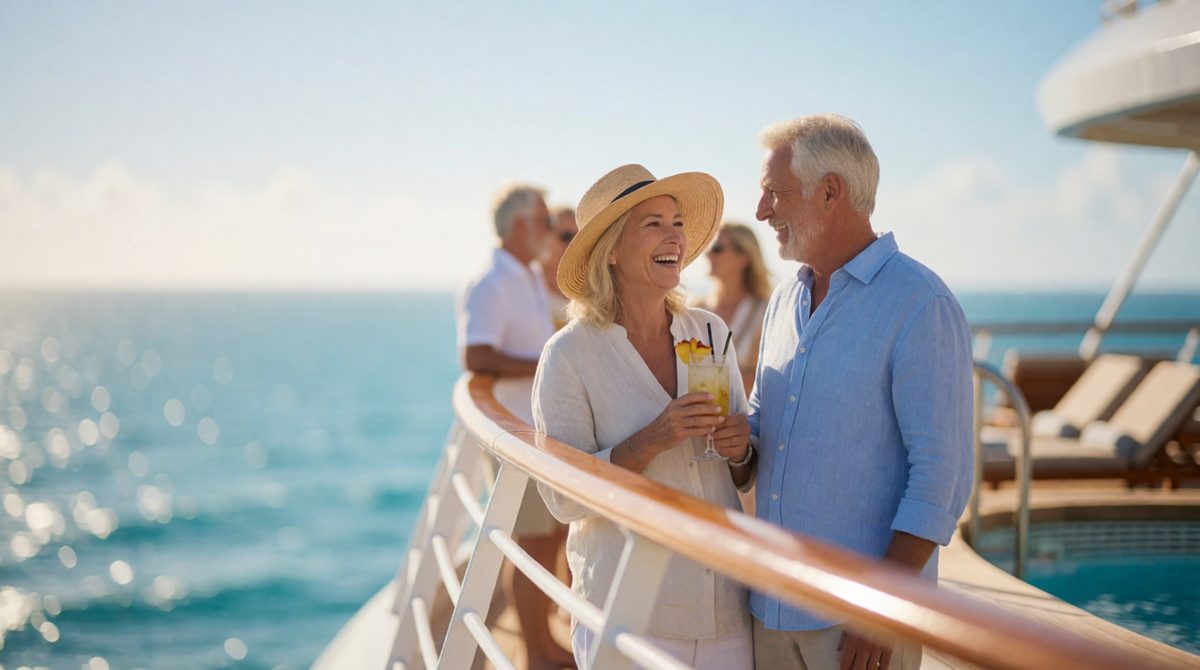
An ageing population is changing tourism demand
Demographics means the make-up of a population. When demographics change, tourism demand changes too. Some of the biggest demographic shifts affecting tourism include ageing populations, smaller families and more people living alone.
👴 The Ageing Population
In many developed countries like the UK, Japan and Germany people are living longer and having fewer children. This means the proportion of older people in the population is growing. This is called an ageing population and it has a huge effect on tourism.
Older travellers (often called the "grey market" or "silver tourists") tend to:
- Have more free time especially after retirement
- Have savings and pension income to spend on travel
- Prefer longer stays and more comfortable, higher-quality accommodation
- Travel in the off-peak season, which helps spread tourism more evenly throughout the year
- Favour cruises, coach tours and cultural trips over adventure holidays
🔍 Case Study: Japan's Silver Tourists
Japan has one of the world's oldest populations over 28% of its citizens are aged 65 or over. Japanese retirees are increasingly travelling abroad, particularly to Southeast Asia, Europe and on luxury cruises. The Japanese tourism industry has responded by creating senior-friendly travel packages, with slower itineraries, accessible transport and health-focused amenities. This demographic shift has directly boosted demand for certain types of tourism product.
👶 Younger Travellers and the Rise of Youth Tourism
At the other end of the age scale, young people are also a growing force in tourism. Gap years, backpacking and budget travel have become hugely popular among 18–30 year olds. Organisations like WYSE Travel Confederation estimate that youth travellers (aged 15–29) make up around 23% of all international tourist arrivals globally.
Young travellers tend to:
- Spend longer at their destination but on a tighter budget
- Prefer hostels, Airbnb and budget airlines
- Be influenced heavily by social media and peer recommendations
- Seek authentic, off-the-beaten-track experiences rather than package holidays
👪 Changing Family Structures
Families look very different today compared to 50 years ago. There are more single-parent families, more couples without children and more multigenerational trips (grandparents, parents and kids all travelling together). These changes affect what kinds of holidays people book.
👩 Single-Parent Families
Single parents often have tighter budgets and less flexibility. They may choose all-inclusive resorts where costs are predictable, or UK staycations to avoid expensive flights. Some tour operators now offer special deals for single-parent families.
👪 Multigenerational Travel
Multigenerational holidays where grandparents, parents and children all travel together are growing fast. These groups need large villas, family suites, or cruise ships that can cater to very different age groups and interests at the same time.
🎓 Education, Awareness and Changing Attitudes
As people become better educated and more aware of the world around them, their travel choices change. Education broadens horizons literally. People who have studied geography, history, or languages are often more curious about visiting other countries and cultures.
🌐 Greater Awareness of the World
Improved education levels in many countries have led to greater cultural curiosity. People want to visit the places they've read about or studied. This has boosted demand for cultural tourism, heritage tourism and educational travel.
For example, the growth of history-focused tours to places like Egypt, Rome and Machu Picchu is partly driven by better-educated populations who want to experience history first-hand.
🌿 Changing Attitudes to Health and Wellbeing
Modern society places a huge emphasis on health, fitness and mental wellbeing. This has created entirely new types of tourism:
- Wellness tourism spa retreats, yoga holidays and meditation centres
- Adventure tourism hiking, cycling and outdoor activities
- Eco-tourism nature-based travel with a low environmental impact
The Global Wellness Institute estimates the wellness tourism market is worth over $800 billion globally and is one of the fastest-growing sectors in travel.
🔍 Case Study: Wellness Tourism in Bali, Indonesia
Bali has become a global hotspot for wellness tourism, attracting millions of visitors each year to its yoga retreats, meditation centres and spa resorts. The island's popularity surged after the book and film Eat, Pray, Love a perfect example of how media and changing social attitudes can combine to transform a destination's tourism demand almost overnight.
📷 Social Media, Fashion and Travel Trends
Perhaps the most dramatic social change of the last 20 years is the rise of social media. Platforms like Instagram, TikTok and YouTube have completely transformed how people discover, choose and share travel experiences.
📸 The Instagram Effect
When a destination looks stunning in photos, people want to go there. This is sometimes called the "Instagram effect" the way social media images drive tourism demand to specific places. A single viral post can put a previously unknown destination on the map.
📷 Destination Discovery
Travellers now discover new destinations through social media feeds rather than travel agents or brochures. A beautiful photo of the Faroe Islands or a hidden Greek village can inspire thousands of bookings.
⭐ Influencer Marketing
Travel influencers with millions of followers are paid by tourism boards and hotels to promote destinations. This is now a major part of destination marketing strategies worldwide.
🛑 Overtourism Risk
The downside is overtourism. Places like Santorini, Venice and Maya Bay in Thailand have been overwhelmed by visitors partly driven by social media hype, damaging the very thing that made them attractive.
🔍 Case Study: Maya Bay, Thailand
Maya Bay became world-famous after featuring in the film The Beach (2000) starring Leonardo DiCaprio. Social media kept the hype going for years. At its peak, over 5,000 tourists visited the tiny bay every single day. The coral reef was severely damaged and in 2018 the Thai government was forced to close Maya Bay completely for four years to allow recovery. It reopened in 2022 with strict visitor limits. This is a powerful example of how social trends can drive demand to unsustainable levels.
🕐 Leisure Time and Holiday Entitlement
You can want to travel all you like, but if you don't have the time, you can't go. The amount of paid holiday entitlement workers receive has a direct impact on how much tourism takes place.
📆 Paid Holiday and Working Hours
Over the last century, working hours have generally fallen and paid holiday entitlement has increased in most developed countries. This has been a major driver of tourism growth.
- In the UK, workers are legally entitled to at least 28 days of paid leave per year (including bank holidays)
- In France, workers get a minimum of 30 days one reason French people are among the world's most enthusiastic holidaymakers
- In the USA, there is no legal minimum for paid holiday which partly explains why Americans take fewer international holidays than Europeans
💡 Interesting Fact
The introduction of the two-week paid holiday in the UK (via the Holidays with Pay Act 1938) is widely credited with kickstarting mass domestic tourism. Suddenly, ordinary working-class families could afford to go to the seaside and they did, in their millions. Resorts like Blackpool and Brighton boomed as a result.
🕐 Flexible Working and Remote Work
Since the COVID-19 pandemic, flexible and remote working has become much more common. This has created a new type of traveller: the "digital nomad" someone who works remotely while travelling the world. Countries like Portugal, Barbados and Estonia have introduced special digital nomad visas to attract these long-stay visitors, who bring significant spending to local economies.
🌎 Urbanisation and Tourism
As more people move to cities, tourism patterns change. Urban dwellers often seek to escape to the countryside, coast, or mountains driving demand for rural and nature-based tourism. At the same time, growing cities themselves become tourist destinations, attracting visitors to their culture, food and nightlife.
🏛 Urban Escape Tourism
City dwellers increasingly crave nature and space. This drives demand for national park visits, glamping, coastal breaks and rural retreats. In the UK, the Lake District and Peak District see huge numbers of visitors from nearby cities like Manchester and Leeds.
🏙 City Break Tourism
At the same time, cities themselves are booming tourist destinations. Short city breaks to places like Amsterdam, Barcelona, Prague and Edinburgh have grown enormously partly because budget airlines make them affordable and quick to reach.
📋 Summary: Key Social Factors at a Glance
👴 Demographics
Ageing populations create demand for comfortable, cultural travel. Younger generations drive budget and adventure tourism. Changing family structures affect holiday types booked.
🎓 Education & Attitudes
Better education increases cultural curiosity and demand for heritage tourism. Changing attitudes to health drive wellness and eco-tourism growth.
📷 Social Media & Leisure
Social media shapes destination choices and can cause overtourism. More paid leave and flexible working give people the time to travel more.
✅ Exam Tip
In the exam, you might be asked to explain how one or more social factors affect tourism demand. Always try to give a specific example or case study for instance, mentioning Japan's ageing population, the Instagram effect on Maya Bay, or how paid holiday entitlement differs between the UK and USA. Examiners love real-world detail!
💡 Quick Revision Checklist
- ✅ I can explain what social factors are and give examples
- ✅ I can describe how an ageing population affects tourism demand
- ✅ I can explain how changing family structures influence holiday choices
- ✅ I can describe how education and changing attitudes create new types of tourism
- ✅ I can explain the role of social media and the "Instagram effect" in tourism
- ✅ I can discuss how paid holiday entitlement and leisure time affect tourism demand
- ✅ I can use case studies (Japan, Maya Bay, Bali) to support my answers