🏛 Introduction to Political Factors Affecting Tourism Demand
Politics and tourism might seem like very different things, but they are closely linked. Every time a government makes a decision whether it's issuing a travel warning, signing a trade deal, or going to war it can have a massive effect on how many people travel, where they go and how easy it is to get there.
Think about it this way: if your government tells you "do not travel to Country X it's dangerous," most people will listen. Or if a country suddenly requires you to apply for an expensive visa just to visit, fewer tourists will bother. Political factors can both increase and decrease tourism demand dramatically.
Key Definitions:
- Political factor: Any decision, event or situation involving governments, power or international relations that affects tourism.
- Tourism demand: The total number of people who want to travel to a particular destination at a given time.
- Travel advisory: An official warning issued by a government advising its citizens about safety risks in other countries.
- Visa: An official document or stamp in a passport that gives permission to enter a foreign country.
- Political instability: A situation where a country's government is weak, unpredictable or facing serious unrest.
📈 Political Factors Can Boost Tourism
When countries have good political relationships, they often make travel easier. They may remove visa requirements, open new air routes, or promote each other's tourism industries. Peace and stability make tourists feel safe and confident to visit.
🔴 Political Factors Can Destroy Tourism
War, terrorism, political protests, government corruption and hostile international relations can all make tourists stay away. Even the threat of danger not just actual danger is enough to put most people off visiting a destination.
📄 Government Travel Advisories
One of the most powerful political tools affecting tourism demand is the government travel advisory. Most countries have a government department that monitors safety around the world and publishes advice for their citizens. In the UK, this is the Foreign, Commonwealth & Development Office (FCDO).
🇬🇧 The UK's FCDO Travel Advice
The FCDO publishes travel advice for every country in the world. It uses a colour-coded system to warn UK travellers about risks. When a destination is marked as "advise against all travel," most travel insurance becomes invalid meaning tourists simply cannot afford to go even if they wanted to.
🟢 Safe to Travel
No special warnings. Normal precautions apply. Tourism flows freely. Example: France, Spain, Japan.
🟡 Some Risk
Caution advised. Certain areas or activities may be risky. Tourism continues but numbers may be lower.
🔴 Do Not Travel
Serious danger. Insurance invalid. Tourism effectively stops. Example: active conflict zones like parts of Sudan or Yemen.
🔍 Case Study: Egypt and the Impact of Travel Advisories
Egypt is one of the world's most famous tourist destinations home to the Pyramids, the Nile and the Red Sea resorts of Sharm el-Sheikh and Hurghada. However, political events have repeatedly hammered its tourism industry.
In 2011, the Arab Spring brought mass protests and political revolution to Egypt. The FCDO and other governments issued travel warnings. Tourist arrivals fell by over 30% in a single year. Hotels emptied, tour operators cancelled holidays and thousands of Egyptians who worked in tourism lost their jobs.
Then in 2015, a Russian passenger jet (Metrojet Flight 9268) was bombed over the Sinai Peninsula, killing all 224 people on board. The UK government immediately advised against all flights to Sharm el-Sheikh. British tourists who made up a huge share of visitors stopped coming almost overnight. The resort lost an estimated £300 million in tourism revenue. The UK flight ban lasted until 2019.
Exam point: This case study shows how a single political/security event can devastate a destination's tourism industry for years.
📄 Visa Policies and Border Controls
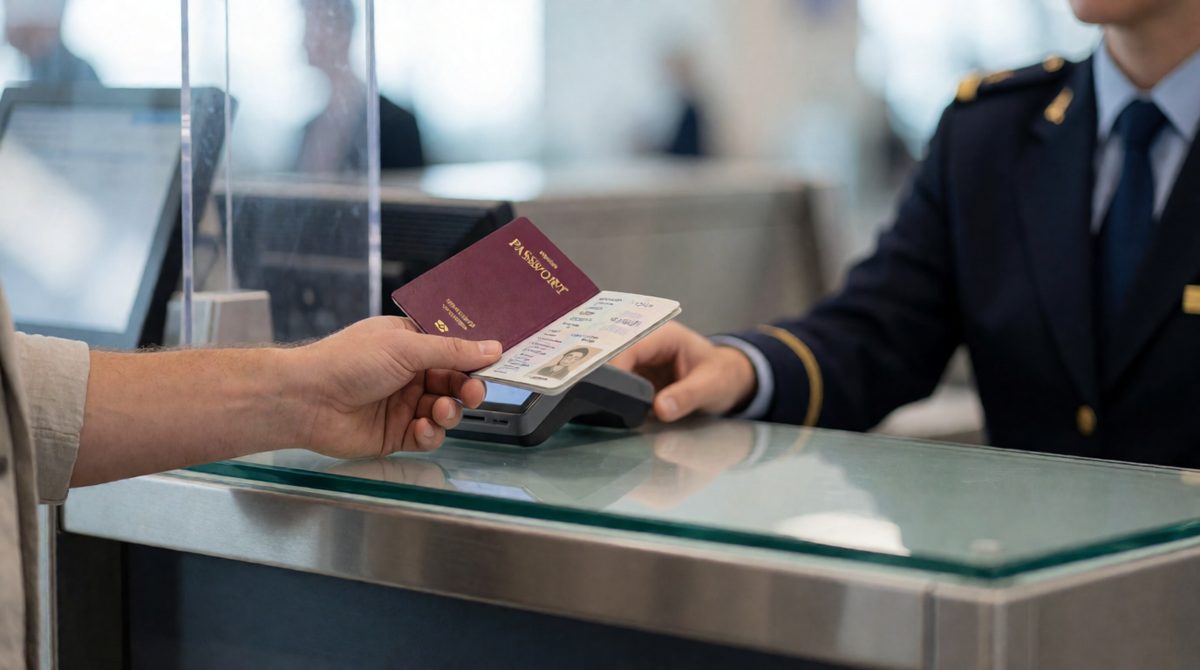
Visas and border controls affect tourism
A visa is permission from a foreign government to enter their country. Visa policies are a direct political decision governments choose who can visit easily and who cannot. Visa requirements have a huge effect on tourism demand.
When a country removes visa requirements or makes them easier, tourist numbers tend to go up. When a country introduces new visa requirements or makes them expensive and complicated, tourist numbers tend to fall.
✈️ Types of Visa Arrangements
✅ Visa-Free Travel
No visa needed. Just turn up with a valid passport. Example: UK citizens visiting most EU countries. Makes travel quick, cheap and easy boosts tourism.
📋 Visa on Arrival
You get a visa when you land at the airport. Slightly more hassle but still fairly easy. Example: UK citizens visiting Thailand. Less of a barrier to tourism.
❌ Pre-Arranged Visa
Must apply in advance, often with forms, photos, fees and waiting times. Example: UK citizens visiting Russia or China. Can put tourists off visiting altogether.
🔍 Case Study: The USA's ESTA System
The United States introduced the Electronic System for Travel Authorisation (ESTA) for visitors from visa-waiver countries (like the UK). Before travelling, visitors must apply online, pay a fee (currently $21) and receive approval. While this is much simpler than a full visa, it still adds a step and a cost.
After the 9/11 terrorist attacks in 2001, the USA dramatically tightened its border controls. Fingerprinting, photography at the border and stricter checks were introduced. Some tourists particularly from Muslim-majority countries found it harder or more unpleasant to enter. Studies showed that the USA lost billions of dollars in tourism revenue in the years following 9/11, partly due to these tighter entry requirements making the country feel less welcoming.
In 2017, President Trump introduced a travel ban on citizens from several Muslim-majority countries. This had an immediate chilling effect on tourism from those nations and sparked international controversy.
🔴 Political Instability, Conflict and Terrorism
Nothing puts tourists off a destination faster than the fear of violence. Political instability meaning a country where the government is weak, corrupt or facing serious challenges makes tourists nervous. Actual conflict or terrorism can destroy a destination's tourism industry almost instantly.
It's important to understand that tourists don't just respond to actual danger they respond to perceived danger. Even if a resort is perfectly safe, if the country has a reputation for trouble, tourists will avoid it.
💥 Terrorism and Tourism
Terrorist attacks specifically targeting tourists have occurred in several famous destinations. The aim of such attacks is often to damage a country's economy by scaring away visitors. Sadly, it often works at least in the short term.
🔍 Case Study: Tunisia After the 2015 Attacks
Tunisia was a popular, affordable Mediterranean holiday destination for British tourists. In March 2015, gunmen attacked the Bardo National Museum in Tunis, killing 22 tourists. Then in June 2015, a lone gunman attacked a beach resort in Sousse, killing 38 people 30 of whom were British.
The UK government immediately issued a "do not travel" advisory for Tunisia. British tourists cancelled holidays en masse. Tour operators like Thomson and Thomas Cook pulled all Tunisia holidays from their programmes. Tunisia's tourism sector which employed around 400,000 people and contributed 7% of GDP collapsed. Hotel occupancy rates fell below 20%.
By 2017, the FCDO had relaxed its advice for some coastal areas and tourist numbers slowly began to recover. However, it took several years for confidence to return. This shows just how long-lasting the political impact on tourism can be.
🌎 International Relations and Political Agreements
The relationships between countries whether friendly or hostile directly affect how easy it is for tourists to travel between them. Positive international relations can lead to agreements that make travel easier, while hostile relations can create barriers.
🤝 Positive International Relations
Countries with good relations may sign Open Skies Agreements (allowing airlines to fly freely between countries), remove visa requirements, promote joint tourism campaigns and make border crossings quick and easy. The Schengen Area in Europe is a perfect example 27 countries with no passport checks at internal borders, making travel incredibly easy and boosting tourism significantly.
🔴 Hostile International Relations
Countries in political dispute may impose trade sanctions, close borders, ban airlines, or issue negative travel advice about each other. For example, during periods of tension between the USA and Cuba, American tourists were legally banned from visiting Cuba for decades. Similarly, Russia and Ukraine's conflict has closed vast amounts of airspace, affecting flight routes and costs across Europe.
🔍 Case Study: Brexit and UK Tourism
When the UK voted to leave the European Union in 2016 (Brexit), it had significant political consequences for tourism. From January 2021, UK citizens lost the right to free movement across the EU. New rules came into effect:
- UK passports must be valid for at least 6 months to enter most EU countries
- UK travellers can only stay in the EU for 90 days in any 180-day period
- The European Health Insurance Card (EHIC) was replaced by the Global Health Insurance Card (GHIC), with some limitations
- From 2025, UK visitors need to register with the EU's ETIAS (European Travel Information and Authorisation System) similar to the USA's ESTA
- Pet passports changed, making it harder to take animals on holiday
These changes added complexity and cost to EU travel for British tourists. Meanwhile, EU citizens visiting the UK also face new passport checks. Brexit is a clear example of how a political decision can create new barriers to tourism demand.
🏢 Government Tourism Policy and Investment
Governments can also actively promote tourism through political decisions. A government that invests in tourism infrastructure, markets its country abroad and creates a welcoming environment for visitors will see higher tourist numbers.
📈 How Governments Encourage Tourism
Many governments have dedicated tourism boards and spend millions promoting their country to international visitors. Political decisions about investment, tax and regulation all shape how attractive a destination is.
💰 Financial Investment
Governments fund airports, roads, hotels and attractions. Dubai's government invested billions in tourism infrastructure, turning it into one of the world's top destinations within decades.
📣 Marketing Campaigns
National tourism boards like VisitBritain or Tourism Australia run global advertising campaigns. These are political decisions about how to spend public money to attract visitors.
📋 Regulation and Ease of Entry
Simplifying visa processes, improving customs procedures and creating tourist-friendly laws all make a destination more attractive. Thailand's visa-on-arrival policy helped make it one of Asia's most visited countries.
🔍 Case Study: Saudi Arabia Opens to Tourism
For most of its history, Saudi Arabia was almost entirely closed to international tourists. Only religious pilgrims visiting Mecca and Medina and business travellers, were allowed in. This was a deliberate political decision by the Saudi government.
However, in 2019, as part of its Vision 2030 economic reform programme, Saudi Arabia made a dramatic political U-turn and began issuing tourist visas for the first time. The government invested heavily in tourism infrastructure, launched a national tourism board and began promoting its ancient sites (like AlUla and Hegra) to the world.
This shows that a single political decision to open up a country can create an entirely new tourism market almost overnight. Saudi Arabia aims to attract 100 million visitors per year by 2030.
📝 Political Factors: Quick Summary
📋 Key Political Factors at a Glance
📄 Travel Advisories
Government warnings about unsafe destinations. When issued, they effectively stop tourism by making insurance invalid and frightening travellers away.
✈️ Visa Policies
Visa-free travel boosts tourism. Expensive or complicated visa requirements act as a barrier. Political decisions determine who can enter a country and how easily.
💥 Terrorism & Conflict
Attacks targeting tourists, civil war, or political unrest can collapse a destination's tourism industry. Recovery can take years even after the danger has passed.
🤝 International Relations
Good relations between countries make travel easier. Hostile relations create barriers. Trade agreements and open skies policies all affect tourism flows.
🏠 Government Policy
Governments can actively promote tourism through investment, marketing and welcoming policies or restrict it through regulation and closed borders.
🌎 Political Change
Elections, revolutions and policy changes can rapidly alter a destination's appeal. Saudi Arabia's opening to tourism and Brexit are modern examples of this.
✅ Exam Tip
In the exam, when asked about political factors, always try to give a named example or case study. Don't just say "terrorism reduces tourism" say "the 2015 Sousse attack in Tunisia caused UK tourist arrivals to collapse as the FCDO issued a 'do not travel' advisory, making travel insurance invalid." Specific detail = higher marks. Also remember that political factors can work both ways they can increase or decrease demand depending on the situation.
💡 Quick Revision Checklist
- ✅ I can define political factors and explain why they affect tourism demand
- ✅ I understand what a travel advisory is and how it affects tourist numbers
- ✅ I can explain how visa policies act as a barrier or encouragement to tourism
- ✅ I can describe the impact of terrorism on tourism using Tunisia as an example
- ✅ I understand how Brexit changed travel between the UK and EU
- ✅ I can explain how positive government policy (like Saudi Arabia's Vision 2030) can create new tourism demand
- ✅ I can give at least three named examples of political factors affecting tourism in exam answers