🌿 Why Has Sustainable Tourism Grown So Much?
Sustainable tourism has gone from a niche idea in the 1980s to one of the fastest-growing sectors in global travel. But why has it grown so much? The answer is not just one thing it's a combination of forces all pushing in the same direction at the same time. In your exam, you won't just be asked to list reasons you'll be asked to evaluate them. That means deciding which reasons are most important and explaining why.
Key Definitions:
- Sustainable tourism growth: The increasing popularity and development of tourism that meets the needs of present visitors without harming the environment, local communities, or future generations.
- Evaluation: Weighing up evidence to make a judgement about which factors are most significant.
- Driver of change: A force or factor that causes something to grow or develop.
📌 The Big Picture
According to the UN World Tourism Organisation (UNWTO), sustainable tourism is now one of the top priorities for governments and businesses worldwide. Over 70% of travellers say they want to travel more sustainably but the reasons behind this shift are complex and worth examining carefully.
📚 Reason 1: Growing Environmental Awareness
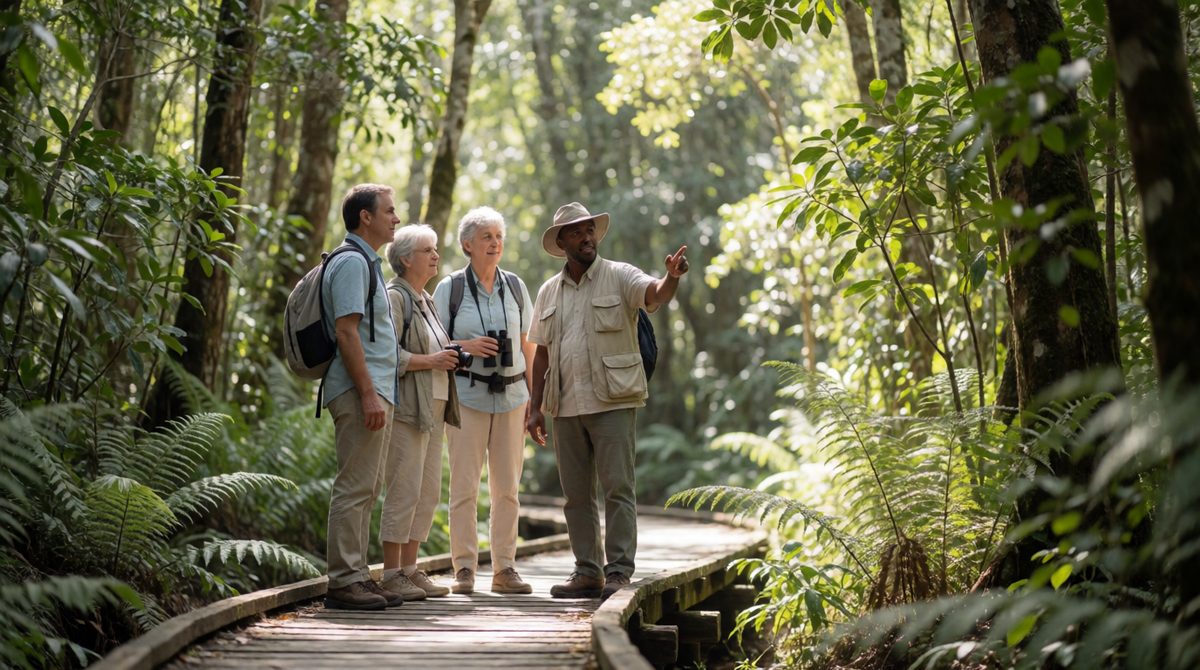
Environmental awareness has driven sustainable tourism
One of the most powerful drivers of sustainable tourism growth is the fact that people simply know more about environmental problems than they did 30 years ago. Climate change, deforestation, plastic pollution and species extinction are now regular topics in schools, on TV and across social media.
🌎 How Awareness Has Changed Behaviour
When people understand that their travel choices have real consequences for coral reefs, rainforests, or local communities many begin to make different decisions. This is known as pro-environmental behaviour: acting in ways that reduce harm to the natural world.
📚 Education
Environmental topics are now part of school curricula worldwide. Young people grow up understanding concepts like carbon footprints, biodiversity and climate change making them more likely to choose sustainable travel options.
📺 Media Coverage
Documentaries like Blue Planet II (2017) shocked millions of viewers with footage of plastic pollution in the oceans. This kind of media coverage directly influences public attitudes towards responsible travel.
📱 Social Media
Platforms like Instagram and TikTok spread environmental messages rapidly. Campaigns like #TrashTag and #LeaveNoTrace have reached billions of people, encouraging responsible behaviour in natural spaces.
🏭 Case Study: The "Blue Planet Effect" in Action
After the BBC's Blue Planet II aired in 2017, surveys showed a dramatic shift in public attitudes. A study by Sky Ocean Rescue found that 88% of people changed their behaviour after watching it including choosing destinations and tour operators with stronger environmental policies. This is a clear example of media-driven awareness fuelling sustainable tourism growth.
📈 Reason 2: Changing Tourist Attitudes and Expectations
It's not just awareness tourists' values have genuinely shifted. The so-called "new tourist" is more experienced, better educated and more ethically aware than previous generations. They want travel experiences that feel meaningful, not just relaxing.
👥 The Rise of the Ethical Consumer
Modern tourists increasingly apply the same ethical standards to travel that they apply to food shopping or clothing. They ask questions like: "Is this hotel exploiting local workers?" or "Does this wildlife experience harm animals?" This consumer pressure forces the tourism industry to offer more sustainable options.
🌟 Experiences Over Luxury
Research consistently shows that younger travellers (especially Millennials and Gen Z) prefer authentic experiences over five-star luxury. Staying in a locally owned guesthouse, learning to cook traditional food, or volunteering on a conservation project is often more appealing than a generic resort holiday.
This shift in expectations is significant because it creates genuine market demand for sustainable tourism products. When customers want something, businesses provide it and sustainable tourism has become commercially attractive as a result.
🌎 Reason 3: Globalisation and Increased Access to Information
Globalisation has made the world feel smaller. People can now research destinations, read reviews, compare eco-credentials and book sustainable holidays entirely online. This access to information is a crucial reason why sustainable tourism has grown.
🔍 How Information Access Drives Sustainable Choices
Before the internet, tourists largely relied on travel agents and brochures. Today, a traveller can spend hours reading about a destination's environmental record, watching YouTube videos of responsible wildlife experiences, or checking a hotel's sustainability certification all before booking. This transparency empowers consumers to make informed, ethical choices.
⭐ Review Platforms
Sites like TripAdvisor now include sustainability ratings. Businesses with poor environmental records can be publicly criticised, creating strong incentives to adopt sustainable practices.
🌎 Global NGOs
Organisations like WWF, Greenpeace and the Rainforest Alliance publish information about responsible travel destinations and operators, helping tourists make better-informed choices.
📱 Booking Apps
Platforms like Bookdifferent.com and Responsibletravel.com specifically filter for sustainable options, making it easier than ever to choose eco-friendly accommodation and tours.
💰 Reason 4: Economic Factors Sustainable Tourism as a Business Opportunity
It would be naive to think sustainable tourism has grown purely because people care about the planet. Economics plays a huge role. Sustainable tourism has become profitable and that financial incentive has driven its rapid expansion.
📌 Did You Know?
Ecotourism is one of the fastest-growing sectors in the global travel industry, growing at 20–34% per year far faster than conventional tourism. This growth rate has attracted major investment from businesses, governments and international organisations.
💵 Premium Pricing
Sustainable tourism products often command higher prices. Eco-lodges, responsible wildlife safaris and certified sustainable tours can charge a premium because customers are willing to pay more for ethical experiences. This makes sustainable tourism financially attractive to businesses.
🌿 Long-Term Resource Protection
Destinations that protect their natural and cultural assets through sustainable practices can continue to attract tourists for decades. Unsustainable tourism, by contrast, can destroy the very attractions that bring visitors making sustainability a smart long-term economic strategy.
🇦🇪 Case Study: Rwanda's Mountain Gorilla Tourism
Rwanda is one of the best examples of sustainable tourism driven by economic logic. The country charges up to $1,500 per person for a one-hour gorilla trekking permit in Volcanoes National Park. This premium pricing strategy:
- Limits visitor numbers to protect the gorillas and their habitat
- Generates enormous revenue from a small number of tourists
- Funds conservation efforts and local community development
- Has helped gorilla populations increase from around 620 in 2010 to over 1,000 today
Rwanda's model shows that sustainable tourism can be both environmentally responsible and highly profitable a powerful combination that has inspired other countries to follow suit.
🏛️ Reason 5: The Role of International Organisations and Agreements
Sustainable tourism has also grown because powerful international bodies have actively promoted and supported it. This "top-down" pressure from global organisations has shaped national policies, business practices and tourist behaviour.
- The United Nations: Declared 2017 the International Year of Sustainable Tourism for Development, raising global awareness and encouraging governments to adopt sustainable tourism policies.
- UNWTO (UN World Tourism Organisation): Provides guidelines, data and support to help countries develop sustainable tourism strategies.
- The Paris Agreement (2015): Committed nations to reducing carbon emissions, which has influenced the aviation and tourism industries to adopt greener practices.
- UNESCO World Heritage Sites: The designation of sites as World Heritage encourages governments to protect and manage them sustainably, often boosting responsible tourism.
🏭 Case Study: Kenya's Community-Based Tourism
With support from the UNWTO and various international NGOs, Kenya has developed an extensive network of community-based tourism projects. Local Maasai communities, for example, now run their own eco-camps and cultural tours. Revenue stays within the community, wildlife is protected and tourists get an authentic experience. International support and funding made this possible showing how global organisations can directly drive sustainable tourism growth on the ground.
⚖️ Reason 6: Climate Change Concerns
Climate change is both a cause and a consequence of tourism. The tourism industry accounts for around 8% of global carbon emissions. As awareness of climate change has grown, so has pressure on the tourism industry to clean up its act and on tourists to make greener choices.
✈️ Flight Shame ("Flygskam")
The "flight shame" movement, which began in Sweden around 2018, encouraged people to avoid flying due to its high carbon emissions. The movement, associated with activist Greta Thunberg, led to a measurable increase in train travel across Europe and boosted interest in lower-carbon holiday options closer to home.
🌞 Threatened Destinations
Iconic destinations like the Great Barrier Reef, the Maldives and the Amazon are visibly threatened by climate change. This has motivated both tourists and governments to support sustainable tourism as a way of protecting these places before they disappear.
⚖️ Evaluating the Reasons: Which Matters Most?
In your IGCSE exam, you may be asked to evaluate the reasons for sustainable tourism growth meaning you need to decide which factors are most important and explain your reasoning. Here's a framework to help you think it through:
📋 A Framework for Evaluation
📈 Scale of Impact
Which reason affects the most people or the most destinations? Environmental awareness and changing attitudes affect billions of tourists worldwide making them arguably the most significant drivers of growth.
🕐 Speed of Change
Some factors have caused rapid change (e.g., social media campaigns can shift attitudes overnight), while others are slower (e.g., government policy changes can take years). Speed matters when evaluating significance.
🔗 Interconnection
Many reasons are linked. Economic incentives work better when awareness is high. Government policies are more effective when tourists demand sustainable options. The best exam answers recognise these connections.
💡 Exam Tip: How to Write a Strong Evaluation
When evaluating reasons for sustainable tourism growth, avoid simply listing them. Instead, use language like: "The most significant reason is... because..." or "While X is important, Y has had a greater impact because..." Always support your judgement with specific evidence a named case study, a statistic, or a real example. This is what separates a Grade 7 answer from a Grade 4 answer.
🔎 Comparing the Reasons: A Summary Table
Use this table to compare the key reasons for sustainable tourism growth and think about how they relate to each other:
| Reason |
Type of Driver |
Example |
Strength of Evidence |
| Growing environmental awareness |
Social / Cultural |
Blue Planet II effect |
★★★★★ |
| Changing tourist attitudes |
Social / Demographic |
New tourist vs old tourist |
★★★★★ |
| Globalisation and information access |
Technological |
Sustainable booking platforms |
★★★★ |
| Economic incentives |
Economic |
Rwanda gorilla tourism |
★★★★ |
| International organisations |
Political / Institutional |
UNWTO, UN Year of Sustainable Tourism |
★★★ |
| Climate change concerns |
Environmental |
Flight shame movement |
★★★★ |
💡 Putting It All Together: A Balanced Conclusion
No single reason explains the growth of sustainable tourism on its own. The reality is that multiple factors have combined to create the conditions for growth. However, if you had to identify the most important driver, a strong case can be made for changing tourist attitudes because without genuine demand from tourists, no amount of government policy or business innovation would be enough to drive real change.
That said, economic incentives are arguably what have made sustainable tourism mainstream rather than niche. When businesses discovered that sustainability could be profitable as Rwanda's gorilla tourism clearly shows the pace of growth accelerated dramatically. The best exam answers will acknowledge this complexity rather than oversimplifying.
🔎 Summary: Evaluating Reasons for Sustainable Tourism Growth
- 🌿 Environmental awareness has grown massively, driven by education, documentaries and social media
- 👥 Changing tourist attitudes especially among younger generations have created real market demand for sustainable options
- 🌎 Globalisation and technology have made it easier to find, compare and book sustainable travel
- 💰 Economic incentives have made sustainable tourism commercially attractive to businesses and governments
- 🏛️ International organisations have provided frameworks, funding and global pressure to adopt sustainable practices
- ⚖️ Climate change concerns have added urgency to the shift towards lower-impact travel
- 📋 In your exam, always evaluate don't just list. Decide which reason is most significant and explain why with evidence