🌎 Tourism Organisations: Who Runs Tourism?
Tourism doesn't just happen on its own. Behind every holiday, hotel stay and guided tour, there are organisations working to plan, promote, regulate and manage tourism. These organisations operate at different levels from a small local visitor centre to the United Nations.
Understanding who these organisations are, what they do and how they try to make tourism more sustainable is a key part of your iGCSE Travel and Tourism course.
Key Definitions:
- Tourism Organisation: A body that plans, promotes, manages or regulates tourism activity at local, national or international level.
- Tourism Provider: A business or organisation that directly supplies tourism products or services such as hotels, airlines, tour operators and attractions.
- Sustainable Tourism: Tourism that meets the needs of today's tourists without damaging the environment, culture or economy for future generations.
- Sector: A part of the economy tourism organisations can be public (government-run), private (profit-making) or voluntary (charity/non-profit).
🏛 The Three Sectors of Tourism
Tourism is delivered by three different types of organisation. Each has different goals, funding and responsibilities. In the exam, you need to know the difference clearly.
🏛 Public Sector
Run by governments. Funded by taxes. Goal is to benefit the public not to make profit. Examples include national tourist boards and local councils.
💰 Private Sector
Run by businesses. Funded by sales and investment. Goal is to make profit. Examples include airlines, hotel chains, tour operators and travel agents.
✍ Voluntary Sector
Run by charities and non-profit groups. Funded by donations and grants. Goal is to protect or promote something such as heritage or wildlife. Examples include the National Trust and WWF.
📈 Why Do All Three Sectors Matter?
In most destinations, all three sectors work together. For example, a national park might be managed by the government (public), have a café run by a private company and be supported by a conservation charity (voluntary). This is called a mixed economy of tourism.
The balance between sectors affects how tourism is managed. Too much focus on profit (private sector) can lead to overdevelopment. Too much government control can slow growth. The voluntary sector often fills the gaps protecting things that neither government nor business prioritises.
🌎 National Tourism Organisations (NTOs)
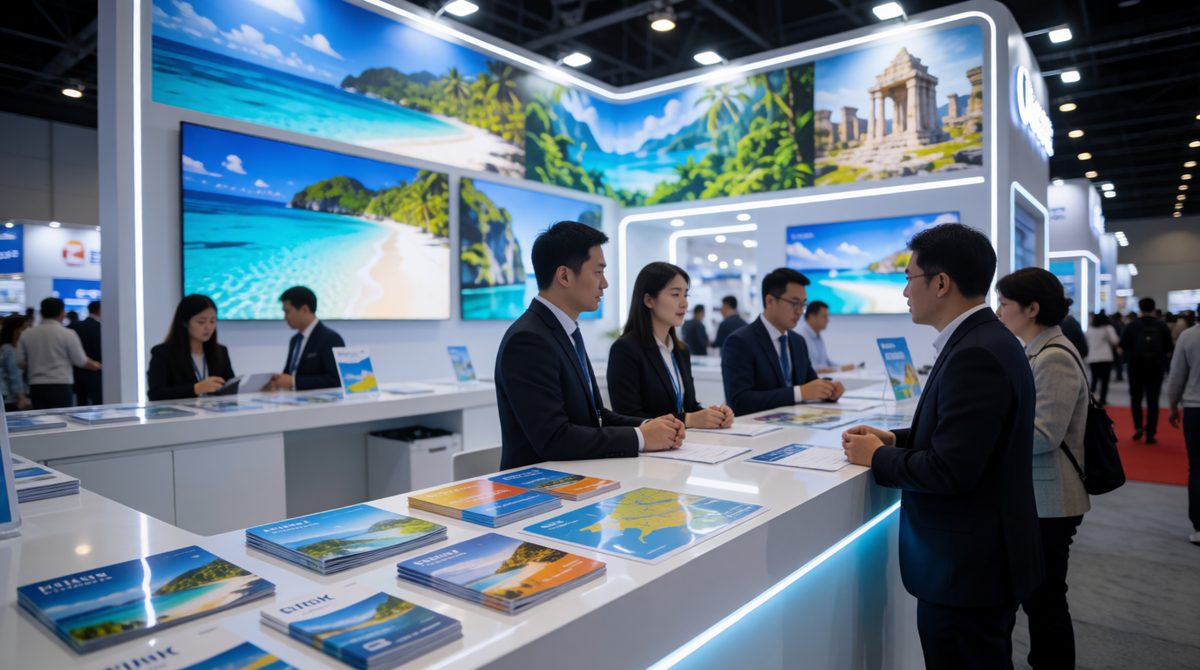
National tourism organisations promote their countries
Every country has some form of National Tourism Organisation (NTO) a government-backed body responsible for promoting the country as a destination and managing tourism at a national level.
✅ What NTOs Do
- Promote the country to international visitors through marketing campaigns
- Collect tourism statistics and research
- Set national tourism policy and strategy
- Support the development of tourism infrastructure
- Coordinate with local tourism bodies and the private sector
- Represent the country at international tourism events
📍 NTO Examples Around the World
- VisitBritain promotes the UK internationally
- Tourism Australia markets Australia globally
- Incredible India (Ministry of Tourism) India's tourism promotion body
- Kenya Tourism Board promotes Kenya's safari and coastal tourism
- Singapore Tourism Board manages and markets Singapore as a destination
🏭 Case Study: VisitBritain
VisitBritain is the UK's national tourism agency, funded by the UK government. It runs international marketing campaigns to attract overseas visitors such as the "GREAT Britain" campaign, which promoted British culture, countryside and cities across 144 countries. VisitBritain works with airlines, hotels and tour operators to create holiday packages and promote Britain at international travel fairs like World Travel Market (WTM) in London. It also publishes research on visitor numbers, spending and trends to help the tourism industry plan ahead. In 2019, before the pandemic, international visitors to the UK spent over £28 billion much of this driven by VisitBritain's promotional work.
🌎 Local and Regional Tourism Organisations
Below the national level, tourism is managed by Regional Tourism Organisations (RTOs) and Local Tourism Boards. These focus on specific areas a county, city or region and deal with the day-to-day management of tourism at ground level.
📍 What Local Tourism Bodies Do
- Run local Tourist Information Centres (TICs)
- Produce local maps, guides and promotional materials
- Support local attractions, hotels and restaurants
- Organise local events and festivals to attract visitors
- Manage visitor pressure at popular sites
- Liaise with the national tourism body and local council
For example, Visit Cornwall promotes tourism across Cornwall in southwest England, while Tourism Northern Ireland manages tourism across that region specifically.
🌎 International Tourism Organisations
At the global level, international organisations set standards, share data and promote responsible tourism across borders.
🌎 UNWTO United Nations World Tourism Organisation
The UNWTO is the leading international body for tourism. It is part of the United Nations and has 159 member countries. Its main roles include:
- Collecting global tourism statistics (e.g. international arrivals, spending)
- Promoting sustainable, responsible and accessible tourism
- Supporting developing countries in building their tourism industries
- Setting global tourism policy and guidelines
The UNWTO publishes the annual World Tourism Barometer, which tracks global tourism trends. In 2023, it reported that international tourist arrivals reached 88% of pre-pandemic levels a major recovery.
✈ IATA International Air Transport Association
IATA represents around 300 airlines worldwide. It sets global standards for air travel safety, ticketing and baggage. For tourism, IATA is important because:
- It regulates how airlines operate internationally
- It sets the rules for how travel agents book flights (the GDS system)
- It campaigns for lower air taxes and better passenger rights
- It publishes data on global air travel demand
IATA also leads the airline industry's commitment to reach net-zero carbon emissions by 2050 a major sustainability target.
💰 Private Sector Tourism Providers
The private sector is the engine of the tourism industry. These are the businesses tourists actually use from booking a flight to checking into a hotel. Private sector providers exist to make profit, but they also shape the tourist experience enormously.
🚌 Types of Private Sector Tourism Providers
✈ Airlines
Carry tourists to destinations. Include full-service carriers (e.g. British Airways, Emirates) and low-cost carriers (e.g. Ryanair, easyJet). Low-cost airlines massively expanded tourism by making flying affordable.
🏠 Hotels and Accommodation
Range from budget hostels to luxury five-star resorts. Major chains include Marriott, Hilton and IHG. Accommodation is often the largest cost for tourists and a major source of local employment.
📄 Tour Operators
Package holidays together flights, hotels, transfers and sometimes meals. Examples include TUI (formerly Thomson) and Jet2holidays. They negotiate bulk deals to offer cheaper prices than booking separately.
📈 Quick Fact: TUI The World's Largest Tour Operator
TUI Group is the world's largest integrated tourism business. It owns airlines, hotels, cruise ships and travel agencies across Europe. In 2023, TUI carried over 19 million customers to destinations worldwide. Because it controls so many parts of the tourism chain, it has enormous influence over where tourists go and how they travel which also means it has a big responsibility to operate sustainably.
✍ Voluntary Sector Tourism Providers
The voluntary sector plays a vital role in protecting the things that make destinations worth visiting in the first place heritage, wildlife, landscapes and culture. These organisations are not trying to make money; they are trying to preserve something valuable.
🌿 The National Trust (UK)
The National Trust is a charity that protects over 500 historic houses, gardens, coastlines and nature reserves across England, Wales and Northern Ireland. It welcomes over 28 million visitors a year. Entrance fees and membership subscriptions fund conservation work. The National Trust is a perfect example of voluntary sector tourism it makes tourism possible while protecting the very things tourists come to see.
🐘 WWF (World Wide Fund for Nature)
WWF works globally to protect wildlife and natural habitats. In tourism, WWF campaigns against practices that harm wildlife such as elephant riding or captive dolphin shows. It also promotes wildlife tourism guidelines and works with tour operators to ensure wildlife encounters are ethical and sustainable. WWF's work directly affects what kinds of tourism are considered acceptable.
⚖ What Is Sustainable Tourism?
Sustainable tourism is one of the most important ideas in modern travel. The basic idea is simple: tourism should not destroy the very things that make a destination special. But making this happen in practice is much harder.
The UNWTO defines sustainable tourism as: "Tourism that takes full account of its current and future economic, social and environmental impacts, addressing the needs of visitors, the industry, the environment and host communities."
Sustainable tourism has three pillars:
🌿 Environmental
Protecting natural habitats, reducing pollution, conserving water and energy, minimising carbon emissions and preventing damage to ecosystems.
👪 Social and Cultural
Respecting local cultures and traditions, involving local communities in tourism decisions and ensuring tourism does not displace or harm residents.
💰 Economic
Ensuring tourism money benefits local people not just foreign-owned companies. Creating fair wages, supporting local businesses and spreading economic benefits.
🏭 Sustainable Tourism in Practice
Many destinations and organisations have introduced specific schemes and policies to make tourism more sustainable. These are called sustainable tourism provisions practical measures that put sustainability into action.
🚫 Visitor Management Schemes
When too many tourists visit a place, it causes overtourism damage to the environment, frustration for locals and a worse experience for visitors. Visitor management schemes try to control this.
- Timed entry tickets: Visitors must book a specific time slot. Used at Stonehenge (UK), the Uffizi Gallery (Italy) and Machu Picchu (Peru).
- Visitor caps: A maximum number of tourists allowed per day. The Galápagos Islands limit daily arrivals to protect wildlife.
- Zoning: Dividing an area into zones some open to tourists, others restricted for conservation. Used in many national parks.
- Tourist taxes: Charging visitors a fee that funds conservation. Venice charges a day-tripper fee of up to €10. Bhutan charges a Sustainable Development Fee of $100 per night.
🏭 Case Study: Bhutan High Value, Low Impact Tourism
Bhutan, a small kingdom in the Himalayas, has one of the world's most famous sustainable tourism policies. Rather than encouraging mass tourism, Bhutan operates a "High Value, Low Impact" strategy. Every tourist must pay a minimum daily fee currently $100 per person per night called the Sustainable Development Fee (SDF). This fee funds free education, healthcare and environmental conservation across the country. Tourist numbers are deliberately kept low to protect Bhutan's Buddhist culture and pristine natural environment. In 2022, Bhutan welcomed just 71,000 tourists compared to millions who visit neighbouring Nepal. The result is a destination that remains unspoilt, authentic and highly desirable. Bhutan is widely regarded as a global model for sustainable tourism.
🌿 Ecotourism Certification Schemes
Ecotourism is a form of sustainable tourism focused on natural environments. It aims to educate visitors, conserve ecosystems and benefit local communities. Many countries and organisations have created certification schemes official labels that tell tourists a business or destination meets sustainability standards.
- Green Globe: An international certification for sustainable tourism businesses. Hotels, tour operators and attractions can apply. Businesses must meet standards on energy use, water conservation, waste management and community involvement.
- Rainforest Alliance: Certifies tourism businesses in tropical regions that protect forests and support local communities.
- Blue Flag: Awarded to beaches and marinas that meet strict standards for water quality, safety, environmental management and education. Over 4,800 Blue Flag beaches exist in 50 countries.
- Costa Rica's CST (Certificate for Sustainable Tourism): A national scheme rating tourism businesses from 0–5 leaves based on their sustainability practices.
🏭 Case Study: Costa Rica A Global Leader in Ecotourism
Costa Rica is one of the world's most celebrated ecotourism destinations. Despite covering just 0.03% of the Earth's surface, it contains nearly 6% of the world's biodiversity. The government made a bold decision in the 1990s to protect over 25% of its land as national parks and reserves and to build tourism around this natural wealth rather than destroy it. The Certificate for Sustainable Tourism (CST) scheme rates every tourism business on its environmental and social performance. Tourists can choose hotels and tour operators with high CST ratings, knowing their money supports conservation. Local communities benefit through employment as guides, rangers and hospitality workers. Costa Rica earns over $4 billion a year from tourism most of it from nature-based, sustainable experiences. It is proof that protecting the environment and growing tourism can go hand in hand.
👪 Community-Based Tourism (CBT)
Community-Based Tourism (CBT) is a sustainable tourism model where local communities own and manage tourism activities and keep the profits. Instead of money flowing to foreign hotel chains, it stays in the local area. This makes tourism genuinely beneficial to the people who live there.
Examples of CBT activities include:
- Staying in locally owned guesthouses or homestays
- Guided walks led by local community members
- Cultural experiences organised by the community (cooking, crafts, storytelling)
- Buying locally made souvenirs directly from artisans
CBT is particularly important in developing countries, where large tourism companies often take most of the profit out of the local economy a problem called economic leakage.
🏭 Case Study: Maasai Mara, Kenya Community-Based Tourism
The Maasai people of Kenya have developed community-based tourism around the famous Maasai Mara game reserve. Rather than simply watching tourists pass through their land, Maasai communities now run their own cultural manyattas (village experiences), offer guided walks and operate community-owned campsites. Revenue from these activities funds schools, clinics and conservation projects. The Olare Motorogi Conservancy, bordering the Maasai Mara, is a brilliant example it is jointly managed by Maasai landowners and a private safari company. Landowners receive a monthly income per acre and tourist numbers are kept low to protect the wildlife. This model ensures local people benefit from tourism rather than being excluded from it.
⚠ The Challenges of Sustainable Tourism
Sustainable tourism sounds great in theory but it faces real challenges. Understanding these challenges is important for your exam.
❌ Why Sustainability Is Hard to Achieve
- Cost: Sustainable practices (solar panels, waste treatment, eco-building) cost more upfront. Small businesses may not be able to afford them.
- Greenwashing: Some businesses claim to be sustainable without really being so just to attract eco-conscious tourists. This is called greenwashing.
- Tourist behaviour: Even in sustainable destinations, individual tourists may behave irresponsibly dropping litter, disturbing wildlife or ignoring rules.
- Economic pressure: Governments in developing countries may prioritise tourist numbers and revenue over environmental protection.
- Enforcement: Rules about visitor numbers, protected areas and wildlife are difficult to enforce, especially in remote locations.
✅ How Organisations Try to Overcome These Challenges
- International funding and grants help small businesses adopt sustainable practices
- Certification schemes help tourists identify genuinely sustainable businesses
- Education programmes teach tourists how to behave responsibly
- Partnerships between governments, NGOs and private businesses share costs and expertise
- Technology (e.g. booking apps, drone monitoring) helps manage visitor numbers more effectively
💡 Exam Tip: Linking Organisations to Sustainability
In your exam, you may be asked to explain how tourism organisations contribute to sustainable tourism. Remember to cover all three sectors: public (government policies, national parks, tourist taxes), private (eco-certified hotels, responsible tour operators) and voluntary (conservation charities, community groups). Always give specific named examples vague answers score fewer marks. Try to explain how a provision works, not just that it exists.
📋 Summary: Key Points to Remember
- Tourism organisations operate at local, national and international levels
- There are three sectors: public (government), private (business) and voluntary (charity/non-profit)
- National Tourism Organisations (NTOs) like VisitBritain promote countries and manage tourism policy
- The UNWTO is the leading international tourism body part of the United Nations
- Private sector providers include airlines, hotels, tour operators and travel agents
- Voluntary organisations like the National Trust and WWF protect heritage and wildlife
- Sustainable tourism has three pillars: environmental, social/cultural and economic
- Sustainable provisions include visitor caps, tourist taxes, ecotourism certification and community-based tourism
- Bhutan and Costa Rica are leading examples of sustainable tourism in practice
- Challenges include greenwashing, cost, enforcement and economic pressure to prioritise growth over sustainability