📌 Managing Demand, Policy-Making and Planning
When too many tourists arrive in the same place at the same time, things go wrong. Beaches get overcrowded, local residents get frustrated, wildlife gets disturbed and the experience for visitors gets worse. This is why organisations don't just attract tourists they also have to manage them.
This session looks at three closely linked management activities:
- Managing demand controlling how many people visit, when and where
- Policy-making creating rules and strategies that guide how tourism develops
- Planning deciding where tourism infrastructure goes and how it fits with the local environment and community
Key Definitions:
- Demand management: Actions taken to influence the number, timing, or behaviour of tourists at a destination.
- Tourism policy: A set of rules, goals and strategies created by governments or organisations to guide how tourism develops.
- Tourism planning: The process of deciding how land, infrastructure and resources are used to support tourism in a sustainable way.
- Dispersal: Spreading tourists away from overcrowded hotspots to quieter areas.
- Demarketing: Deliberately reducing demand for a destination or attraction, often to protect it from overtourism.
👤 Managing Visitor Demand
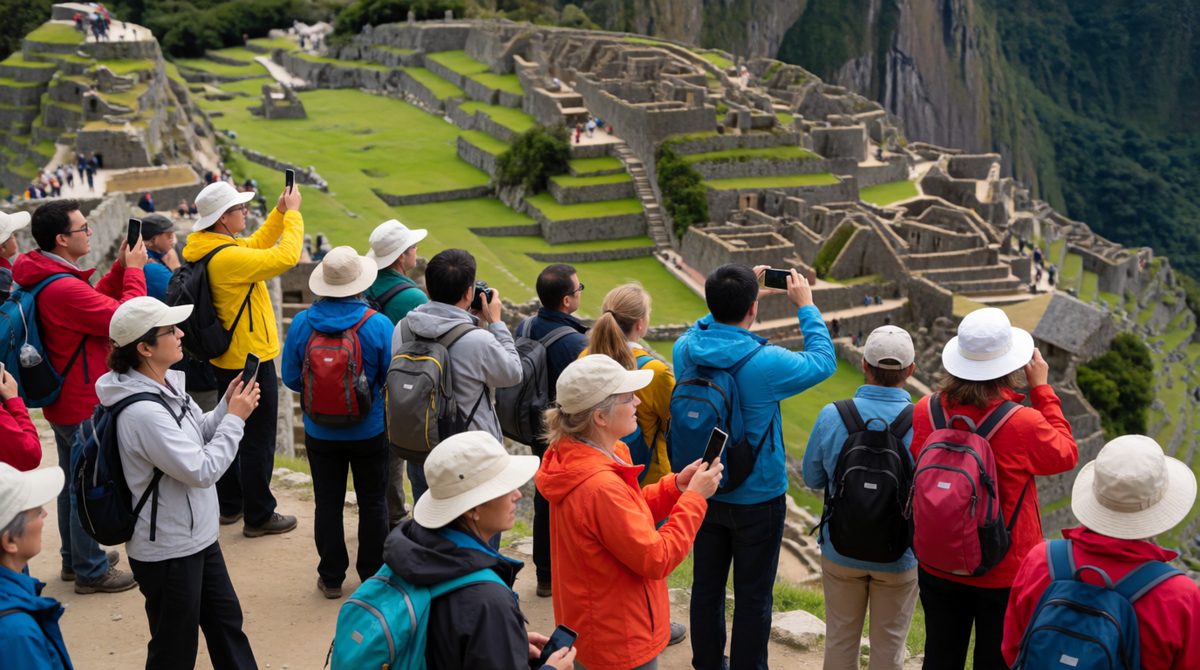
Managing visitor numbers protects popular sites
Managing demand is about making sure the right number of visitors arrive at the right time and in the right place. It doesn't always mean turning tourists away it's more about being smart about how visitor flows are organised.
📍 Why Demand Needs Managing
Some destinations are simply too popular for their own good. When visitor numbers exceed what a place can handle, the results can be damaging for the environment, for local communities and even for tourists themselves who end up having a poor experience.
🌿 Environmental Damage
Footpath erosion, litter, pollution and disturbance to wildlife all increase when too many visitors arrive at once.
👥 Community Pressure
Residents face noise, traffic, rising prices and loss of housing to holiday lets when tourism becomes too intense.
📈 Poor Visitor Experience
Queues, crowds and a feeling of being "herded" reduce satisfaction and damage a destination's reputation.
🎪 Tools for Managing Demand
Organisations use a variety of practical tools to manage visitor demand. These range from pricing strategies to physical barriers. Here are the most important ones you need to know:
💲 Pricing Strategies
Charging higher prices during peak times discourages some visitors and spreads demand more evenly. For example, entry fees to national parks may be higher in summer. Some destinations charge a tourist tax an extra fee added to hotel bills to manage numbers and raise funds for conservation.
Example: Amsterdam introduced a tourist tax of €3 per night per person, later raised to 7% of the hotel bill, to help manage overtourism in the city centre.
🎪 Ticketing and Booking Systems
Timed entry tickets mean visitors arrive in controlled batches rather than all at once. Online pre-booking systems allow managers to cap daily visitor numbers. This is used at museums, heritage sites and natural attractions worldwide.
Example: Stonehenge in England uses a timed ticketing system. Visitors must book in advance and numbers are capped to protect the monument and the visitor experience.
📍 Dispersal Strategies
Instead of concentrating tourists in one spot, organisations promote alternative attractions nearby. This spreads the economic benefits more widely and reduces pressure on hotspots.
Example: VisitScotland promotes the North Coast 500 route to draw tourists away from Edinburgh and into the Highlands, benefiting rural communities and reducing city-centre congestion.
🚫 Access Restrictions
Some areas are simply closed to tourists, either permanently or seasonally. Physical barriers like fences, boardwalks and roped-off zones guide visitors away from sensitive areas. Vehicle bans reduce pollution and congestion.
Example: The Cinque Terre in Italy introduced fines for tourists walking certain trails without a permit and banned large cruise ships from docking in the most sensitive areas.
📷 Demarketing Putting People Off on Purpose
This might sound strange, but some destinations deliberately try to reduce their appeal to certain types of tourists. This is called demarketing. It doesn't mean closing a destination it means targeting a different, more suitable audience.
📋 Case Study: Palau The Palau Pledge
Palau is a tiny island nation in the Pacific Ocean with stunning coral reefs and marine life. Worried about the damage caused by mass tourism, the government introduced the Palau Pledge in 2017 the world's first law requiring tourists to sign a promise to behave responsibly before they're allowed entry.
The pledge is stamped in visitors' passports and commits them to protecting the environment, respecting local culture and not taking any natural materials. Palau also reduced the number of flights allowed into the country and banned certain sunscreen chemicals that damage coral reefs.
This is a brilliant example of demarketing mass tourism while still welcoming responsible, high-value visitors.
📜 Policy-Making in Tourism
A tourism policy is basically a plan a set of decisions made by governments or organisations about how tourism should work. Good policies set clear goals, identify problems and put strategies in place to deal with them.
Tourism policies are made at different levels:
- International level e.g., the UNWTO's Global Code of Ethics for Tourism
- National level e.g., a country's tourism ministry setting visitor targets or sustainability goals
- Regional level e.g., a regional tourism board promoting specific areas
- Local level e.g., a local council deciding where a new visitor centre can be built
🏛 What Makes a Good Tourism Policy?
Effective tourism policies tend to share certain features. They are based on research, involve local communities, balance economic growth with environmental protection and are reviewed regularly.
📊 Evidence-Based
Good policies use data visitor numbers, economic impact studies, environmental surveys to make informed decisions rather than guesses.
👥 Inclusive
Local communities, businesses and NGOs should all have a say in tourism policy. Top-down decisions made without community input often fail.
⚖️ Flexible
Tourism is affected by unpredictable events pandemics, natural disasters, economic crises. Good policies can adapt quickly to changing circumstances.
📋 Case Study: Iceland Managing a Tourism Boom
Iceland saw visitor numbers rocket from around 500,000 in 2010 to over 2.3 million in 2018 in a country with a population of just 360,000. This rapid growth caused serious problems: traffic jams at natural sites, damage to fragile lava fields and pressure on Reykjavik's infrastructure.
The Icelandic government responded with a range of policy measures:
- Introduced a tourist tax to fund conservation and infrastructure
- Created new ranger programmes to manage visitors at natural sites
- Invested in boardwalks and designated paths to protect sensitive landscapes
- Promoted off-season travel through marketing campaigns to spread demand across the year
- Developed new tourism regions away from the Golden Circle to disperse visitors
Iceland's response shows how national-level policy-making can tackle the problems caused by rapid tourism growth.
🏢 Planning Controls in Tourism
Tourism planning is about deciding where things get built and how they fit into the surrounding environment. Without planning controls, tourism development can be chaotic hotels built on beaches, roads cutting through forests, resorts that destroy the very landscapes that attracted tourists in the first place.
📍 What Do Planning Controls Cover?
Planning controls are rules set by governments and local authorities that determine what can be built, where and to what standard. In tourism, they are used to:
- Prevent overdevelopment in sensitive natural or cultural areas
- Ensure new tourism facilities meet environmental and safety standards
- Protect the character of historic towns and villages
- Require environmental impact assessments before major projects begin
- Zone land for specific uses e.g., designating areas as national parks, green belts, or conservation zones
🌿 National Parks and Protected Areas
Governments designate certain areas as protected, which means tourism development is strictly controlled or banned altogether. Activities like building hotels, mining, or intensive farming are restricted. Tourism is allowed but managed carefully.
Example: The Lake District National Park in England has strict planning rules. New buildings must use local stone and large commercial developments are generally refused to preserve the landscape.
📄 Environmental Impact Assessments (EIAs)
Before a major tourism project is approved, developers may be required to carry out an EIA a detailed study of how the project will affect the local environment, wildlife and communities. If the impact is judged too harmful, the project can be blocked or modified.
Example: A proposed resort development in a coastal area might require an EIA to assess the impact on coral reefs, sea turtle nesting sites and local water supplies before planning permission is granted.
📋 Case Study: Dubai Planned Tourism Development
Dubai is one of the world's most striking examples of planned tourism development. The government of Dubai made a deliberate policy decision in the 1990s to diversify the economy away from oil by developing tourism. This involved:
- Massive investment in infrastructure airports, roads, metro systems
- Planned development of iconic attractions the Burj Khalifa, Palm Jumeirah, Dubai Mall
- Clear zoning policies separating tourist zones from residential areas
- Government-backed airline expansion through Emirates to increase visitor access
- Strict building regulations ensuring a consistent, high-quality tourism environment
Dubai now welcomes over 16 million international visitors per year. Its success is largely down to long-term, government-led planning rather than organic, uncontrolled growth. However, critics point out that this model relies heavily on cheap migrant labour and has significant environmental costs.
🔄 Balancing Development and Conservation
One of the biggest challenges in tourism planning is finding the right balance between economic development and protecting the environment and local culture. This tension is at the heart of almost every planning decision in tourism.
⚖️ The Development vs Conservation Debate
On one side, tourism development brings jobs, investment and income. On the other, uncontrolled development destroys the very things that make a destination attractive. Planners and policy-makers have to find a middle path.
📈 Arguments for Development
Creates jobs and income. Improves infrastructure for locals. Raises living standards. Generates tax revenue for governments.
🌿 Arguments for Conservation
Protects natural and cultural heritage. Ensures long-term tourism viability. Preserves biodiversity. Maintains local identity and community wellbeing.
⚖️ The Compromise
Sustainable tourism planning tries to allow development that meets present needs without compromising the ability of future generations to enjoy the same resources.
📋 Case Study: The Maldives Planning for a Fragile Destination
The Maldives is made up of 1,200 low-lying coral islands in the Indian Ocean. It is one of the world's most tourism-dependent economies tourism accounts for around 28% of GDP. But it is also one of the most environmentally vulnerable destinations on Earth, threatened by rising sea levels and coral bleaching.
The Maldivian government has used careful planning to manage this tension:
- One island, one resort policy: Each resort occupies its own island, keeping tourist and local communities separate and preventing overdevelopment of inhabited islands.
- Marine protected areas: Large areas of reef are designated as no-fishing, no-anchor zones to protect biodiversity.
- Building height restrictions: No building can be taller than the surrounding palm trees, preserving the natural landscape.
- Eco-certification schemes: Resorts are encouraged to meet environmental standards in energy use, waste management and water conservation.
The Maldives shows that even in a highly tourism-dependent economy, smart planning policy can help protect the environment that tourism depends on.
👥 Who Is Involved in Planning and Policy?
Tourism planning and policy-making involves a wide range of stakeholders people and organisations with an interest in the outcome. Getting these groups to work together is often the hardest part of the process.
- 🏛 National governments set overall tourism strategy and legislation
- 🏭 Local authorities grant planning permission and manage local infrastructure
- 💼 Private sector businesses hotels, tour operators, airlines invest in development
- 🌐 NGOs and charities campaign for environmental and community protection
- 👥 Local communities affected by tourism development and should have a voice
- 🌎 International bodies UNWTO, UNESCO set global standards and guidelines
💡 Exam Tip: Managing Demand vs Policy-Making vs Planning
These three concepts are closely linked but distinct. In the exam, make sure you can tell them apart:
- Managing demand = controlling visitor numbers, timing and behaviour (e.g., timed tickets, tourist taxes, dispersal)
- Policy-making = setting rules and strategies to guide tourism development (e.g., sustainability targets, visitor number caps)
- Planning = deciding where and how tourism infrastructure is built (e.g., zoning, EIAs, building regulations)
A good exam answer will use specific examples and explain why each tool is used, not just what it is.
📚 Quick Recap: Managing Demand, Policy-Making and Planning
- 📍 Managing demand uses tools like pricing, ticketing, dispersal and access restrictions to control visitor flows
- 🚫 Demarketing deliberately reduces demand from certain types of tourist to protect destinations
- 📜 Tourism policies are made at international, national, regional and local levels
- 🌿 Planning controls include zoning, EIAs, building regulations and protected area designations
- ⚖️ Balancing development and conservation is the central challenge of tourism planning
- 👥 Multiple stakeholders are involved in planning and policy, including governments, businesses, NGOs and local communities
- 📋 Case studies: Palau Pledge, Iceland tourism boom, Dubai planned development, Maldives one-island-one-resort policy