📌 Services Provided by Tourism Organisations
Tourism doesn't just happen by itself. Behind every successful destination, there are organisations working hard to promote it, research it, fund it and provide information about it. These four services are the engine room of destination development and management.
Whether it's a National Tourism Organisation (NTO), a local authority, a public-private partnership, or an international body like the UNWTO, all of these organisations carry out some or all of these four core services. Understanding what each service involves and why it matters is essential for your iGCSE exam.
Key Definitions:
- Promotion: Activities that raise awareness of a destination and encourage people to visit.
- Research: The collection and analysis of data to understand tourism trends, visitor behaviour and economic impact.
- Funding: Money provided to support tourism development, infrastructure, marketing or conservation.
- Information: Facts, advice and guidance provided to visitors, businesses and governments to support decision-making and improve the visitor experience.
📈 Why These Four Services Matter
Together, promotion, research, funding and information form a cycle. Research identifies what a destination needs. Funding provides the resources. Promotion attracts visitors. Information ensures those visitors have a great experience and spend money locally. Without any one of these, the system breaks down.
🌐 Who Provides These Services?
These services are delivered by a wide range of organisations: national governments, NTOs, regional tourism boards, local authorities, NGOs and private businesses. Often several organisations work together for example, a government might fund a campaign that an NTO then promotes.
📣 Promotion
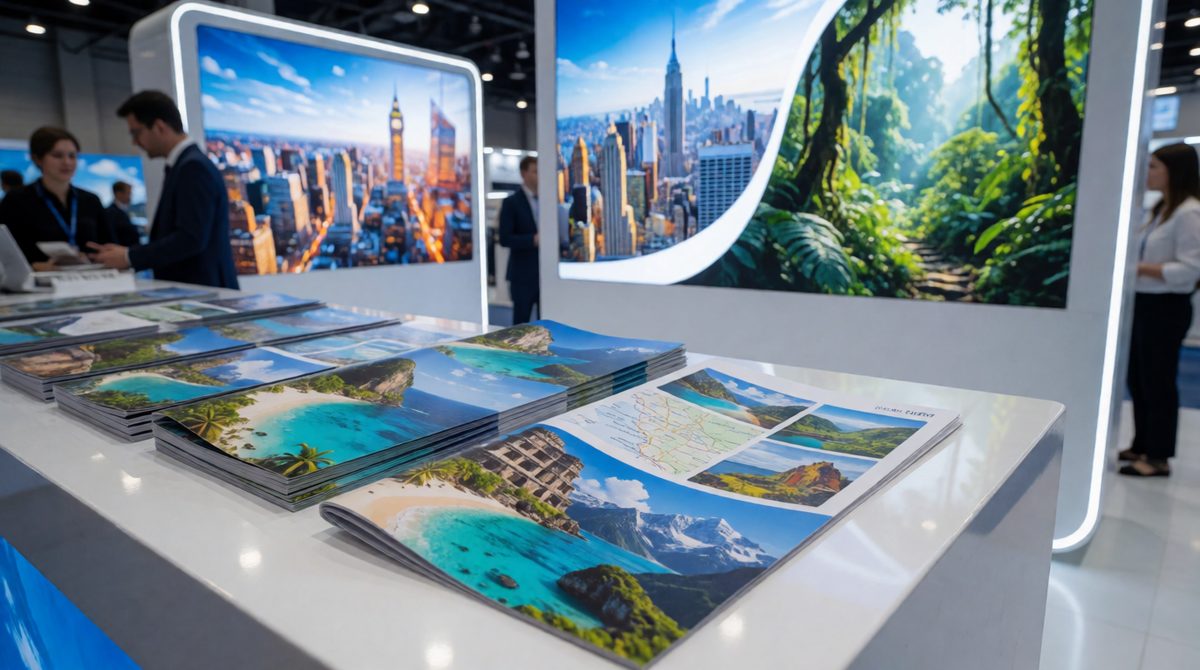
Tourism organisations promote destinations
Promotion is probably the most visible service that tourism organisations provide. It involves telling people about a destination what it offers, why they should visit and how to get there. Promotion can target international tourists, domestic tourists, or both.
📺 What Does Promotion Actually Involve?
Promotion covers a huge range of activities. It's not just adverts on TV it includes everything from a social media post to a stand at a travel trade fair. The key is reaching the right audience with the right message at the right time.
📷 Digital Promotion
Social media campaigns, influencer partnerships, YouTube travel content, SEO-optimised websites and targeted online adverts. This is now the most cost-effective way to reach younger audiences.
📞 Trade Promotion
Attending international travel fairs such as World Travel Market (WTM) in London or ITB Berlin. NTOs meet tour operators and travel agents to encourage them to sell their destination.
🏭 PR and Media
Inviting journalists and travel bloggers on press trips (called 'familiarisation trips' or 'fam trips') so they write positive articles and reviews about the destination.
📋 Case Study: VisitDubai Promoting a Modern Destination
Dubai's Department of Economy and Tourism (DET) runs one of the world's most aggressive destination promotion programmes. It uses celebrity endorsements, major sporting events (such as the Dubai World Cup and the Dubai Tennis Championships) and a strong social media presence across Instagram, TikTok and YouTube. Dubai also hosts world-class events like Expo 2020 to generate global media coverage. The result? Dubai welcomed over 17 million international overnight visitors in 2023, making it one of the most visited cities on Earth. This shows how sustained, multi-channel promotion can transform a destination's global profile.
🎯 Who Targets Whom?
Not all promotion is aimed at the same audience. Organisations carefully identify their target markets the groups of people most likely to visit and tailor their promotional messages accordingly.
- Demographic targeting: Age, income, family status (e.g. promoting family resorts to parents with young children)
- Geographic targeting: Focusing on countries where demand is growing (e.g. India and China are key growth markets for many NTOs)
- Psychographic targeting: Based on lifestyle and interests (e.g. adventure tourism, cultural tourism, wellness tourism)
- Seasonal targeting: Promoting a destination in its off-peak season to spread visitor numbers more evenly
📋 Case Study: Tourism Ireland Promoting the Island of Ireland
Tourism Ireland is a unique organisation it promotes the whole island of Ireland (both the Republic of Ireland and Northern Ireland) to overseas markets. It operates in over 20 markets worldwide and uses a mix of digital campaigns, partnerships with airlines and attendance at major travel trade events. One of its most successful campaigns, "Fill Your Heart with Ireland", used emotional storytelling to connect with the Irish diaspora in the USA one of Ireland's biggest source markets. This shows how promotion can be tailored to specific cultural connections, not just general tourism appeal.
📊 Research
Before any organisation can promote a destination effectively, it needs to understand it. That's where research comes in. Research provides the data and evidence that organisations need to make good decisions about how to develop and manage tourism.
Without research, organisations would be guessing. They wouldn't know which markets to target, how many visitors are coming, what those visitors are spending, or whether tourism is having a positive or negative impact on local communities.
🔎 Types of Research in Tourism
👤 Visitor Surveys
Questionnaires completed by tourists at airports, attractions or hotels. They collect data on visitor origin, spending, satisfaction and purpose of visit. This is primary research collected first-hand.
📄 Statistical Analysis
Using existing data (e.g. border crossing records, hotel occupancy rates, flight bookings) to identify trends. This is secondary research using data already collected by others.
🌎 Impact Studies
Research into the economic, social, cultural and environmental impacts of tourism on a destination. Used to inform policy decisions and sustainability planning.
💵 How Research Is Used
Research findings are used in many practical ways by tourism organisations:
- Identifying which countries send the most visitors so promotion budgets can be focused there
- Understanding what visitors enjoy or dislike so the tourism product can be improved
- Measuring the economic value of tourism to justify government funding
- Tracking visitor numbers at sensitive sites to manage carrying capacity
- Forecasting future demand to plan new infrastructure such as airports or hotels
📋 Case Study: UNWTO Global Tourism Research
The United Nations World Tourism Organisation (UNWTO) is the world's leading authority on tourism statistics and research. Every year it publishes the World Tourism Barometer, which tracks international tourist arrivals, receipts and trends across every region of the world. In 2023, the UNWTO reported that international tourist arrivals reached 88% of pre-pandemic levels, with 1.3 billion arrivals recorded. This kind of global research helps governments and NTOs understand where tourism is recovering and where investment is needed. Without this data, national tourism strategies would lack a solid evidence base.
🔗 Research and the Private Sector
It's not just governments and NTOs that carry out research. Private companies also invest heavily in tourism research:
- Hotel chains track occupancy rates and guest satisfaction scores
- Airlines analyse booking patterns to adjust routes and pricing
- Online travel agencies (OTAs) like Booking.com use big data to understand consumer behaviour
- Consultancy firms such as Deloitte and PwC produce tourism market reports for governments and investors
The key point is that research is a shared responsibility across the public and private sectors and the best decisions are made when both types of research are combined.
💲 Funding
Tourism development costs money. Building a new visitor centre, running a global marketing campaign, training local guides, restoring a heritage site none of this happens without funding. Understanding where that money comes from and how it is used, is a key part of the iGCSE syllabus.
🏢 Public Sector Funding
Governments fund tourism through direct grants, subsidies and budget allocations to NTOs and tourism ministries. Public funding is often used for infrastructure (roads, airports), heritage conservation and national marketing campaigns. The justification is that tourism generates tax revenue and jobs so investment pays off.
💼 Private Sector Funding
Hotels, airlines, tour operators and attractions invest their own money in development and promotion. Private investment is driven by profit businesses fund what they believe will generate returns. They may also co-fund campaigns with NTOs through public-private partnerships (PPPs).
🌎 International and Development Funding
Many developing countries receive tourism funding from international organisations. This is particularly important where national governments lack the resources to develop tourism infrastructure on their own.
- World Bank: Provides loans and grants for tourism infrastructure in developing countries (e.g. improving airports, roads and sanitation in tourist areas)
- European Union (EU): Funds regional tourism development through its Structural Funds and the European Regional Development Fund (ERDF)
- UNWTO: Provides technical assistance and capacity-building funding to help developing nations grow their tourism sectors sustainably
- NGOs: Organisations like WWF fund conservation projects that also support eco-tourism development
📋 Case Study: EU Funding for Tourism in Portugal's Alentejo Region
The Alentejo region of Portugal known for its cork forests, medieval villages and wine received significant EU Structural Fund investment to develop rural tourism infrastructure. Funding was used to restore historic buildings as boutique hotels (known as pousadas), improve rural roads and train local people in hospitality. The result was a significant increase in tourism to a previously overlooked region, spreading visitor numbers away from the overcrowded Algarve coast. This is a strong example of how international funding can support dispersal strategies and regional development simultaneously.
📌 Tourism Taxes as a Funding Source
An increasingly common way of funding destination management is through tourism taxes charges levied on visitors that are then reinvested into the destination. These are sometimes called bed taxes, visitor levies or tourist taxes.
- Barcelona: Charges a tourist tax of up to €4 per person per night. Revenue is used to manage overtourism and improve public spaces.
- Venice: Introduced a day-tripper entry fee of €5 in 2024 to manage visitor numbers and fund city maintenance.
- Bhutan: Charges a Sustainable Development Fee of $100 per person per day one of the highest in the world which funds conservation and limits mass tourism.
Tourism taxes are controversial. Supporters say they make visitors pay for the impact they cause. Critics argue they can put tourists off and damage the local economy.
📝 Information Services
The final core service is information. Tourism organisations provide information to two main groups: visitors (to help them enjoy their trip) and the industry and government (to help them plan and manage tourism effectively).
📍 Information for Visitors
Visitors need information before they travel, during their trip and sometimes after they return. Providing accurate, accessible information improves the visitor experience and encourages positive word-of-mouth recommendations.
- Before travel: Destination websites, travel guides, social media, visa and entry requirements, health and safety advice
- During the visit: Tourist Information Centres (TICs), maps, signage, guided tours, apps and QR codes at attractions
- After the visit: Follow-up surveys, loyalty programmes, social media engagement to encourage return visits
📄 Information for the Industry and Government
Tourism organisations also produce and share information that helps businesses and policymakers make better decisions. This includes:
- Tourism statistics reports published by NTOs and the UNWTO, showing visitor numbers, spending and trends
- Market intelligence reports detailed analysis of specific source markets (e.g. "Chinese outbound tourism trends")
- Destination management plans strategic documents that set out how a destination will be developed and managed over the next 5–10 years
- Training materials guides and courses for tourism businesses on topics like customer service, sustainability and accessibility
📋 Case Study: VisitScotland Information in the Digital Age
VisitScotland, Scotland's national tourism organisation, has invested heavily in digital information services. Its website visitscotland.com receives millions of visits per year and provides everything from itinerary planning tools to live event listings. VisitScotland also operates a network of iCentres (modern Tourist Information Centres) across Scotland, combining face-to-face advice with digital kiosks and interactive maps. During the COVID-19 pandemic, VisitScotland rapidly updated its information services to provide real-time guidance on travel restrictions demonstrating how information services must be accurate, timely and accessible to be effective.
🔄 How the Four Services Link Together
It's important to understand that promotion, research, funding and information don't work in isolation they are deeply interconnected. Here's how they link in practice:
🔗 The Cycle of Destination Development
- Research identifies that a destination is underperforming in a key market (e.g. fewer visitors from Germany than expected)
- Funding is secured from the government or private partners to address this gap
- Promotion is targeted specifically at the German market using the funded budget
- Information is provided in German on the destination's website and at TICs to welcome German visitors
- More German visitors arrive, spend money and generate data which feeds back into research for the next cycle
This cycle shows why all four services are equally important. Cutting any one of them weakens the whole system.
⚠️ Common Exam Mistake
Students often write about promotion only when asked about "services provided by tourism organisations." Remember: research, funding and information are equally important services and examiners want to see all four discussed. Always use specific examples to back up your points.
💡 Exam Tip: Linking Services to Organisations
In the exam, you may be asked which organisation provides a particular service. Remember: NTOs primarily handle promotion and research; governments handle funding and policy; TICs handle visitor information; and international bodies like the UNWTO handle global research and information sharing.
📚 Quick Recap: Services Provided Promotion, Research, Funding and Information
- 📣 Promotion raises awareness of a destination through digital campaigns, trade fairs, PR and targeted marketing
- 📊 Research provides the data organisations need to make good decisions including visitor surveys, statistics and impact studies
- 💲 Funding comes from governments, private businesses, international bodies and tourism taxes and is used for infrastructure, marketing and conservation
- 📝 Information is provided to both visitors (to improve their experience) and the industry/government (to support planning and management)
- 🔄 All four services are interconnected and work together in a cycle of destination development
- 📋 Key examples: VisitDubai (promotion), UNWTO (research), EU Structural Funds (funding), VisitScotland (information)