🔍 Analysing Factors Affecting Tourism Development
Not every place becomes a tourist hotspot. Some destinations attract millions of visitors every year, while others with equally stunning scenery or fascinating culture barely make it onto the map. Why? The answer lies in a mix of factors that either encourage or hold back tourism development.
In your iGCSE exam, you won't just be asked to list these factors you'll need to analyse them. That means explaining how and why they matter, using real examples and case studies as evidence.
Key Definitions:
- Tourism development: The process by which a destination grows its tourism industry building infrastructure, attracting visitors and generating income.
- Enabling factors: Conditions that make tourism development easier or more likely.
- Constraining factors: Conditions that make tourism development harder or slower.
- Analysis: Going beyond description to explain causes, effects and relationships between factors.
💡 Why Analysis Matters in the Exam
A student who says "The Maldives has good weather" gets basic marks. A student who says "The Maldives has a tropical climate with warm temperatures year-round, which enables it to attract high-spending tourists seeking beach holidays, generating significant foreign exchange earnings" that student gets top marks. Analysis means making connections.
🌎 The Five Key Factor Groups
When analysing tourism development, it helps to group factors into five categories. These don't work in isolation they interact with each other and the strongest exam answers will show that.
🌿 Physical and Environmental Factors
Climate, landscapes, wildlife, coastlines and natural resources. These form the foundation of most tourism destinations. A tropical beach, a mountain range or a wildlife-rich savanna can be the primary pull factor for millions of tourists.
Example: Kenya's savanna and wildlife make it a world-class safari destination.
🏛 Economic and Infrastructure Factors
Transport links, accommodation, investment, affordability and economic stability. Even the most beautiful destination will struggle without airports, roads and hotels. Investment from governments or private companies is essential.
Example: Dubai invested billions in airports and luxury hotels, transforming a desert into a global hub.
🏛️ Political Factors
Government policy, political stability, visa rules and international relations. A stable government that actively promotes tourism can transform a destination. Conflict or instability can destroy one almost overnight.
Example: Rwanda's government actively rebuilt its tourism industry after the 1994 genocide, focusing on gorilla trekking.
👥 Social and Cultural Factors
Local attitudes to tourists, cultural attractions, language, safety perceptions and the quality of the visitor experience. Tourists want to feel welcome, safe and engaged. Destinations with rich cultural heritage or unique traditions have a strong advantage.
Example: Japan's unique blend of ancient temples, food culture and modern technology attracts a wide range of tourists.
📱 Technological Factors
The internet, social media, online booking platforms and transport technology have transformed how tourism develops. A destination that goes viral on Instagram can see visitor numbers surge. Low-cost airlines have opened up destinations that were previously too expensive to reach.
Example: Iceland's tourism boom from 2010 onwards was partly driven by social media sharing images of the Northern Lights and dramatic landscapes, combined with the growth of budget airlines flying into Reykjavik.
🔍 Case Study 1: The Maldives 🏈 Physical Factors Driving Development
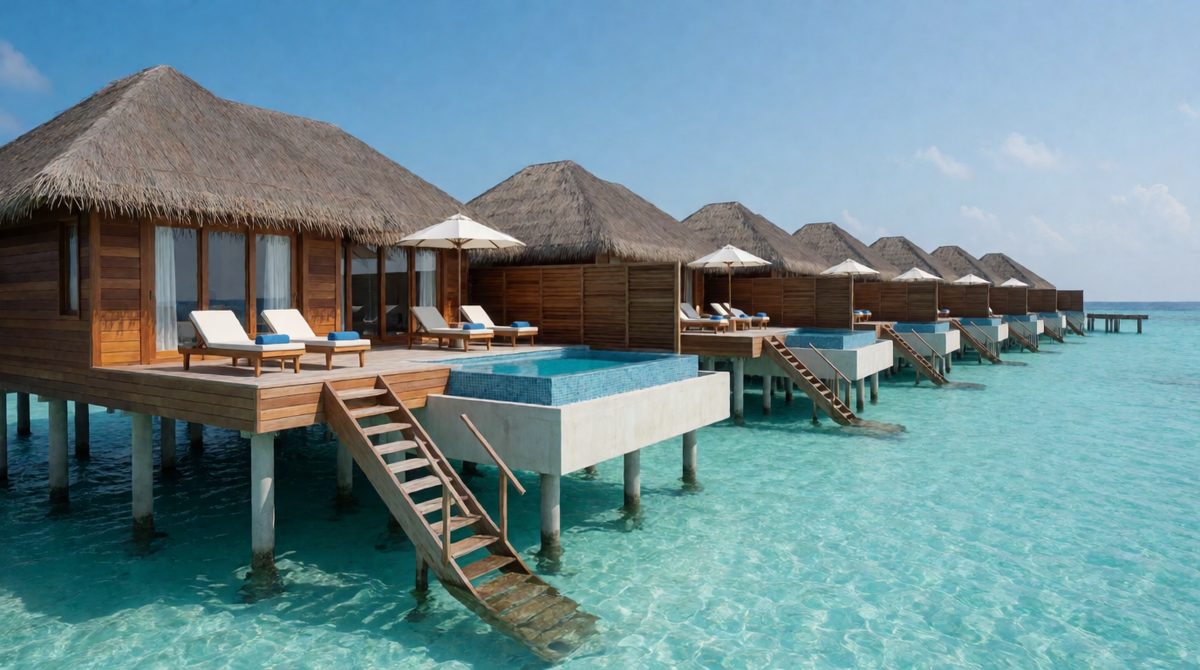
The Maldives developed tourism around its islands
🏈 The Maldives: Paradise Built on Physical Geography
The Maldives is a chain of 1,200 coral islands in the Indian Ocean. Its tourism industry is almost entirely built on its physical environment crystal-clear warm water, white sand beaches, coral reefs and year-round sunshine.
✅ Enabling Factors
☀️ Climate
Warm tropical climate (27–30°C) year-round. Two seasons: dry (November–April) and wet (May–October). The dry season is the peak tourism period, attracting sun-seekers from Europe and Asia.
🌊 Marine Environment
Over 1,000 species of fish and 200 coral species. World-class diving and snorkelling. The natural marine environment is the core product that tourists pay premium prices for.
💵 Economic Model
The government developed a "one island, one resort" model each resort occupies its own island. This keeps tourism controlled, exclusive and high-value. Average spend per tourist is among the highest in the world.
❌ Constraining Factors
- Climate change: Rising sea levels threaten to submerge low-lying islands. The average elevation is just 1.5 metres above sea level making the Maldives one of the most climate-vulnerable countries on Earth.
- Coral bleaching: Warmer ocean temperatures cause coral bleaching, damaging the very resource that tourists come to see.
- Over-dependence: Tourism accounts for over 60% of GDP. Any global crisis (like COVID-19) devastates the economy.
- Accessibility: Remote location means long-haul flights, which limits the market and increases the carbon footprint of each visitor.
🔍 Case Study 2: Nepal ⛰️ When Factors Conflict
⛰️ Nepal: The World's Roof Opportunity and Challenge
Nepal is home to eight of the world's ten highest mountains, including Everest. It has extraordinary potential for adventure tourism, trekking and cultural tourism. Yet its development has been uneven and complicated by competing factors.
✅ Enabling Factors
- Unique physical landscape: The Himalayas are a once-in-a-lifetime destination for trekkers and climbers worldwide.
- Cultural heritage: Kathmandu Valley contains seven UNESCO World Heritage Sites, including ancient temples and palaces.
- Affordability: Nepal is a low-cost destination, making it accessible to backpackers and budget travellers from Europe, North America and Asia.
- Government support: "Visit Nepal" campaigns have been run repeatedly, with the government investing in tourism promotion.
❌ Constraining Factors
- Poor infrastructure: Roads outside Kathmandu are often poor or impassable in monsoon season. Many trekking routes rely on basic teahouses rather than formal accommodation.
- Natural hazards: The 2015 earthquake killed nearly 9,000 people, destroyed heritage sites and caused tourist numbers to collapse from 790,000 in 2014 to 539,000 in 2015.
- Political instability: Nepal experienced years of civil conflict (1996–2006) and political uncertainty, which deterred investment and tourists.
- Environmental pressure: The Everest Base Camp trail generates enormous amounts of waste. In 2019, a clean-up expedition removed over 11 tonnes of rubbish from the mountain.
- Seasonality: Trekking is concentrated in spring (March–May) and autumn (September–November), creating intense pressure on trails and facilities during peak periods.
💡 Analysis Point: Interacting Factors
Nepal shows how factors interact. The physical landscape is a huge opportunity, but poor infrastructure (economic factor) limits how many tourists can access it comfortably. Political instability (political factor) has repeatedly undermined investment. Natural hazards (physical factor) can undo years of development in days. This is exactly the kind of multi-factor analysis that earns top marks.
🔍 Case Study 3: Cuba 🏴 Political Factors Dominating Development
🏴 Cuba: Politics Shapes Everything
Cuba is a fascinating case study because its tourism development has been almost entirely shaped by political factors rather than physical or economic ones. The island has beautiful beaches, warm climate, vibrant culture and colonial architecture all the ingredients for a thriving tourism industry. Yet for decades, political decisions kept it largely isolated from global tourism.
🚫 The US Embargo
Since 1962, the USA has maintained a trade embargo against Cuba. For decades, American tourists were banned from visiting. Since the USA is the world's largest source of outbound tourists and Cuba is just 145 km from Florida, this was a massive constraint on development. Without American visitors, Cuba missed out on billions of dollars of potential tourism revenue.
✅ The 2015 Thaw and Its Effects
When President Obama began normalising US-Cuba relations in 2015, tourist numbers surged. American visitors increased by over 70% in 2016. Hotels, airlines and tour operators rushed to invest. However, when the Trump administration reversed many of these changes after 2017, growth stalled again demonstrating how quickly political decisions can alter tourism development.
📈 Cuba's Tourism Numbers: A Political Story
- 2015: 3.5 million tourists relations begin to improve
- 2016: 4 million tourists surge following US-Cuba détente
- 2019: Numbers fall as US tightens restrictions again
- 2020–2021: COVID-19 causes near-total collapse
Cuba's story shows that political stability and international relations can be more powerful than any physical advantage in determining whether tourism develops.
🔍 Case Study 4: Botswana 🐘 A Deliberate Development Strategy
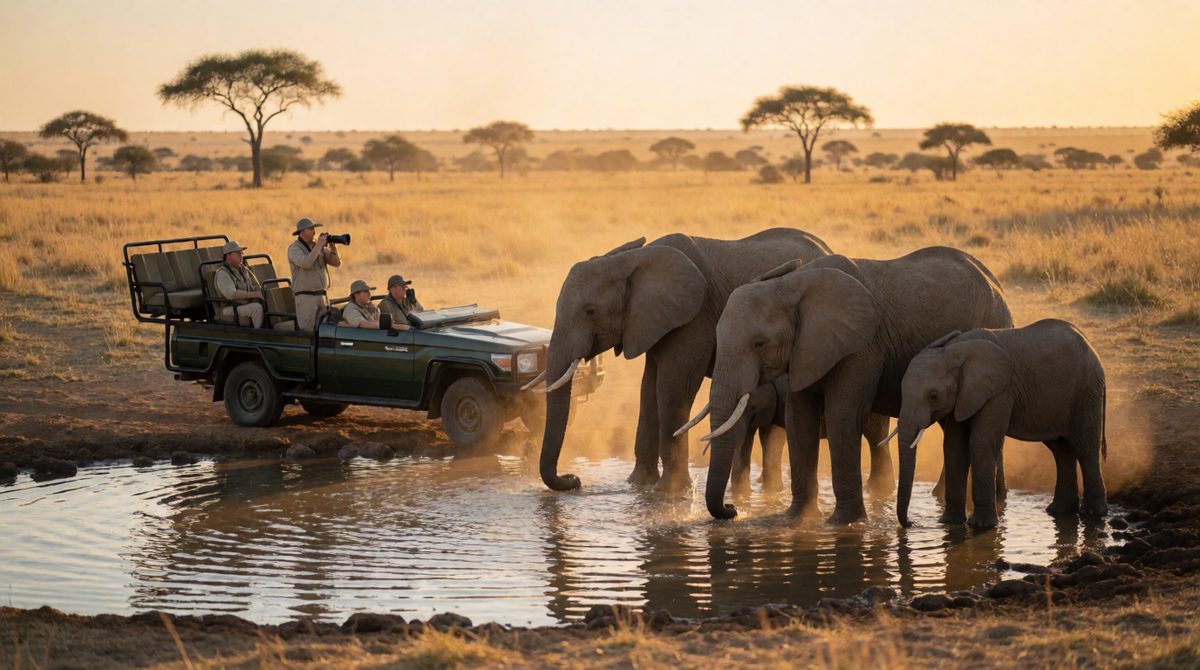
Safari in Botswana - a deliberate strategy of low-volume, high-value tourism protects wildlife while earning income
🐘 Botswana: Quality Over Quantity
Botswana has made a deliberate political and economic choice: attract fewer, higher-spending tourists rather than mass tourism. This strategy is designed to protect the environment while maximising economic benefit.
✅ How Botswana's Strategy Works
- High fees, low numbers: Safari permits and park fees are deliberately expensive. The Okavango Delta a UNESCO World Heritage Site and one of Africa's most spectacular wildlife areas limits visitor numbers strictly.
- Exclusive lodges: Accommodation is limited to small, high-end eco-lodges. A single night can cost $1,000 or more but this generates more revenue per tourist than mass tourism would.
- Community involvement: Local San Bushmen communities are involved in tourism through community-based tourism projects, ensuring that revenue stays in local hands.
- Government stability: Botswana is one of Africa's most politically stable democracies, which encourages foreign investment in tourism infrastructure.
❌ Challenges
- High costs exclude most African tourists and many international visitors, raising questions about equity.
- Dependence on a small number of very wealthy tourists makes the industry vulnerable to global economic downturns.
- Climate change threatens the Okavango Delta's water supply, which could undermine the entire tourism product.
📈 Comparing Destinations: A Framework for Analysis
When the exam asks you to compare how factors affect tourism development in different places, use this framework to structure your thinking:
🔍 Identify
Name the specific factor. Don't just say "the environment" say "the tropical marine environment with coral reefs and warm water temperatures."
📈 Explain
Explain how this factor affects development. Does it attract tourists? Does it enable investment? Does it create a barrier?
⚖️ Evaluate
How significant is this factor compared to others? Is it the main reason for success or struggle, or just one of several? Are there tensions between factors?
⚖️ How Factors Interact: The Big Picture
The most important skill in this topic is understanding that factors don't work alone. Here are some key interactions to understand:
- Physical + Political: A beautiful landscape means nothing if the government is unstable or hostile to tourists. Zimbabwe has spectacular Victoria Falls but political instability and economic crisis reduced tourist numbers dramatically in the 2000s.
- Economic + Physical: Investment in infrastructure can unlock physical attractions that were previously inaccessible. China's investment in high-speed rail has opened up inland natural attractions to domestic tourists.
- Social + Economic: Local community attitudes to tourism affect the quality of the visitor experience. If locals feel exploited or excluded from tourism benefits, this can create tension that deters future visitors.
- Technological + All others: Social media and online booking have amplified the impact of all other factors. A destination's natural beauty, cultural heritage or political stability can now reach a global audience instantly.
💡 Exam Tip: The "So What?" Test
After every point you make in an exam answer, ask yourself: "So what? Why does this matter for tourism development?" If you can answer that question, you're analysing. If you can't, you're just describing. For example: "Nepal has the Himalayas [fact] so what? this attracts adventure tourists and trekkers from around the world, generating significant income for local communities and the national economy [analysis]."
📚 Summary: Analysing Factors Affecting Development
✅ Key Enabling Factors
- Attractive physical environment (climate, landscape, wildlife)
- Political stability and supportive government policy
- Good transport infrastructure and accessibility
- Investment in accommodation and facilities
- Strong cultural heritage and unique attractions
- Positive international image and marketing
- Technology enabling online booking and promotion
❌ Key Constraining Factors
- Political instability, conflict or restrictive government
- Poor infrastructure and limited accessibility
- Natural hazards (earthquakes, floods, extreme weather)
- Environmental fragility and over-development
- Health risks and disease outbreaks
- Negative perceptions and poor international image
- Economic instability or high costs for visitors
🌟 Exam Tips
- Use named examples: Always name specific destinations, not just "a country in Africa." Examiners reward precision.
- Show interactions: The best answers explain how two or more factors work together or against each other.
- Use data where you can: Specific figures (tourist numbers, percentages, dates) make your analysis much more convincing.
- Don't just list: For higher marks, you need to explain and evaluate, not just identify factors.
- Consider both sides: Most destinations have both enabling and constraining factors. Acknowledging both shows sophisticated thinking.
- Link to the question: Always bring your analysis back to the specific question being asked don't just write everything you know.