🌍 Climate Change and Tourism: Why It Matters
Climate change is one of the biggest threats facing the planet and tourism is both a cause and a victim of it. Flights, cruise ships, hotels and tourist activities all pump greenhouse gases into the atmosphere. At the same time, rising sea levels, extreme weather and melting glaciers are destroying the very destinations that tourists love to visit.
The good news? Education programmes are one of the most powerful tools we have to change behaviour and they don't require new laws or huge budgets to get started.
Key Definitions:
- Climate change: Long-term shifts in global temperatures and weather patterns, largely caused by human activity such as burning fossil fuels.
- Carbon footprint: The total amount of greenhouse gases (especially CO₂) produced by a person, business or activity.
- Education programme: A planned effort to inform and change the attitudes or behaviour of a target group in this case, tourists, staff or local communities.
- Carbon literacy: Understanding how everyday choices contribute to carbon emissions and knowing how to reduce them.
📸 Did You Know?
Tourism accounts for around 8% of global greenhouse gas emissions when you include flights, accommodation, food and activities. Aviation alone makes up about 2.5% of global CO₂ emissions but its warming effect at altitude means its actual climate impact is much higher.
🏫 What Are Education Programmes?
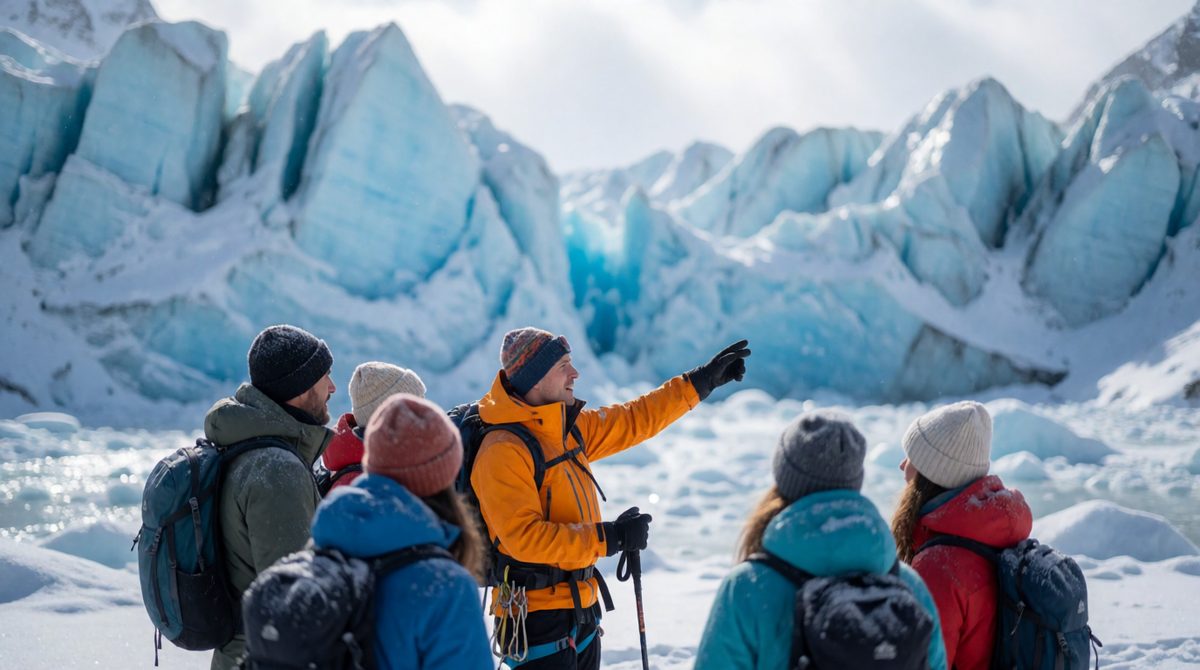
Education helps tourists understand climate change
An education programme in tourism is any organised effort to teach people tourists, workers, businesses or local residents about the environmental impact of tourism and how to reduce it. They can be delivered in many ways: leaflets, apps, guided tours, school visits, staff training, signage, or social media campaigns.
The goal is simple: change behaviour by changing knowledge and attitudes. If people understand why something matters, they are far more likely to act differently.
🌟 Who Are They Aimed At?
Education programmes can target tourists (before, during or after their trip), tourism businesses (hotels, tour operators, airlines), local communities (residents who live in tourist destinations) and young people through schools and youth groups. Each group needs a different approach and message.
📈 Why Education Works
Unlike laws or taxes, education programmes empower people to make their own choices. When tourists genuinely understand the impact of their behaviour like leaving lights on, taking long showers, or buying single-use plastic they are more likely to change. It builds long-term habits rather than just forcing short-term compliance.
⚡ Tourism's Contribution to Climate Change
Before we look at how education helps, it's important to understand exactly what tourism does to the climate. This gives education programmes their focus and urgency.
🚫 The Main Sources of Tourism Emissions
✈ Aviation
Flying is the single biggest contributor to a tourist's carbon footprint. A return flight from London to New York produces roughly 1.7 tonnes of CO₂ per passenger more than many people in developing countries produce in an entire year.
🚢 Cruise Ships
Large cruise ships burn heavy fuel oil, one of the dirtiest fuels available. A single large cruise ship can emit as much air pollution as one million cars in a day. Passengers often don't realise this.
🏠 Hotels and Resorts
Heating, cooling, lighting and laundry in hotels use enormous amounts of energy. Many tourists use far more energy on holiday than they would at home leaving air conditioning on all day, requesting fresh towels daily and taking long hot showers.
🏭 Case Study: The Travel Foundation Tourist Education in Practice
The Travel Foundation is a UK-based charity that works with tour operators to make tourism more sustainable. One of their key projects involved working with Thomson (now TUI) to educate holidaymakers travelling to destinations like Cyprus and Turkey.
Tourists were given pre-departure information about the environmental challenges facing their destination including water shortages and energy use. On arrival, in-resort guides explained local issues and encouraged tourists to take shorter showers, reuse towels and buy locally produced food.
Results: Surveys showed that tourists who received this information were significantly more likely to change their behaviour during their stay. Many said they had not previously considered the impact of their holiday choices. This shows that well-timed, relevant education genuinely changes behaviour.
🌿 Types of Climate Education Programmes in Tourism
There is no single way to run an education programme. The best ones are creative, targeted and delivered at the right moment. Here are the main types used in tourism destinations around the world.
📱 Pre-Trip Education
This is education delivered before the tourist even leaves home. It might come from a tour operator's website, a booking confirmation email, or a social media campaign. The idea is to set expectations and encourage tourists to pack lightly, choose direct flights, offset their carbon, or research sustainable options at their destination.
For example, Intrepid Travel one of the world's largest adventure travel companies includes detailed carbon footprint information for every tour on their website. Tourists can see exactly how much CO₂ their trip will produce and are encouraged to offset it through verified schemes.
📍 On-Site Interpretation and Signage
Once tourists arrive at a destination, interpretation panels, guided tours and visitor centres can explain the environmental significance of what they are seeing. This is especially powerful in natural environments like national parks, coral reefs and glaciers where tourists can see the effects of climate change with their own eyes.
🏭 Case Study: Franz Josef Glacier, New Zealand Seeing Climate Change First-Hand
The Franz Josef Glacier in New Zealand has retreated dramatically due to climate change losing over 3 kilometres in length since 1900. What was once a popular walk-on glacier experience is now only accessible by helicopter due to the ice melting so rapidly.
The local visitor centre now uses this as a powerful education tool. Photographs from the 1900s, 1950s and today are displayed side by side, showing tourists the dramatic retreat of the ice. Information panels explain the link between global carbon emissions and glacier melt. Guided tours include a discussion of what tourists themselves can do to slow climate change.
Why it works: Tourists are emotionally affected by what they see. Watching a glacier disappear in real time is far more powerful than reading a statistic. This emotional connection makes the education memorable and motivating.
🏫 Staff Training Programmes
Tourism workers hotel staff, tour guides, airline crew interact with thousands of tourists every year. If they are trained to talk about sustainability and climate change, they become powerful ambassadors for change. Staff training programmes teach employees how to explain environmental issues to guests in a friendly, non-preachy way and how to model sustainable behaviour themselves.
The Green Tourism Business Scheme in the UK requires participating businesses to train their staff in environmental awareness as part of their certification. This ensures that sustainability messaging is consistent and genuine across the whole business.
🏭 School and Youth Programmes
Many destinations run education programmes aimed at local school children. This is a long-term strategy today's children are tomorrow's tourists, workers and decision-makers. In Kenya, the Wildlife Clubs of Kenya educate young people about the importance of wildlife conservation and the threats posed by climate change to ecosystems like the Maasai Mara. By building environmental values early, these programmes create a generation that naturally makes more sustainable choices.
📱 Digital and Social Media Campaigns
Modern education programmes increasingly use apps, social media and online platforms to reach tourists. The UNWTO (United Nations World Tourism Organisation) runs global campaigns like #TravelTomorrow, encouraging tourists to think about the long-term impact of their choices. These campaigns use short videos, infographics and influencer partnerships to make sustainability messages engaging and shareable especially for younger audiences.
🏭 Case Study: Great Barrier Reef Marine Park Authority Eye on the Reef
The Great Barrier Reef Marine Park Authority (GBRMPA) in Australia runs one of the world's most impressive tourism education programmes. The "Eye on the Reef" programme trains tourists, divers and snorkellers to become citizen scientists recording what they see on the reef using a standardised app.
Tourists are briefed before entering the water about coral bleaching, climate change and how their behaviour affects the reef. They learn not to touch coral, not to use certain sunscreens (which damage coral) and how rising sea temperatures cause bleaching. By involving tourists directly in data collection, the programme creates a sense of personal responsibility and ownership.
Impact: Over 100,000 surveys have been submitted by citizen scientists. Tourists report feeling more connected to the reef and more motivated to reduce their carbon footprint after participating. The programme also generates valuable scientific data that helps managers protect the reef.
⚖ Strengths and Weaknesses of Education Programmes
Education programmes are popular but they are not perfect. It's important to evaluate them honestly for your exam.
✅ Strengths
💪 Long-Term Change
Education changes attitudes and values, not just behaviour. A tourist who truly understands climate change will make better choices on every future trip not just the one where they received the education.
💰 Cost-Effective
Compared to building new infrastructure or enforcing complex regulations, education programmes can be relatively cheap to run. A well-designed leaflet or app can reach thousands of tourists at minimal cost.
👥 Builds Community
Education programmes that involve local communities help build pride and ownership over the local environment. When residents understand why their ecosystem matters, they are more likely to protect it themselves.
⚠ Weaknesses
😐 Not Always Effective
Knowing something is bad doesn't always stop people doing it. Many tourists understand that flying damages the climate but still choose to fly. This gap between knowledge and action is called the "value-action gap."
🕑 Takes Time
Education programmes produce slow results. Changing cultural attitudes and habits takes years or even decades. Meanwhile, climate change is happening right now and needs urgent action.
🚫 Hard to Measure
It is difficult to prove that an education programme actually caused a change in behaviour. Tourists might say they will change, but follow-up evidence is hard to collect, especially once they return home.
📋 Exam Tip
In the exam, you may be asked to evaluate education programmes as a strategy for managing destinations sustainably. Always give both sides strengths AND weaknesses. Use specific case studies (like the Great Barrier Reef or Franz Josef Glacier) to support your points. The best answers will also compare education programmes to other strategies like laws, taxes or visitor caps, explaining why a combination of approaches is usually most effective.
🌎 The Role of International Organisations
Education programmes don't just happen at individual destinations. International organisations play a huge role in setting the agenda, providing funding and sharing best practice around the world.
- UNWTO (United Nations World Tourism Organisation): Promotes sustainable tourism globally and runs awareness campaigns encouraging responsible travel behaviour.
- UNESCO: Manages World Heritage Sites and provides education resources to help tourists understand the significance and fragility of these places.
- WWF (World Wildlife Fund): Partners with tourism businesses to run education campaigns about biodiversity loss and climate change in key destinations.
- UNEP (United Nations Environment Programme): Works with governments and tourism industries to develop education frameworks for sustainable tourism.
🏭 Case Study: Iceland Educating Tourists About Responsible Travel
Iceland experienced a tourism boom in the 2010s, with visitor numbers rising from 500,000 in 2010 to over 2 million by 2018. This rapid growth put enormous pressure on fragile landscapes, including glaciers, geysers and volcanic fields all of which are directly threatened by climate change.
The Icelandic government and tourism industry responded with the "Inspired by Iceland" and later the "Pledge to Iceland" campaigns. Tourists were asked to sign a pledge promising to respect nature, stick to marked paths, not disturb wildlife and reduce their waste. The campaign was delivered through social media, airport signage, hotel check-in materials and guided tour briefings.
Guides were specifically trained to explain the link between climate change and the melting of Iceland's glaciers making the issue personal and visible. Tourists standing on a glacier that may disappear within their lifetime found this message deeply impactful.
Outcome: The campaign was widely praised for raising awareness and reducing incidents of tourists going off-trail or damaging fragile ecosystems. It showed that education combined with an emotional pledge can be more powerful than rules alone.
🌟 Putting It All Together
Education programmes are not a silver bullet they work best as part of a wider strategy that also includes regulation, economic incentives and community involvement. But they are a vital piece of the puzzle. When tourists, workers and communities genuinely understand the link between their choices and climate change, sustainable behaviour becomes the norm rather than the exception.
📋 Summary: Combating Climate Change Through Education Programmes
- Tourism contributes around 8% of global greenhouse gas emissions, with aviation being the biggest single source.
- Education programmes aim to change the knowledge, attitudes and behaviour of tourists, workers and communities.
- They can be delivered before, during or after a trip through leaflets, apps, guided tours, signage, staff training and social media.
- Case studies include the Great Barrier Reef (citizen science), Franz Josef Glacier (visual impact), Iceland (pledge campaigns) and the Travel Foundation (pre-departure education).
- Strengths: Long-term attitude change, cost-effective, builds community pride.
- Weaknesses: Value-action gap, slow results, hard to measure impact.
- International organisations like the UNWTO, UNESCO and WWF play a key role in supporting and funding education programmes globally.