♻ Waste, Recycling and Tourism: The Big Picture
Every tourist generates waste. From the plastic bottle bought at the airport to the uneaten buffet breakfast at a hotel, tourism produces enormous amounts of rubbish. Globally, the tourism industry contributes hundreds of millions of tonnes of solid waste every year and in popular destinations, this can completely overwhelm local waste systems.
Managing this waste is one of the most practical and visible ways that destinations can combat climate change. When waste ends up in landfill, it produces methane a greenhouse gas far more potent than CO₂. Recycling and reducing waste cuts emissions, saves resources and keeps destinations attractive for visitors.
Key Definitions:
- Waste reduction: Using fewer resources in the first place so less rubbish is created.
- Reuse: Using items more than once instead of throwing them away after a single use.
- Recycling: Processing used materials (glass, paper, plastic, metal) so they can be made into new products.
- Landfill: A site where rubbish is buried underground. Landfill produces methane as waste breaks down.
- Circular economy: A system where materials are kept in use for as long as possible, reducing the need for new resources.
- Single-use plastic: Plastic items designed to be used once and thrown away, such as straws, bottles and cutlery.
📸 Did You Know?
A single cruise ship can generate over 8 tonnes of solid waste per day. That's the same as the rubbish produced by a small town all from one vessel at sea. Managing this waste responsibly is a massive challenge for the cruise industry.
🚫 Why Tourism Creates So Much Waste
Tourists tend to consume more than they would at home. They eat out more, buy more souvenirs, use more toiletries and often stay in hotels that provide single-use items like shampoo bottles, plastic cups and individually wrapped biscuits. Popular destinations can see their waste output multiply dramatically during peak season.
🏢 Hotels and Accommodation
Hotels are among the biggest waste producers in tourism. They generate food waste from restaurants and buffets, packaging waste from supplies and single-use plastic from toiletries and room amenities. A large resort hotel can produce several tonnes of waste every single day.
⛵ Transport and Airports
Airports and airlines generate huge quantities of waste from food packaging, plastic cutlery, duty-free bags and in-flight meals. Many airlines still serve food in single-use plastic trays, though some are beginning to switch to compostable alternatives.
🏞 Attractions and Events
Theme parks, festivals and tourist attractions generate large amounts of waste from food stalls, gift shops and visitor facilities. A single music festival can leave behind hundreds of tonnes of rubbish, including abandoned tents, clothing and food packaging.
🏖 Coastal and Natural Areas
Beaches, national parks and natural attractions suffer from litter left by visitors. Plastic waste in particular is devastating for marine and wildlife ecosystems. Even biodegradable items like food scraps can disrupt local wildlife if left in the wrong places.
♿ The Three Rs in Tourism: Reduce, Reuse, Recycle
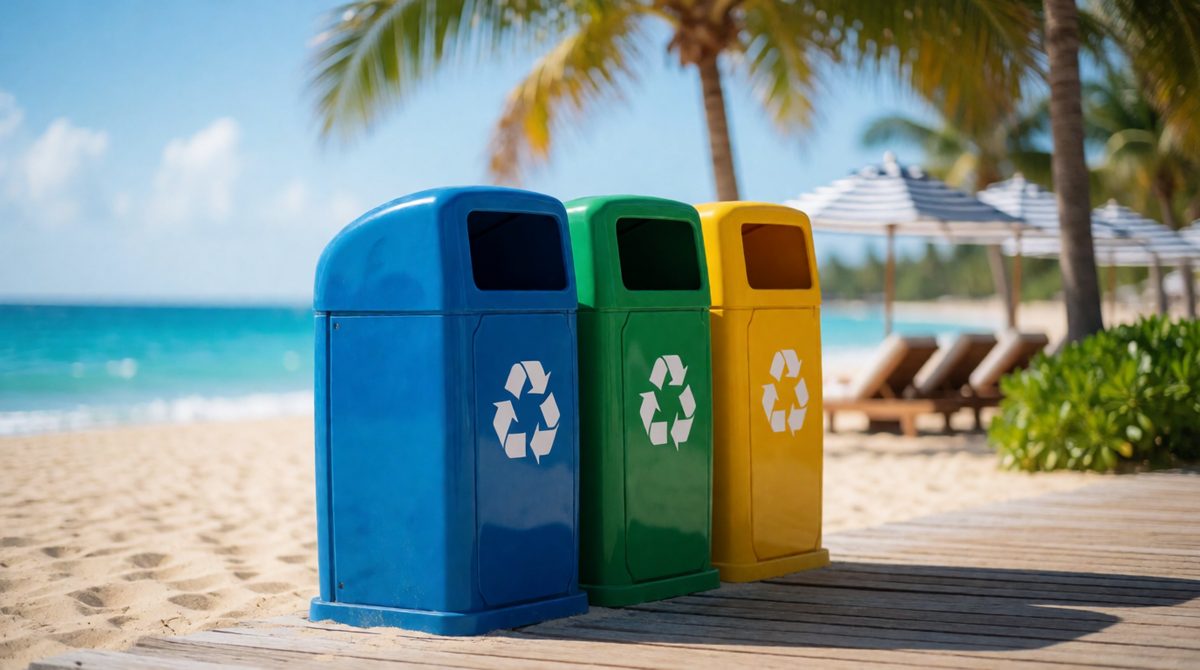
Destinations work to reduce tourism waste
The most effective approach to waste management follows a clear priority order often called the waste hierarchy. The best option is always to create less waste in the first place. If waste is unavoidable, reuse is better than recycling. Recycling is better than sending things to landfill.
🚫 The Waste Hierarchy
⬆ 1. Reduce
The most powerful option. Use fewer resources from the start. Examples: removing miniature plastic toiletry bottles from hotel rooms, serving food in smaller portions to cut food waste, using digital tickets instead of paper ones.
🔄 2. Reuse
Use items multiple times before disposal. Examples: refillable water stations in hotels, reusable shopping bags in gift shops, returnable glass bottles in resort restaurants, linen reuse programmes in hotels.
♻ 3. Recycle
Process used materials into new products. Examples: glass bottle collection at resorts, paper recycling in hotel offices, aluminium can recycling at attractions. Recycling is better than landfill but uses energy, so it's the last resort.
🏭 Case Study: Scandic Hotels, Scandinavia Leading the Way in Hotel Waste Reduction
Where: Sweden, Norway, Denmark and Finland
What they did: Scandic Hotels is one of Europe's most sustainable hotel chains. They removed all single-use plastic from their rooms and restaurants, replacing miniature shampoo bottles with large refillable dispensers. They introduced food waste tracking technology in all their restaurants to measure exactly how much food was being thrown away and then used that data to reduce portion sizes and adjust ordering. By 2022, Scandic had cut food waste by over 30% across their hotels.
Other measures: Guests are encouraged to reuse towels and bed linen. Soap bars are collected and recycled into new soap through a partnership with a charity. Cardboard, glass and food waste are all separated for recycling or composting.
Result: Scandic has become a benchmark for sustainable hotel management in Europe, showing that reducing waste also saves money a win for the environment and the business.
🌿 Strategies Used by Destinations to Manage Waste
Destinations use a wide range of strategies to tackle waste. These can be split into approaches aimed at businesses, tourists and governments.
🏭 Strategies for Businesses
Hotels, restaurants and attractions can take direct action to reduce the waste they produce and manage it more responsibly.
- Removing single-use plastics: Replacing plastic straws, cups and cutlery with paper, bamboo or metal alternatives.
- Bulk dispensers: Using refillable soap and shampoo dispensers instead of individual plastic bottles.
- Food waste programmes: Donating surplus food to local charities, composting kitchen waste, or using food waste tracking apps.
- Supplier agreements: Choosing suppliers who use minimal packaging or who take back packaging for reuse.
- Staff training: Teaching staff how to sort waste correctly and reduce unnecessary waste in daily operations.
🏭 Case Study: Soneva Fushi, Maldives Zero Waste to Landfill
Where: Baa Atoll, Maldives
The challenge: The Maldives is a remote island nation with very limited space for waste disposal. Sending waste to landfill on a small island is catastrophic for the environment and the Maldives is already highly vulnerable to climate change and rising sea levels.
What Soneva Fushi did: This luxury eco-resort built its own on-site waste management facility called "Mr Trash Wheel" a waste-to-resource centre. All waste produced by the resort is sorted, recycled or repurposed on site. Glass bottles are crushed and turned into sand for construction. Organic waste is composted and used in the resort's own vegetable garden. Metal is collected and sent to recycling facilities on the mainland.
Single-use plastics: Soneva Fushi banned all single-use plastics across the resort. Guests are given reusable water bottles on arrival and all packaging used in the resort is either biodegradable or recyclable.
Result: The resort diverts over 90% of its waste away from landfill. It has become a model for sustainable resort management in small island destinations worldwide.
📋 Government and Destination-Level Strategies
Individual businesses can only do so much. Governments and destination management organisations (DMOs) play a crucial role in setting rules, providing infrastructure and encouraging good behaviour across the whole destination.
📋 Legislation and Bans
Governments can ban single-use plastics outright, making it illegal to sell or use them. The EU banned many single-use plastic items in 2021, including plates, cutlery, straws and cotton buds. This directly affects tourism businesses operating in Europe.
💰 Deposit Return Schemes
Tourists pay a small deposit on drinks bottles or cans and get it back when they return the container for recycling. This dramatically increases recycling rates. Germany's system (called Pfand) achieves a 98% return rate for bottles one of the highest in the world.
🏭 Case Study: Rwanda Africa's Plastic Bag Ban
Where: Rwanda, East Africa
What happened: In 2008, Rwanda became one of the first countries in the world to completely ban plastic bags. Visitors arriving at Kigali International Airport have their bags searched and any plastic bags are confiscated. The ban applies to everyone tourists and residents alike.
Why it matters for tourism: Rwanda is a major ecotourism destination, famous for mountain gorilla trekking in Volcanoes National Park. Keeping the country clean and green is essential for maintaining its reputation as a premium, sustainable destination. Tourists visiting Rwanda are immediately struck by how clean and litter-free the country is compared to many other destinations.
Result: Rwanda is now widely regarded as one of the cleanest countries in Africa. The plastic bag ban has been credited with significantly reducing litter and plastic pollution in rivers, lakes and natural areas. It has become a model for other African nations.
⚖ Strengths and Weaknesses of Waste Management Strategies
✅ Strengths
Reducing waste cuts costs for businesses. Recycling conserves natural resources. Bans on single-use plastics produce immediate, measurable results. Waste reduction improves the visual appeal of destinations, maintaining tourist satisfaction.
⚠ Weaknesses
Setting up recycling infrastructure is expensive, especially in remote or island destinations. Tourists may not follow waste rules if they are not clearly explained. Some recycling processes still use significant energy. Enforcement of bans can be difficult in large or busy destinations.
📈 Conflicts
Businesses may resist changes if they increase costs. Local communities may lack the infrastructure to handle tourist-generated waste. In developing countries, waste management systems may be underfunded, making sustainable tourism harder to achieve.
📷 How Tourists Can Help
Sustainable waste management isn't just the responsibility of businesses and governments tourists themselves have a key role to play. Responsible tourist behaviour can make a significant difference, especially in fragile or remote destinations.
- Carry a reusable water bottle and refuse single-use plastic bottles.
- Use refill stations where available rather than buying new bottles.
- Sort waste correctly using the recycling bins provided at accommodation and attractions.
- Avoid buying over-packaged souvenirs or products.
- Participate in beach or trail clean-up activities offered by local organisations.
- Choose accommodation and tour operators with recognised sustainability certifications.
🏭 Case Study: Glastonbury Festival, UK Tackling Festival Waste
Where: Somerset, England
The challenge: Glastonbury is one of the world's most famous music festivals, attracting around 200,000 visitors each year. In the past, the festival generated enormous amounts of waste including thousands of abandoned tents, sleeping bags and single-use cups left behind by departing festival-goers.
What they did: Glastonbury introduced a reusable cup scheme visitors pay a deposit on a reusable cup and get it back when they return it. This dramatically cut the number of plastic cups going to landfill. The festival also banned single-use plastic bottles in 2019, installing hundreds of free water refill points across the site. Volunteers run a Love the Farm, Leave No Trace campaign, encouraging visitors to take their rubbish home or use the recycling stations provided.
Result: The reusable cup scheme alone prevented an estimated 1.3 million plastic cups from going to landfill in a single year. Glastonbury has become a leader in sustainable event management and is frequently cited as an example of how large events can reduce their environmental impact.
📋 Exam Tip
📋 How to Answer Waste Management Questions
In the exam, you may be asked to evaluate strategies for managing waste sustainably. Always try to:
- Name a specific strategy (e.g. deposit return scheme, single-use plastic ban, food waste tracking).
- Give a real example from a named destination or organisation.
- Explain why it works what environmental benefit does it have?
- Consider limitations is it expensive? Hard to enforce? Does it depend on tourist cooperation?
- Use the correct terminology: reduce, reuse, recycle, circular economy, landfill, single-use plastic.
🌟 Putting It All Together
Managing waste sustainably is one of the most practical and visible ways that tourism destinations can combat climate change. From luxury eco-resorts in the Maldives to music festivals in Somerset, the most successful approaches combine reducing waste at source, encouraging reuse and making recycling easy and accessible. When businesses, governments and tourists all play their part, the results can be dramatic cleaner destinations, lower emissions and a tourism industry that future generations can still enjoy.
📋 Summary: Combating Climate Change Through Recycling, Reuse and Reducing Waste
- Tourism generates huge amounts of waste, from hotels, transport, attractions and visitors themselves.
- The waste hierarchy prioritises: Reduce → Reuse → Recycle in that order.
- Landfill produces methane, a powerful greenhouse gas diverting waste from landfill directly combats climate change.
- Hotels like Scandic and resorts like Soneva Fushi show that waste reduction is achievable and profitable.
- Government action such as Rwanda's plastic bag ban and the EU's single-use plastic directive can create large-scale change quickly.
- Deposit return schemes, food waste tracking, refillable dispensers and reusable cup schemes are all effective tools.
- Tourists have a personal responsibility to reduce, reuse and recycle when travelling.
- Challenges include cost, enforcement, infrastructure gaps and tourist behaviour.