🏠 What Does "Empowering Communities" Actually Mean?
When we talk about empowering local and indigenous communities in tourism, we mean giving people real power not just a token role. It means local people have a genuine say in how tourism develops in their area, they benefit financially from it and their culture and way of life is respected rather than exploited.
Too often in the past, tourism was developed around communities rather than with them. Big hotel chains moved in, profits left the country and local people ended up working low-paid jobs in resorts built on their ancestral land. That model is increasingly seen as unsustainable and unfair.
Key Definitions:
- Community Empowerment: Giving local people the tools, rights and resources to make decisions about tourism in their area.
- Indigenous Communities: Groups of people who are the original inhabitants of a region and have a distinct cultural identity, language and connection to the land.
- Community-Based Tourism (CBT): A form of tourism where local communities are directly involved in planning, managing and benefiting from tourism activities.
- Economic Leakage: When money spent by tourists leaves the local area and flows to foreign-owned businesses instead of staying in the community.
- Cultural Commodification: When a community's culture is turned into a product to be sold to tourists, often losing its meaning in the process.
📸 Did You Know?
The United Nations World Tourism Organisation (UNWTO) estimates that in some developing countries, up to 80% of tourist spending leaks out of the local economy to foreign-owned businesses. Community-based tourism aims to reverse this by keeping money local.
⚖ Top-Down vs. Bottom-Up Tourism Development
There are two very different ways tourism can be developed in a destination. Understanding the difference is key to this topic.
📈 Top-Down Development
Decisions are made by governments, large corporations or international investors. Local people have little or no say. Profits often flow outward. Communities may be displaced or marginalised. Examples include large all-inclusive resorts in the Caribbean or mass tourism developments in Southeast Asia.
🏠 Bottom-Up Development
Communities lead the planning and management of tourism. Local people decide what type of tourism happens, how many visitors come and how profits are shared. This approach respects local culture and is more likely to be sustainable long-term.
🌿 Why Empowering Communities Matters for Sustainability
Sustainable tourism isn't just about protecting nature it's about people too. The three pillars of sustainability are environmental, economic and social. Community empowerment sits at the heart of the social and economic pillars.
👪 The Three Pillars and Community Empowerment
🌿 Environmental
Local communities often have the deepest knowledge of their local environment. When empowered, they become its best protectors managing land use, wildlife and natural resources sustainably.
💰 Economic
When communities control tourism businesses, money stays local. This reduces leakage, creates real jobs and funds local services like schools and healthcare.
🎓 Social
Empowered communities maintain their cultural identity. They decide what to share with tourists and what to keep private. This prevents exploitation and preserves traditions for future generations.
📍 Forms of Community Empowerment in Tourism
Empowerment doesn't look the same everywhere. It can take many different forms depending on the community, the destination and the type of tourism involved.
- Ownership of tourism businesses: Communities own and run lodges, tour companies, craft markets and guiding services.
- Land rights: Communities have legal ownership or management rights over the land used for tourism.
- Decision-making power: Local people sit on tourism planning boards and have a vote on what developments are allowed.
- Revenue sharing: A percentage of park entry fees or tourism taxes is paid directly to local communities.
- Cultural control: Communities decide how their traditions, ceremonies and sacred sites are presented to tourists.
- Capacity building: Training programmes help local people develop skills in hospitality, guiding, business management and conservation.
🏭 Case Study: Maasai Mara, Kenya Community Conservancies
Location: Narok County, Kenya
Background: The Maasai people have lived alongside wildlife in the Mara ecosystem for centuries. As safari tourism boomed, large private game reserves were developed but Maasai communities often received little benefit while their grazing land was fenced off.
What Changed: Community conservancies were established, where Maasai landowners lease their land to form wildlife corridors and receive a direct income per acre per month. High-end eco-lodges like Ol Kinyei Conservancy are built on Maasai land and operated in partnership with the community.
Benefits:
- Maasai families receive regular income from land leases often more than they'd earn from livestock farming
- Community members are employed as guides, rangers and lodge staff
- Wildlife populations have increased because communities now have a financial reason to protect animals rather than compete with them
- Schools and clinics have been funded by tourism revenues
Evaluation: This is widely regarded as a successful model of community empowerment. However, not all Maasai benefit equally women and younger community members sometimes have less influence over how funds are distributed.
🌎 Indigenous Communities and Cultural Tourism
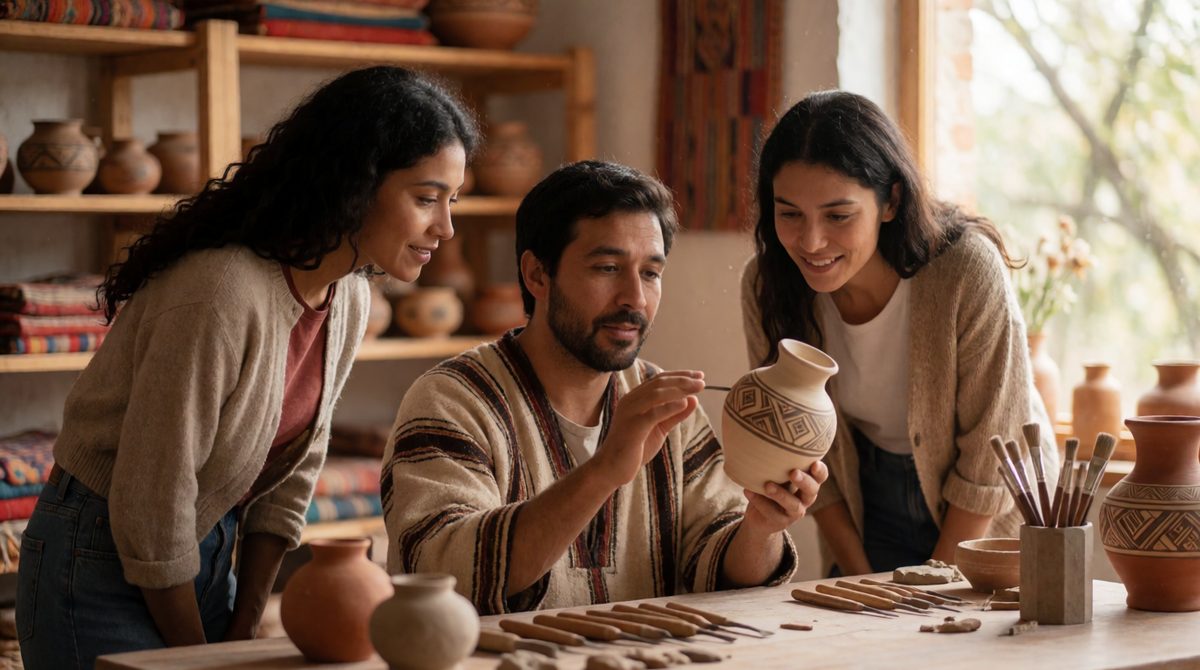
Indigenous communities can lead cultural tourism
Indigenous communities face particular challenges in tourism. Their cultures, sacred sites and traditional knowledge are often highly attractive to tourists but this can lead to exploitation if communities don't have control.
Cultural tourism can be a powerful tool for preserving indigenous identity and generating income but only when the community is in charge.
🏭 Case Study: Māori Tourism, New Zealand
Background: The Māori are the indigenous people of New Zealand (Aotearoa). Their culture including the haka, traditional carving, weaving and storytelling is a major draw for international tourists.
The Challenge: For many years, Māori culture was presented by non-Māori businesses in ways that were inaccurate or disrespectful. Sacred elements were commercialised without consent.
The Response: Māori communities have increasingly taken control of their own tourism products. Organisations like Te Puia in Rotorua are Māori-owned and operated. They offer authentic cultural experiences including traditional performances, geothermal tours and craft demonstrations with profits going back into the community and cultural preservation.
Key Principle: Māori tourism operates on the concept of kaitiakitanga guardianship and stewardship of the land and culture. Tourists are welcomed as guests, not consumers.
Outcome: Māori tourism generates over NZ$1 billion annually and supports thousands of jobs within Māori communities. Cultural pride and language preservation have also been strengthened.
🚫 The Risks of Getting It Wrong: Cultural Commodification
When tourism develops without community control, culture can become a product stripped of meaning and sold for profit. This is called cultural commodification and it's a serious concern for indigenous communities worldwide.
⚠ Signs of Cultural Commodification
- Sacred ceremonies performed as entertainment for tourists
- Traditional clothing worn for photo opportunities rather than real cultural occasions
- Mass-produced souvenirs made in factories, not by local artisans
- Cultural performances that are altered or exaggerated to appeal to tourist expectations
✅ How to Avoid It
- Communities decide which cultural elements are shared with tourists
- Tourists are educated about the meaning and significance of what they experience
- Authentic, locally made products are promoted over factory imports
- Cultural protocols are respected some things are simply not for tourists to see
🏭 Case Study: Quechua Communities, Sacred Valley, Peru
Background: The Sacred Valley near Cusco, Peru, is home to Quechua-speaking indigenous communities who are descendants of the Inca civilisation. The region attracts millions of tourists heading to Machu Picchu.
The Problem: For years, most tourist money went to Cusco-based tour operators and international hotel chains. Local Quechua villages saw little benefit despite being a key part of the tourist experience.
Community Response: Organisations like Awamaki work directly with Quechua women's weaving cooperatives. Tourists can visit villages, learn about traditional textile techniques and buy directly from the artisans. Prices are fair and the money goes straight to the weavers.
Impact: Women in the cooperatives have seen their incomes increase significantly. They have also gained confidence, business skills and a stronger sense of cultural pride. The programme has helped preserve traditional dyeing and weaving techniques that might otherwise have been lost.
Lesson: Even in heavily visited destinations, targeted community empowerment programmes can redirect tourist spending to those who need it most.
📈 Measuring the Success of Community Empowerment
How do we know if community empowerment is actually working? Exam questions often ask you to evaluate strategies so it's important to think about both the positives and the problems.
⚖ Strengths and Weaknesses of Community Empowerment Approaches
✅ Economic Strengths
- Reduces economic leakage
- Creates local jobs and businesses
- Funds community services
- Diversifies income beyond farming or fishing
✅ Social & Cultural Strengths
- Preserves cultural identity and traditions
- Builds community pride and confidence
- Gives communities a voice in their own future
- Promotes mutual respect between tourists and hosts
⚠ Weaknesses & Challenges
- Requires significant training and capacity building
- Benefits may not be shared equally within communities
- Can be undermined by powerful outside investors
- Communities may lack capital to start businesses
- Political instability can disrupt programmes
🏛 The Role of NGOs, Governments and Tour Operators
Communities rarely empower themselves in isolation. External organisations play a crucial supporting role but the key is that they support rather than control.
- NGOs (Non-Governmental Organisations): Provide training, funding and advocacy. Examples include the Rainforest Alliance and Tourism Concern.
- Governments: Can pass laws requiring revenue sharing, protecting indigenous land rights and ensuring communities have representation in planning decisions.
- Tour Operators: Responsible operators choose community-owned accommodation and tours, ensuring tourist spending reaches local people. The UNWTO has guidelines encouraging this.
- International Certification: Schemes like Travelife and Rainforest Alliance Certification reward businesses that genuinely support local communities.
🏭 Case Study: Responsible Tourism in Rajasthan, India Barefoot College
Background: Rural communities in Rajasthan, India, have traditionally had limited access to education and economic opportunities. Tourism to the region famous for its palaces, deserts and festivals was largely controlled by city-based operators.
The Initiative: The Barefoot College in Tilonia trains rural women (many of whom are illiterate) as solar engineers, craftswomen and community guides. Some villages now offer homestay tourism experiences run entirely by local women.
Impact: Women who previously had no income now earn a living, have decision-making power in their households and act as ambassadors for their culture. Tourists get a genuinely authentic experience that no large resort could replicate.
Key Takeaway: Empowerment works best when it builds on existing community strengths and gives people practical skills alongside tourism opportunities.
📋 Exam Tip
📋 How to Answer Community Empowerment Questions
In the exam, you may be asked to evaluate how well a strategy empowers local communities, or to compare community-based tourism with other approaches. Here's how to structure a strong answer:
- Define the key term (e.g. community empowerment, CBT)
- Describe the strategy clearly what does it actually involve?
- Give an example a named place or case study always earns marks
- Evaluate what are the benefits AND the limitations?
- Conclude is it effective overall? Under what conditions does it work best?
Remember: the best answers always consider more than one perspective the community, the tourist, the government and the environment.
🌟 Putting It All Together
Empowering local and indigenous communities is not just a nice idea it is a fundamental requirement of truly sustainable tourism. When communities have real power, real income and real respect, tourism becomes a force for good: protecting cultures, conserving environments and improving lives.
The case studies in this lesson from the Maasai Mara to the Māori of New Zealand, from the Quechua weavers of Peru to the rural women of Rajasthan all show the same thing: tourism works best when the people who live in a destination are its leaders, not just its backdrop.
📋 Summary: Empowering Local and Indigenous Communities
- Community empowerment means giving local people real power, income and cultural control in tourism
- Community-Based Tourism (CBT) is a key model where communities lead and benefit from tourism
- Indigenous communities face particular risks from cultural commodification if they lack control
- Economic leakage is reduced when communities own tourism businesses
- Case studies: Maasai Mara (Kenya), Māori Tourism (New Zealand), Sacred Valley (Peru), Barefoot College (India)
- NGOs, governments and responsible tour operators all play a supporting role
- Challenges include unequal benefit distribution, lack of capital and outside investor pressure
- Successful empowerment requires training, land rights, decision-making power and fair revenue sharing