🌎 Putting Theory Into Practice
You've already studied the individual tools visitor management, waste reduction, energy use, community empowerment, biodiversity protection. But how do real destinations bring all of this together into one joined-up approach? That's what this session is about.
Sustainable destination management isn't just one policy or one project. It's a whole system of decisions, plans, partnerships and trade-offs. Some destinations do it brilliantly. Others struggle. And most are somewhere in between.
Key Definitions:
- Destination Management Organisation (DMO): A body responsible for planning, promoting and managing tourism in a specific area. It might be a government agency, a public-private partnership, or a local authority.
- Integrated management plan: A single strategy that combines environmental, economic and social goals into one coordinated approach.
- Stakeholder: Anyone with an interest in how a destination is managed tourists, locals, businesses, governments, NGOs.
- Sustainability indicators: Measurable data used to track whether a destination is becoming more or less sustainable over time (e.g. carbon emissions, visitor satisfaction, local employment rates).
📸 Did You Know?
The UN World Tourism Organisation (UNWTO) has identified over 40 core indicators that destinations can use to measure sustainable tourism progress covering everything from water use per tourist to the percentage of tourism revenue kept in the local economy.
📈 What Makes a Destination "Well Managed"?
A well-managed destination doesn't just protect the environment it balances the needs of tourists, local people, businesses and the natural world at the same time. That's genuinely difficult to do. Here are the key features that experts look for:
✅ Signs of Good Management
- Clear policies backed by law or regulation
- Local communities involved in decision-making
- Tourism revenue reinvested locally
- Visitor numbers monitored and controlled
- Environmental damage tracked and reduced
- Long-term planning rather than short-term profit
⚠ Signs of Poor Management
- Overdevelopment and loss of natural character
- Local people excluded from tourism benefits
- No limits on visitor numbers
- Profit leaving the destination (leakage)
- Environmental degradation ignored
- Reactive decisions made in a crisis
🏭 Case Study: Fuerteventura, Canary Islands Biosphere Reserve Management
Fuerteventura is a Spanish island in the Atlantic Ocean, popular with European sun-seekers. It receives over 10 million tourists a year a huge number for an island of just 120,000 residents. In 2009, UNESCO designated the entire island a Biosphere Reserve, meaning it had to demonstrate a commitment to sustainable development.
🌎 What Is a Biosphere Reserve?
A UNESCO Biosphere Reserve is an internationally recognised area where people and nature are supposed to coexist sustainably. They have three zones: a core protected zone, a buffer zone and a transition zone where sustainable development is encouraged.
What Fuerteventura Has Done
🌿 Environmental
Strict building regulations prevent new hotels being built in protected dune and coastal areas. Sand dune restoration projects have reversed some erosion caused by tourist footfall.
💰 Economic
The island promotes local food, crafts and guided tours to keep more money in the local economy. Local goat cheese (queso majorero) is marketed as a premium tourism product.
👪 Social
Local schools include sustainability education. Community groups are consulted on planning decisions. The Biosphere Reserve status is used as a marketing tool to attract higher-spending, more responsible tourists.
Has It Worked?
Results are mixed. The Biosphere Reserve designation has raised awareness and brought in some high-quality tourism. However, mass tourism still dominates the majority of visitors stay in large all-inclusive resorts, meaning leakage remains high and environmental pressure continues. Critics argue the designation is more about marketing than genuine sustainability. This is a useful example of the gap between policy and reality.
🏭 Case Study: Queenstown, New Zealand Adventure Tourism and Sustainability
Queenstown on New Zealand's South Island is one of the world's most famous adventure tourism destinations bungee jumping, skiing, jet boating and hiking all draw over 3 million visitors a year to a town of just 15,000 people. Managing this intensity of tourism sustainably is a major challenge.
The Queenstown Lakes District Council Approach
The local council has developed a Destination Management Plan that tries to balance growth with sustainability. Key features include:
- Dispersal strategy: Actively promoting lesser-known areas nearby (like the Wakatipu Basin and Arrowtown) to spread visitor pressure away from the town centre.
- Infrastructure investment: Upgrading walking and cycling paths to reduce car dependency and carbon emissions.
- Regenerative tourism: Encouraging tourists to actively contribute to conservation for example, through paid conservation volunteering programmes alongside their holiday.
- Seasonal management: Marketing winter skiing and summer hiking equally to reduce the extreme peaks and troughs in visitor numbers.
📈 Regenerative Tourism A Step Beyond Sustainability
Sustainability aims to do less harm. Regenerative tourism goes further it aims to actively improve the destination. Tourists plant trees, restore habitats, or fund conservation as part of their trip. Queenstown is one of several destinations experimenting with this model.
Challenges Queenstown Faces
Despite good planning, Queenstown struggles with housing costs driven up by tourism investment, meaning local workers can't afford to live there. Carbon emissions from long-haul flights bringing tourists from Europe and North America are enormous and largely outside local control. This shows that even well-managed destinations face problems that no single plan can fully solve.
⚖ The Role of Certification Schemes in Destination Management
One practical tool used by destination managers is certification awarding a recognised label to businesses or destinations that meet sustainability standards. This gives tourists a way to make informed choices and gives businesses an incentive to improve.
🌿 Green Destinations Standard
An international programme that assesses destinations against 100 criteria covering nature, environment, culture, social wellbeing and business. Destinations earn Bronze, Silver, Gold or Top 100 status. It's used in over 60 countries and helps DMOs identify where they need to improve.
🏛 Travelife for Tour Operators
A certification scheme for tour operators that checks whether they are sourcing accommodation, transport and activities responsibly. Operators must demonstrate they are reducing carbon, supporting local economies and not funding harmful wildlife tourism.
🚫 The Greenwashing Risk
Not all certification schemes are equal. Some are self-awarded with no independent checking. Greenwashing is when a business or destination claims to be sustainable for marketing purposes without making real changes. Savvy tourists (and exam students!) should look for schemes with independent auditing and transparent criteria.
🏭 Case Study: Slovenia Europe's Green Destination
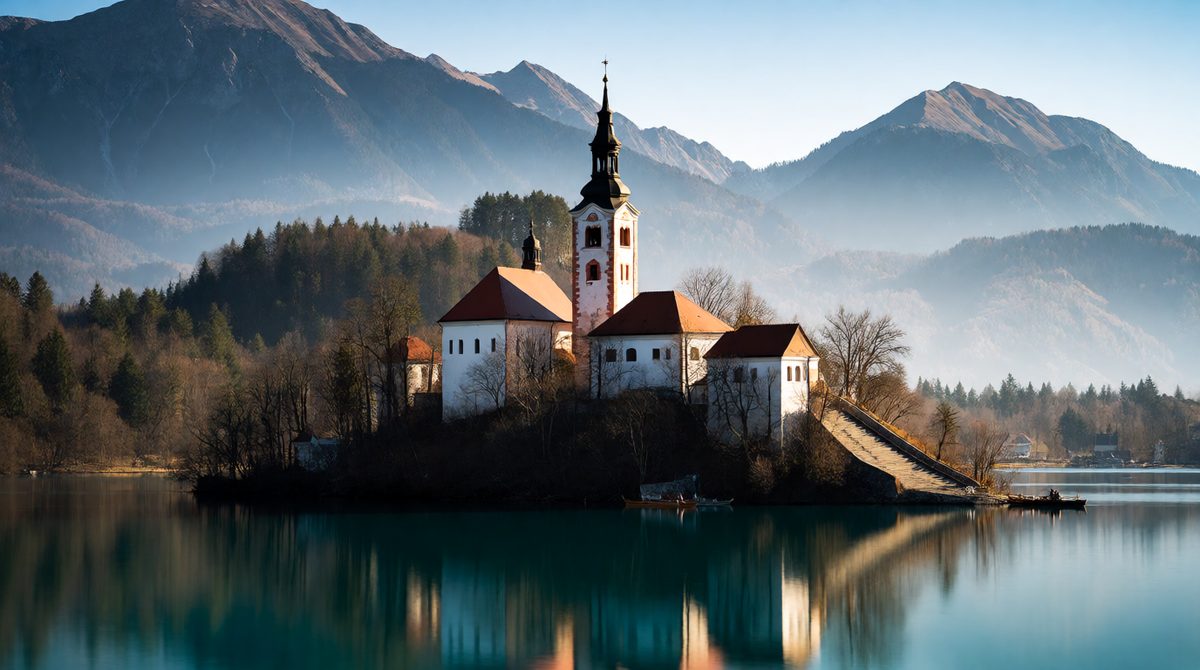
Slovenia is known as a green destination
Slovenia is a small Central European country with a population of just 2 million. It has positioned itself as one of Europe's leading sustainable tourism destinations and has the awards to prove it. In 2016, Slovenia's capital Ljubljana was named European Green Capital by the EU. The country as a whole holds the Green Destinations Top 100 award.
Key Strategies
- Slovenia Green: A national certification label for sustainable tourism providers hotels, agencies, destinations and resorts. Over 60 destinations and hundreds of businesses are certified.
- Green Scheme of Slovenian Tourism (GSST): A government-backed programme that helps destinations develop sustainability action plans, measure progress and market themselves to responsible tourists.
- Car-free zones: Ljubljana's city centre is almost entirely pedestrianised. Tourists are encouraged to use electric vehicles, cycling and public transport.
- Local food promotion: The "I feel Slovenia" campaign promotes local food, wine and rural tourism to keep spending in the local economy.
Why Slovenia Works as a Model
Slovenia succeeds because sustainability is embedded at every level national government policy, local authority planning, individual business certification and tourist marketing all point in the same direction. It's a small country, which makes coordination easier. But the key lesson is that joined-up thinking across all stakeholders is what makes sustainable management actually work.
📈 Slovenia's Results
Tourism revenue in Slovenia has grown steadily while environmental quality has been maintained. The country attracts higher-spending tourists who stay longer exactly the "high value, low volume" model that sustainable destinations aim for. Visitor satisfaction scores are consistently among the highest in Europe.
⚖ Evaluating Sustainable Destination Management: A Balanced View
Why It's Complicated
No destination perfectly manages tourism sustainably. Every case study involves trade-offs, compromises and ongoing challenges. When you evaluate sustainable management in the exam, you need to show you understand both what works and what doesn't and why.
✅ What Works
- Clear legal frameworks and enforcement
- Community involvement from the start
- Long-term planning over short-term gain
- Independent monitoring and reporting
- Marketing that attracts the right tourists
⚠ What Fails
- Policies without enforcement
- Greenwashing and false claims
- Ignoring local community needs
- Short political cycles vs long-term goals
- Global pressures (e.g. climate, flights) beyond local control
📋 Key Tensions
- Economic growth vs environmental protection
- Tourist access vs conservation
- Local needs vs national policy
- Affordability vs quality tourism
- Short-term jobs vs long-term sustainability
📋 Exam Tip: Case Study Questions
📝 How to Use Case Studies in the Exam
When a question asks you to "use an example" or "refer to a case study", you must name the destination and give specific details not just general statements. Compare these two answers:
- ❌ "Some destinations use certification schemes to manage tourism sustainably." Too vague. No marks for specific detail.
- ✅ "Slovenia uses the Green Scheme of Slovenian Tourism (GSST) to certify hotels, agencies and resorts. This has helped attract higher-spending tourists while maintaining environmental quality." Specific, detailed, earns marks.
For evaluation questions (worth 6–9 marks), always discuss both strengths AND weaknesses and try to reach a conclusion about which side is stronger.
📋 How to Answer Sustainable Management Questions
📝 Question Types and How to Tackle Them
📌 "Describe how one destination manages tourism sustainably." (4 marks)
Name the destination. Give two or three specific strategies. Use data or named schemes if you can. Don't just list briefly explain how each strategy helps.
📌 "Explain why sustainable destination management is difficult to achieve." (4 marks)
Think about competing stakeholder interests, the cost of enforcement, global pressures beyond local control and the tension between economic growth and environmental protection.
📌 "Evaluate the success of sustainable tourism management in [destination]." (9 marks)
Structure: What has been done → What has worked → What hasn't worked → Why → Conclusion. Use evidence. Be balanced. Don't just say "it's good" or "it's bad".
🌟 Putting It All Together
Sustainable destination management is not a single action it's a continuous process of planning, monitoring, adjusting and involving the right people. The best destinations treat sustainability not as a constraint on tourism, but as the foundation that makes tourism worth having in the first place.
From Slovenia's national certification system to Queenstown's regenerative tourism experiments, the evidence shows that success comes from coordination, commitment and community involvement not just good intentions.
📋 Summary: Sustainable Destination Management in Practice
- Destination Management Organisations (DMOs) coordinate sustainable tourism planning
- Integrated management plans combine environmental, economic and social goals
- Certification schemes (like Slovenia Green) help tourists and businesses make sustainable choices
- Greenwashing is a real risk independent auditing matters
- Regenerative tourism goes beyond sustainability to actively improve destinations
- Case studies: Fuerteventura (Biosphere Reserve), Queenstown (adventure tourism), Slovenia (national green strategy)
- Evaluation requires balance acknowledge both successes and ongoing challenges
- In the exam: be specific, use named examples and always evaluate both sides