🌍 Introduction to Economic Impacts of Tourism
Tourism is one of the biggest industries on the planet. Every time someone books a flight, stays in a hotel, eats at a restaurant abroad, or visits a theme park, they are putting money into an economy. This money doesn't just disappear it flows through businesses, workers and governments in really powerful ways.
In this section, we focus on the positive economic impacts of travel and tourism specifically how it boosts GDP, generates tax revenue and creates wealth for communities and countries.
Key Definitions:
- Economy: The system by which a country manages its money, industries and resources.
- GDP (Gross Domestic Product): The total value of all goods and services produced in a country in one year. It's basically a measure of how rich a country is.
- Tax Revenue: Money collected by the government from businesses and individuals used to pay for schools, hospitals, roads, etc.
- Wealth Creation: The process of generating income and increasing the financial well-being of people and places.
- Multiplier Effect: When tourist spending circulates through the local economy, creating more jobs and income than the original amount spent.
- Foreign Exchange Earnings: Money brought into a country by international tourists spending in a foreign currency.
📈 Tourism is HUGE globally
Before COVID-19, tourism accounted for around 10% of global GDP and supported 1 in 10 jobs worldwide, according to the World Travel and Tourism Council (WTTC). Even after the pandemic, tourism has bounced back strongly showing just how vital it is to the global economy.
🌎 Who benefits?
Both developed countries (like France and the USA) and developing countries (like Kenya and Thailand) benefit hugely from tourism. For some smaller nations like the Maldives or Barbados tourism is the backbone of their entire economy.
💵 Tourism and GDP
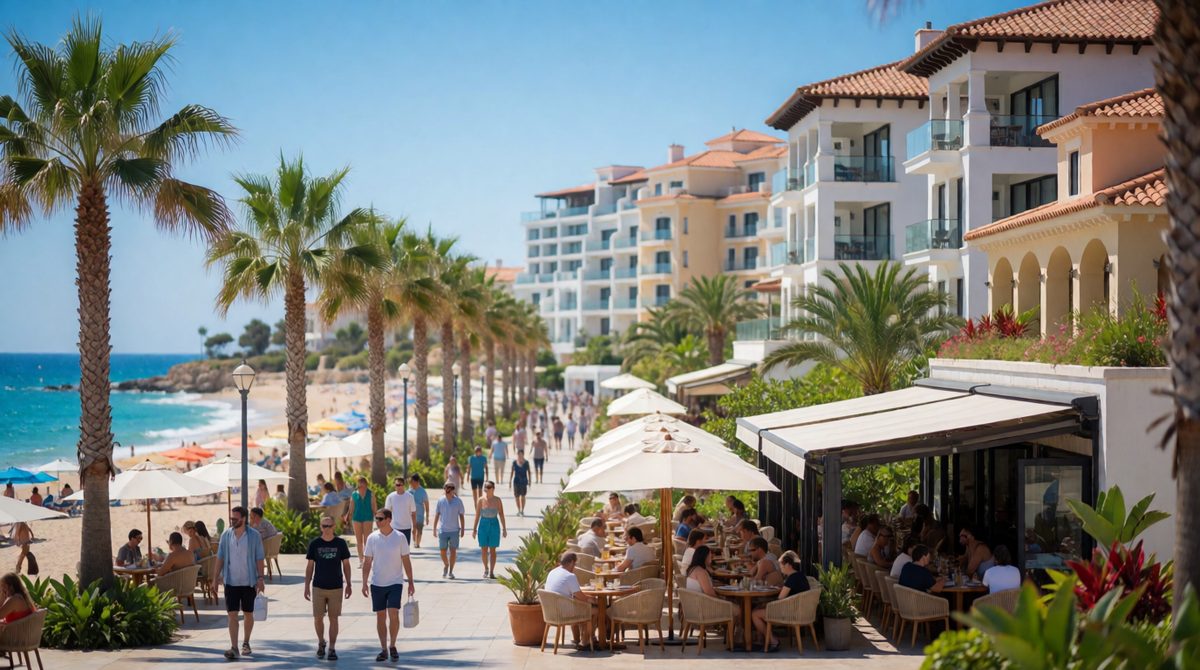
Tourism adds to a country's GDP
GDP stands for Gross Domestic Product. Think of it as the total "score" of everything a country produces and earns in a year. Tourism adds to this score in a big way both directly and indirectly.
Direct vs Indirect Contributions to GDP
Tourism's contribution to GDP works on two levels. Direct contributions come straight from tourist spending. Indirect contributions come from businesses that support tourism (like food suppliers, laundry services and transport companies).
✈ Direct GDP
Money tourists spend directly hotels, flights, restaurants, attractions and souvenirs. Every pound or dollar spent by a tourist counts towards GDP.
🛒 Indirect GDP
Tourism businesses buy supplies from other local businesses. A hotel buys food from a local farm that farm's income also contributes to GDP.
💰 Induced GDP
Workers in tourism spend their wages locally on groceries, rent and entertainment. This spending also adds to GDP. It's the multiplier effect in action!
🌎 Case Study: Spain
Spain is one of the world's top tourist destinations. In 2019, tourism contributed approximately 12.4% of Spain's total GDP worth around €154 billion. The country welcomed over 83 million international visitors that year, making it the second most visited country in the world. Tourism supports millions of Spanish jobs in hotels, restaurants, transport and retail. Without tourism, Spain's economy would look very different.
🇨🇳 Case Study: Kenya Tourism and GDP in a Developing Country
Kenya is a brilliant example of how tourism can be a major economic driver in a developing nation. Kenya's wildlife and safari tourism centred around places like the Maasai Mara National Reserve attracts hundreds of thousands of visitors each year.
- Tourism contributes around 8–10% of Kenya's GDP.
- It is one of Kenya's top three sources of foreign exchange, alongside tea and horticulture.
- In 2019, Kenya earned approximately $1.8 billion (USD) from tourism.
- The money tourists spend helps fund infrastructure improvements like roads and airports, which benefit local people too.
💳 Tax Revenue from Tourism
Governments love tourism and one big reason is tax revenue. When tourists spend money, they pay taxes just like everyone else. This money goes straight to the government, which can then spend it on public services.
There are several ways tourism generates tax revenue:
- VAT / Sales Tax: Tourists pay tax on goods and services they buy meals, souvenirs, hotel stays.
- Airport Departure Tax: Many countries charge a fee when you fly out. In the UK, this is called Air Passenger Duty (APD).
- Tourism Levies / Bed Taxes: Some countries charge a specific tax per night stayed in a hotel. Amsterdam charges a tourist tax of 7% on hotel bills.
- Corporation Tax: Tourism businesses (hotels, airlines, tour operators) pay tax on their profits.
- Income Tax / National Insurance: Tourism workers pay income tax on their wages.
- Customs Duties: Taxes on imported goods used by the tourism industry.
🏭 Real Example: Dubai's Tourism Tax Strategy
Dubai introduced a Tourism Dirham Fee a nightly hotel tax ranging from AED 7 to AED 20 (about £1.50–£4.30) depending on the hotel's star rating. With millions of tourists visiting each year, this generates enormous revenue for the government. This money is reinvested into tourism infrastructure, making Dubai even more attractive a smart cycle of investment and return.
🇬🇧 UK: Air Passenger Duty
The UK charges Air Passenger Duty (APD) on flights departing from UK airports. In 2022–23, APD raised over £3.2 billion for the UK government. This is a direct example of how tourism-related activity fills government coffers.
🇮🇹 Italy: Tourist Tax
Italian cities like Rome and Venice charge tourists a nightly city tax. Venice, which receives around 25 million visitors per year, uses this revenue to help maintain its historic infrastructure and manage the environmental pressures of mass tourism.
💸 Wealth Creation and the Multiplier Effect
One of the most exciting economic concepts in tourism is the multiplier effect. It explains how one tourist's spending can create far more wealth than just the original amount spent. Think of it like a snowball rolling downhill it gets bigger and bigger.
How the Multiplier Effect Works
Imagine a tourist visits a hotel in Thailand and spends £100 on their room. Here's what happens next:
- 🏠 The hotel uses some of that money to pay its staff wages.
- 🌽 The hotel buys local food from a nearby farm to feed guests.
- 🚕 The hotel pays a local taxi company to transfer guests.
- 🛒 Hotel staff spend their wages at local shops and markets.
- 🏭 The farm uses its income to buy equipment from a local supplier.
That original £100 has now supported a hotel, a farm, a taxi driver, shop workers and an equipment supplier. The total economic activity generated is much more than £100. This is the multiplier effect!
📈 The Multiplier Effect By the Numbers
Economists use a figure called the tourism multiplier to measure this effect. A multiplier of 1.5 means that every £1 spent by a tourist generates £1.50 of economic activity in total. In developing countries with strong local supply chains, multipliers can be even higher. However, if hotels are foreign-owned and import most of their goods, the multiplier is lower this is called economic leakage (money leaving the local economy).
🇨🇾 Case Study: Thailand Wealth Creation Through Tourism
Thailand is one of the world's most popular tourist destinations, famous for its beaches, temples and street food. Tourism has been a massive engine of wealth creation:
- In 2019, Thailand welcomed over 39 million international tourists.
- Tourism generated approximately $60 billion USD in revenue around 11% of Thailand's GDP.
- Millions of Thai people work in tourism-related industries from tuk-tuk drivers and street food vendors to hotel managers and tour guides.
- Tourism has helped lift millions of Thai people out of poverty, particularly in rural areas near popular destinations like Chiang Mai and Phuket.
- The government has invested tourism tax revenues into improving roads, airports and public services.
💼 Foreign Exchange Earnings
When international tourists visit a country, they bring foreign currency with them. They exchange it for local currency and spend it. This is called foreign exchange earnings and it's incredibly important especially for developing countries.
- Foreign exchange helps countries pay for imports (goods bought from other countries).
- It strengthens the national currency and improves the country's balance of payments.
- It gives governments funds to invest in development projects.
🇲🇻 Case Study: Maldives Almost Entirely Dependent on Tourism
The Maldives is a small island nation in the Indian Ocean. Tourism accounts for around 28% of its GDP and over 60% of its foreign exchange earnings. With very few other industries, the Maldives relies on wealthy tourists who pay thousands of pounds for luxury overwater bungalows to keep its economy running. This shows both the enormous power of tourism for wealth creation and the risk of being too dependent on one industry.
📋 Summary: Why Positive Economic Impacts Matter
Let's pull it all together. Tourism creates positive economic impacts in three main ways:
📈 GDP Growth
Tourist spending directly and indirectly adds to a country's GDP, making the nation wealthier overall. Countries like Spain, Thailand and Kenya all rely heavily on this.
💳 Tax Revenue
Governments collect taxes from tourists, tourism businesses and tourism workers. This funds public services like hospitals, schools and roads benefiting everyone.
💸 Wealth Creation
Through the multiplier effect and foreign exchange earnings, tourism spreads wealth through communities creating jobs, raising incomes and improving living standards.
✍ Exam Tip!
In your iGCSE exam, you may be asked to explain or evaluate the positive economic impacts of tourism. Always try to use specific examples and data (like country names, percentages and figures) to support your answers. Examiners love to see real-world evidence! Also, remember the difference between direct and indirect economic impacts it shows deeper understanding.