🚫 The Dark Side of Tourism Money
Tourism brings money into a country that much is clear. But not all of that money stays and the arrival of lots of tourists can actually make life harder for local people. Two of the biggest negative economic impacts are inflation and leakage. These are key concepts for your iGCSE exam and understanding them will help you give balanced, high-quality answers.
Key Definitions:
- Inflation: A general rise in the prices of goods and services over time. In tourism, it means tourists drive up prices so locals can no longer afford everyday items.
- Economic Leakage: When money that tourists spend in a destination "leaks" out of the local economy and ends up abroad, rather than benefiting local people.
- Import Leakage: When a destination has to import goods and services to satisfy tourists, sending money out of the country.
- Export Leakage: When profits made by foreign-owned businesses in the destination are sent back to the company's home country.
- All-Inclusive Resort: A type of holiday where tourists pay one price upfront that covers accommodation, food, drink and entertainment usually all within the resort complex.
📈 Tourism-Induced Inflation
When large numbers of tourists arrive in a place, they bring money with them and are often willing to pay more than locals for goods and services. This extra demand pushes prices up which is great for businesses, but can be a real problem for the people who actually live there.
How Inflation Happens in Tourist Destinations
Think about a small beach town. Before tourism, a meal at a local restaurant might cost £3. Then tourists start arriving and they're used to paying £15 for a meal back home, so they don't mind paying £8 here. The restaurant owner raises prices. Soon, all the restaurants do the same. Now local people, who earn local wages, can no longer afford to eat out. This is tourism-induced inflation in action.
🏠 Property & Rent Inflation
One of the most damaging forms of tourism inflation is in housing. When tourists want to rent holiday homes or when developers build hotels, demand for land and property shoots up. Landlords can earn far more renting to tourists than to locals, so they switch. Rents rise, locals get priced out and communities can be destroyed. This has happened dramatically in cities like Barcelona and Lisbon.
🛍 Food & Goods Inflation
Tourists often want familiar foods, imported drinks and branded goods. This increases demand for imported products. Local markets shift to serve tourists rather than residents. Prices in local shops and markets rise because traders know tourists will pay more. Locals on fixed wages find their money buys less and less over time.
🇮🇹 Case Study: Thailand Inflation in Tourist Hotspots
Thailand welcomes over 35 million tourists per year (pre-pandemic figures). In popular areas like Koh Samui and Phuket, property prices have risen by over 300% in two decades. A beachfront plot that cost the equivalent of £5,000 in the 1990s could sell for over £500,000 today. Local Thai fishermen and farmers who once lived near the coast have been pushed inland as they can no longer afford land or rent near tourist areas. The cost of food in tourist zones is often 3–5 times higher than in non-tourist areas of the same country. Local people earning average Thai wages (around £400/month) struggle to afford basics in their own towns.
💵 Who Gets Hurt Most by Tourism Inflation?
Not everyone suffers equally. People who own businesses or property often benefit from rising prices. But people on low or fixed incomes such as farmers, teachers, nurses and elderly residents can be seriously harmed. This increases inequality within the destination.
😖 Low-Income Workers
Earn local wages but face tourist-level prices. Their real purchasing power falls even if their wages stay the same.
👴 Elderly & Retired People
Often on fixed pensions. Cannot increase their income to match rising prices. May be forced to move away from their communities.
🏠 Renters
Landlords convert long-term rentals into short-term holiday lets (like Airbnb). Fewer homes available for locals, rents spike dramatically.
🇪🇸 Case Study: Barcelona, Spain The Airbnb Effect
Barcelona is one of Europe's most visited cities, with over 12 million tourists per year. The rise of short-term rental platforms like Airbnb has had a dramatic effect on housing. By 2023, there were over 10,000 licensed tourist apartments in the city and many more unlicensed ones. Average rents in central Barcelona rose by 68% between 2014 and 2023. Local residents have protested with signs reading "Tourism Kills the City." The city government has now banned new tourist apartment licences in many areas and is trying to reclaim housing for residents. This is a powerful example of how tourism inflation can damage communities even in wealthy countries.
🔄 Economic Leakage When Money Leaves
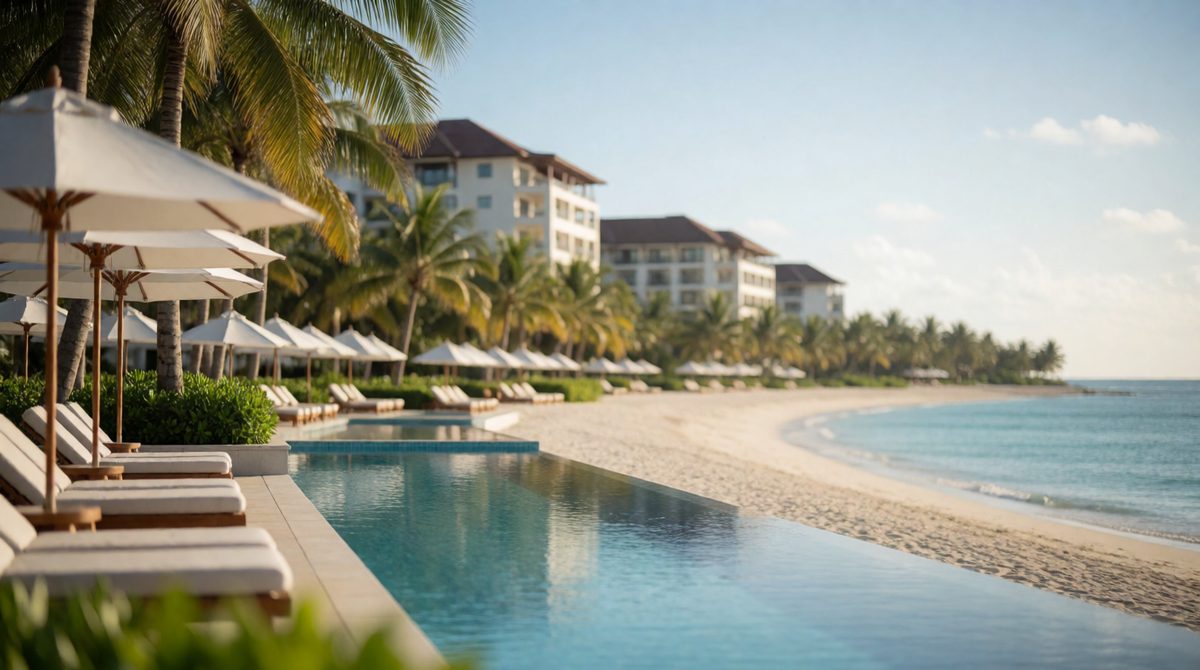
Leakage means tourism money leaves the local economy
Even when tourists spend money at a destination, a large chunk of it may never actually benefit local people. This is called economic leakage. It is one of the most important concepts in tourism economics and is especially significant in developing countries.
Imagine a tourist from the UK books a holiday to Jamaica. They pay £2,000. Here's where that money might actually go:
- ✈️ £800 to a British airline (British Airways)
- 🏠 £700 to an American-owned hotel chain (e.g. Sandals or Marriott)
- 🚗 £150 to a foreign-owned tour operator for excursions
- 🍕 £100 to imported food and drink served at the resort
- 🇮🇲 £250 actually reaches local Jamaican businesses
That means 87.5% of the tourist's spending leaks out of Jamaica. Only £250 of £2,000 stays in the local economy. This is leakage in action.
📋 The Two Types of Leakage
🚚 Import Leakage
This happens when a destination imports goods and services to meet tourist demand. Tourists from Europe and North America expect certain foods, drinks and products that aren't produced locally. The destination has to buy these from abroad, sending money out of the country. For example, a Caribbean resort importing French wine, American beef and European toiletries is creating import leakage. The money spent on those imports goes to foreign producers, not local ones.
🏠 Export Leakage (Profit Repatriation)
This happens when foreign companies own tourism businesses in a destination and send their profits back to their home country. A US-owned hotel in Kenya, a French-owned resort in Bali, or a British tour operator running safaris in Tanzania all of these take profits out of the local economy. The workers may be local, but the profits go abroad. This is sometimes called profit repatriation.
🇨🇾 Case Study: The Caribbean A Leakage Hotspot
The Caribbean is one of the world's most tourism-dependent regions, yet it suffers from some of the highest leakage rates on the planet. Studies by the United Nations Environment Programme (UNEP) found that in some Caribbean islands, up to 80 cents of every tourist dollar leaks out of the local economy. Why so high? Most large hotels are owned by American, European or Canadian companies. Food is largely imported. Airlines are foreign-owned. Even entertainment acts are often flown in from abroad. The all-inclusive resort model is a major culprit tourists pay everything upfront to a foreign company and rarely spend money outside the resort. Local craft sellers, restaurants and taxi drivers see very little benefit.
🏠 The All-Inclusive Problem
All-inclusive resorts are incredibly popular with tourists you pay one price and everything is included. But from an economic development perspective, they are a major source of leakage. Tourists have no reason to leave the resort, so local businesses get almost nothing.
🚫 No Local Spending
Tourists eat, drink and are entertained entirely within the resort. Local restaurants, bars and shops lose out on tourist spending entirely.
🚚 Imported Supplies
Large resort chains often have global supply contracts. Food, drink and equipment come from international suppliers, not local farmers or producers.
💸 Profits Leave
The resort is owned by a multinational company. After paying local staff wages, the rest of the profit is sent to company headquarters abroad.
🇦🇫 Case Study: Kenya Leakage in Safari Tourism
Kenya earns around $1.5 billion per year from tourism, making it one of Africa's top tourism earners. However, research suggests that between 40% and 60% of this leaks out of the Kenyan economy. Many of the large safari lodges and camps are owned by foreign companies or wealthy non-Kenyan individuals. Tourists often book through foreign tour operators who take a large commission. Imported vehicles, fuel and equipment are needed to run safaris. Even some food served at lodges is imported. The Kenyan government has tried to address this by encouraging locally-owned lodges and community tourism projects, such as those run by Maasai communities, where profits stay within the local community.
⚖️ Why Leakage is Worse in Developing Countries
Leakage affects all tourist destinations to some degree, but it is far more damaging in developing countries. Here's why:
- 🚫 Lack of local capital: Local people often don't have the money to invest in hotels and large tourism businesses, so foreign investors step in and take the profits.
- 🚫 Weak supply chains: Local industries may not be able to produce enough food, goods or services to meet tourist demand, forcing imports.
- 🚫 Dependence on foreign expertise: Specialist skills (hotel management, marketing, finance) may need to be brought in from abroad, with salaries leaving the country.
- 🚫 Limited bargaining power: Small developing nations have little power to negotiate with large multinational tourism companies.
- ✅ By contrast, a developed country like France or the USA has strong local industries, local ownership of tourism businesses and local supply chains so leakage is much lower.
🇲🇻 Case Study: Maldives Extreme Leakage Despite High Spending
The Maldives attracts some of the world's wealthiest tourists. A single night in a luxury overwater bungalow can cost over £1,000. Yet the Maldives has very high leakage. The islands have almost no agriculture, so virtually all food is imported. Most luxury resorts are owned by international hotel chains (Hilton, Four Seasons, Marriott). Skilled management staff are often brought in from abroad. Despite tourism making up over 60% of GDP and 90% of government revenue, many Maldivian people remain on low wages and the country has significant national debt. The money flows through the Maldives but much of it doesn't stay there.
⚖️ Comparing Inflation and Leakage
📈 Inflation Key Points
- Caused by increased demand from tourists
- Pushes up prices of land, housing, food and goods
- Hurts low-income locals the most
- Can destroy local communities and culture
- Worse in small, popular destinations (islands, historic cities)
- Example: Barcelona, Phuket, Santorini
🔄 Leakage Key Points
- Caused by foreign ownership and imports
- Money leaves the local economy
- Reduces the real economic benefit of tourism
- Worse in developing countries with weak local industries
- All-inclusive resorts make it much worse
- Example: Caribbean, Kenya, Maldives
✍️ Exam Technique Writing About Negative Economic Impacts
In your iGCSE exam, you may be asked to evaluate the economic impacts of tourism. This means you need to show both sides but for this topic, you need to explain the negatives clearly and with evidence. Here are some tips:
- 💡 Define your terms first. Always define inflation or leakage before you explain them. Examiners reward precise use of terminology.
- 💡 Use specific examples. Don't just say "prices go up." Say "in Barcelona, rents rose by 68% between 2014 and 2023 due to tourist apartment demand."
- 💡 Explain the impact on people. Connect the economic concept to real human effects locals being priced out of housing, low-income workers struggling to afford food.
- 💡 Use the word "because." Examiners want explanation, not just description. "Leakage is worse in developing countries because they lack local capital and strong supply chains."
- 💡 For evaluation questions, acknowledge that tourism still brings some benefits, but argue that leakage and inflation can significantly reduce or even cancel out those benefits for local communities.
📋 Summary Inflation and Leakage as Negative Economic Impacts
Tourism-induced inflation occurs when tourist demand pushes up prices for land, housing, food and goods, making life more expensive for local residents especially those on low incomes. Economic leakage occurs when tourist spending flows out of the local economy through imports, foreign-owned businesses and profit repatriation. Both effects mean that the headline figures for tourism revenue can be misleading the actual benefit to local communities may be far smaller than it appears. Developing countries are particularly vulnerable to both inflation and leakage due to limited local ownership, weak supply chains and dependence on foreign investment. Understanding these negative impacts is essential for a balanced view of tourism's role in economic development.