📈 Putting It All Together Evaluating Economic Impacts
You've studied the individual economic impacts of tourism the multiplier effect, employment, infrastructure, leakage, inflation and over-dependence. Now it's time to do what examiners love most: evaluate. That means weighing up the evidence, comparing impacts and reaching a reasoned conclusion.
Evaluation is not just listing good and bad things. It means asking: How significant is this impact? For whom? Under what conditions? Does the benefit outweigh the cost?
Key Definitions:
- Evaluation: Judging the importance, value, or significance of something using evidence.
- Net benefit: The overall gain once costs have been subtracted from benefits.
- Stakeholder: Anyone affected by tourism governments, local people, businesses, tourists.
- Context: The specific circumstances of a country (e.g. how developed it is, how dependent on tourism it is) that affect how impacts play out.
💡 Why Evaluation Matters in the Exam
iGCSE Travel & Tourism questions often ask you to "assess", "evaluate", or "discuss" economic impacts. These command words require you to go beyond description. You must show both sides, use named examples and give a supported conclusion. This lesson gives you the tools to do exactly that.
⚖️ The Evaluation Framework A Tool for Every Answer
When evaluating any economic impact, use this four-step framework to structure your thinking:
1️⃣ Identify the Impact
Name the economic impact clearly. Is it positive or negative? Direct or indirect? Give a specific example or statistic.
2️⃣ Explain the Mechanism
Explain how and why this impact occurs. Link it to economic concepts like the multiplier, leakage, or opportunity cost.
3️⃣ Apply a Case Study
Use a real named example with specific data. This is what separates a good answer from a great one.
4️⃣ Reach a Judgement
Who benefits most? Who loses out? Is the impact short-term or long-term? Is it reversible? This is your evaluation your opinion backed by evidence.
📋 Context Is Everything
The same impact can be very different depending on the country. A 5% leakage rate matters less to Germany than a 75% leakage rate matters to a small island nation. Always consider the context.
🌎 Comparing Developed vs Developing Countries
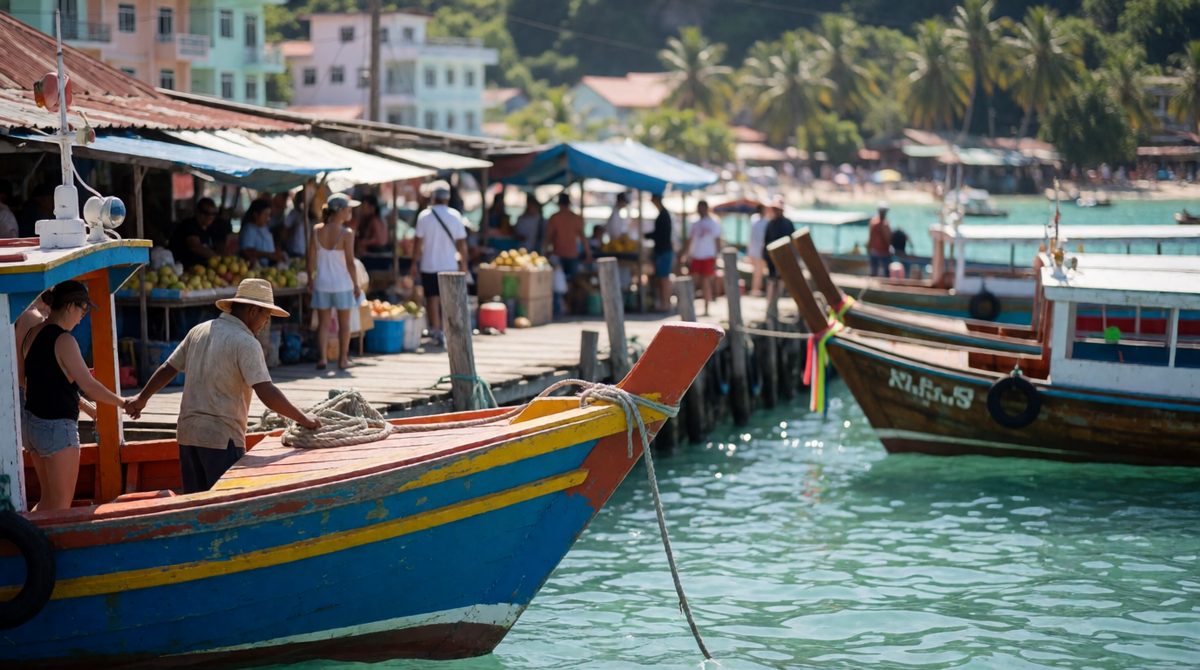
Tourism impacts differ between developed and developing countries
One of the most important evaluation skills is recognising that tourism's economic impacts are not the same everywhere. A key comparison the iGCSE syllabus expects you to make is between developed and developing countries.
🏭 Developed Countries
Countries like Spain, France and the USA have strong, diversified economies. Tourism adds to their wealth but is rarely their only income source. They have existing infrastructure, skilled workforces and domestic supply chains so leakage is lower and the multiplier effect is stronger. Economic benefits are more evenly spread.
🇬🇧 Developing Countries
Countries like Kenya, the Maldives, or Jamaica often rely heavily on tourism. They may lack local supply chains, meaning imports are high and leakage is severe. Infrastructure may be poor before tourism arrives. Jobs created may be low-skilled and seasonal. The benefits are real but often unevenly distributed.
🏭 Case Study: Spain A Developed Economy Maximising Tourism Benefits
Spain is one of the world's top tourist destinations, welcoming over 83 million visitors in 2019. Tourism contributes around 12–14% of GDP. Because Spain has a strong domestic economy, it can supply much of what tourists need locally food, construction materials, transport. This keeps leakage low and the multiplier effect high. Spanish workers across many sectors benefit, from farmers supplying hotels to taxi drivers and souvenir makers. Spain also uses tourism tax revenue to invest in infrastructure that benefits both tourists and locals. Evaluation: Spain demonstrates that with a developed economy, tourism can deliver widespread, sustainable economic benefits with limited negative side effects.
🇲🇻 Case Study: Maldives High Earnings, High Leakage
The Maldives earns around $3 billion per year from tourism roughly 28% of GDP. Tourists spend heavily at luxury resorts. However, because the Maldives is a small island nation with limited agriculture and manufacturing, it must import most food, building materials and luxury goods. Estimates suggest that up to 75% of tourist spending leaks out of the economy. Most resort staff are imported from neighbouring countries. Local communities often see little of the wealth. Evaluation: Despite enormous gross earnings, the net economic benefit to the Maldivian people is much smaller than the headline figures suggest. This makes the Maldives a powerful case for why leakage and context matter in evaluation.
💵 Weighing Positive Against Negative Impacts
A strong evaluation doesn't just list positives and negatives it weighs them against each other. Here are the key questions to ask:
- Does the positive impact benefit everyone, or just a small group?
- Is the negative impact permanent or can it be managed?
- Is the country dependent on tourism, or does it have alternatives?
- Are the benefits long-term or just short-term?
- Do the same people who bear the costs also receive the benefits?
🇦🇫 Case Study: Kenya Balancing Benefits and Costs
Kenya earns around $1.5 billion per year from tourism, making it one of Africa's top earners. Tourism supports around 1.5 million jobs directly and indirectly and funds conservation of wildlife reserves like the Maasai Mara. Infrastructure built for tourism roads, airports, utilities also benefits local communities.
However, Kenya also faces significant leakage, with international hotel chains repatriating profits abroad. Many tourism jobs are low-paid and seasonal. Local Maasai communities near game reserves have sometimes been displaced or excluded from economic benefits. Inflation in tourist areas has raised the cost of living for locals.
👍 Strong Positives
Foreign exchange earnings, conservation funding, infrastructure, 1.5 million jobs, GDP contribution of ~10%.
👎 Significant Negatives
Profit leakage, seasonal work, uneven distribution of benefits, displacement of communities, inflation in tourist zones.
⚖️ Evaluation Judgement
Tourism is vital to Kenya's economy but its benefits are unevenly spread. Government policy to support local ownership and community tourism could improve the net benefit significantly.
🔄 The Importance of Economic Diversification
One of the most important evaluative points you can make is about economic diversification the idea that countries should not rely on tourism alone. When a country has a diverse economy, the negative impacts of tourism (like leakage or seasonality) matter less, because other industries can absorb shocks.
🇬🇧 Case Study: Dubai, UAE Diversification as a Strategy
Dubai deliberately used tourism as a tool for diversification, not as an end in itself. Knowing that oil revenues would eventually decline, Dubai invested massively in tourism infrastructure the Burj Khalifa, Palm Jumeirah, world-class airports to attract visitors and foreign investment. By 2022, tourism contributed around 11.5% of Dubai's GDP, but this sat alongside a thriving finance, trade and logistics sector. Evaluation: Dubai shows that tourism is most economically powerful when it is part of a broader strategy rather than a country's only plan. The economic risks of over-dependence are minimised when tourism growth is managed alongside other sectors.
📋 Evaluating Economic Impacts A Summary Table
Use this table as a quick-reference revision tool. It summarises the key economic impacts, their positives, negatives and the most useful case study for each.
| Economic Impact |
Positive Side |
Negative Side |
Best Case Study |
| Multiplier Effect |
Money circulates, creating wider wealth |
Weakened by leakage |
Spain, Indonesia |
| Employment |
Millions of jobs, direct and indirect |
Seasonal, low-paid, low-skilled |
Kenya, Caribbean |
| Infrastructure |
Roads, airports, utilities for all |
Built for tourists, not locals |
Dubai, Bali |
| Leakage |
Can be reduced with policy |
Up to 75% lost in small island states |
Maldives, Caribbean |
| Inflation |
Higher prices can boost local incomes |
Locals priced out of housing/food |
Barcelona, Thailand |
| Over-Dependence |
Short-term economic stability |
Devastating when tourism collapses (COVID-19) |
Caribbean, Maldives |
| Diversification |
Reduces risk, spreads benefits |
Requires investment and planning |
Dubai, Thailand |
✍️ Exam Technique Writing a Full Evaluation Answer
Let's put everything together. Here is a model approach for a high-mark evaluation question.
📋 Sample Exam Question
"Evaluate the economic impacts of tourism on a developing country you have studied." [8 marks]
📋 Model Answer Structure
👍 Paragraph 1 Positive Impact + Case Study
Point: Tourism generates significant foreign exchange earnings and employment in developing countries.
Evidence: In Kenya, tourism contributes approximately 10% of GDP and supports 1.5 million jobs directly and indirectly. The multiplier effect means that money spent by tourists circulates through the local economy, benefiting farmers, transport workers and craft sellers.
Evaluation: This is a significant benefit, particularly as Kenya has limited alternative sources of foreign income.
👎 Paragraph 2 Negative Impact + Case Study
Point: However, leakage significantly reduces the net economic benefit.
Evidence: In the Maldives, up to 75% of tourist spending is estimated to leak out of the economy through imports and profit repatriation by foreign-owned resorts.
Evaluation: This means that despite high gross earnings, the actual benefit to local people is much smaller raising questions about whether tourism truly develops these economies.
⚖️ Paragraph 3 Conclusion (Judgement)
Overall, tourism does bring real economic benefits to developing countries particularly through employment, infrastructure and foreign exchange. However, these benefits are often unevenly distributed and reduced by leakage, inflation and over-dependence. The net impact depends heavily on government policy: countries that invest in local supply chains, community tourism and economic diversification like Kenya's community conservancies are better placed to maximise benefits and minimise costs. Without such policies, tourism risks creating wealth that passes through a developing country rather than staying in it.
👥 Who Benefits? A Stakeholder Evaluation
A sophisticated evaluation considers who gains and who loses from tourism's economic impacts. Different stakeholders have very different experiences.
🏛 National Government
Gains tax revenue, foreign exchange and GDP growth. May benefit from tourism even when leakage is high, as long as some revenue is taxed. Can invest in infrastructure and public services.
🏠 Local Communities
May gain jobs and improved infrastructure. But also face higher living costs, displacement, seasonal unemployment and may see profits flow to foreign-owned businesses rather than local ones.
🏢 International Businesses
Hotel chains, airlines and tour operators based in developed countries often capture the largest share of tourist spending through all-inclusive packages and repatriated profits. They benefit most while contributing least locally.
💡 Key Evaluative Insight
The same tourism economy can be a success story for a national government (GDP up, tax revenue rising) and a disappointment for local communities (prices up, jobs seasonal, profits leaving). This is why evaluation must always ask: "A benefit for whom?"
📋 Final Summary Evaluating Economic Impacts
- ✅ Evaluation means weighing evidence, not just listing facts.
- ✅ Use the framework: Identify → Explain → Case Study → Judgement.
- ✅ Context matters developed and developing countries experience impacts very differently.
- ✅ The same impact can be positive for one stakeholder and negative for another.
- ✅ Leakage, seasonality and over-dependence reduce the net benefit of tourism.
- ✅ Diversification and strong government policy can maximise net benefits.
- ✅ Always use named case studies with specific data in your exam answers.
- ✅ A strong conclusion makes a clear, supported judgement don't sit on the fence.