🌎 Introduction: Can Tourism Actually Help the Environment?
When most people think about tourism and the environment, they think about damage pollution, litter on beaches, coral reefs being destroyed. And yes, those are real problems. But here's the thing: tourism can also do a huge amount of good for the environment. Money from tourists can fund conservation, restore habitats and protect endangered species. This topic is all about those positive environmental impacts.
The key idea is this: if local communities and governments can earn money from tourists visiting natural areas, they have a strong reason to protect those areas rather than destroy them for farming or industry. Tourism becomes a tool for conservation.
Key Definitions:
- Conservation: Protecting and managing natural environments, wildlife and resources so they are not damaged or destroyed.
- Regeneration: Restoring or renewing a damaged or neglected environment so it recovers and improves.
- Investment: Spending money on something now so it improves and brings benefits in the future.
- Ecotourism: Responsible travel to natural areas that conserves the environment and improves the wellbeing of local people.
- National Park: A protected area of land managed by the government for conservation and public enjoyment.
- Habitat: The natural home or environment of a plant or animal species.
- Biodiversity: The variety of plant and animal life in a particular habitat or on Earth as a whole.
💵 Investment
Tourism generates income from entrance fees, hotel taxes, guided tours and souvenirs. Governments and organisations can reinvest this money into protecting natural areas. For example, national park entrance fees often go directly towards ranger patrols, anti-poaching units and habitat management. Without tourist money, many of these programmes simply could not exist.
🌿 Conservation
Conservation means actively protecting wildlife and wild places. Tourism creates a financial reason to keep animals alive and forests standing. A living elephant attracts tourists for decades and earns far more money than one killed for ivory. This economic argument is powerful it turns nature into something worth protecting rather than exploiting.
🌎 Regeneration
Some areas that were previously damaged by mining, farming, or neglect have been restored thanks to tourism investment. Regeneration projects might involve replanting native trees, reintroducing lost species, or cleaning up polluted rivers. Tourism gives these projects a purpose and a funding source.
📈 Why It Matters for iGCSE
The iGCSE syllabus asks you to understand that tourism is not just damaging it can also be a positive force for the environment. You need to be able to give specific examples and explain the mechanisms: how exactly does tourism money lead to environmental improvement?
🌿 How Tourism Investment Funds Conservation
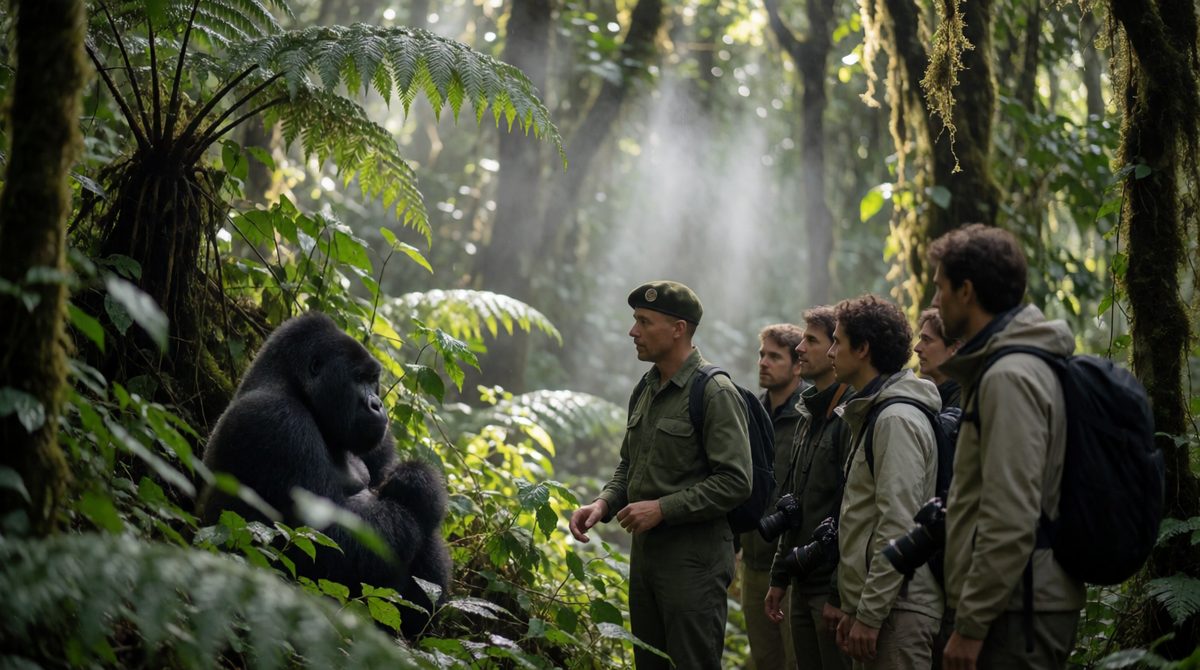
Tourism money can fund conservation
One of the most direct ways tourism helps the environment is through the money it generates. Let's look at the different ways this investment flows into conservation.
💰 Where Does the Money Come From?
Tourism generates revenue through many different channels. This money can then be directed towards environmental protection in a variety of ways.
🏭 Entrance Fees
Visitors to national parks and nature reserves pay entrance fees. In Kenya's Maasai Mara, these fees fund ranger salaries and anti-poaching patrols. Without tourists paying to see the wildlife, there would be far less money to protect it.
🏠 Accommodation Taxes
Hotels and lodges often pay a percentage of their income as a tax or levy that goes towards conservation funds. Eco-lodges in Costa Rica contribute to the national system of protected areas through these mechanisms.
👥 Tour Operator Contributions
Many responsible tour operators voluntarily contribute a portion of their profits to conservation projects. Some set up their own foundations for example, &Beyond (a luxury safari company) runs conservation programmes across Africa funded partly by tourist revenue.
🔍 Case Study: Galapagos Islands, Ecuador
The Galapagos Islands are one of the world's most famous wildlife destinations. They are home to species found nowhere else on Earth giant tortoises, marine iguanas and blue-footed boobies. Tourism to the islands generates around $418 million per year for Ecuador. A significant portion of this goes to the Galapagos National Park, which uses the funds to:
- Control invasive species that threaten native wildlife
- Run captive breeding programmes for giant tortoises
- Patrol marine reserves to prevent illegal fishing
- Monitor and research fragile ecosystems
The number of giant tortoises has actually increased from around 3,000 in the 1970s to over 19,000 today largely thanks to conservation funded by tourism income. This is a brilliant example of tourism investment leading directly to species recovery.
🕌 Habitat Conservation and Protection
Tourism doesn't just fund conservation it can also directly protect habitats by giving them economic value. When a forest or wetland is worth more standing than cleared, landowners and governments are more likely to protect it.
🌳 Protecting Forests Through Tourism
Rainforests are under enormous pressure from logging and farming. But when tourists pay to visit them, they become economically valuable in their natural state. This is sometimes called the "use it or lose it" argument if the forest earns money for local people, they will fight to keep it.
🌳 Case Study: Costa Rica's Rainforests
Costa Rica covers just 0.03% of the Earth's surface but contains around 5% of the world's biodiversity. In the 1980s, Costa Rica had one of the highest deforestation rates in the world. Then the government made a bold decision: invest in ecotourism. Today, over 25% of Costa Rica's land is protected in national parks and reserves. Tourism is now the country's largest source of foreign income, earning over $3.5 billion per year. Forest cover has actually increased from 21% in 1987 to over 52% today. Tourism gave the forest economic value and saved it.
🐠 Wildlife Conservation: Protecting Species
Tourism creates a powerful economic reason to keep wildlife alive. This is especially important for large, charismatic animals like elephants, gorillas and tigers that are threatened by poaching and habitat loss.
🦍 Mountain Gorilla Tourism, Rwanda
Mountain gorillas are critically endangered there are only around 1,000 left in the wild. Rwanda charges tourists $1,500 per person for a one-hour gorilla trekking permit. This generates millions of dollars for conservation and employs hundreds of local rangers and guides. The gorilla population has actually increased in recent years tourism is a key reason why. Local communities benefit economically, so they protect the gorillas rather than poach them.
🐘 Whale Watching vs. Whaling
In many parts of the world, whale watching tourism has replaced whaling as the main economic use of whales. In Iceland, whale watching generates around $20 million per year. A living whale is worth far more to the economy than a dead one. This economic argument has helped shift attitudes towards whale protection in several countries.
🏗 Environmental Regeneration Through Tourism
Regeneration goes one step further than conservation it's about actively restoring environments that have already been damaged. Tourism can fund and motivate these restoration projects.
🌊 Coral Reef Restoration
Coral reefs are often damaged by climate change, pollution and careless tourism (boats dropping anchors, tourists touching corals). But tourism money and tourist interest can also fund their recovery. Coral gardening projects where fragments of coral are grown in underwater nurseries and then transplanted onto damaged reefs are funded in many places by dive tourism operators who need healthy reefs to attract customers.
🌊 Case Study: Coral Restoration in the Florida Keys, USA
The Florida Keys reef tract is the third largest coral barrier reef in the world and attracts millions of divers and snorkellers each year. Tourism revenue funds the Coral Restoration Foundation, which has grown and transplanted over 170,000 corals onto damaged reefs. Dive operators contribute funding because they know that without healthy reefs, tourists will stop coming. This is a perfect example of tourism investment driving environmental regeneration.
🌿 Land Regeneration: Rewilding with Tourism
Rewilding is the process of restoring land to its natural state often by reintroducing native species that have been lost. Tourism can make rewilding financially viable by attracting visitors who want to see the restored wildlife.
🐺 Case Study: Wolves in Yellowstone, USA
Wolves were reintroduced to Yellowstone National Park in 1995 after being absent for 70 years. Their return triggered a trophic cascade wolves controlled deer populations, which allowed riverbank vegetation to recover, which stabilised river banks and improved water quality. The park's ecosystem regenerated dramatically. Wolf watching tourism now generates an estimated $35 million per year for local communities. Tourism gave the rewilding project public support and economic justification.
🏠 Urban Regeneration Through Tourism
Regeneration doesn't only happen in wild places. Tourism investment can also regenerate urban environments improving derelict areas, cleaning up waterfronts and creating green spaces in cities.
For example, the development of tourism infrastructure along the River Thames in London led to the regeneration of formerly industrial areas like the South Bank. Old warehouses became galleries and restaurants, the river was cleaned up and green spaces were created. Tourism investment transformed a neglected urban environment into a thriving, attractive area.
🌿 Ecotourism: Tourism Designed to Help the Environment
Ecotourism is a specific type of tourism that is designed to have positive environmental impacts. It is one of the fastest growing sectors of the travel industry.
The principles of ecotourism include:
- Minimising environmental impact
- Building environmental and cultural awareness
- Providing financial benefits for conservation
- Empowering local communities
- Educating tourists about the environment
🌿 Ecotourism in Action: Borneo, Malaysia
The rainforests of Borneo are home to orangutans, pygmy elephants and proboscis monkeys. Ecotourism lodges like those in the Danum Valley Conservation Area charge premium prices for wildlife experiences. The money funds ranger patrols, research stations and anti-poaching activities. Tourists are educated about conservation issues during their stay, creating global ambassadors for Borneo's forests. Local communities are employed as guides and lodge staff, giving them an income that depends on the forest remaining intact.
✍️ Exam Tips: What You Need to Know
🎯 Key Points to Remember
💡 The Core Argument
Tourism creates economic value for natural environments. When nature earns money, people protect it. This is the fundamental reason why tourism can have positive environmental impacts.
📋 Use Specific Examples
In the exam, always back up your points with named examples. Don't just say "national parks" say "Maasai Mara, Kenya" or "Yellowstone, USA." Specific examples earn more marks.
⚖️ Know the Three Themes
Investment (money going into conservation), Conservation (protecting what exists) and Regeneration (restoring what was damaged). Make sure you can explain and give examples of all three.
📚 Quick Summary: Positive Environmental Impacts of Tourism
- 💰 Investment: Entrance fees, taxes and tour operator contributions fund conservation programmes
- 🌿 Habitat protection: Forests, reefs and wetlands gain economic value when tourists visit them
- 🐠 Species conservation: Wildlife is protected because living animals earn more than dead ones
- 🌎 Regeneration: Damaged environments are restored using tourism funds (coral reefs, rewilding)
- 🌿 Ecotourism: A form of tourism specifically designed to benefit the environment and local communities
- 🏠 Urban regeneration: Tourism investment can also improve neglected urban environments