Introduction to Gas Exchange in Plants
Plants are living organisms that need to exchange gases with their environment to survive. Just like you breathe in oxygen and breathe out carbon dioxide, plants also need to take in and release gases. However, plants have a unique twist - they can make their own food through photosynthesis, which means they use carbon dioxide and produce oxygen during the day!
Gas exchange in plants happens mainly through tiny pores called stomata (singular: stoma). Think of these as the plant's breathing holes. Understanding how plants exchange gases helps us appreciate how they contribute to the oxygen we breathe and how they remove carbon dioxide from the atmosphere.
Key Definitions:
- Gas Exchange: The process by which plants take in carbon dioxide and release oxygen (and vice versa).
- Stomata: Tiny pores found mainly on the underside of leaves that allow gases to enter and exit.
- Guard Cells: Specialised cells that surround each stoma and control its opening and closing.
- Photosynthesis: The process where plants use carbon dioxide, water and sunlight to make glucose and oxygen.
- Respiration: The process where plants break down glucose using oxygen to release energy, producing carbon dioxide.
🌱 Stomata Structure
Each stoma is surrounded by two kidney-shaped guard cells. When these cells take in water, they swell up and curve away from each other, opening the stoma. When they lose water, they become flaccid and close the stoma. This clever mechanism allows plants to control when gases can enter and leave.
The Two Key Processes
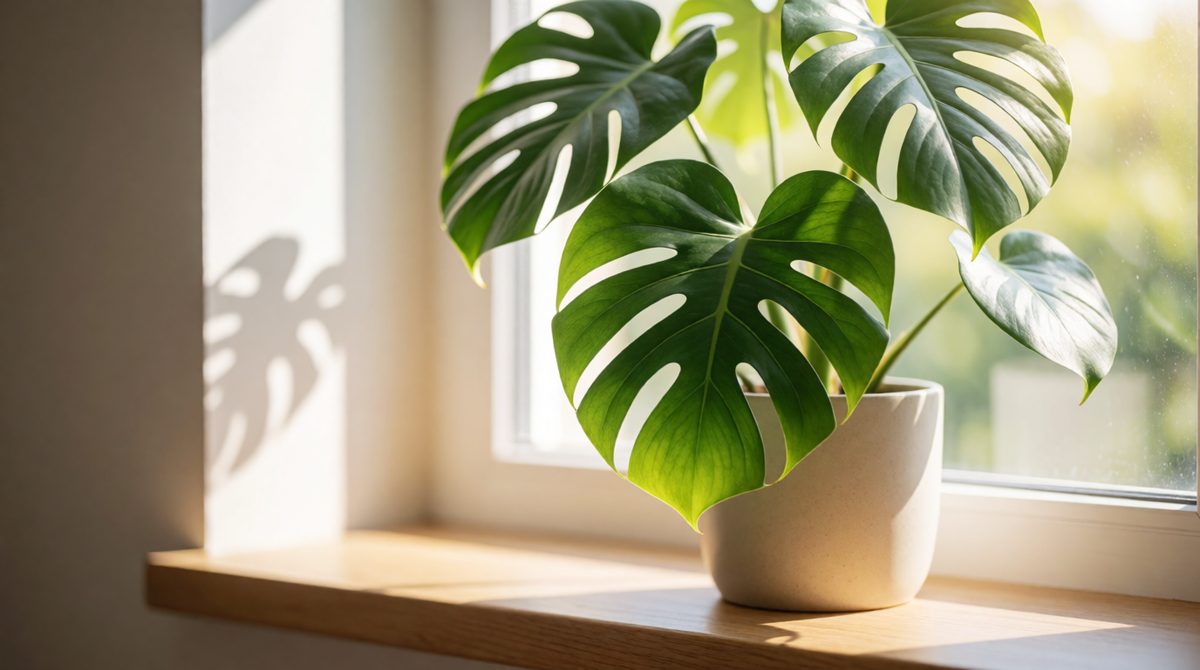
Plants take in CO2 and give out oxygen
Plants carry out two important processes that involve gas exchange: photosynthesis and respiration. These processes happen at different times and have opposite gas requirements.
Photosynthesis and Gas Exchange
During photosynthesis, plants need carbon dioxide from the air and produce oxygen as a waste product. This mainly happens during daylight hours when there's enough light energy available. The equation for photosynthesis shows us exactly which gases are involved:
Photosynthesis Equation
Carbon dioxide + Water → Glucose + Oxygen
6CO₂ + 6H₂O → C₆H₁₂O₆ + 6O₂
This means plants take in 6 molecules of carbon dioxide and produce 6 molecules of oxygen for every glucose molecule made.
☀ Daytime
Photosynthesis rate is high. Plants take in lots of CO₂ and release lots of O₂. The stomata are usually open to allow gas exchange.
🌒 Evening
As light fades, photosynthesis slows down. Less CO₂ is needed and less O₂ is produced. Stomata may start to close.
🌙 Night-time
No photosynthesis occurs. Only respiration happens, so plants take in O₂ and release CO₂, just like animals do.
Respiration and Gas Exchange
Plant respiration happens 24 hours a day, just like in animals. Plants break down the glucose they've made (or stored) to release energy for growth, movement and other life processes. This process uses oxygen and produces carbon dioxide.
Respiration Equation
Glucose + Oxygen → Carbon dioxide + Water + Energy
C₆H₁₂O₆ + 6O₂ → 6CO₂ + 6H₂O + ATP
Notice this is the opposite of photosynthesis! Plants need oxygen and produce carbon dioxide during respiration.
How Stomata Control Gas Exchange
Stomata are the main gateway for gas exchange in plants. These microscopic pores are found mainly on the underside of leaves, though some plants have them on both surfaces. The opening and closing of stomata is controlled by guard cells, which respond to various environmental factors.
👍 When Stomata Open
Stomata typically open when:
• Light is available (for photosynthesis)
• Carbon dioxide levels inside the leaf are low
• The plant has plenty of water
• Temperatures are moderate
👎 When Stomata Close
Stomata typically close when:
• It's dark (no photosynthesis needed)
• The plant is losing too much water
• Carbon dioxide levels are high enough
• Temperatures are too hot or too cold
Factors Affecting Gas Exchange Rate
Several environmental factors can speed up or slow down gas exchange in plants. Understanding these factors helps explain why plants behave differently in various conditions.
Light Intensity
Light intensity has a huge impact on gas exchange because it directly affects photosynthesis. In bright light, plants photosynthesise rapidly, so they need lots of carbon dioxide and produce lots of oxygen. In dim light, photosynthesis slows down, so less gas exchange is needed.
Temperature
Temperature affects gas exchange in two main ways. Higher temperatures make molecules move faster, which can increase the rate of gas exchange. However, if it gets too hot, plants may close their stomata to prevent water loss, which actually reduces gas exchange.
Carbon Dioxide Concentration
If there's plenty of carbon dioxide in the air around a plant, it doesn't need to keep its stomata open as wide or for as long. Conversely, if carbon dioxide levels are low, stomata may open wider to let more in.
Water Availability
Water is crucial for keeping stomata open. When a plant is short of water, it closes its stomata to prevent further water loss. This is a survival mechanism, but it also means gas exchange is reduced.
Case Study Focus: Desert Plants
Desert plants like cacti have adapted their gas exchange to survive in extremely dry conditions. Many open their stomata only at night when it's cooler and less water will be lost. They store the carbon dioxide they collect at night and use it for photosynthesis during the day when their stomata are closed. This adaptation is called CAM photosynthesis (Crassulacean Acid Metabolism).
Leaf Adaptations for Gas Exchange
Plant leaves have evolved several features that make gas exchange more efficient. These adaptations help plants get the gases they need while minimising water loss.
🌿 Thin Leaves
Most leaves are thin so gases don't have to travel far to reach all the cells inside. This makes gas exchange much faster and more efficient.
👁 Large Surface Area
Leaves are flat and broad to provide a large surface area for gas exchange. More surface area means more space for stomata and faster gas exchange.
🌱 Stomata Position
Most stomata are on the underside of leaves where it's shadier and cooler. This reduces water loss while still allowing gas exchange.
Daily Patterns of Gas Exchange
The balance between photosynthesis and respiration creates interesting daily patterns in plant gas exchange. During the day, photosynthesis usually produces more oxygen than respiration uses up, so plants are net producers of oxygen. At night, only respiration occurs, so plants become net producers of carbon dioxide.
The Compensation Point
There are brief periods at dawn and dusk when photosynthesis and respiration rates are equal. At these times, called compensation points, the plant neither takes in nor releases any net amount of carbon dioxide or oxygen. All the oxygen produced by photosynthesis is used up by respiration and all the carbon dioxide produced by respiration is used up by photosynthesis.
Real-World Application
Understanding plant gas exchange helps us appreciate why forests are so important for our planet. During the day, forests act like giant oxygen factories, taking in carbon dioxide (a greenhouse gas) and releasing oxygen that we need to breathe. A single large tree can produce enough oxygen for two people for one day!