IGCSEs for UK Home Educating Families
Complete Cambridge and Pearson Edexcel IGCSE courses your child can work through at home. Short, clear lessons teach every part of the specification, then quizzes and games make sure it sticks.
- Follows the exam board spec
- Games on every lesson
- Phone, tablet or laptop
Made for home educating families
You don't need to know the subject
Every lesson teaches one part of the specification from scratch, so your child can work through it on their own.
See how they're doing
Quiz scores and lessons done are saved, so you can see at a glance what's gone in and what needs another look.
A timetable that fits your family
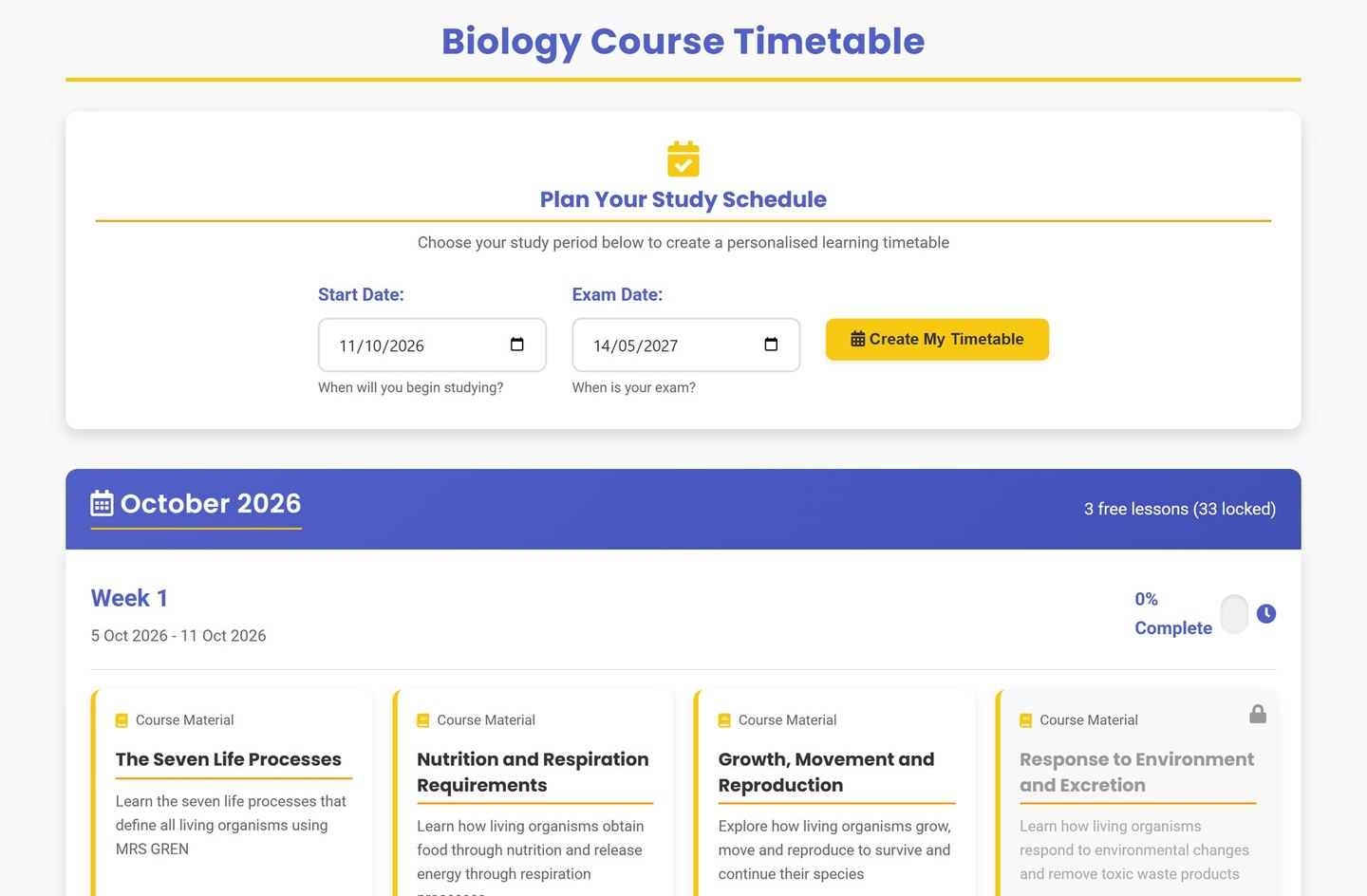
Choose when to finish and the course plans each week for you, around the rest of your home education.
Our 12 courses
Every course teaches the whole specification. Try the first 3 lessons of any course free.
Cambridge IGCSE
Environmental Management
Cambridge IGCSE · 0680 · Exams 2027-2029- 271 lessons
- 5,420 quiz questions
- 2 3D games
Geography
Cambridge IGCSE · 0460 · Exams 2027-2029- 247 lessons
- 5,193 quiz questions
- 1 3D game
Marine Science
Cambridge IGCSE · 0697 · Exams 2027-2029- 260 lessons
- 5,200 quiz questions
- 11 3D games
Travel & Tourism
Cambridge IGCSE · 0471 · Exams 2027-2029- 260 lessons
- 4,840 quiz questions
- 9 3D games
Pearson Edexcel IGCSE
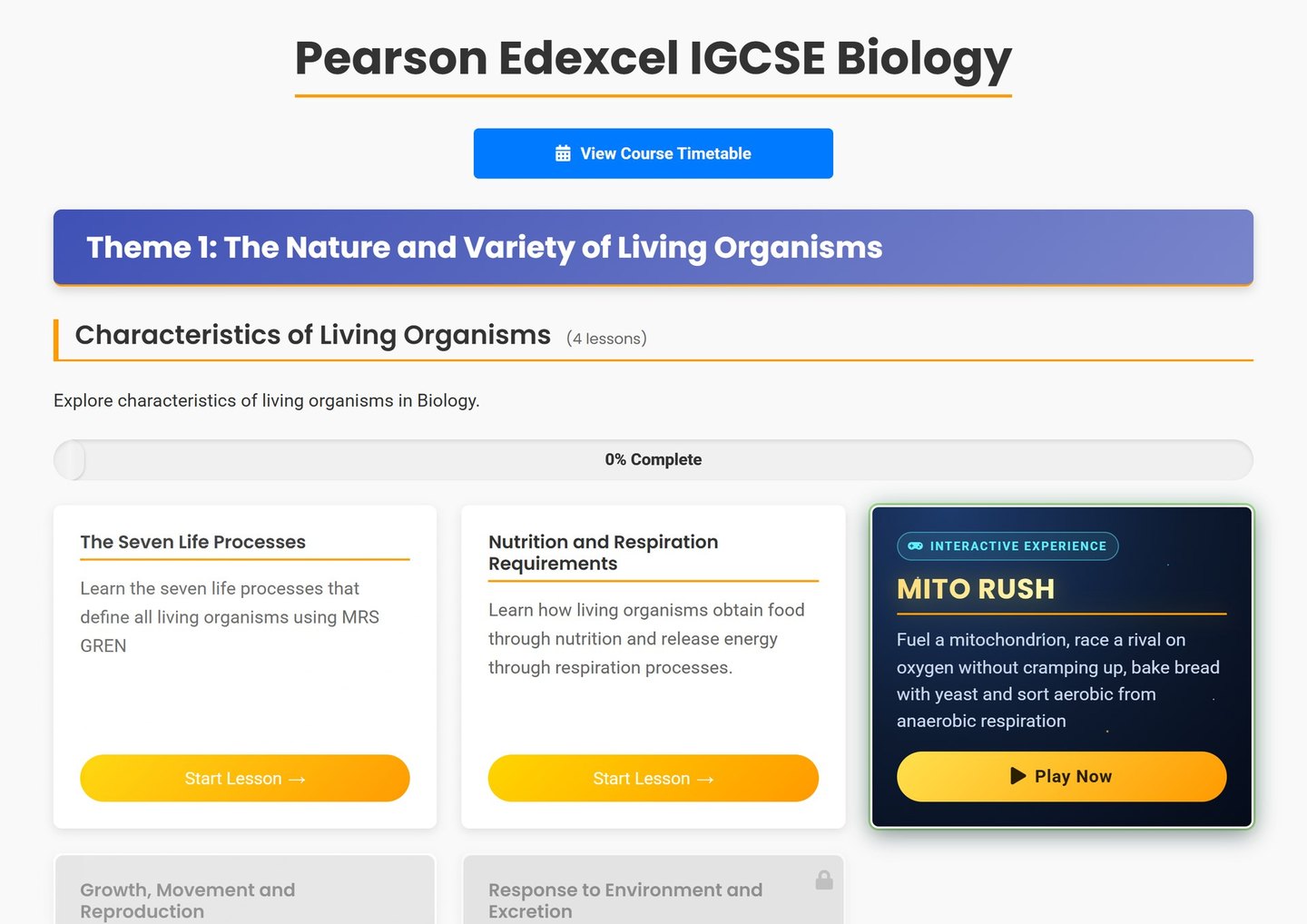
Biology
Pearson Edexcel IGCSE · 4BI1 · Exams 2026-2029- 265 lessons
- 5,100 quiz questions
- 10 3D games
Business
Pearson Edexcel IGCSE · 4BS1 · Exams 2026-2029- 260 lessons
- 5,200 quiz questions
- 8 3D games
Economics
Pearson Edexcel IGCSE · 4EC1 · Exams 2027-2030- 67 lessons
- 670 quiz questions
- 10 3D games
Geography (9-1)
Pearson Edexcel IGCSE · 4GE1 · Exams 2026-2029- 324 lessons
- 5,840 quiz questions
Learn it. Test it. Play it. Remember it.
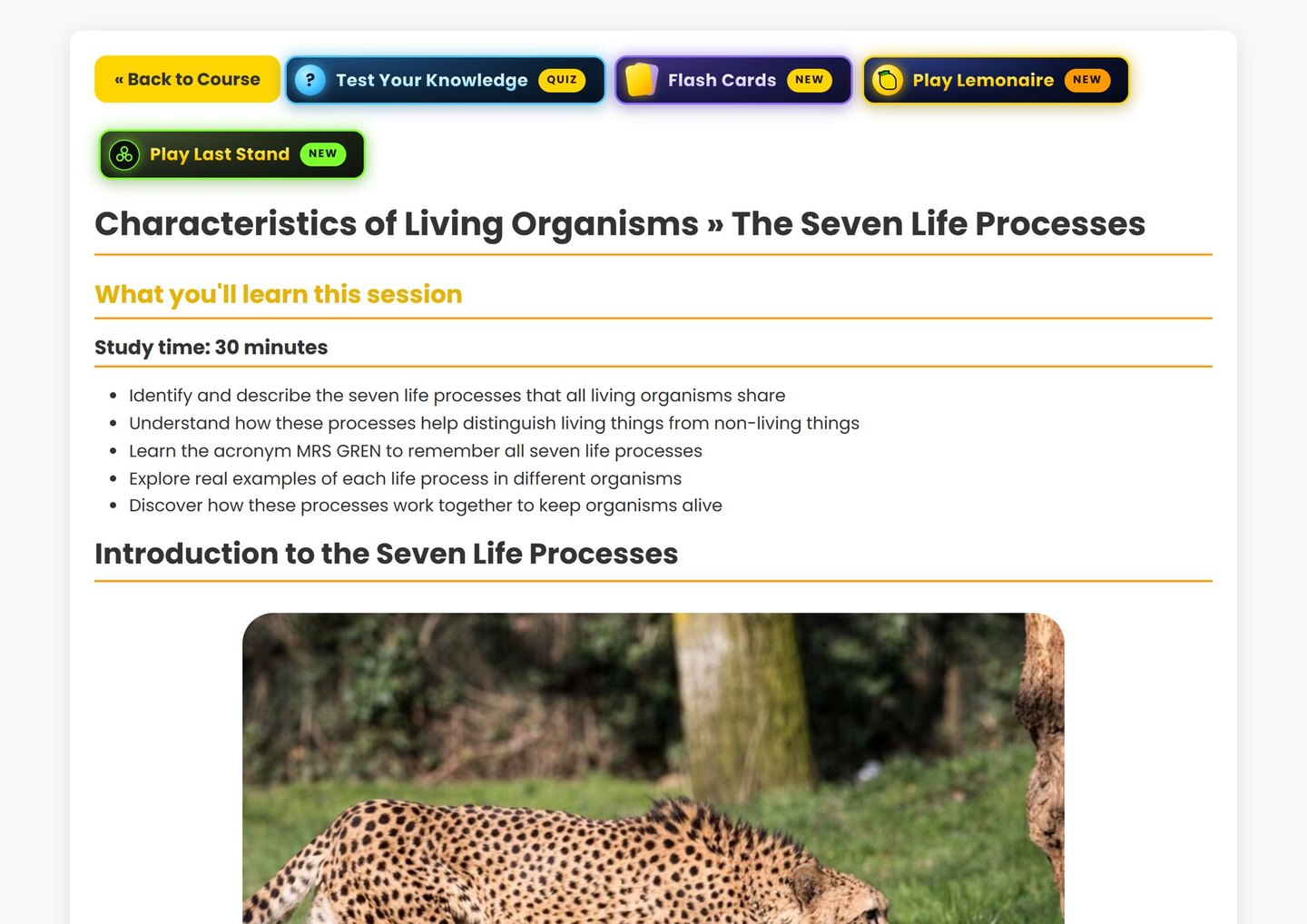
A short lesson on one part of the specification
About 30 minutes, with clear explanations, diagrams, pictures and videos. Key words and exam tips are picked out as you go.
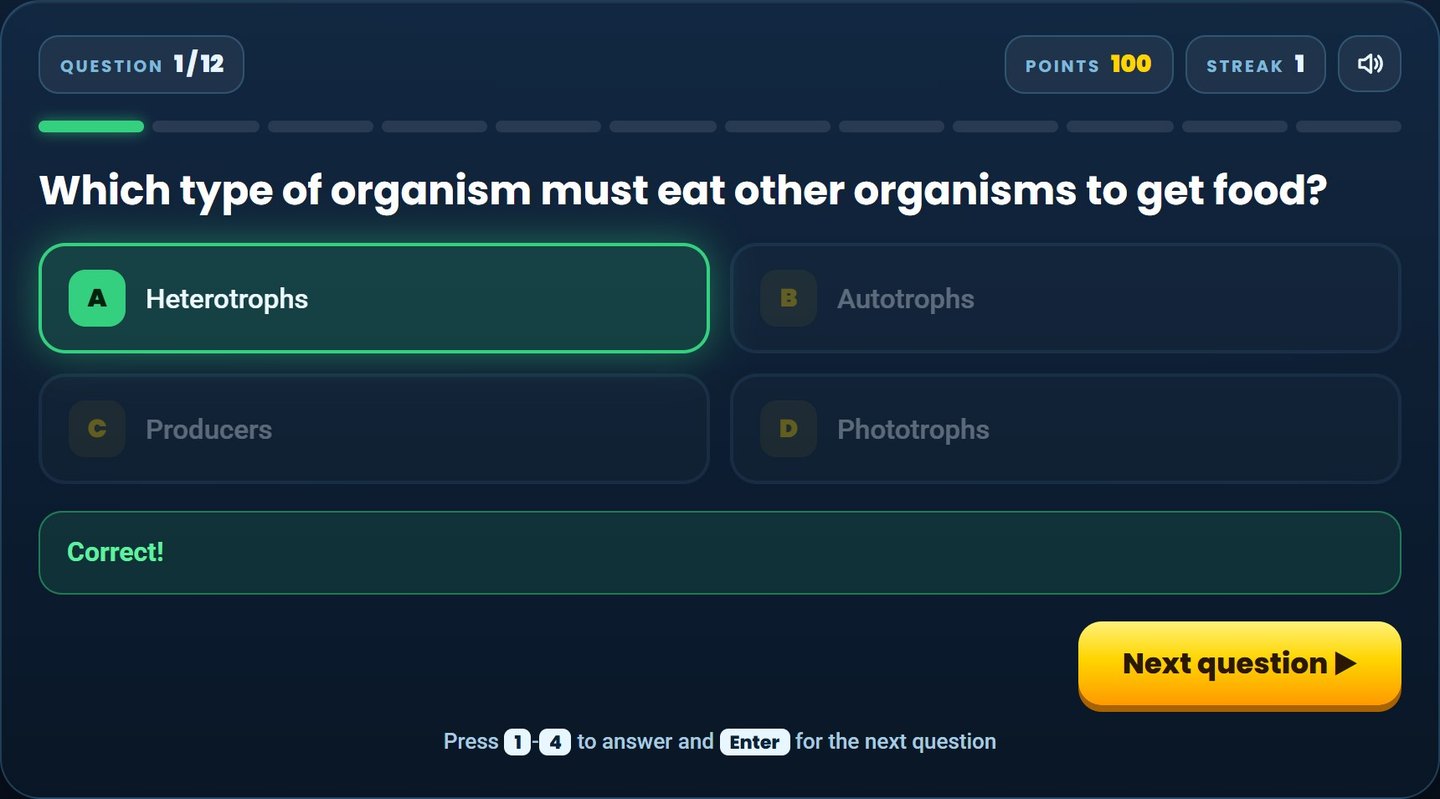
A quiz straight after
Every lesson ends with a quiz on what it taught. Get one wrong and the right answer and the reason appear straight away.
Games that use the same questions
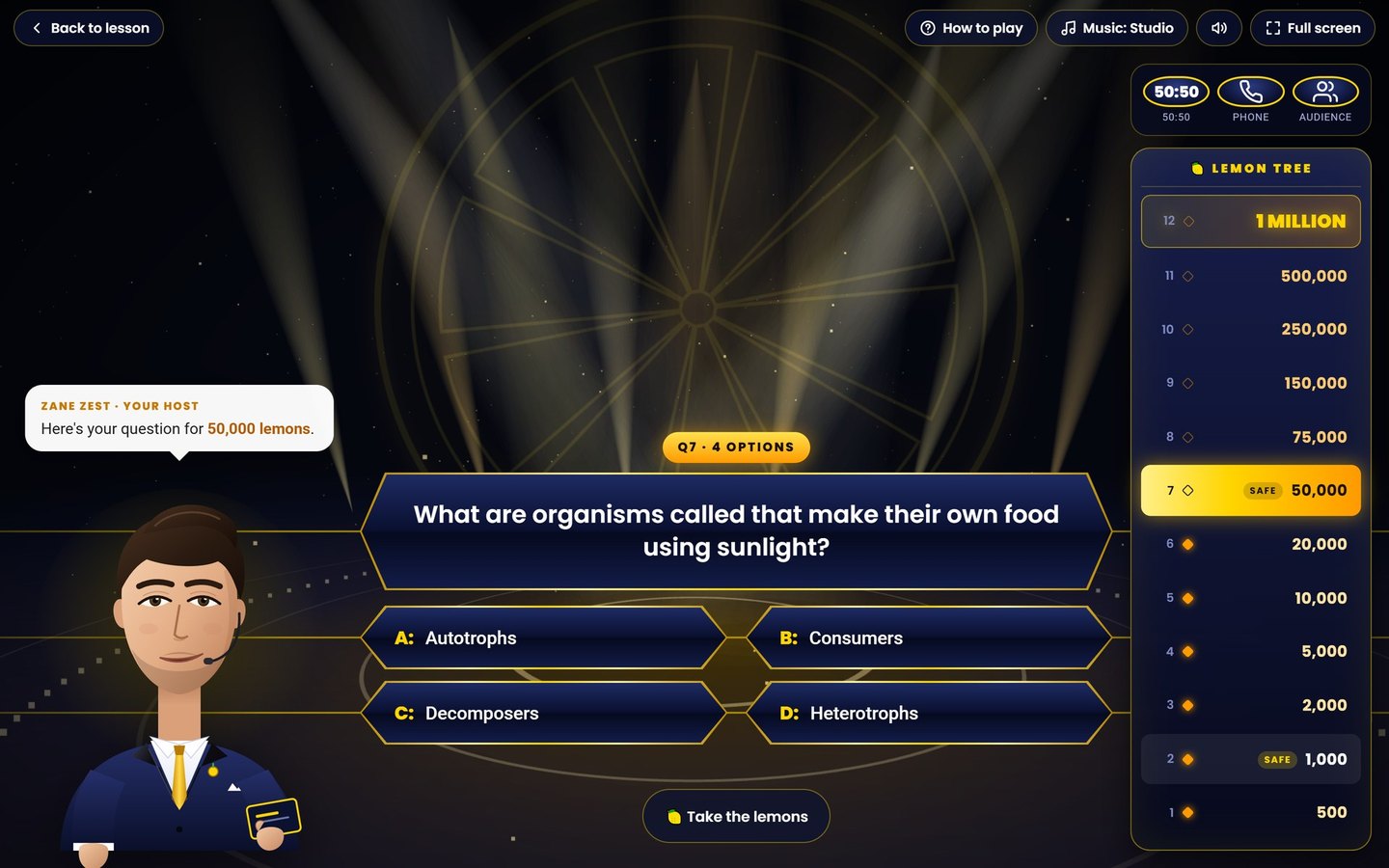
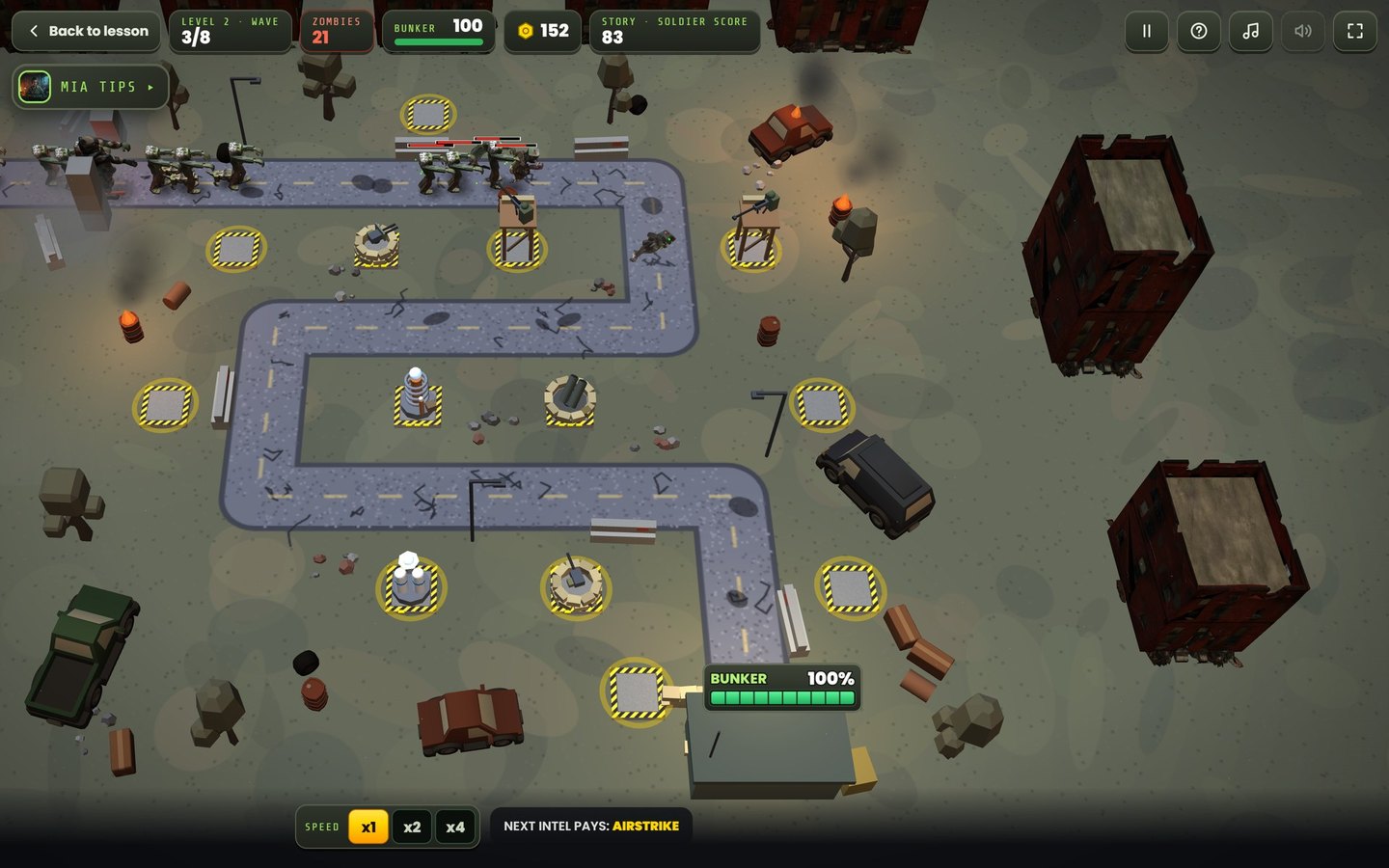
Lemonaire (a quiz show) and Last Stand (a zombie defence game) are on every lesson. You only win by knowing the answers, so students practise far more.
Flash cards that come back at the right time
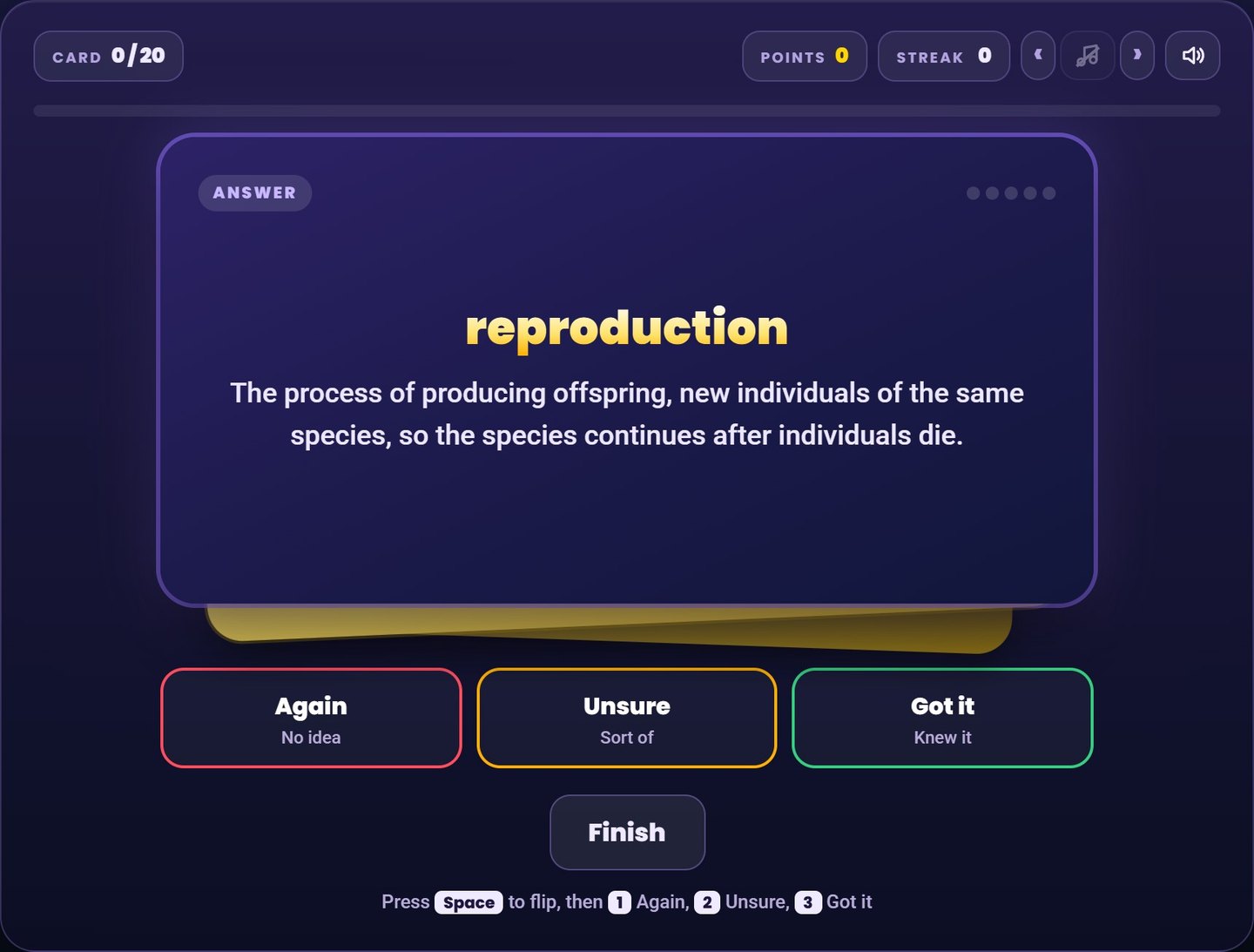
Smart Review brings each card back just before you would forget it, from easy to exam-hard.
A timetable to exam day
Choose your finish date and every lesson is planned week by week, with revision time at the end.
The hardest topics, turned into 3D games
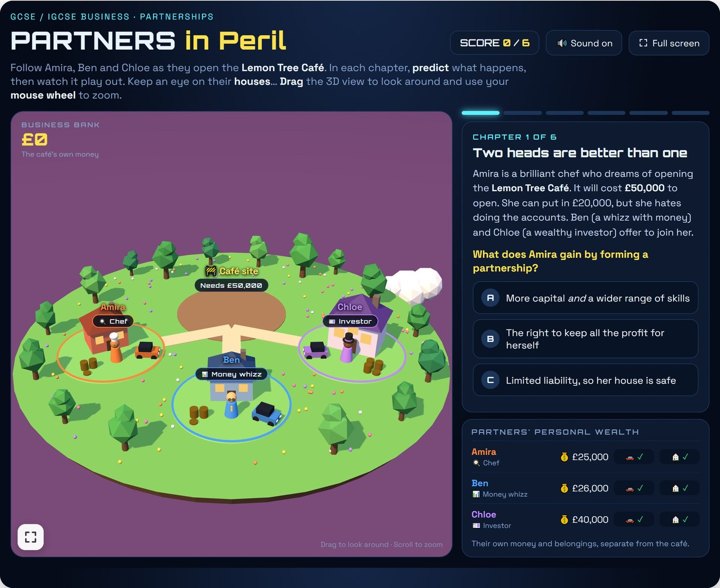
79 games so far. Some ideas are much easier to understand when you can see them move and try them yourself.
Partners in Peril
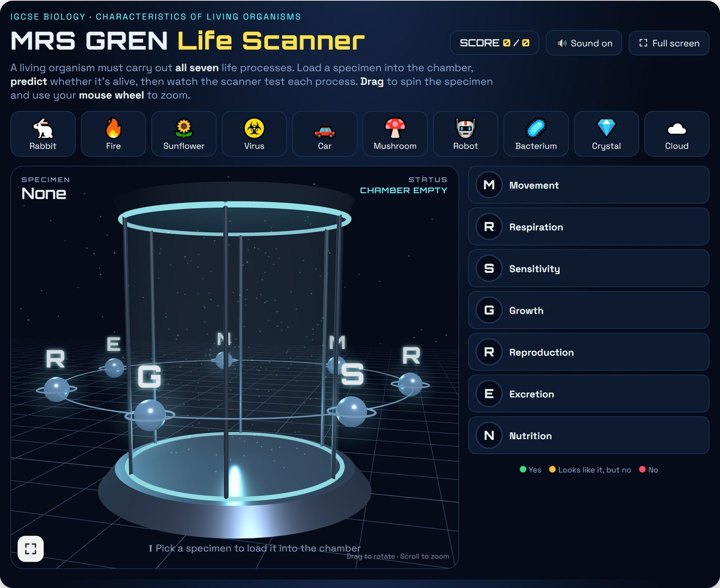
MRS GREN Life Scanner
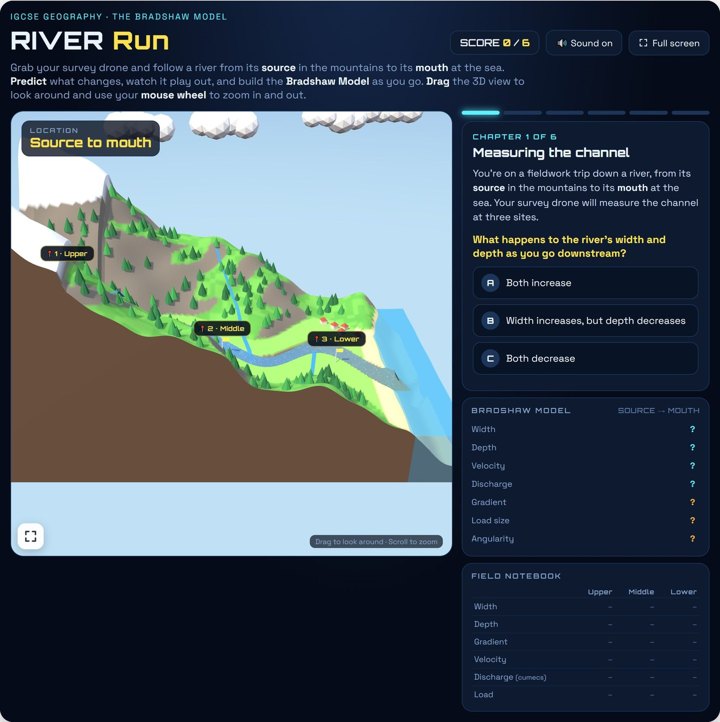
River Run
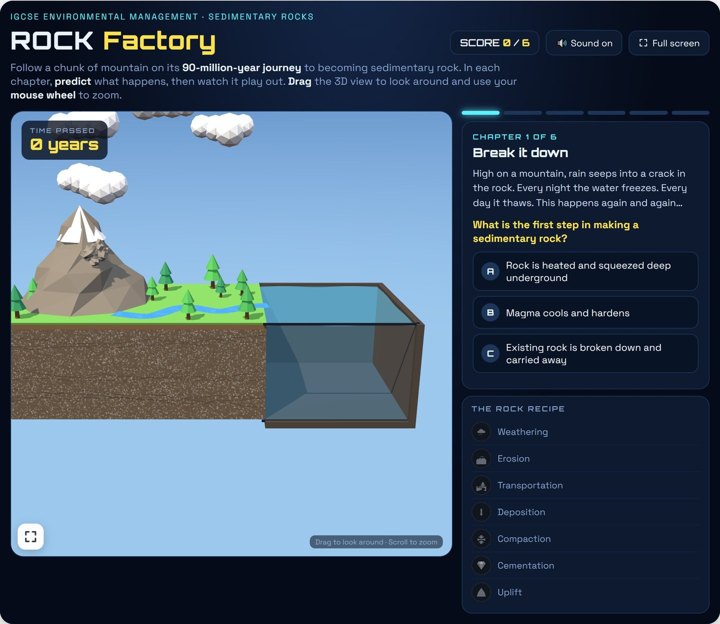
Rock Factory
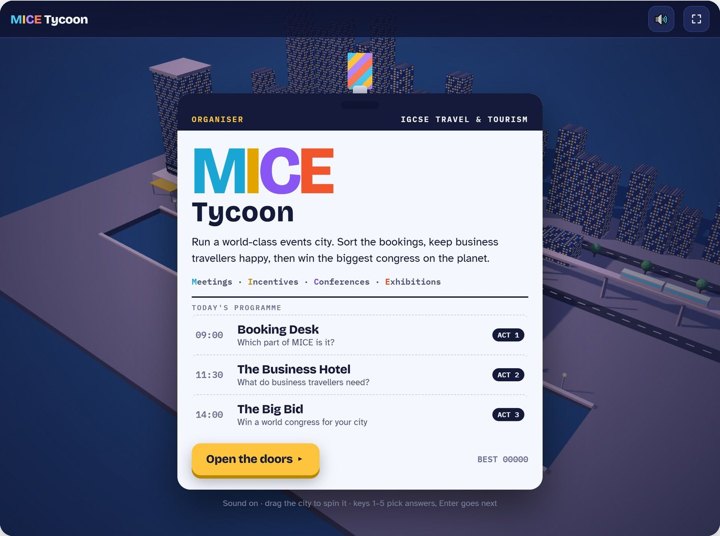
MICE Tycoon
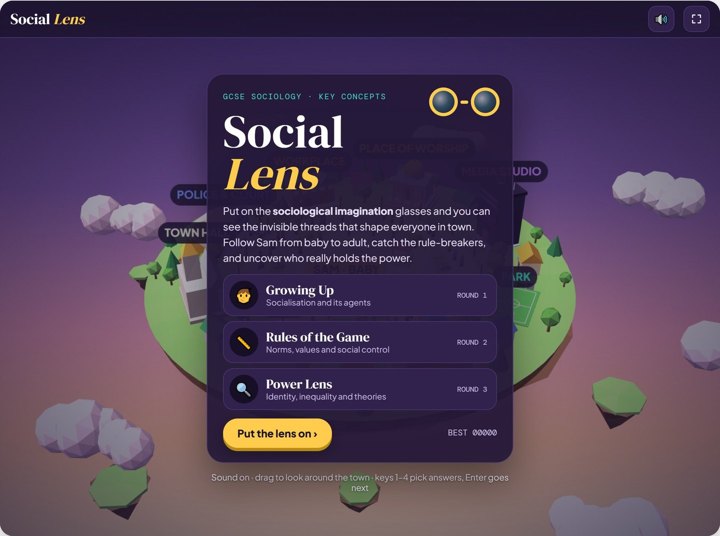
Social Lens
A whole course for a fraction of the cost
 Brainy Lemons | Private tutor | Online school | |
|---|---|---|---|
| Cost | £84 for a whole course | £30-£60 an hour | Thousands a year |
| Teaches every topic from scratch | |||
| Quiz and games on every lesson | Varies | ||
| Study any time, as often as you like | Set lesson times | ||
| Start today | Find one first | Term dates |
What parents say
★★★★★We have used you for Marine Science and Geography IGCSE subjects. We were very pleased with both the cost and ease of use of your online learning. We are very happy with the experience and would fully recommend you to others. Thank you.
S Sarah H.
★★★★★I love Brainy Lemons so much I’ve been recommending it to others. What I found, as a parent, the most useful was the timetable feature. I could put when I wanted the course to finish into the timetable and loved how it worked out a weekly set of lessons. This gave us plenty of time for revision and exam practise and my child went into the exam feeling confident.
E Emma L.
★★★★★My son is home educated and we signed him up to the Geography and Business courses. We got a discount when signing up for 2 courses and so it worked out really good value for money. My son has found it easy to use just following through the lessons and it really helped to be able to set a deadline to keep my son on track. I would really like to see more subjects and more options to pay where you can spread the cost as being home educated and having to pay for all education yourself can really add up.
C Claire M.
Whole courses from £84
Every lesson, quiz, game, flash card and tool. Nothing else to buy. Save more when you take more than one subject.
Good to know
Why IGCSEs for home education?
IGCSEs are widely taken by home-educated students in the UK because most are assessed by exams only, with no coursework, so they are easier to sit as a private candidate.
Which exam boards do you cover?
AQA GCSE, Cambridge IGCSE and Pearson Edexcel IGCSE. Each course follows one exam board's specification exactly, and the course page shows the specification code.
Can we try it before we pay?
Yes. The first 3 lessons of every course are free, with their quizzes and games. No card and no sign-up needed.
Do I need to teach anything?
No. The lessons do the teaching, and the quizzes and games check it has gone in. You can follow along on the progress page.
How do home-educated students sit the exam?
They sit it as a private candidate at an exam centre that takes private candidates. You book directly with the centre, usually well before the exam season, and the centre charges an entry fee.
Who are the courses for?
Students aged 14 to 16 studying GCSEs or IGCSEs, at school, at home or as a private candidate.
Does the price include the exam?
No. Exams are booked and paid for separately with an exam centre. The course gets you ready for them.
Can I buy more than one course?
Yes. One course is £84, two are £154 and three are £210. Or pay £10 a month per course for 12 months.
What do we need to use it?
Just a web browser. It works on phones, tablets, laptops and computers.
Start your GCSEs today
Instant access to the whole course. Or try the first 3 lessons of any course free.
Home education GCSE options: how it all works
When your child is home educated, GCSEs work a little differently. No school enters them for exams automatically, so you choose what to study, the exam board, how they learn it and where they sit it.
That sounds like a lot, but home educators find it's flexible: you can go at your own pace and skip what a school timetable would force on you. Lots of families do: local councils in England reported 126,000 children in elective home education in autumn 2025 (Department for Education figures), and many of them go on to take GCSEs or International GCSEs.
Do home educated children have to take GCSEs?
No. In England there's no legal requirement for a home educated child to sit any exams. Department for Education guidance says there's no set curriculum and no duty to enter children for public examinations.
In practice, most families still want them. Sixth forms, post-16 colleges and many apprenticeships ask for GCSE grades, especially maths and English. So the real question is usually which ones, when and how, rather than whether.
Four ways to get GCSEs while home educating
| Route | What it costs you | Good for |
|---|---|---|
| Study at home, sit the exams as a private candidate | An online GCSE course, books or a tutor, plus an entry fee for each exam | Families who want to pick subjects and set the pace |
| A 14-16 place at a further education college | Free where offered, as further education providers can get government funding for home educated 14 to 16 year olds | Teenagers who'd like taught lessons for a few subjects. Places and subjects are limited. |
| An online school with live classes | Often thousands of pounds a year, and exams are usually still extra | Learners who need fixed lesson times and live teaching every day |
| Wait and take English and maths post-16 | Free at a college or sixth form | Students who aren't ready yet. In England anyone 16 to 18 without grade 4 keeps studying them. |
Most home educators mix these. A common pattern is studying at home for most GCSEs and booking the exams privately, which is the route this page is built around.
Which GCSE subjects work best for home education?
The easiest ones are assessed by written exams only. With no coursework or practical work to supervise, any exam centre that takes private candidates can enter your teenager.
Exam-only subjects
Most International GCSE subjects, and GCSEs such as maths, history, religious studies, sociology and psychology, are assessed entirely by written papers. That's why so many home educated students study International GCSEs from Cambridge or Pearson Edexcel. Sixth forms and universities treat them as equivalent to GCSEs for entry, and the grades are equivalent too: a 7 is a 7.
Subjects that need more from the centre
- GCSE sciences (AQA, OCR and others): biology, chemistry and physics have required practicals your entering centre must confirm. Not every centre will run them for students who don't attend.
- GCSE English Language: the spoken language endorsement is part of the qualification, so the centre has to assess a short presentation. It's graded separately and doesn't change the 9 to 1 grade.
- Subjects with fieldwork or coursework: art, design and technology, drama, music and PE need work marked by the centre, which most centres won't do for external students.
- Modern languages: the speaking test has to be run by the centre, so check before you start.
If you'd like a science, an International GCSE avoids the lab work: practical skills are tested in a written paper instead. The GCSE and IGCSE table on our homepage compares the two in more detail.
How many GCSEs do home educated teenagers take?
Usually fewer than at school, and that's fine. Many sixth forms ask for five GCSEs at grade 4 or above, often including maths and English. Check the entry requirements of the sixth forms your teenager might apply to, then work backwards.
Home educators also tend to spread exams out. A student might take one GCSE at 15, two the next summer and the rest a year after year 11. Cambridge runs exams in June and November in the UK, and Pearson Edexcel has a November series for many International GCSE subjects too, so there's more than one chance a year. GCSE exams are mainly in the summer, with a November series only for English Language and maths, for students aged 16 or over.
Some families use Functional Skills English or maths as a stepping stone. Functional Skills is a different qualification at Level 1 or Level 2, so check whether the post-16 place your student wants will accept it instead of a GCSE.
Every one of our courses follows one exam board syllabus, so you always know exactly which exam to book.
See our coursesSee pricesHow much do GCSE exams cost when you're home educating?
There are two things to budget for: the learning, and the exam entries. Families normally pay both themselves.
| Cost | Typical amount | Notes |
|---|---|---|
| Entry fee for each GCSE or IGCSE | Commonly around £200-£300 per subject at centres that take private candidates | Paid to the exam centre. Late entries are dearer, and sciences or languages can be dearer again. |
| Five GCSEs | Roughly £1,000-£1,500 in total | Spread over two or three years if you split the exams up |
| Private tutor | £30-£60 an hour | Useful for teaching tricky topics and written feedback, but weekly tutor sessions add up fast |
| Self-study online course | Brainy Lemons: see the prices above, or £10 a month per course | The whole syllabus taught lesson by lesson, with practice and progress tracking |
Exam fees vary a lot between centres, so ask two or three for their price list before you decide. Some also charge for access arrangements, such as extra time, because they need their own assessment.
Planning the exam year: a simple timeline
For exams in June 2027, the standard entry deadline set by JCQ (the Joint Council for Qualifications) is 21 February 2027. Centres usually want your booking well before that.
- September to October: choose the subjects and the exact exam board and syllabus code. Ask local centres whether they take private candidates for them.
- November to January: book with a centre and pay. Raise any access arrangements now, as they take time.
- February: entries close. A student in year 11 should be finishing new topics around now.
- March to May: revision and timed past papers from the exam board's website, checked with the mark scheme.
- May and June: the exams. Take photo ID, and expect to sit with other candidates under an invigilator.
- August: results day. Results come through the centre, and the certificate follows later.
Each GCSE is planned around 130 guided learning hours, so a steady three hours a week for each one over a year, plus a few extra hours at revision time, covers it. Our planner works this out for you: pick an exam date and it spreads every lesson across the weeks, with revision at the end.
Brainy Lemons is self-study, so it suits home educators who aren't subject teachers. The teaching is done for you: each topic is a short lesson, then a quiz and games check the learning has gone in, and you can see progress and quiz scores at any time. It fits around everything else a parent and child have going on, with no tutor hours to book. The first 3 lessons of every course are free to try.
Home education GCSE questions
How do you do GCSEs if your child is home educated?
Your child studies at home, using a course, books, a tutor or a mix, and then sits the same exam as school students. You book it with an exam centre that takes external candidates and pay them directly.
Can my child's old school let them sit GCSE exams there?
It can, but it doesn't have to once a student is off the school roll. Some schools happily take former pupils as private candidates, so it's worth asking. JCQ also publishes a list of centres that accept private candidates.
Are GCSEs from home education worth the same?
Yes. The qualification comes from the exam board, not from where the learning happened. The results and certificate are exactly the same as a school student's, and universities accept them in the same way.
Can a home educated child sit GCSEs early?
Yes. There's no minimum age for private candidates. Some home educated students take a subject they love at 14 or 15 to get used to exams before the rest.
What's the cheapest way to get GCSEs when home educating?
Study at home with a low-cost course and free past papers, take fewer GCSEs, book early to avoid late fees, and compare centre prices. A 14-16 place at an FE provider is free where you can get one, but the choice is limited.
Does home education affect A level or university applications?
Not if the grades are there. Sixth forms look at GCSE results, often asking for a 6 or above in the ones you want to take at A level. Universities welcome home educated applicants, who apply through UCAS like anyone else, and a university looks at your results, not at whether you went to school.