🌋 Tectonic hazards
Caused by movement of the Earth's crust. Examples: earthquakes, volcanic eruptions and tsunamis.
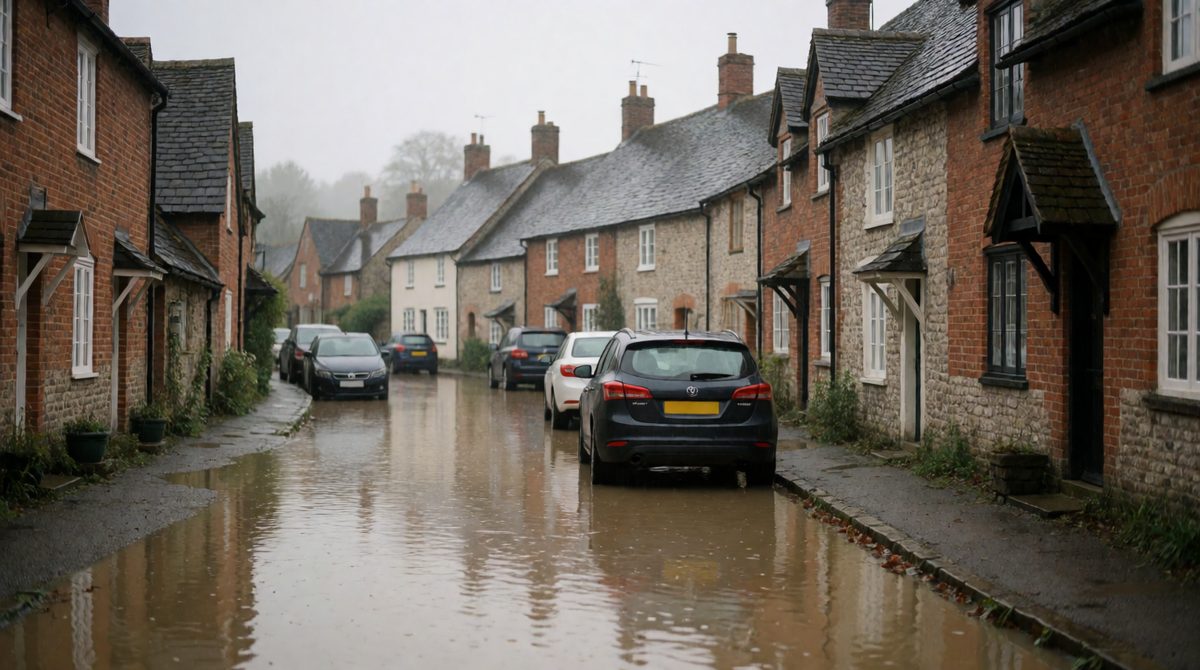
A natural hazard is a natural event that threatens people and property, like this flood
The Earth is always changing. Plates move, air swirls, rivers rise and hillsides slip. Most of the time, nobody is harmed. But when one of these natural events threatens people or property, geographers call it a hazard.
The spec says that natural hazards pose major risks to people and property. That is the key idea for this whole unit: a hazard is a threat. It has not necessarily hurt anyone yet.
Key terms:
Think about an earthquake in the middle of an empty desert. It is a natural event, but it threatens nobody. It is not a hazard to people. The same earthquake under a large city is a major hazard. So a natural event only becomes a hazard when people or property are in its way.
Geographers group natural hazards by what causes them. There are four main types. Learn all four, because exam questions often ask you to name or classify them.
Caused by movement of the Earth's crust. Examples: earthquakes, volcanic eruptions and tsunamis.
Caused by the weather and the air around us. Examples: tropical storms, tornadoes, droughts, heatwaves and blizzards.
Caused by the movement of land and rock at the surface. Examples: landslides, avalanches and rockfalls.
Caused by living things. Examples: disease outbreaks (epidemics) that spread through a population.
Key terms:
One hazard can trigger another. For example, heavy rain (atmospheric) can saturate a slope and cause a landslide (geomorphological). An earthquake (tectonic) can also set off landslides. When you classify a hazard, ask: what caused it?
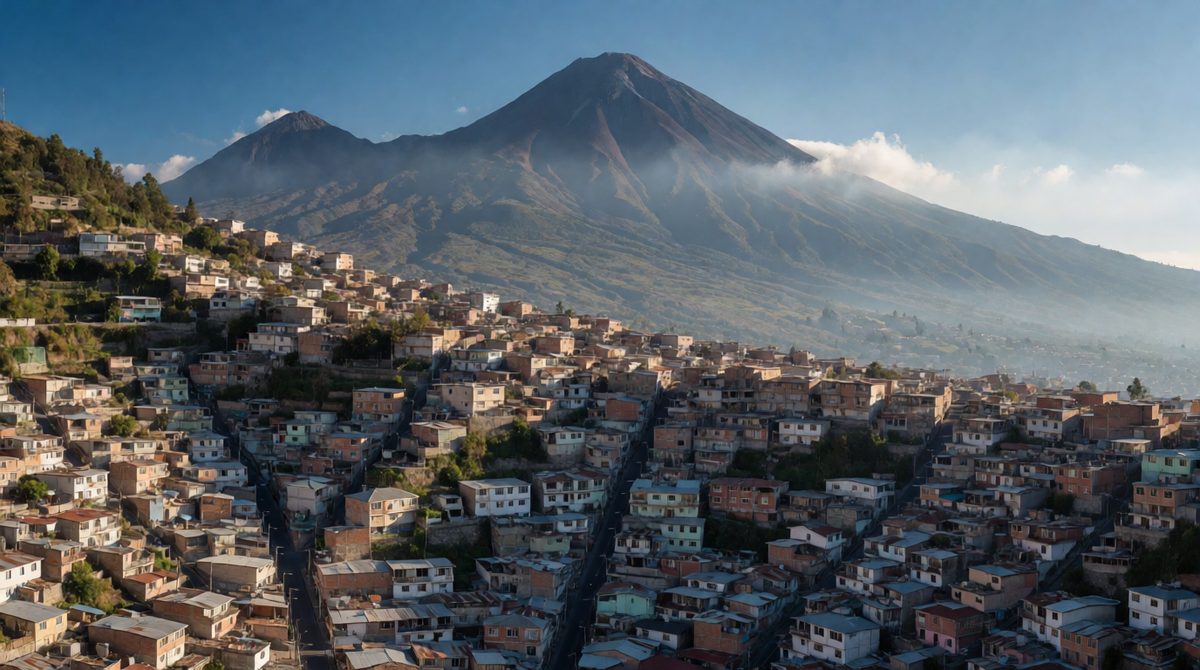
More people living close to a hazard means a higher hazard risk
Two places can face the same natural event and have very different outcomes. This is because the level of risk depends on people as well as nature. The spec asks you to know the factors that affect hazard risk. Here they are, one at a time.
More people means more people who could be in the path of a hazard. As the population grows, more homes, roads and businesses are built, so there is more property to be damaged too.
Urbanisation is the growth in the proportion of people living in towns and cities. Cities pack lots of people and buildings into a small area, so one hazard can affect huge numbers of people at once. Fast-growing cities may also have poorly built homes on risky land, such as steep hillsides or river banks.
Poor people often have little choice about where they live. They may only be able to afford cheap land that is at risk, such as flood-prone areas or unstable slopes. Their homes may be weakly built. They also have less money to prepare, to escape or to rebuild afterwards.
Some hazard-prone land is very attractive for farming. Soils near volcanoes can be fertile, and flat river flood plains are good for crops. Farmers therefore choose to live and work in places where hazards are more likely. Clearing land and farming it can also make some hazards worse, for example by leaving slopes bare and more likely to slip.
Climate change may be altering the pattern of some weather hazards, such as heatwaves, droughts and flooding. This can put more people at risk in places that did not suffer from them before. You will study the causes and effects of climate change in the lessons on Evidence for Climate Change and Causes of Climate Change.
A country's level of development affects how well it can cope. Richer countries can usually afford strong buildings, good emergency services, warning systems and insurance. Poorer countries often have fewer of these. The result is that the same hazard can cause far greater harm in a poorer place.
Risk goes up when more people are exposed to a hazard and when they are less able to cope. Risk goes down when people are well prepared, well protected and have the resources to recover.
1. Saying "a natural hazard is a natural disaster". A hazard is a threat. A disaster is what happens when the hazard causes serious harm.
2. Forgetting that people are part of the answer. Risk is not only about how strong the event is.
3. Writing "bad weather" for atmospheric hazards. Name a specific hazard, such as a drought or a tornado.
4. Mixing up types. A landslide is geomorphological, even when an earthquake or heavy rain triggers it. The earthquake is tectonic, but the landslide it causes is geomorphological.
(a) State what is meant by a natural hazard. [1 mark]
(b) Name one atmospheric hazard and one biological hazard. [2 marks]
(c) Explain why the risk from natural hazards is increasing in many cities. [4 marks]
(a) A natural event that threatens people or property (1).
(b) Atmospheric: tropical storm, drought or heatwave (1). Biological: a disease epidemic (1).
(c) Many cities are growing quickly through urbanisation and population growth (1), so more people and buildings are exposed to hazards (1). Poor people may be forced to live on risky land such as steep slopes or flood plains (1) and their homes may be weakly built, so they have less ability to cope and recover (1).
For a 4-mark "explain" question, aim for two clear linked points, each with a reason. Use words like "because" and "so" to show the chain.
Access the full course and all the resources like custom timetables and progress tracking.
Join Today