What is climate change?
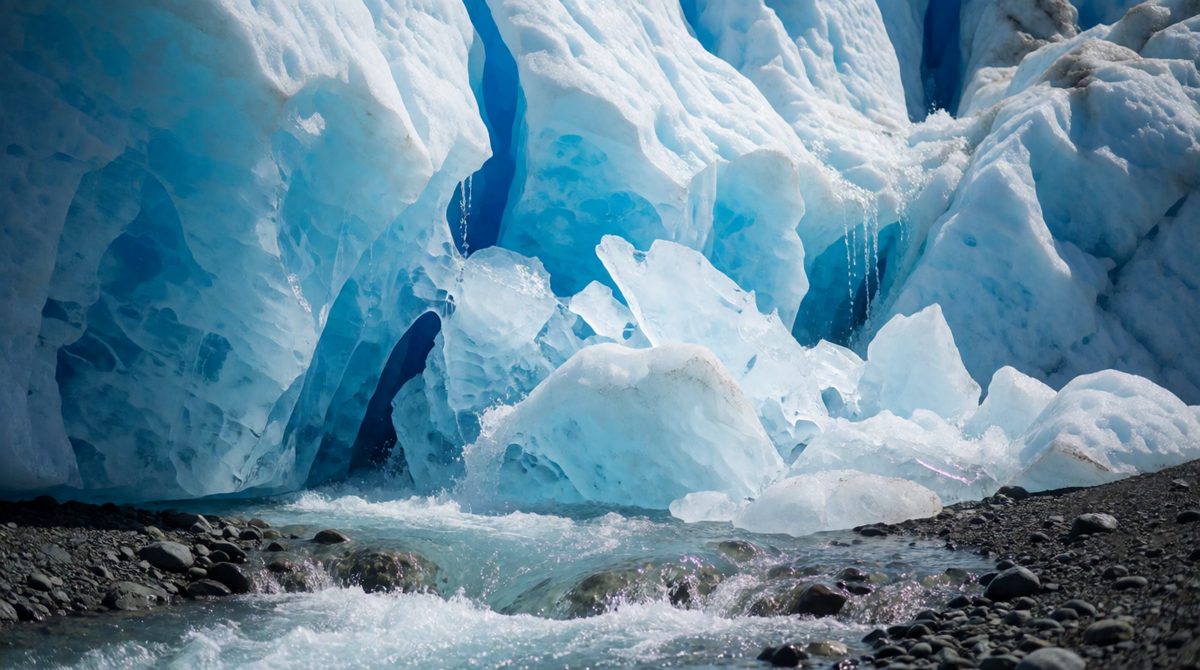
Shrinking glaciers are one piece of evidence that the climate is changing
Weather is what happens outside today. Climate is the average weather of a place over a long time, usually 30 years or more. The climate of the Earth has never stayed the same. It has always changed, and the evidence for this goes back a very long way.
The spec asks you to know the evidence for climate change from the beginning of the Quaternary period to the present day. The Quaternary began about 2.6 million years ago and we are still in it. It has been a time of big swings. Cold glacial periods (ice ages) were followed by warmer interglacial periods. We are living in a warm interglacial now.
Key terms:
- Climate change: a long-term change in the Earth's average temperature and weather patterns.
- Quaternary period: the most recent period of Earth's history, starting about 2.6 million years ago and continuing today.
- Glacial period: a cold time when ice sheets spread across large areas.
- Interglacial period: a warmer time between two glacial periods.
- Evidence: information that scientists use to work out what the climate was like.
How do we know about the past?
Reliable instrument records only go back about 150 years. So scientists use clues left in nature. These clues are called proxy evidence, because they stand in for direct measurements.
Evidence from the distant past
❄ Ice cores
Scientists drill deep into ice sheets in Greenland and Antarctica and pull out long tubes of ice. Each year's snow builds a new layer. Tiny air bubbles trapped in the ice hold samples of the air from that time. Scientists measure the gases in the bubbles, such as carbon dioxide, and the chemistry of the ice to work out past temperatures. Some cores are over 800,000 years old.
🌳 Tree rings
A tree adds one ring every year. In a warm, wet year the tree grows well and the ring is wide. In a cold or dry year the ring is narrow. Counting and measuring the rings gives a record of the climate for each year the tree was alive. Some trees and old timbers give records going back thousands of years.
🌿 Pollen
Plants release pollen. It is preserved in peat bogs and the mud at the bottom of lakes. Scientists dig out layers of mud and identify the pollen in each layer under a microscope. Different plants like different climates, so the pollen shows which plants grew there and what the climate must have been like.
📖 Historical records
People have written about weather for centuries. Diaries, paintings, newspapers, ship logs and harvest dates all give clues. For example, the River Thames in London froze hard enough in some cold winters for people to hold frost fairs on the ice. The last was in 1814.
Evidence from recent times
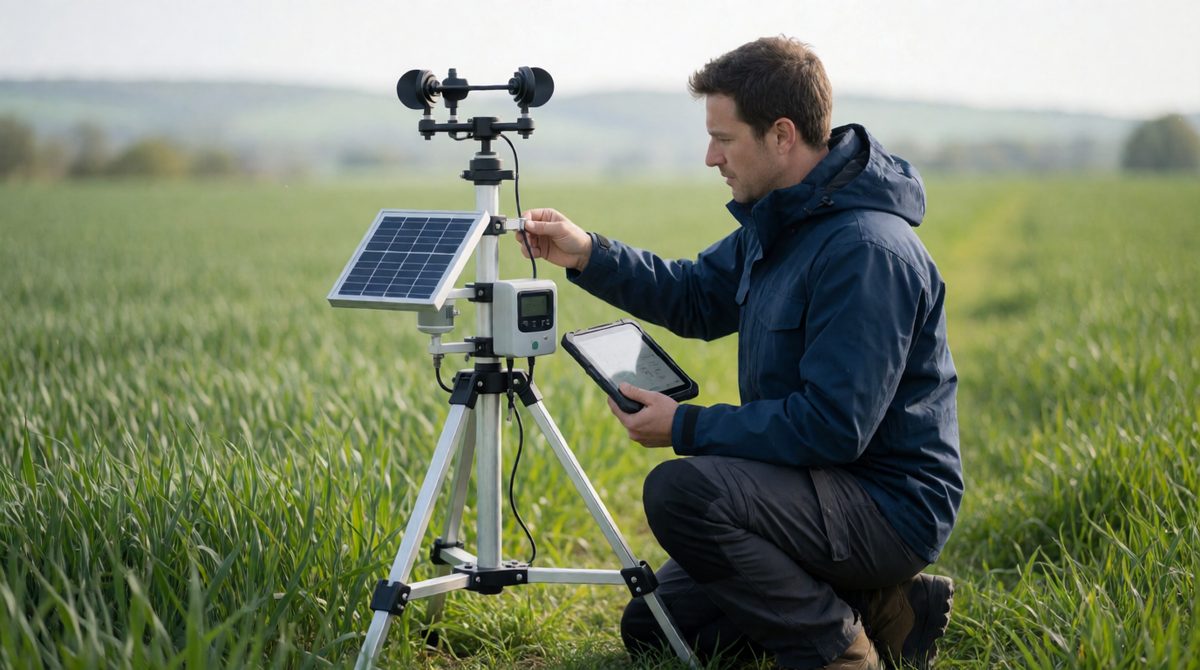
Weather stations give accurate temperature records going back over a century
🌡 Temperature records
Weather stations and ships have measured temperature with instruments since the 1800s, and satellites since the 1970s. These records show that the global average temperature has risen by about 1.1°C since the late 1800s. The most recent years are among the warmest on record.
🌊 Sea level
Tide gauges and satellites measure the height of the sea. Global sea level has risen by about 20 cm since 1900. The sea rises because ice on land melts and because water expands slightly as it warms.
🏔 Ice sheets and glaciers
Satellite images and measurements show that glaciers are shrinking in many places, and the Greenland and Antarctic ice sheets are losing ice. The area of Arctic sea ice has also fallen.
Notice how the pieces fit together. Warmer air melts ice, melting ice and warmer water raise sea level, and all of this matches the rise in measured temperature. Several different types of evidence pointing the same way makes the case much stronger.
Using evidence well
Different evidence works best over different time scales.
- Ice cores: hundreds of thousands of years.
- Pollen and tree rings: thousands of years.
- Historical records: hundreds of years.
- Temperature, sea level and ice measurements: the last 100 to 150 years, now in great detail.
Each type has limits. Tree rings show growth, which can be affected by things other than temperature, such as rainfall. Old diaries may be incomplete or only cover one place. This is why scientists use many sources together.
Worked example
A scientist sees that tree rings from 1816 are very narrow. This suggests that the growing season was cold or poor that year. To be more sure, she checks historical records from the same time. If diaries also describe a cold summer and poor harvests, the two sources support each other and the conclusion is more reliable.
Common mistakes
Mixing up weather and climate. One cold day is weather, not climate change. Do not just write that tree rings show temperature. Say that wide rings show good growing conditions, such as warm and wet years, and narrow rings show poorer conditions. Also, do not say ice cores show only temperature. They also show the gases in the air, such as carbon dioxide.
Exam-style question
(a) Describe how ice cores provide evidence of past climate. [2 marks]
(b) Explain one reason why scientists use more than one type of evidence to study climate change. [2 marks]
(c) Suggest how rising sea level provides evidence that climate change is happening. [2 marks]
Model answer
(a) Ice is drilled out of ice sheets such as Antarctica in long tubes (1). Air bubbles trapped in the layers are analysed to show gases and past temperatures (1).
(b) Each type has limits, for example tree rings can be affected by rainfall as well as temperature (1). Using several sources that agree makes the conclusion more reliable (1).
(c) Sea level rises as ice on land melts (1). Melting is caused by rising temperatures, and water also expands as it warms (1).
Exam tip
In a "describe" question for an ice core, name the place it comes from and say what is trapped inside it. Two clear points earn two marks.