🌾 Food and water
Changing temperatures and rainfall can make farming harder in some places, so crop yields fall. Some areas get more droughts, which means less water for drinking, farming and industry. Other areas may be able to grow new crops.
Sign up to access the complete lesson and track your progress!
Unlock This Course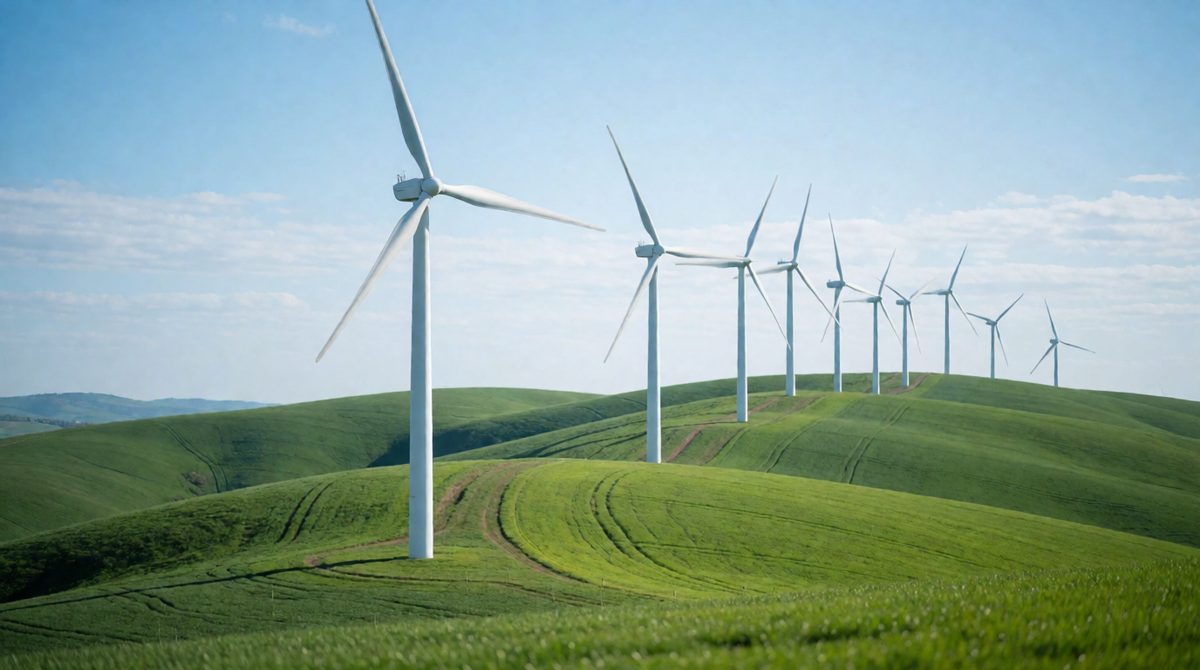
Switching to renewable energy is one way to cut the causes of climate change
You already know that the climate is warming and that human activity is a major cause. This lesson asks two questions. What does a warmer world do to people and nature? And what can be done about it?
The spec splits the answer to the second question into two ideas. They sound similar, so learn the difference now.
Key terms:
An easy way to remember it: mitigation tackles the cause, adaptation tackles the effects.
A warmer climate does not affect everyone in the same way, but some effects are widespread.
Changing temperatures and rainfall can make farming harder in some places, so crop yields fall. Some areas get more droughts, which means less water for drinking, farming and industry. Other areas may be able to grow new crops.
Melting ice and warming oceans make the sea rise. Low-lying coasts and river deltas flood more often. People may lose homes and farmland, and some have to move away.
Heatwaves can cause illness and deaths, especially among the old and very young. Warmer conditions can help some diseases, such as those carried by mosquitoes, to spread to new areas.
More floods, droughts and heatwaves damage homes, roads and businesses. Insurance costs rise and governments must spend more on repairs. Some places may gain, for example from a longer growing season or more tourists in warm weather.
Do not say "everyone suffers equally". Effects differ from place to place, and poorer countries often cope less well because they have less money for protection. A few places may even benefit, so say so when a question asks for balance.
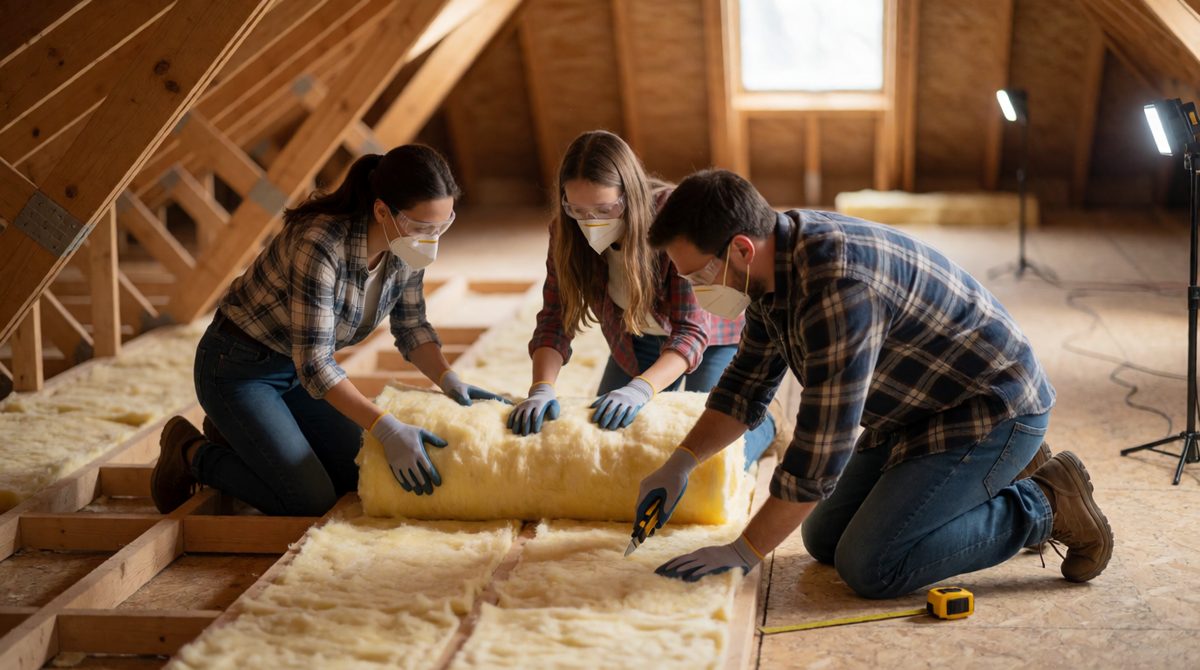
Better insulation saves energy, a way of mitigating climate change
Mitigation works on the greenhouse gases that cause warming. The spec names four main strategies.
Burning fossil fuels releases carbon dioxide. Alternative sources, such as wind, solar and nuclear power, release little or none when they make electricity. Using more of them in place of coal, oil and gas cuts emissions. You will meet the different energy sources in detail in a later lesson.
Carbon capture and storage (CCS) catches carbon dioxide from power stations and factories before it escapes into the air. The gas is then transported, often by pipeline, and stored deep underground in rock, such as old gas fields.
Trees take in carbon dioxide from the air as they grow, so planting new forests removes carbon dioxide. Protecting existing forests helps too. The limits are that young trees take many years to grow, and land is needed that might be used for farming.
Greenhouse gases do not stop at borders, so countries need to work together. In an international agreement, governments promise to cut emissions. Two well-known examples are the Kyoto Protocol (1997) and the Paris Agreement (2015). In the Paris Agreement, countries agreed to try to keep global warming well below 2 degrees C above pre-industrial levels, and to aim for 1.5 degrees C.
The weakness is that countries choose their own targets, and some do not meet them. Governments also argue over who should do the most: richer countries that have produced the most emissions in the past, or fast-growing countries that now produce a lot.
Even if emissions fell tomorrow, some warming would continue. Adaptation accepts this and prepares for it. The spec names three types.
Farmers can grow crops that cope with heat and drought, change planting dates, and use irrigation more carefully. Some may switch to new crops that suit the warmer climate.
Build reservoirs to store water, fix leaking pipes, charge people for the water they use so they save it, and recycle water. These steps help when rainfall becomes less reliable.
Build sea walls and flood barriers such as the Thames Barrier in London, and raise buildings above flood level. In some places people move away from the most threatened land.
Adaptation costs money, so richer countries find it easier. A poorer country may know what to do but not be able to pay for it.
Neither is enough alone. Mitigation reduces how bad the problem gets in the future. Adaptation protects people now and in the years ahead. Most experts say we need both.
Sort these: (a) building a wind farm, (b) building a sea wall, (c) planting a forest, (d) growing drought-resistant crops.
Mitigation: (a) and (c), because they reduce greenhouse gases. Adaptation: (b) and (d), because they help people cope with changes that are happening.
(a) Explain the difference between mitigation and adaptation. [2 marks]
(b) Explain one way that climate change can affect people. [2 marks]
(c) Explain how carbon capture can reduce the causes of climate change. [2 marks]
(a) Mitigation reduces the causes of climate change, such as cutting greenhouse gas emissions (1). Adaptation means responding to the effects of climate change, so people can cope with it (1).
(b) Rising sea levels can flood low-lying coasts (1), so people may lose their homes and farmland and have to move away (1).
(c) Carbon dioxide is captured from power stations before it reaches the air (1). It is then stored underground, so less of this greenhouse gas builds up in the atmosphere (1).
In "explain" questions, make a point and then add a "so" or "because" link. In part (b), the effect on its own gets 1 mark and the consequence for people gets the second.