🌿 Biotic parts
Algae, pondweed and water lilies. Water snails, tadpoles, water fleas, dragonfly nymphs, diving beetles, small fish and frogs. Bacteria and fungi in the mud.
Sign up to access the complete lesson and track your progress!
Unlock This Course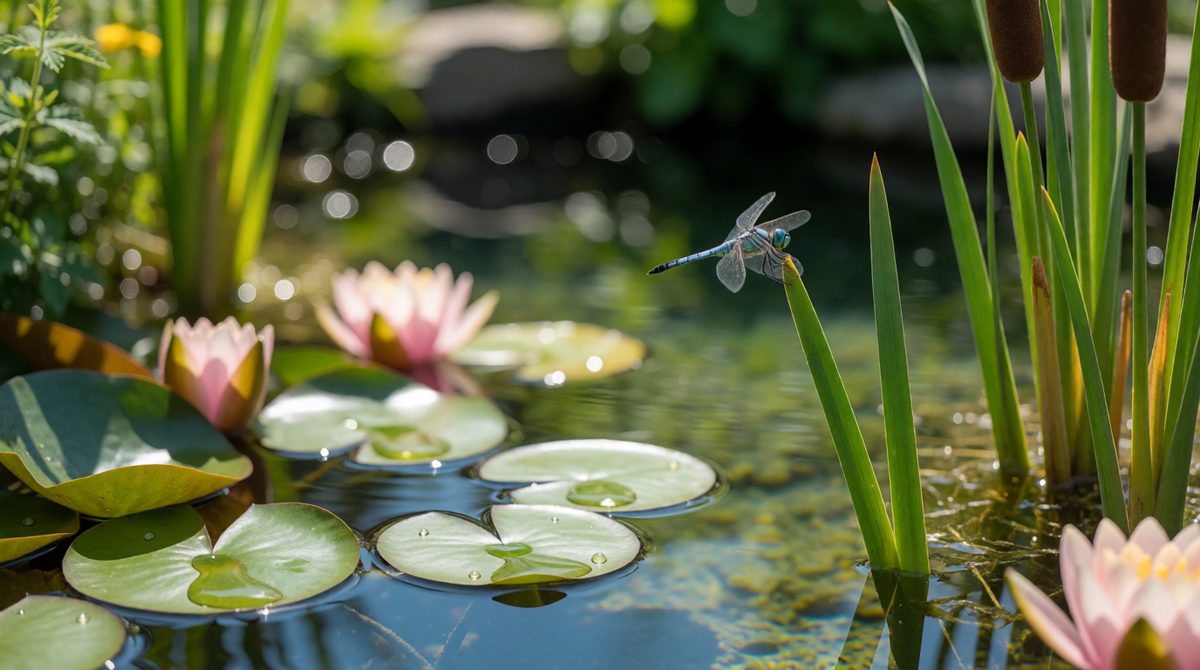
A pond is a small ecosystem where plants, animals, water and soil all link together
An ecosystem is a natural system made up of living things and the non-living world around them, all interacting with each other. Ecosystems exist at a range of scales. A rotting log, a garden pond, a woodland and the whole Amazon rainforest are all ecosystems.
Every ecosystem has two types of component. Biotic components are the living parts, such as plants, animals and bacteria. Abiotic components are the non-living parts, such as sunlight, temperature, water, soil and oxygen. Living things depend on the abiotic parts, and they also affect them. For example, pond plants release oxygen into the water.
Key terms:
A pond is a good example of a small ecosystem. You can see most of its parts in one place, and it shows how everything is connected.
Algae, pondweed and water lilies. Water snails, tadpoles, water fleas, dragonfly nymphs, diving beetles, small fish and frogs. Bacteria and fungi in the mud.
Sunlight, water temperature, oxygen dissolved in the water, the water itself, nutrients in the water and mud, and the depth of the pond.
The living parts of the pond fall into three groups, based on how they get their energy.
Key terms:
A food chain shows who eats whom, in a single line. The arrows show the direction the energy moves. A pond food chain could be:
algae → water snail → diving beetle → heron
Real life is not this simple. A heron eats frogs as well as fish, and a dragonfly nymph eats many different animals. A food web shows all the food chains in an ecosystem joined together. It is a better picture of the real pond, because it shows that most living things have more than one food source and more than one predator.
Key terms:
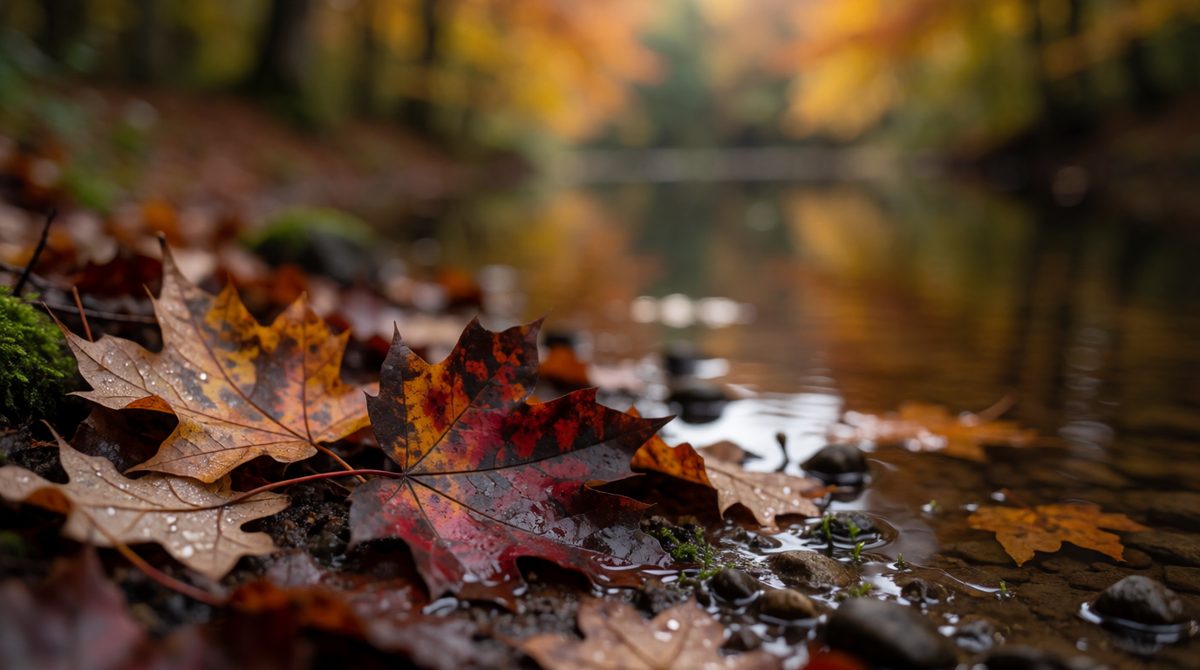
Decomposers break down dead leaves and return nutrients to the soil and water
Plants need nutrients from the water and mud to grow. These nutrients are not used up. They go round and round in a cycle.
Producers take nutrients from the water and mud and use them to grow.
Consumers eat the producers and each other, so the nutrients move along the food chain.
Plants and animals die, and waste is produced. Decomposers break it down and release the nutrients back into the water and mud.
Without decomposers, dead material would pile up and the nutrients would stay locked inside it. The producers would run out of nutrients, and the whole pond would suffer.
Key term:
In a healthy pond, the components are in balance. There are enough producers to feed the primary consumers, enough primary consumers to feed the secondary consumers, and so on. Abiotic conditions such as light and oxygen stay in a range that the living things can cope with. Because all the parts are linked, a change to one component affects the others. The effects spread through the food web and the abiotic parts.
If disease kills most of the small fish, fewer dragonfly nymphs and tadpoles are eaten. More tadpoles and snails then eat more algae and pondweed, so the producers fall. The herons lose a food source and may leave.
Fertiliser can wash from a nearby field into the pond. Algae grow very quickly and cover the surface. Less sunlight reaches the pondweed below, so it dies. Decomposers then use up the oxygen in the water as they break down the dead plants, and fish can die.
Both examples show the same idea. One small change can move through the whole ecosystem, because every part depends on other parts.
Drawing arrows in a food chain from the eater to the food. They point from the food to the eater, because they show the movement of energy. Another mistake is thinking decomposers are consumers that eat living things. They break down dead material and waste. Also, do not forget that abiotic parts are part of the ecosystem as well as the living things.
Part of a UK pond food web is described. Algae are eaten by water snails and tadpoles. Tadpoles are eaten by dragonfly nymphs. Dragonfly nymphs are eaten by fish.
(a) State one biotic and one abiotic component of the pond ecosystem. [2 marks]
(b) Name the producer in the food web. [1 mark]
(c) Explain what would happen to the other living things in the pond if most of the tadpoles died. [3 marks]
(a) Biotic: any living thing, for example algae or fish (1). Abiotic: any non-living thing, for example sunlight or oxygen in the water (1).
(b) Algae (1).
(c) The dragonfly nymphs would have less food, so their numbers would fall (1). The fish would then have less food, so they would also decline (1). The water snails would have less competition for algae and may increase in number (1).
In part (c), follow the change step by step along the food web, using words like "so" and "then". Marks are given for each link in the chain of effects.