Ecosystems » Global Ecosystems
What you'll learn this session
Study time: 30 minutes
AQA spec: 3.1.2.1
- What a biome is and why biomes sit where they do
- Where the six large scale global ecosystems are found
- The main climate and vegetation of each one
- How to describe and compare biomes in an exam
🔒 Unlock Full Course Content
Sign up to access the complete lesson and track your progress!
Unlock This CourseFrom a pond to the whole planet
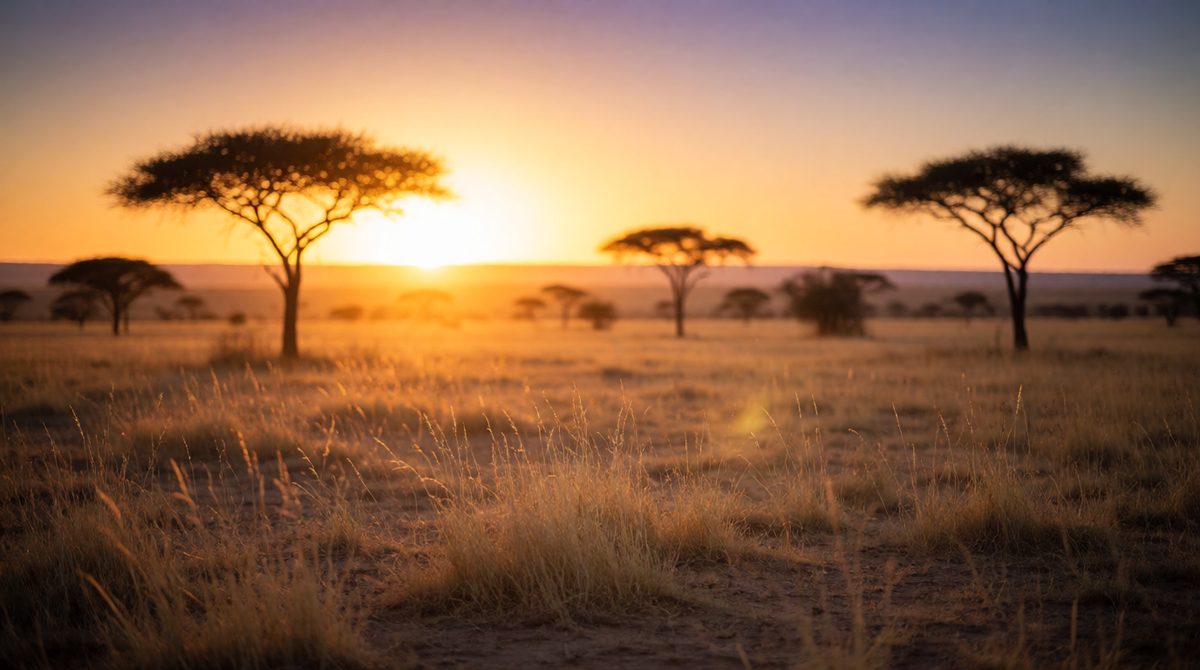
Savanna grassland is one of the world's large-scale ecosystems
In the last lesson you studied a small ecosystem, a pond. Ecosystems also exist at a much larger scale. The biggest natural ecosystems cover whole continents and are called biomes. In this lesson you will get an overview of six of them: where each one is found, and its main climate and vegetation.
Key terms:
- Biome: a large scale natural global ecosystem, with its own typical climate, plants and animals.
- Distribution: where something is found across the world.
- Latitude: how far north or south of the equator a place is.
Why biomes are where they are
The two biggest influences on a biome are temperature and rainfall. Both change with latitude. Places near the equator get the Sun's rays most directly, so they are hot. Places near the poles get weaker rays, so they are cold. Rainfall follows the global circulation of the air, which is why very wet and very dry places form in bands around the Earth.
Plants grow to suit their climate, and animals depend on those plants. That is why the world's biomes form a pattern that roughly follows lines of latitude. Mountains and ocean currents can change the pattern a little.
The six biomes at a glance
Tropical rainforest
Where: near the equator, for example the Amazon, central Africa and South East Asia.
Climate: hot all year and very wet, often over 2,000 mm of rain a year.
Vegetation: dense, tall, evergreen trees in layers.
Hot desert
Where: about 15 to 35 degrees north and south of the equator, for example the Sahara and the Australian deserts.
Climate: very dry, under 250 mm of rain a year, very hot days and cold nights.
Vegetation: sparse, such as cacti and thorny shrubs.
Tundra / polar
Where: the far north (northern Canada, Russia, Greenland) and Antarctica.
Climate: freezing for much of the year, with a short cool summer and little precipitation.
Vegetation: mosses, lichens and low shrubs, with few or no trees.
Temperate forest
Where: mid-latitudes, for example the UK, western Europe, eastern USA and eastern China.
Climate: mild, with rain through the year and four seasons.
Vegetation: broadleaf trees such as oak and beech, which lose their leaves in autumn.
Grassland / savanna
Where: large areas of Africa, South America, Australia and India, between the rainforests and the deserts.
Climate: warm to hot, with a wet season and a dry season.
Vegetation: tall grasses with a few scattered trees, such as acacia and baobab.
Coral reef
Where: shallow tropical seas, for example the Great Barrier Reef, the Caribbean and the Red Sea.
Conditions: warm, clear, sunlit, salty water.
Life: coral and algae, with huge numbers of fish and other sea creatures.
Tropical rainforest
Rainforests sit in a belt either side of the equator. The Sun is strong all year, so there is no cold season and plants can grow all year round. Warmth and heavy rain give the most dense vegetation on land. The vegetation is tall, evergreen forest. Rainforests contain more plant and animal species than any other land biome.
Hot desert
Hot deserts are found further from the equator, where dry air sinks and little rain falls. There are no clouds to keep heat in at night, so the temperature can drop sharply after dark. Few plants can cope, so the ground is often bare sand or rock, with sparse plants such as cacti and thorny shrubs.
Tundra and polar
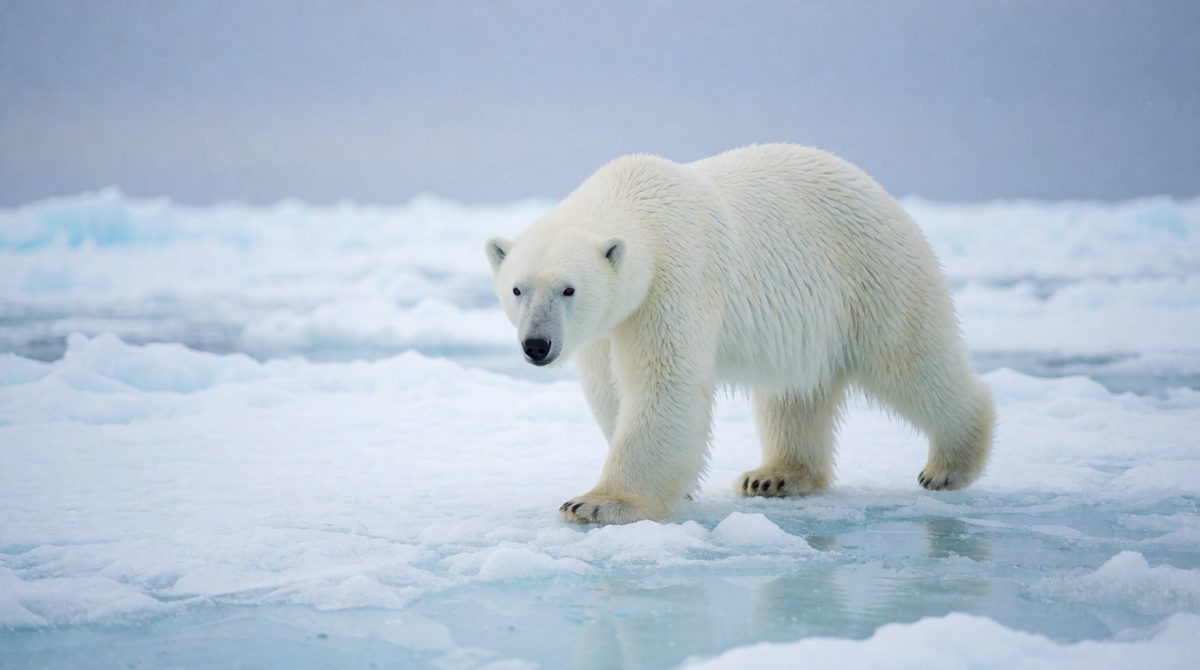
Polar regions are cold, icy ecosystems with very few plant and animal species
Tundra lies close to the poles. It is too cold and windy for trees. Much of the ground is frozen for most of the year and only thaws on the surface in the short summer. The vegetation is low shrubs, mosses and lichens. The very coldest places, such as inland Antarctica, are covered by ice and have almost no plants at all.
Temperate forest
The UK is in the temperate forest biome. The climate is mild, with no extremes of heat or cold. The four seasons change what the forest looks like: leaves open in spring, fill the trees in summer, and fall in autumn. Much of the original forest has been cleared for farming and towns, but this is still the natural biome for the UK.
Grassland and savanna
Grasslands are found where there is too little rain for a forest but too much for a desert. The savanna is tropical grassland with a clear wet season and dry season. Grasses grow fast in the wet season and turn yellow and dry in the dry season. Trees are few and far apart because the long dry season makes it hard for them to survive.
Savanna is the tropical type of grassland. Temperate grasslands, such as the prairies of North America and the steppe of Asia, are found in continental interiors, with hot summers and cold winters.
Coral reefs
Coral reefs are a marine biome, so they are in the sea, not on land. Corals are tiny animals that build hard skeletons. They need shallow water so sunlight can reach tiny algae living inside them. They need warm, clean, salty water, which is why reefs are found in tropical seas and not near the poles. Reefs have very high biodiversity.
Common mistakes
1. Mixing up deserts and tundra because both are "empty". Tundra is cold, a hot desert is hot and dry. 2. Saying biomes have sharp edges. They blend gradually into each other. 3. Forgetting that coral reefs are a marine biome. 4. Saying the UK has rainforest because it is wet. Its natural biome is temperate forest.
Exam-style question
(a) Name the biome found in the UK. [1 mark]
(b) Describe the climate of a tropical rainforest. [2 marks]
(c) Explain why few trees grow in the tundra. [2 marks]
Model answer
(a) Temperate forest (1).
(b) It is hot all year (1) and very wet, with heavy rainfall all year round (1).
(c) It is very cold for most of the year (1) and the ground is frozen, so roots cannot grow deep and the growing season is short (1).
Exam tip
For a "describe the climate" question, always give both temperature and rainfall, and add figures or a word like "all year" to earn the second mark.