🌾 Subsistence farming
Poor families clear small plots by cutting and burning trees ("slash and burn"). The ash feeds the soil for a few years. When the soil is used up, they move on and clear more forest.
Sign up to access the complete lesson and track your progress!
Unlock This Course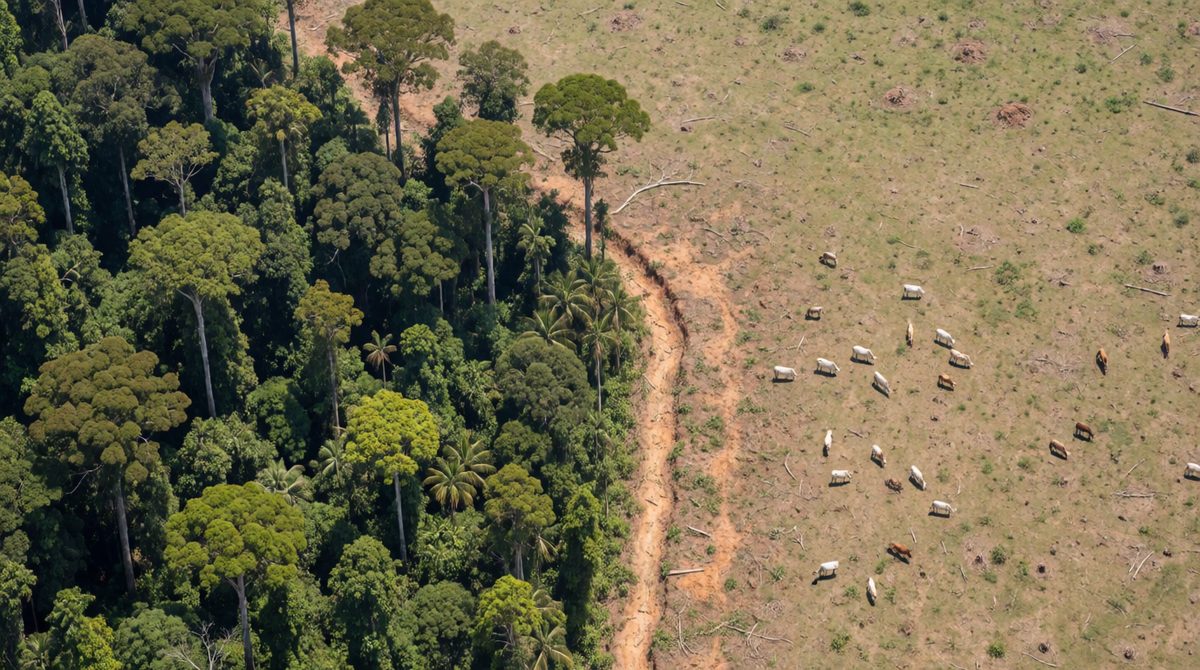
Cattle ranching is a major cause of deforestation in the Amazon
Large areas of tropical rainforest are being cleared today. This lesson is a case study of the Amazon rainforest in South America. It is the largest rainforest on Earth and about 60% of it lies in Brazil.
Key terms:
The rate of deforestation in the Amazon has not stayed the same. It has gone up and down.
So the rate changes with government policy, money and demand for products. The forest is still being lost in every one of these years.
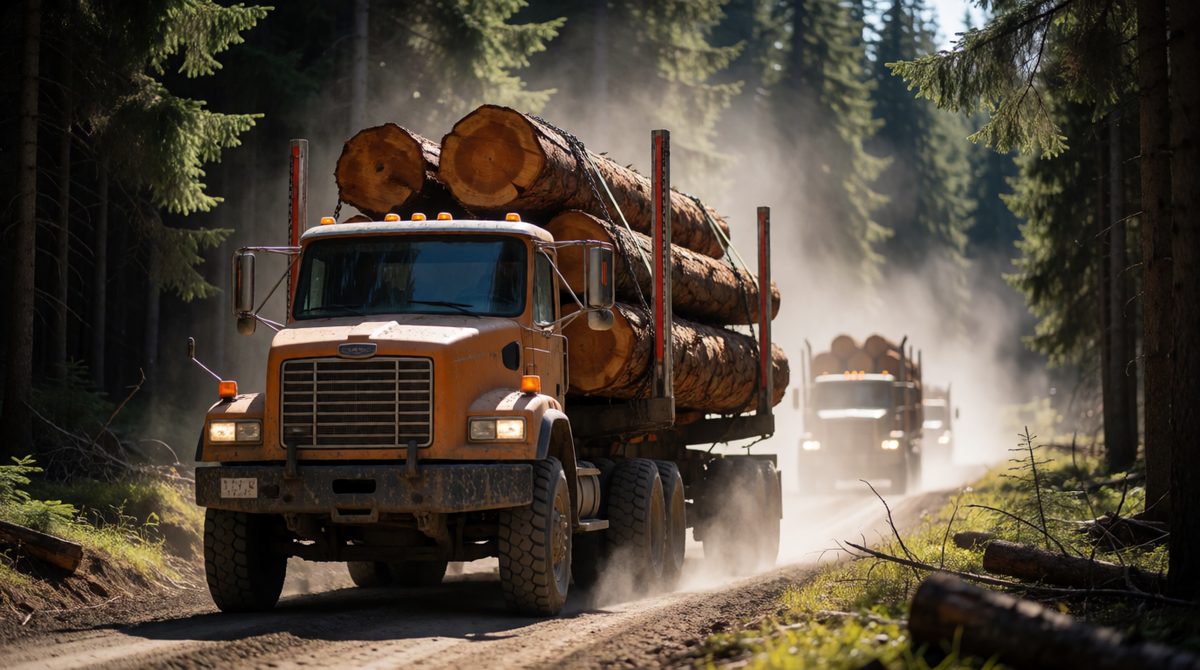
Logging is one cause of deforestation in the Amazon
There is no single cause. Many things work together. Some people clear the forest to survive. Others clear it to make money.
Poor families clear small plots by cutting and burning trees ("slash and burn"). The ash feeds the soil for a few years. When the soil is used up, they move on and clear more forest.
Large companies clear huge areas for cattle ranches and for soy beans. Cattle ranching is the biggest single cause of clearance in the Amazon. Much of the soy is sold as animal feed.
Valuable hardwood trees, such as mahogany, are cut down and sold for furniture and building. Loggers make tracks to get the trees out. These tracks open up the forest to more people. Some logging is illegal and hard to control in such a huge area.
Roads, such as the Trans-Amazonian Highway built from the 1970s, were cut through the forest to link it to the rest of Brazil. Roads make it possible to reach new areas. Farmers, loggers and miners follow the road and clear forest on both sides. Roads are often the first step in deforestation.
The Amazon has iron ore, gold and other minerals. Mines such as Carajas in Brazil need large areas of forest cleared for the mine, the waste and the roads and railways that carry the ore out.
Fast rivers can be used to make hydroelectric power (HEP). Dams, such as Belo Monte on the Xingu River, flood large areas of forest behind the dam. More forest is cleared for the power lines and access roads.
From the 1970s the Brazilian government encouraged people to move to the Amazon. Landless families from crowded cities and poor regions moved in. They cleared forest for homes, farms and new towns. As the population has grown, more land is needed for housing, food and jobs, so more forest is cleared. Brazil's growing population also raises the demand for farm products, timber and energy.
Roads open up the forest. Settlers, farmers, loggers and miners then arrive. A growing population needs more food, homes and energy, which leads to more roads, farms and dams. One cause makes the next one easier.
Saying "people are cutting down trees" is not enough for marks. Name the cause, then explain how it clears the forest. Also, do not mix up subsistence farming (feeding the family) with commercial farming (selling for profit). Finally, do not write about the impacts of deforestation here. They are a separate topic.
Using a case study of a tropical rainforest, explain two causes of deforestation. [4 marks]
Cause 1: Commercial farming (1). In the Amazon, large areas of forest are cleared for cattle ranches and soy farms to make money from selling beef and animal feed (1).
Cause 2: Road building (1). Roads such as the Trans-Amazonian Highway open up the forest so settlers, loggers and miners can reach it and clear land along the road (1).
For "explain" questions, name each cause, then add a "so" or "because" to show how it leads to the loss of trees. Use a place name from the Amazon in each answer.