💰 Economic benefits
Jobs on farms, in sawmills and in mines. Money from exports. Roads, towns and services built to reach new areas. Cheap land for farmers.
Sign up to access the complete lesson and track your progress!
Unlock This Course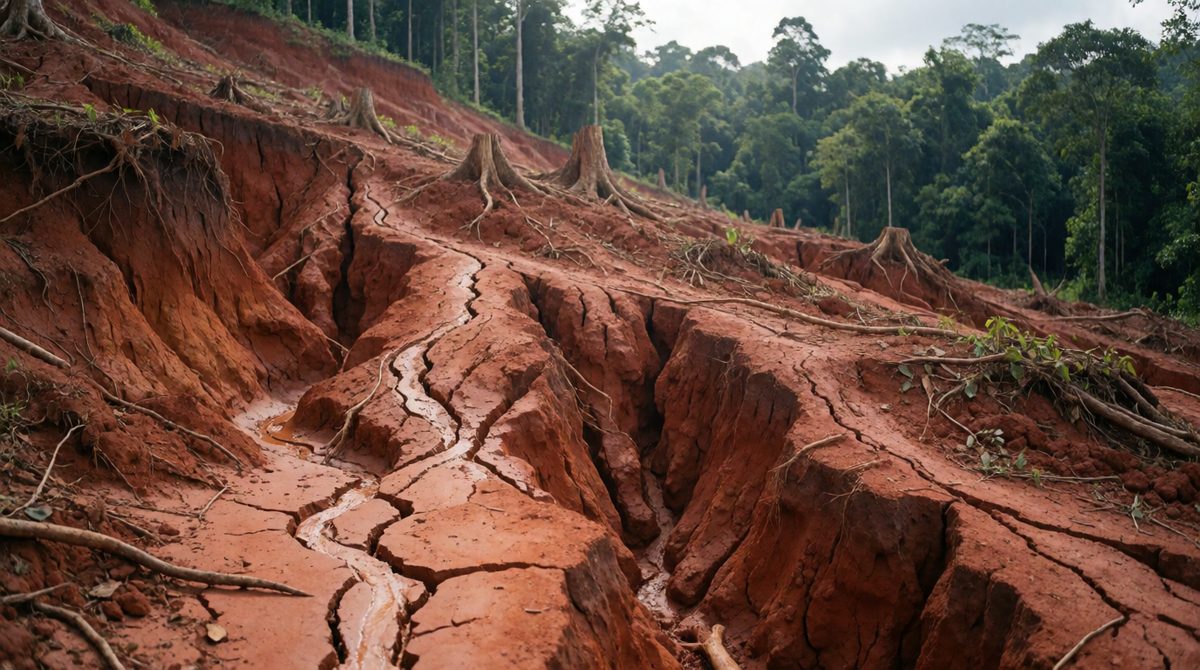
Without trees, heavy rain washes the soil away, one impact of deforestation
Last lesson you saw why the Amazon is being cleared. Now we look at what happens next. Deforestation has economic impacts (to do with money and jobs) and environmental impacts (to do with nature). Some are positive, but many are negative. The spec asks you to know three: economic development, soil erosion and contribution to climate change.
Key terms:
Clearing the Amazon can bring money into Brazil. Cleared land is used for cattle ranching and soy farms, and the beef, soy, timber and minerals are sold at home and abroad. This brings in income for the country and for the companies and workers involved.
Jobs on farms, in sawmills and in mines. Money from exports. Roads, towns and services built to reach new areas. Cheap land for farmers.
The money is often short term. Cleared land can only be farmed for a few years before the soil is exhausted. Many local and indigenous people gain little and lose the forest they depended on.
So economic development from deforestation can be real, but it is not always fair or long lasting. Once the forest is gone, so are the resources it could have supplied for ever.
Rainforest soils are thin and hold few nutrients. In an intact forest, the canopy shields the ground from heavy rain, and tree roots bind the soil together.
When the trees are removed:
The eroded soil is washed into rivers. This can make rivers muddy and can harm the fish that people rely on for food.
Do not say the soil is poor because the forest was cut down. Rainforest soil is already poor. The forest survives because nutrients are recycled quickly. Cutting the trees breaks that cycle and exposes the soil, so the little fertility there is gets washed away.
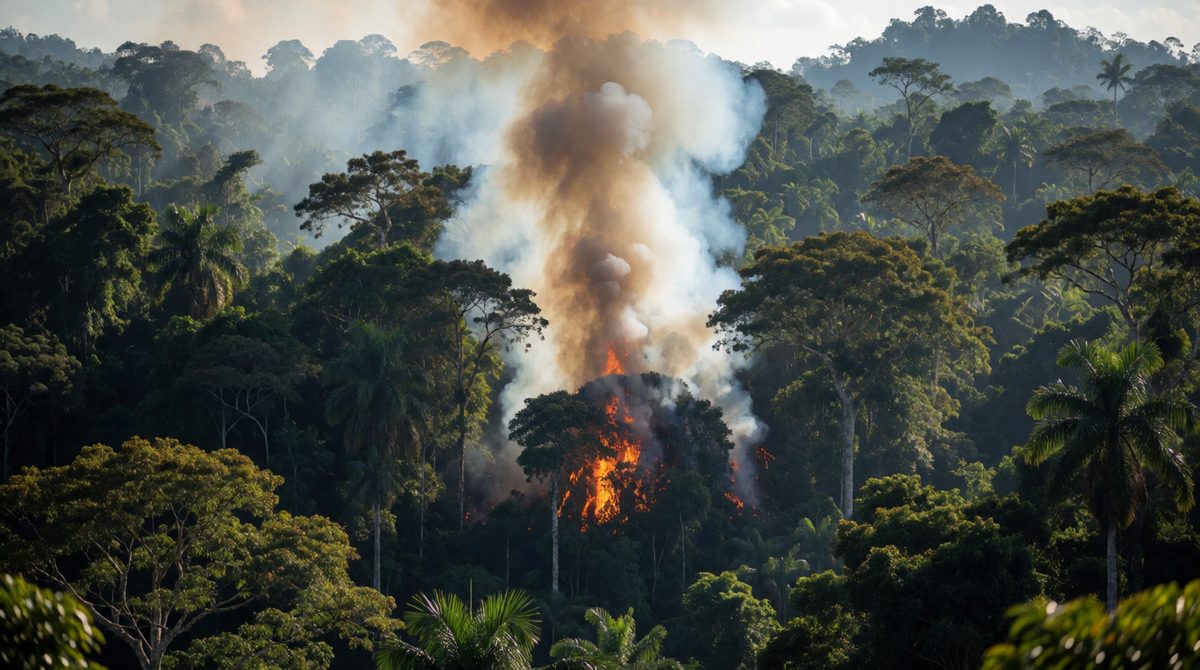
Burning forest releases carbon dioxide, adding to climate change
Trees take in carbon dioxide during photosynthesis and store the carbon in their wood and leaves. This makes the Amazon a huge carbon store.
Carbon dioxide is a greenhouse gas, so more of it in the air adds to the enhanced greenhouse effect and to global warming.
Question: explain how deforestation contributes to climate change. Answer: trees store carbon (1). When they are burned or left to rot, carbon dioxide is released into the air (1). Fewer trees means less carbon dioxide is absorbed by photosynthesis (1). More carbon dioxide strengthens the greenhouse effect (1).
The spec also asks you to know why rainforests are valuable. Think about two groups: people and the environment.
Homes: indigenous peoples live in the forest and depend on it.
Food and materials: fruits, nuts, rubber and timber.
Medicines: many medicines have been developed from rainforest plants.
Jobs and income: from farming, logging, mining and tourism.
Carbon store: helps to slow climate change.
Biodiversity: a home to a huge range of species.
Water cycle: trees release water vapour, which helps to form rain.
Soil protection: roots and canopy protect the ground.
The word to remember is balance. A rainforest is worth money when it is cleared, but it is also worth a great deal left standing.
Only giving one side. If a question asks about value, say who benefits (people or the environment) and give a reason. A list of words with no explanation will not reach the top marks.
(a) Explain one way that deforestation can lead to soil erosion. [2 marks]
(b) Explain one economic benefit and one problem of deforestation in the Amazon. [4 marks]
(c) Explain why tropical rainforests are valuable to the environment. [3 marks]
(a) Tree roots no longer hold the soil together (1), so heavy rain washes the topsoil away (1).
(b) Benefit: cleared land is used for cattle and soy, which are exported and bring income and jobs (1 for the benefit, 1 for the development). Problem: the soil quickly loses its fertility after clearing, so the income is short term and farmers have to move on (1 for the problem, 1 for the development).
(c) Rainforests store carbon, which helps to slow climate change (1). They are home to a huge range of plants and animals, so they protect biodiversity (1). Trees release water vapour, which helps to form rainfall (1).
"Explain" questions need a point plus a reason. Use the word "because" or "so" to link your idea to its effect, as in "the trees are removed, so the soil is washed away".