🌊 Oceanic crust
Found under the oceans. It is thinner (roughly 5 to 10 km), denser (heavier) and younger. It is constantly being made and destroyed.
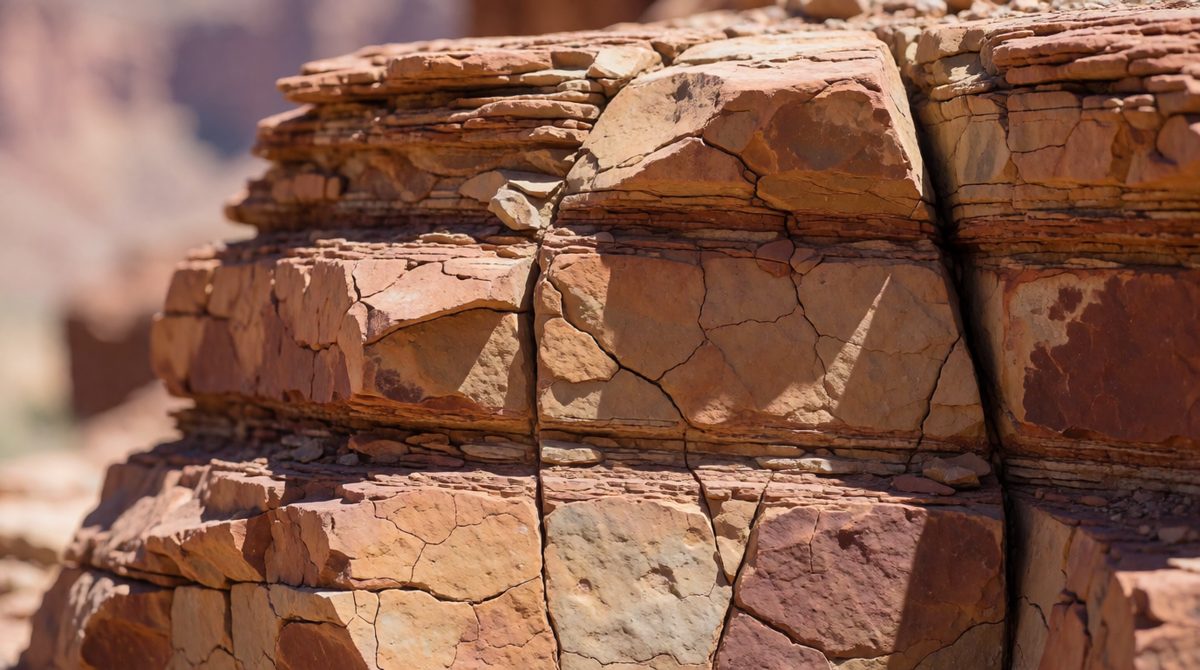
The Earth's crust is a thin rocky layer sitting on top of the hot mantle
Earthquakes and volcanic eruptions are caused by physical processes deep inside and beneath the surface of the Earth. To understand them, you need to know what the planet is made of.
The Earth has four main layers:
The crust is very thin compared with the rest of the Earth. If the Earth were an apple, the crust would be about as thick as the apple's skin.
Key terms:
There are two types of crust. They are very different, and the difference matters when plates meet.
Found under the oceans. It is thinner (roughly 5 to 10 km), denser (heavier) and younger. It is constantly being made and destroyed.
Forms the continents. It is thicker (roughly 30 to 70 km), less dense (lighter) and much older. It is rarely destroyed.
Remember: oceanic crust is dense, so it can sink. Continental crust is lighter, so it sits higher than oceanic crust.
Key terms:
The crust and the very top of the mantle are not one solid shell. They are broken into huge slabs called tectonic plates. These plates fit together a bit like the pieces of a giant jigsaw puzzle. Some carry continents, some carry oceans, and some carry both.
Plate tectonics theory says that these plates move slowly, by a few centimetres each year. That is about as fast as your fingernails grow. The place where two plates meet is called a plate margin (or plate boundary).
Most earthquakes and volcanic eruptions happen at or near plate margins. This is because the plates push, pull and grind against each other there.
Key terms:
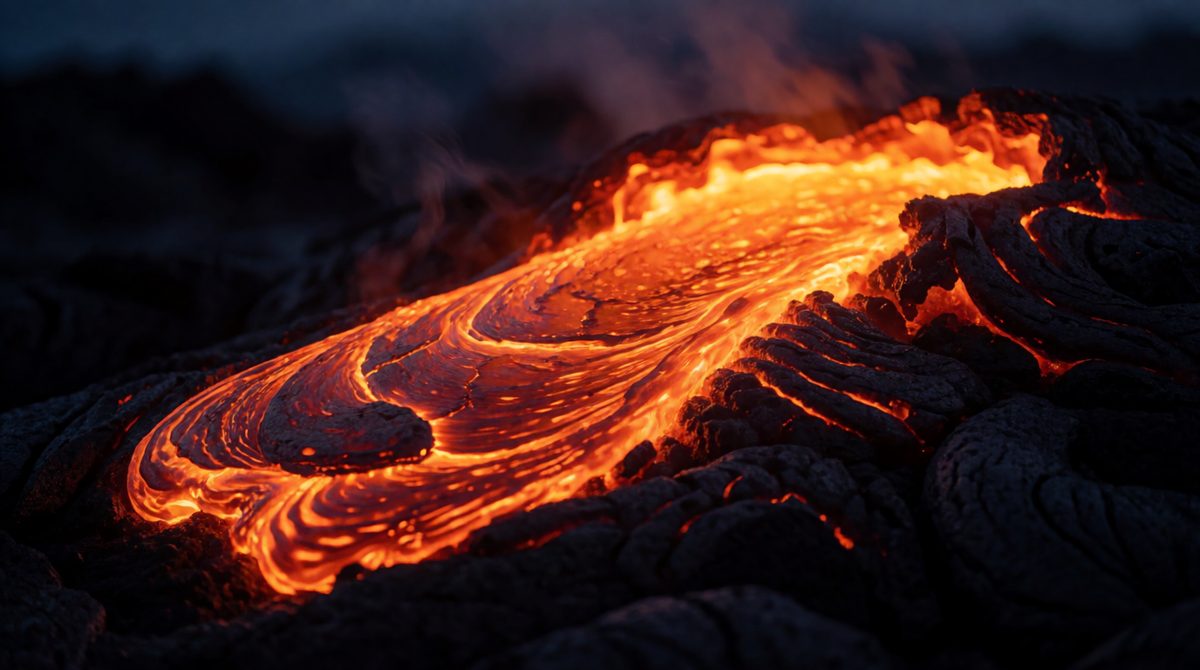
Heat from the core drives convection currents in the mantle, which help move the plates
Two processes are linked to plate movement.
The core heats the mantle. Hot rock is less dense, so it rises. Near the top it cools, becomes denser and sinks again. This circular flow is a convection current. It drags the plates above it along.
At some plate margins, the heavy edge of an oceanic plate sinks into the mantle. As it sinks, its weight pulls the rest of the plate behind it, like a tablecloth sliding off a table.
So the plates are moved by a mix of rising and falling currents in the mantle and by the pull of sinking plate edges.
Key terms:
Many students say that plates float on liquid. The mantle is mostly solid rock that moves very slowly, not a runny liquid. Also, do not mix up the crust (the thin outer layer) with the whole plate, which includes the top of the mantle too.
If you plot earthquakes and volcanoes on a world map, they do not appear at random. They form clear lines and belts. These lines match the plate margins almost exactly. So we can use the pattern of earthquakes and volcanoes to see where the plate margins are.
The main plates to know are the Pacific, North American, South American, Eurasian, African, Indo-Australian, Nazca and Antarctic plates.
There are three kinds of plate margin: constructive, destructive and conservative. You will see what happens at each one in the lesson Plate Margins: Constructive, Destructive and Conservative. For now, you only need to know that tectonic activity is found at all of them.
Key term:
In the exam you may be given a map and asked to describe the pattern. Use this simple plan:
"Volcanoes are found in a long line down the middle of the Atlantic Ocean, including Iceland. This is the Mid-Atlantic Ridge, where two plates meet. There are very few volcanoes in the middle of the Eurasian plate."
Saying "volcanoes are in hot countries". Volcanoes are about plate margins, not heat at the surface. Iceland is cold but has many volcanoes. Also, a few volcanoes (such as Hawaii) are found away from plate margins, so say "most" rather than "all".
(a) Name the two types of crust. [2 marks]
(b) Describe the global distribution of earthquakes and volcanoes. [3 marks]
(c) Explain how slab pull helps to move tectonic plates. [2 marks]
(a) Oceanic crust (1) and continental crust (1).
(b) Most earthquakes and volcanoes are found in lines or belts (1), for example the Pacific Ring of Fire around the Pacific Ocean (1). They closely match plate margins (1). There are very few in the middle of plates (1). Any three points for 3 marks.
(c) The heavy edge of an oceanic plate sinks into the mantle (1). Its weight pulls the rest of the plate along behind it (1).
"Describe" means say what the pattern is, not why. For (b), use at least one named place and a link to plate margins to reach full marks.
Access the full course and all the resources like custom timetables and progress tracking.
Join Today