🌵 Storing water
A cactus is a succulent. Its thick, swollen stem soaks up water after rain and holds it for months. The stem is often ribbed, so it can expand like a concertina when it fills.
Sign up to access the complete lesson and track your progress!
Unlock This Course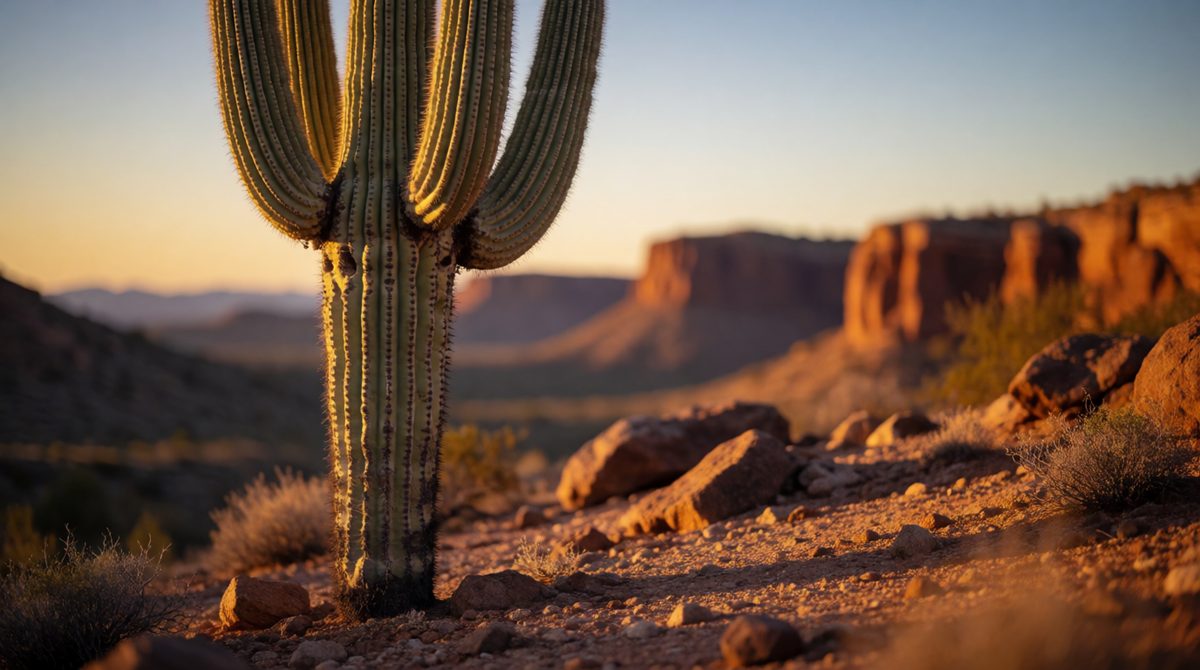
Cacti store water in their thick stems, an adaptation to the dry desert
Deserts are tough places to live. Water is scarce, days are scorching and nights can be cold. Plants and animals that live there have adaptations that help them cope with the physical conditions. Each adaptation solves one of three problems: finding water, keeping water, and handling the heat.
In the last lesson you saw how little rain falls and how large the daily temperature range is. This lesson shows how living things have beaten those conditions.
Key terms:
A cactus is a succulent. Its thick, swollen stem soaks up water after rain and holds it for months. The stem is often ribbed, so it can expand like a concertina when it fills.
Cactus leaves are reduced to sharp spines. Spines have a tiny surface, so very little water escapes. A thick, waxy skin seals the stem. Spines also protect the plant from thirsty animals.
Some plants have very long roots. A taproot, like that of the mesquite tree, grows many metres down to reach water deep underground. Cacti do the opposite. Their roots are shallow but spread wide, so they can soak up a brief shower before it evaporates.
Some plants avoid the drought completely. Their seeds lie dormant in the soil, sometimes for years. When rain finally falls, they germinate, flower and make new seeds in just a few weeks. The desert then briefly turns green and colourful.
Other plants have small, thick leaves with a waxy coat, or lose their leaves in the driest weeks. Both tricks cut water loss.
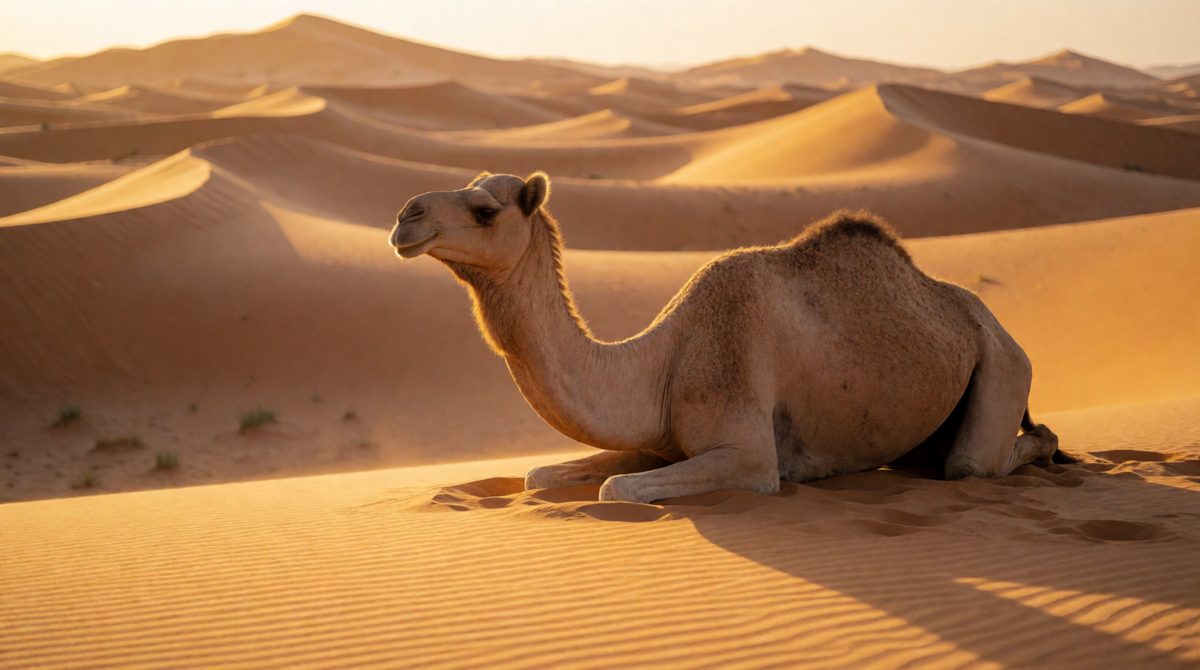
Camels can go a long time without water, an adaptation to the hot desert
Animals must also find water, save water and stay cool. Many are nocturnal, so they shelter in the heat of the day and come out when it is cooler. Others have special body features.
The camel has wide, flat feet that spread its weight, so it does not sink in soft sand. It has long eyelashes and can close its nostrils to keep out blown sand. It can drink a huge amount of water in one go and then go many days without drinking. The hump stores fat, not water. This fat is an energy store, and keeping it in one place instead of all over the body helps the camel lose heat.
The fennec fox has very large ears. Blood flows through them close to the surface, so heat escapes into the air and the fox stays cool. Its pale, sandy fur reflects the Sun and helps it hide. It digs a burrow to shelter from the heat in the day. It is nocturnal, and its furry feet protect it from hot sand.
Other examples are worth knowing too:
Many students write that a camel stores water in its hump. It does not. The hump stores fat. Another mistake is to say an adaptation just "helps it survive". Always say what the feature does, for example "large ears lose heat, so the fox stays cool".
You met biodiversity in the rainforest lessons. Hot deserts have far fewer species than a rainforest, because few plants and animals can cope with so little water. But the species that live there are highly specialised. Many can live nowhere else.
This makes desert biodiversity fragile. Plants grow slowly because water is scarce, and it can take a very long time for damaged vegetation to recover. Animals depend on that vegetation for food and shelter, so one loss affects the others. This links back to the interdependence you studied earlier.
Several issues threaten biodiversity in hot deserts:
Later lessons look at how people use deserts and at desertification, where land on the edge of a desert becomes drier and less able to support life.
Explain how a cactus is adapted to a hot desert. Start with the problem, then the feature, then how it helps. "Rain is rare, so the cactus has a thick stem that stores water. The spines are very thin, so little water is lost by evaporation. Its roots are shallow and wide, so it soaks up rainfall quickly."
(a) Describe one way in which a named desert animal is adapted to the physical conditions of a hot desert. [2 marks]
(b) Explain why hot desert biodiversity is easily damaged by human activity. [4 marks]
(a) The fennec fox has very large ears (1), which lose heat to the air so the fox stays cool (1).
(b) Few species can survive in the desert, and those that do are specialised (1). Plants grow slowly because water is scarce, so damage takes a long time to recover (1). If people overgraze or cut wood for fuel, plants are removed (1). Animals that rely on the plants for food and shelter then lose their habitat, so the whole ecosystem is affected (1).
In a 4-mark "explain" question, aim for linked points. Write about slow plant growth, then say what that means for animals. Each link earns a mark.