Case study: the Sahara
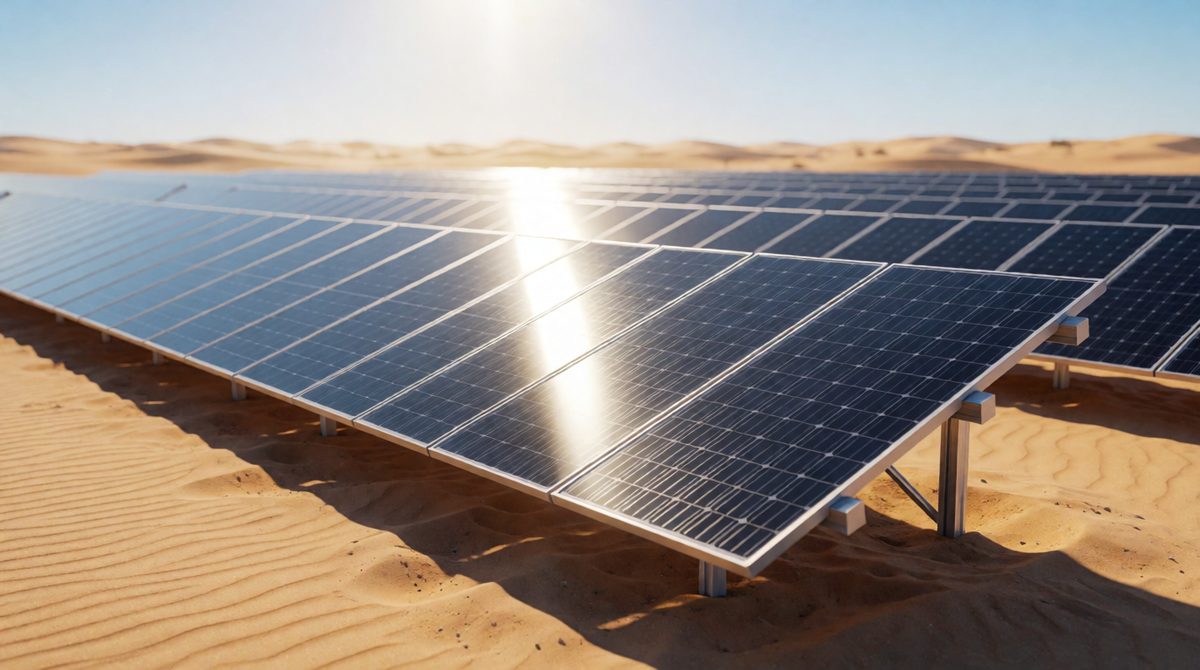
Strong sunshine gives the Sahara huge potential for solar energy
The spec asks you to study one hot desert in detail. In this lesson our case study is the Sahara. It covers most of the northern part of Africa and stretches across about ten countries, including Morocco, Algeria, Libya, Egypt and Niger. It is about 9 million square kilometres, which is roughly the size of the whole of the USA.
The Sahara sits close to 30 degrees north, so you already know why it is dry. Development of a hot desert creates both opportunities (good things that help people and the economy) and challenges (problems that make life or business harder). The Sahara has plenty of both.
Key terms:
- Development: using an area's resources to improve the economy and people's lives.
- Mineral extraction: digging or drilling valuable materials out of the ground.
- Oasis: a place in a desert where water reaches the surface, so plants can grow.
- Inaccessibility: being hard to reach because of distance, terrain or a lack of roads.
Opportunity 1: mineral extraction
Many valuable resources lie under the desert sand and rock. Few other land uses compete for the land, so they can often be mined or drilled easily.
- Oil and natural gas: Algeria and Libya have large fields in the Sahara. Pipelines carry gas to Europe, so the sales bring in money for these countries.
- Phosphates: mined in Morocco and Western Sahara, and used to make fertiliser for farmers around the world.
- Iron ore: mined in Mauritania and sold to steel makers abroad.
Mining also creates jobs, and the mining companies often build roads, power lines and housing that local people can use.
Opportunity 2: energy
☀ Solar power
The Sahara has very clear skies and strong sunshine for most of the year, so it is one of the best places on Earth for solar energy. The Noor solar complex near Ouarzazate, on the edge of the Sahara in Morocco, uses thousands of mirrors to collect the Sun's heat and make electricity.
⚡ Fossil fuels
Oil and gas are also an energy opportunity. They can be used at home to power industry and cities, or sold abroad. Selling energy can help countries to pay for schools, hospitals and roads.
There is lots of flat, empty land for solar farms. Large solar projects have been planned to send electricity to Europe, though building them is expensive and some plans have been delayed.
Opportunity 3: farming
Farming looks impossible in the desert, but it does happen where there is water.
- Oases: people grow date palms, with smaller crops such as vegetables and cereals growing in their shade. Dates are an important food and a crop that can be sold.
- River valleys: the River Nile runs through the Sahara in Egypt. Farmers use its water for irrigation to grow crops such as cotton and wheat on the flat land beside the river.
- Irrigation from underground water: in Libya, a huge system of pipes called the Great Man-Made River carries water from deep underground to farms and cities.
- Herding: some people move their goats and camels from place to place to find grazing, so they can make a living from land that cannot grow crops.
Opportunity 4: tourism
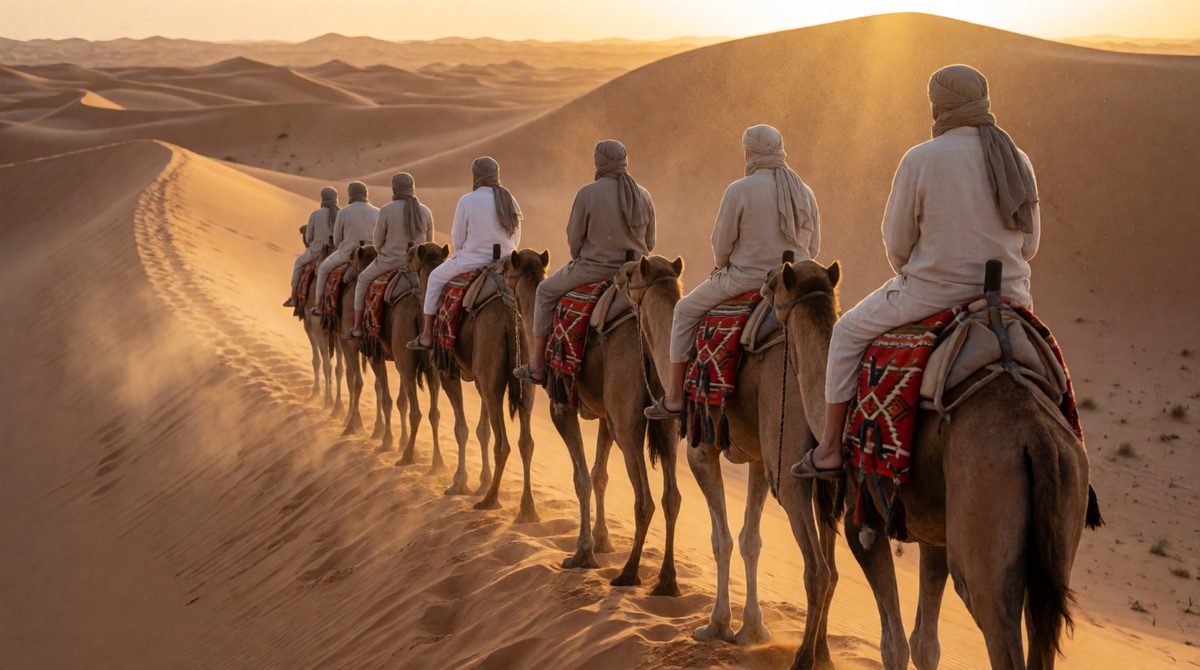
Tourism brings jobs and money to parts of the Sahara
The Sahara has unusual and exciting landscapes that many tourists want to see: huge sand dunes, rocky mountains, starry night skies and ancient desert towns.
- In Morocco, visitors travel to the dunes at Merzouga for camel treks and nights in desert camps.
- In Tunisia, tourists visit the desert towns and the film sets where some famous science fiction films were made.
- Tourists bring money for hotels, guides, restaurants and souvenir shops, which creates jobs for local people.
Worked example
Question: give one opportunity and say why it is an opportunity. Answer: "Solar energy is an opportunity because the Sahara has strong sunshine and clear skies for most of the year, so power stations such as Noor in Morocco can make large amounts of electricity and the country can earn money from it." Notice the three parts: name it, add a named example, explain why.
Challenge 1: extreme temperatures
In the day, temperatures in the Sahara can reach over 40 degrees Celsius, and at night in winter they can fall close to freezing. This makes development harder in several ways:
- Workers in mines and on building sites risk heat exhaustion, so they need shade, rest and lots of water, which adds to costs.
- Machines and vehicles can overheat and break down, and buildings need expensive air conditioning.
- Tourists avoid the hottest months, so tourism can be seasonal.
- Sandstorms can damage equipment, block roads and cut off power from solar panels.
Challenge 2: water supply
Water is the biggest problem of all. Rainfall is very low and unreliable, there are few rivers and surface water quickly evaporates.
- Farming needs large amounts of water, so crops must be irrigated, which is expensive.
- Much of the groundwater is thousands of years old and is hardly ever replaced by rain, so it can run out if too much is pumped.
- Mines, hotels and growing towns all need water as well, so these uses can compete with each other.
Challenge 3: inaccessibility
The Sahara is huge and very empty. Many places are hundreds of kilometres from the nearest city, port or railway.
- Building and maintaining roads, railways and pipelines is difficult and expensive, because shifting sand dunes can bury them.
- Few people live there, so it is hard to find workers or customers, and workers often have to be flown or bussed in.
- Moving goods, such as ore or crops, to ports and markets takes a long time and costs a lot.
- Tourists need long journeys to reach remote places, and emergency services find it hard to get to them.
Development can also contribute to land becoming even drier at the edges of deserts. You will study this in the lesson called Desertification.
✔ Opportunities
Mineral extraction, energy, farming, tourism.
⚠ Challenges
Extreme temperatures, water supply, inaccessibility.
Common mistakes
Writing "the desert is hot and dry" and nothing else. Always link the challenge to development, for example "it is too hot for workers, so costs rise". Another common mistake is forgetting the named examples. Use places such as Algeria, Morocco, Libya or the River Nile to show you know the case study.
Exam-style question
Using a case study of a hot desert, explain one opportunity and one challenge of developing the environment. [4 marks]
Model answer
Opportunity: Mineral extraction is an opportunity in the Sahara because there are large oil and gas fields in Algeria and Libya (1). Selling these resources abroad brings in money and creates jobs (1).
Challenge: Water supply is a challenge because the Sahara has very low rainfall and few rivers (1). This makes farming and mining expensive because water has to be pumped from deep underground, which could run out (1).
Exam tip
For "explain" questions with 4 marks, write two developed points. Name the opportunity or challenge, give a Sahara detail, and then say why it matters. Do not just list.