🌱 Low growing
Plants stay close to the ground. This keeps them out of the strong, freezing wind and lets them use the warmer air near the surface. Many grow tightly together in clumps, which gives extra shelter.
Sign up to access the complete lesson and track your progress!
Unlock This Course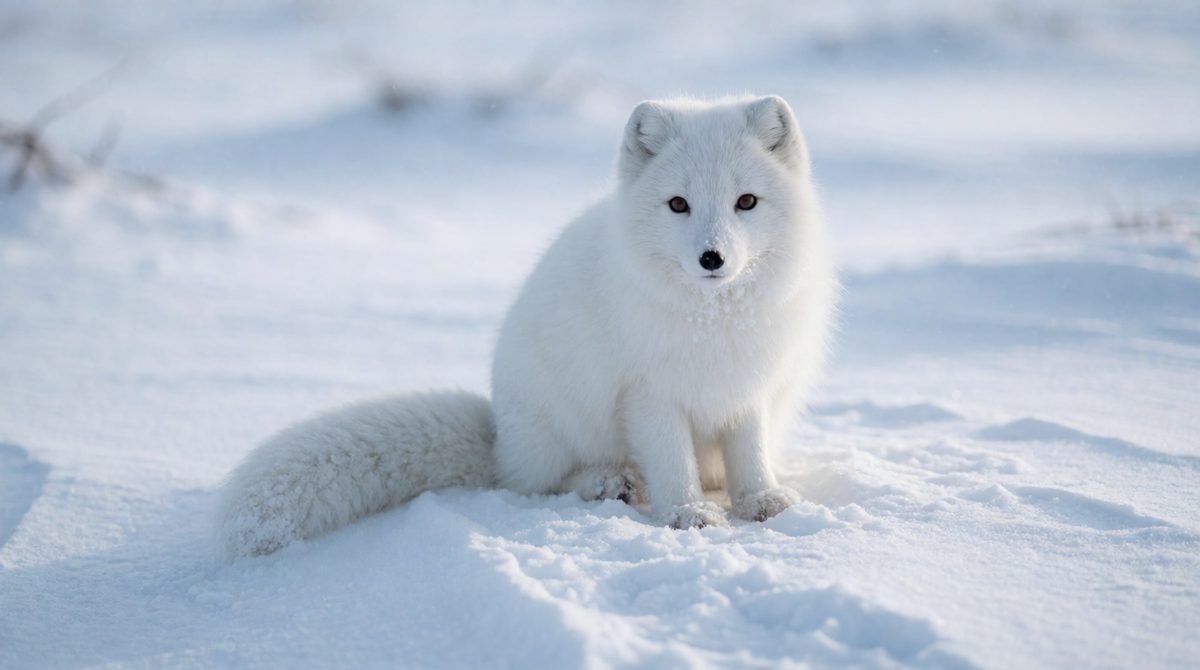
Thick fur and small ears help Arctic animals keep their heat in
Cold environments are tough places to live. Winters are long, dark and freezing, summers are short and cool, and there is very little precipitation. The ground is frozen for much of the year, so plants and animals need special features to survive. Remember, an adaptation is a feature that helps a living thing survive in its environment.
The organisms that live here have three big problems to solve: keeping warm, finding food and water, and coping with a very short growing season. Each adaptation below solves one of these problems.
Key terms:
Tundra plants have to survive strong winds, thin soils and permafrost beneath them. Trees cannot grow here, so the plants are small and tough. Typical tundra plants include mosses, lichens, cotton grass and Arctic willow.
Plants stay close to the ground. This keeps them out of the strong, freezing wind and lets them use the warmer air near the surface. Many grow tightly together in clumps, which gives extra shelter.
Permafrost lies just below the surface, and roots cannot grow into frozen ground. Plants have shallow roots that spread out wide in the thin active layer, which thaws in summer.
The growing season is only about two months long. Many plants grow and flower very quickly in the long daylight of summer, so they can make seeds before the cold returns.
Small, waxy or hairy leaves lose less water to the dry, windy air and are less damaged by the wind.
Animals in cold environments cannot easily escape the weather. They have adaptations of their body, and adaptations of their behaviour.
Other animals avoid the worst of the cold. Some hibernate. Many birds migrate to warmer places for the winter.
Question: why does a polar bear have blubber? Link three steps. The bear lives in freezing air and water. Blubber is a thick layer of fat, which is a good insulator. This stops body heat escaping, so the bear stays warm and can survive. Always give the feature, then what it does, then why it helps.
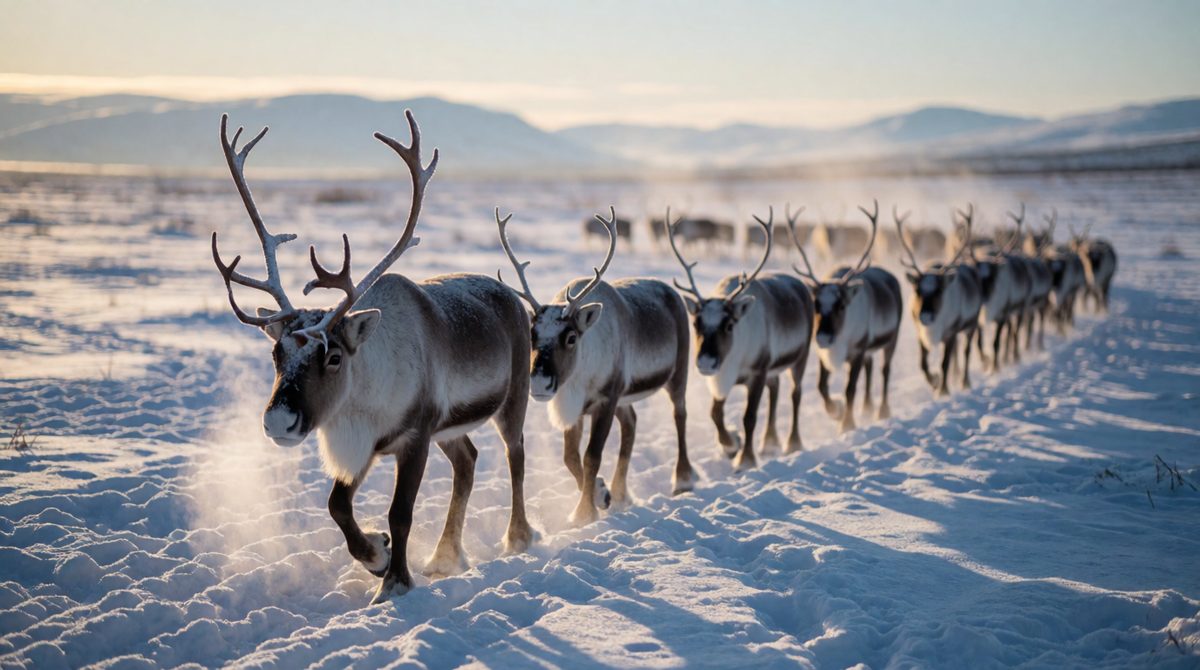
Few species can survive the cold, so biodiversity is low
Remember, biodiversity is the variety of plant and animal life in an area. Biodiversity in cold environments is low. Few species can cope with the extreme cold, the short growing season and the frozen ground. There are far fewer species than in a tropical rainforest.
This means food chains are short and simple, for example lichen, caribou, wolf. If one species is lost, the animals that depend on it have few other foods to turn to. For this reason cold environments are described as fragile.
How these environments can be protected is covered in the lesson Protecting Cold Environments.
Saying that animals "choose" to grow thick fur. Adaptations come from generations of survival, not choice. Another mistake is writing "to keep warm" and stopping there. Always say how: fur and blubber trap heat so less escapes. Also, do not say that a cold environment has high biodiversity just because a few animals are well known, such as polar bears.
(a) Describe two ways in which plants are adapted to the tundra. [2 marks]
(b) Explain how the polar bear is adapted to survive in a cold environment. [3 marks]
(c) Explain why damage to the biodiversity of a cold environment can take a long time to repair. [2 marks]
(a) Plants grow low to the ground to avoid strong winds (1). They have shallow roots because permafrost stops roots growing deeper (1).
(b) It has thick white fur, which gives insulation and camouflage (1). It has blubber, which keeps it warm in cold water (1). Its wide paws spread its weight on thin ice (1).
(c) The growing season is very short (1), so plants grow slowly and take many years to recover from damage (1).
In "explain" questions such as (b), each mark needs a feature and a reason. Use the word "so" or "because" to join them.