Remember, AQA students study two of coasts, rivers and glacial landscapes, so check which two your school teaches.
Why manage the coast?
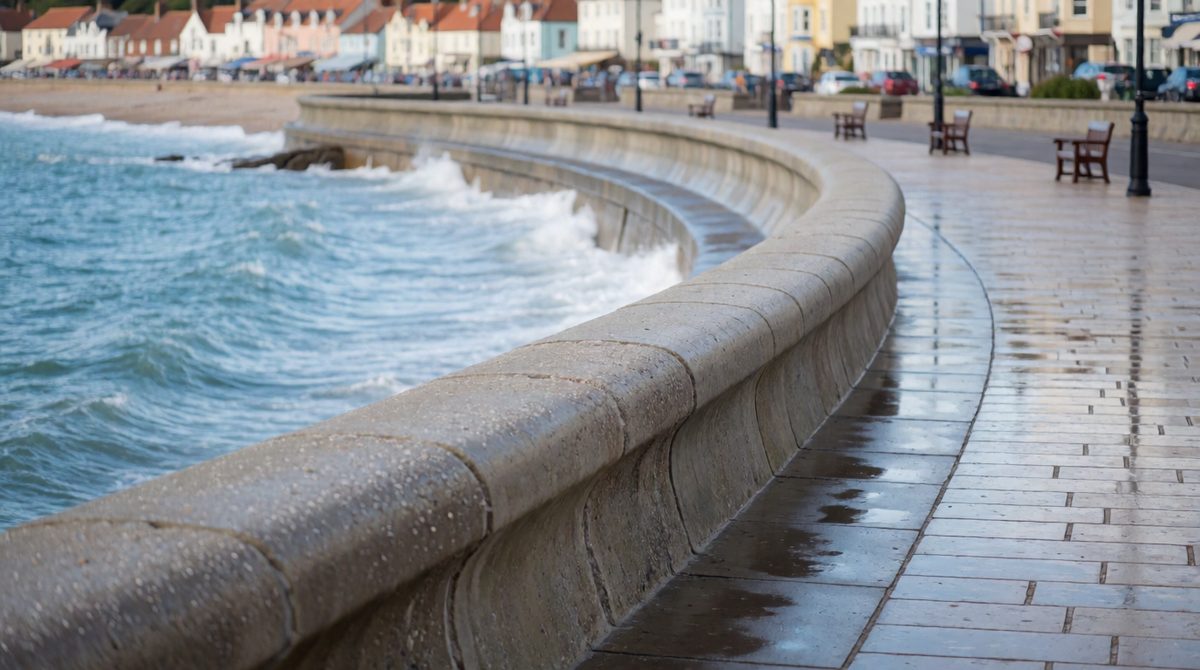
Sea walls are hard engineering: they protect the coast but cost a lot
The sea keeps eroding the land. Where people live, work or farm close to the edge, cliffs falling into the sea and waves flooding low land can destroy homes, roads and businesses. Different management strategies can be used to protect coastlines from the effects of these physical processes.
Every strategy has costs (money, damage to nature, loss of land, ugly views) and benefits (protection, safety, tourism). There is no perfect answer, so you must be able to weigh them up.
Key terms:
- Coastal management: the methods used to protect the coast from erosion and flooding.
- Hard engineering: building artificial structures to stop or slow the sea.
- Soft engineering: working with natural processes to reduce the power of the sea.
- Managed retreat: allowing the sea to flood or erode areas that were once protected.
Hard engineering
Hard engineering means building solid structures. It usually protects the land well, but it costs a lot and can change the look of the coast.
🏗 Sea walls
A concrete wall, often curved, built at the foot of a cliff or along a promenade. The curve sends wave energy back out to sea.
Benefits: very effective, lasts a long time, and gives a walkway.
Costs: very expensive to build and repair, can look ugly, and waves can wear away the beach in front of it.
⛰ Rock armour
Large boulders piled up at the base of a cliff or sea wall. They absorb wave energy and make waves break before they reach the land.
Benefits: cheaper than a sea wall, easy to build and fairly long lasting.
Costs: the rocks are often brought from far away, they can look out of place, and they can be dangerous to walk on.
🧱 Gabions
Wire cages filled with rocks, stacked at the foot of a cliff. They absorb some wave energy and help to hold the cliff up.
Benefits: cheap and quick to put up.
Costs: the wire rusts, so they do not last long, and they can look untidy.
🌊 Groynes
Wooden or rock barriers built out into the sea at right angles to the beach. They trap sediment moved by longshore drift, so the beach grows wider. A wide beach slows waves and protects the land behind.
Benefits: fairly cheap, and they create a beach that tourists use.
Costs: they starve beaches further along the coast of sediment, so erosion there gets worse, and they can spoil the view.
Soft engineering
Soft engineering uses natural features such as beaches and dunes to take the power out of the waves. It is usually cheaper and fits in better with the environment, but it may need repeating and may not protect against the biggest storms.
🏖 Beach nourishment
Sand or shingle is added to a beach to make it higher and wider. This is taken from the sea bed or from elsewhere.
Benefit: a bigger beach absorbs waves and is better for tourists.
Cost: it must be repeated again and again, so it is expensive over time.
🚜 Beach reprofiling
Machines reshape the beach, often by pushing sand and shingle up the beach to make a steeper, higher ridge that absorbs wave energy.
Benefit: cheap and uses the beach's own material.
Cost: the work must be done regularly, and it only helps on a beach that already exists.
🌿 Dune regeneration
Dunes are rebuilt using fences to trap windblown sand, and marram grass is planted to bind the sand. Paths may guide people so they do not trample the plants.
Benefit: cheap, natural and good for wildlife.
Cost: access is restricted, and it will not stop a major storm.
Managed retreat
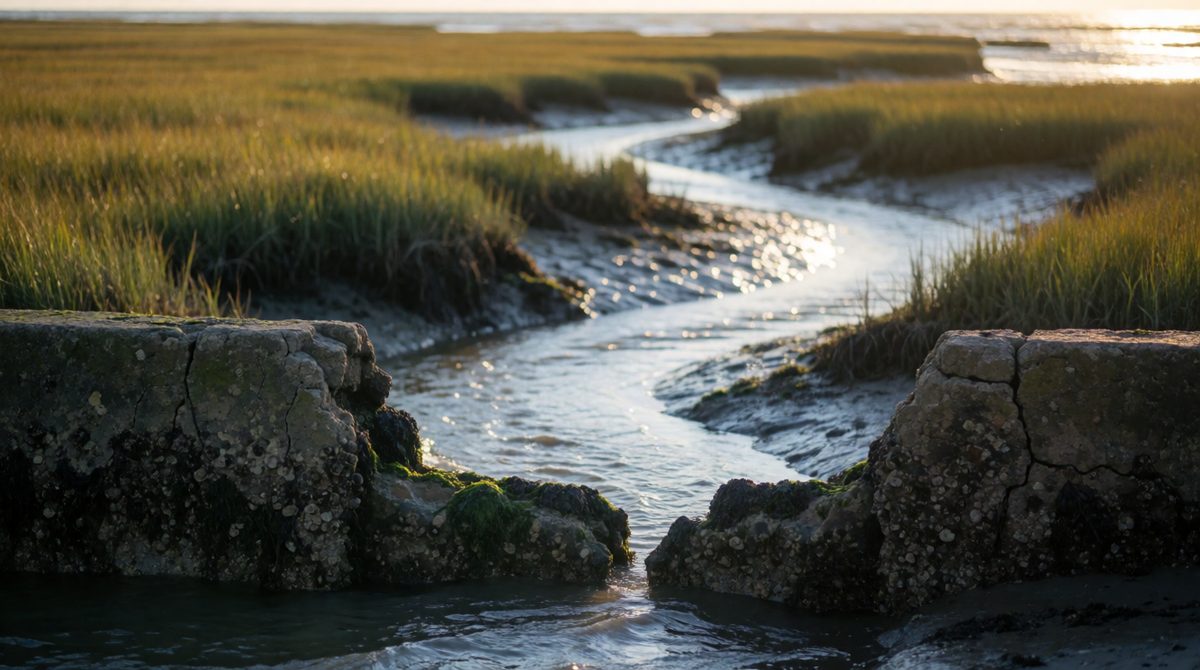
Managed retreat lets the sea flood low land to form new salt marsh
Managed retreat (also called coastal realignment) means letting the sea flood an area on purpose. The old sea defences are removed or left to fail, and the land behind becomes a natural buffer. Over time the flooded land often turns into salt marsh, which absorbs wave energy and provides a home for wildlife.
- Benefits: much cheaper than building defences, creates new habitats, and gives a natural flood defence.
- Costs: farmland and sometimes homes are lost, and people may need compensation. Local people often feel angry and unsafe.
Managed retreat is usually chosen where the land is low in value, such as farmland, and not where there are towns.
Choosing a strategy
Planners compare the cost with the value of what is being protected. A town with homes and businesses may justify an expensive sea wall. A stretch of empty farmland may not. That is why different parts of the same coast can be managed in different ways.
Common mistakes
Students often say hard engineering is "bad" and soft engineering is "good". Both have costs and benefits. Another mistake is saying groynes stop erosion everywhere. They protect one stretch of beach but can make erosion worse further along. Always give a cost and a benefit, and say why.
Exam-style question
(a) Name one example of hard engineering. [1 mark]
(b) Explain one benefit and one cost of beach nourishment. [4 marks]
(c) Explain why managed retreat may be chosen instead of a sea wall. [3 marks]
Model answer
(a) Rock armour (or sea wall, gabions or groynes). (1)
(b) Benefit: a wider, higher beach absorbs wave energy (1), so it protects the land behind and attracts tourists (1). Cost: the sand or shingle gets washed away (1), so it has to be replaced again and again, which is expensive over time (1).
(c) A sea wall is very expensive to build and repair (1). Managed retreat is much cheaper (1), and it is suitable where the land behind is low value such as farmland, and can create salt marsh that absorbs waves (1).
Exam tip
In "explain one benefit and one cost" questions, give two linked points for each: say what happens, then say why it matters.