⛰ Weak, unstable cliffs
The cliffs at Lyme Regis are made of layers of clay on top of harder limestone. Clay is soft and becomes slippery when it is wet, so the cliffs suffer slumping and landslides. Much of the town is built on this unstable land.
Sign up to access the complete lesson and track your progress!
Unlock This Course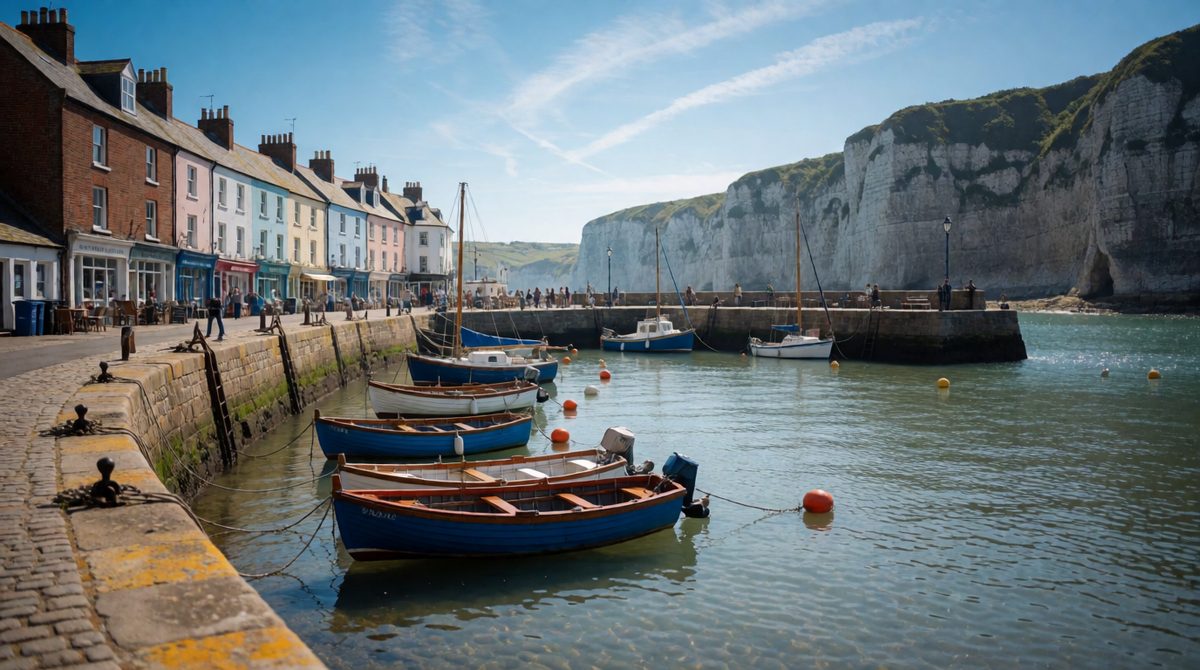
Lyme Regis is protected from erosion and landslides by a big coastal scheme
The spec asks you to know an example of a coastal management scheme in the UK. This lesson uses Lyme Regis, a small seaside town in Dorset, on the western edge of the Jurassic Coast. For your example you need to know three things: the reasons for management, the management strategy, and the resulting effects and conflicts.
Key terms:
The cliffs at Lyme Regis are made of layers of clay on top of harder limestone. Clay is soft and becomes slippery when it is wet, so the cliffs suffer slumping and landslides. Much of the town is built on this unstable land.
The town is open to the sea, so strong waves hit the coast. They erode the foot of the cliffs, which makes the slopes above less stable.
There was a lot to protect. Homes, roads and businesses sit on or near the cliffs. The town depends on tourism, and the beaches, seafront and harbour are what visitors come for. Lyme Regis is also part of the Jurassic Coast World Heritage Site, so the cliffs are valuable for their fossils and wildlife.
In short, the reasons for management were to protect homes and businesses, to protect the seafront and tourism, and to slow landslides and erosion.
The scheme was called the Lyme Regis Environmental Improvements. It was planned in the early 1990s and built in stages, called phases, over about twenty years. It mixed hard engineering, soft engineering and work on the cliffs themselves.
A sea wall and promenade east of the mouth of the River Lim, to protect the seafront from the waves. (The Cobb is the old stone harbour wall at the western end of the seafront.)
New sea walls, a new shingle beach to absorb wave energy, and rock armour at the eastern end of the front.
A scheme for the stretch of coast west of the Cobb was considered, but it was not built because the costs were greater than the benefits.
About 390 metres of new sea wall east of the town, plus work to stabilise the cliffs above it, including nailing (steel rods fixed into the slope).
You already know sea walls, rock armour and beach nourishment from Managing the Coast. At Lyme Regis they were used together, so the wall holds back the waves while the beach absorbs their energy and the cliff work keeps the slope from slipping.
Question: identify two parts of the Lyme Regis strategy and say what each does.
Answer: in Phase 4 a 390 metre sea wall stops waves reaching the foot of the cliff. Nailing the cliff above holds the slope together so it is less likely to slide.
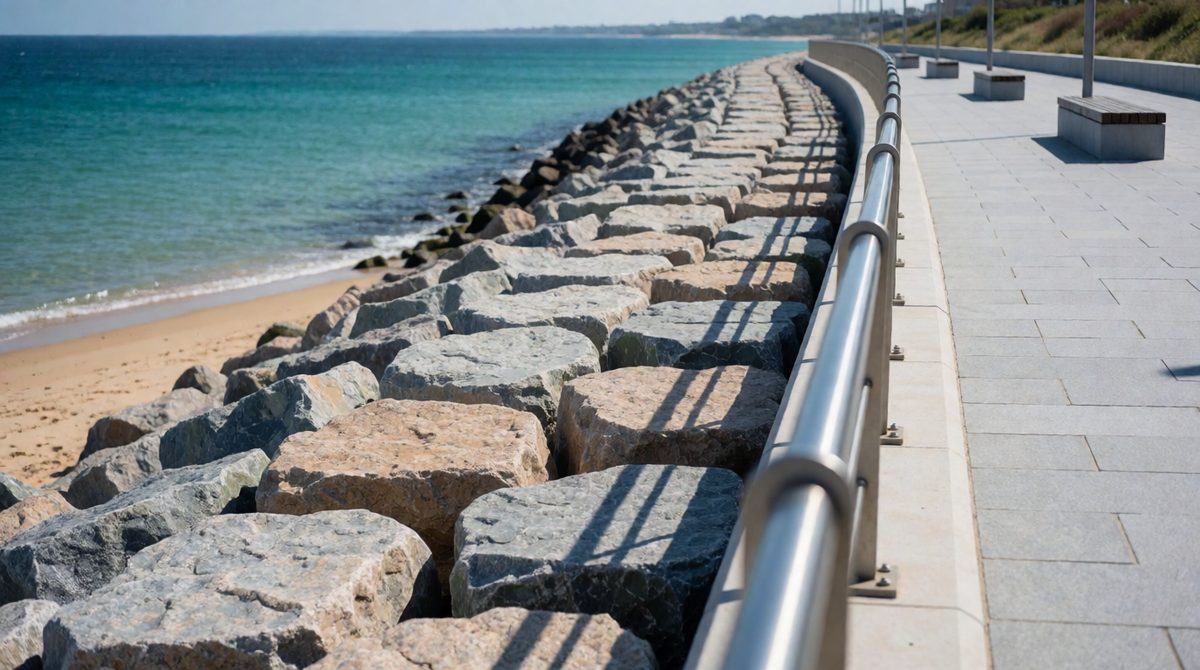
New sea walls and a wider beach have helped protect the town
Homes and roads are better protected. Phase 4 alone protects up to 480 properties from damage or loss of access and secures about 390 metres of coast for around 50 years. A wide beach and new promenade attract visitors, which helps the local economy.
The scheme was very expensive. Building work was noisy and disruptive for residents and visitors. Hard structures change the look of the coast.
Not everyone agreed about what should be done. Conflicts at Lyme Regis include:
Writing only general facts about sea walls. Examiners want place-specific detail: name Lyme Regis, the clay cliffs, the phases and one or two real features such as the new shingle beach or the cliff nailing. Another mistake is forgetting the conflicts, which are a separate spec point.
Using a named example of a coastal management scheme in the UK, explain the reasons for management and describe one conflict the scheme has caused. [4 marks]
Lyme Regis in Dorset needed management because the cliffs are made of weak clay that slumps and slides when wet (1), and the town and its homes are built on this unstable land (1). The scheme included new sea walls and a shingle beach, with cliff nailing to stabilise the slopes (1). A conflict is that the Jurassic Coast is valued for fossils exposed by erosion, so protecting the cliffs can reduce the fossils people can find, even though it protects homes (1).
For "reasons for management" name the place, the geology (clay on limestone) and what was at risk, so each sentence earns a mark.