🏢 Primary effects
Buildings and bridges collapse. Roads and railways are cracked. Gas pipes, power lines and water pipes are broken. People are killed or injured by falling buildings.
Sign up to access the complete lesson and track your progress!
Unlock This Course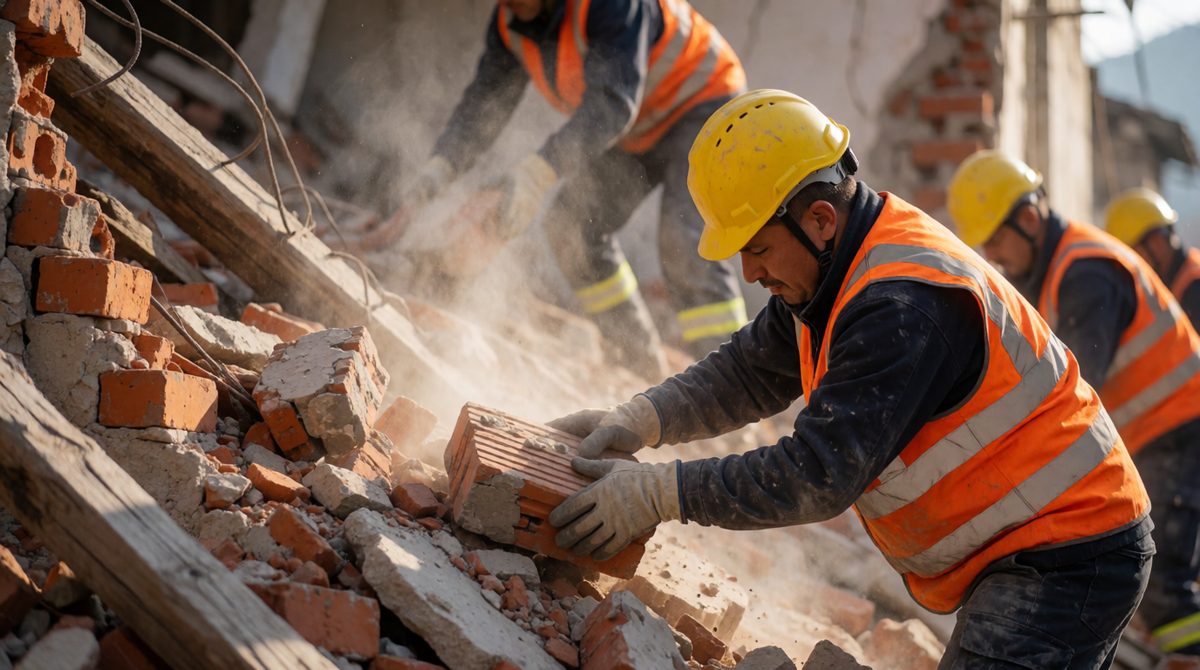
Rescue and shelter are immediate responses in the hours and days after an earthquake
When an earthquake or volcanic eruption hits, it causes effects. These are what happens to people, buildings and the environment. Geographers split them into two groups, and they also split what people do about them into two groups.
Key terms:
Buildings and bridges collapse. Roads and railways are cracked. Gas pipes, power lines and water pipes are broken. People are killed or injured by falling buildings.
Tsunamis flood the coast. Landslides block roads. Fires start from broken gas pipes. Dirty water spreads disease. Shops and businesses close so people lose jobs and income.
A good way to remember it: primary happens because of the shaking. Secondary happens because of the primary effects.
The same size of earthquake can cause very different results in different places. The spec says that effects and responses vary between areas of contrasting levels of wealth. A richer area usually has:
A poorer area often has weaker buildings, fewer emergency services and has to rely more on help from other countries. You need two named examples to show this.
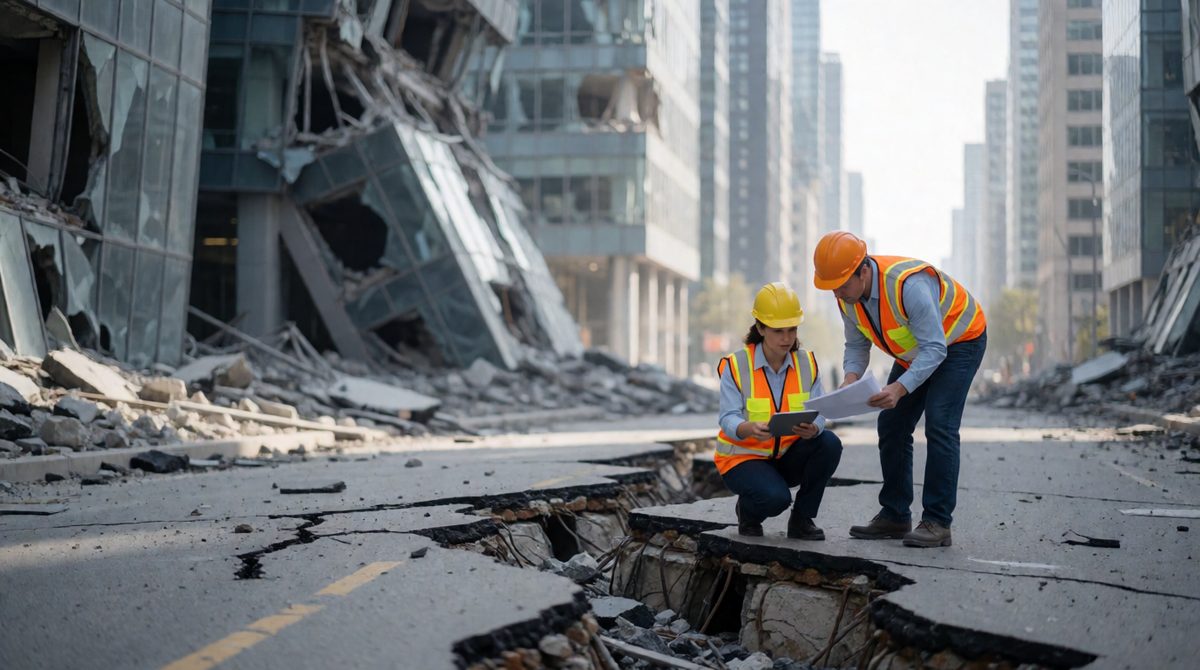
Chile's 2010 earthquake: strict building rules helped many modern buildings stay standing
Chile is a higher income country in South America (some books call it an NEE). On 27 February 2010 an earthquake of magnitude 8.8 struck off its coast, near the city of Concepcion. It happened on the destructive margin you met in an earlier lesson.
About 500 people died. Many buildings, roads and bridges were damaged or destroyed, and power, water and phone lines were cut. Hundreds of thousands of homes were damaged.
A tsunami hit coastal towns and caused many of the deaths. Fishing boats and ports were destroyed. Some looting happened and businesses closed, so jobs were lost.
The army was sent in to keep order and help people. A curfew was set. Emergency food, water and temporary shelter were handed out, and field hospitals were set up. Help from other countries was accepted.
The government put money into a large rebuilding plan for homes, schools, hospitals, roads and ports. Strong building rules, which Chile already had, were kept and improved.
Because Chile was wealthy and well prepared, the death toll was low for such a powerful earthquake, and recovery was quick.
Nepal is a lower income country in Asia. On 25 April 2015 an earthquake of magnitude 7.8 struck near Gorkha, about 80 km north-west of the capital Kathmandu. It was caused by the Indian Plate pushing into the Eurasian Plate. A large aftershock followed on 12 May.
Almost 9,000 people died and many thousands more were injured. Hundreds of thousands of homes were destroyed, often built from brick and mud with weak walls. Old temples in Kathmandu collapsed, and roads and power lines were broken.
Landslides blocked roads in the mountains and cut off villages. An avalanche on Mount Everest killed climbers at base camp. Many people lived in the open, so disease was a danger. Tourism, a major source of income, fell sharply.
Nepal had too few rescue teams and little heavy equipment, and the blocked roads slowed help. Many other countries and charities sent rescue teams, medical teams, food, tents and money.
Rebuilding was slow and relied on international aid and loans. Schemes gave families money to build homes to safer, earthquake-resistant designs. Many families were still in temporary shelters years later.
Chile's earthquake was much stronger (8.8 compared with 7.8), yet far fewer people died. Chile had strict building rules, good emergency services and its own money to rebuild. Nepal had weaker buildings, fewer services, hard-to-reach mountain areas and needed a lot of outside help.
Mixing up primary and secondary effects: a tsunami is secondary because it is caused by the earthquake, not the earthquake itself. Another mistake is to say that the stronger earthquake always kills more people. Wealth and preparation matter just as much as strength.
(a) Give one primary effect and one secondary effect of an earthquake. [2 marks]
(b) Using named examples, explain why the effects of earthquakes were different in an area of higher income and an area of lower income. [4 marks]
(a) Primary: buildings collapse (1). Secondary: a tsunami floods the coast, or landslides block roads (1).
(b) In Chile (higher income) about 500 people died in the 8.8 earthquake (1) because buildings were built to strict building rules and emergency services were well equipped (1). In Nepal (lower income) almost 9,000 people died in a weaker 7.8 earthquake (1) because many homes were weakly built, and rescue was slow and relied on international aid (1).
In a 4-mark question about two places, name both places, give a fact for each, and use the word "because" to link the fact to wealth.