⚒ Abrasion
Rocks and stones are frozen into the bottom and sides of the glacier. As the ice moves, they scrape along the valley floor and walls like sandpaper. This smooths the rock and leaves scratches called striations.
Note: in AQA GCSE Geography you study two of these three optional topics: coasts, rivers and glacial landscapes. If your school has chosen glacial landscapes, this is where it starts.
Sign up to access the complete lesson and track your progress!
Unlock This Course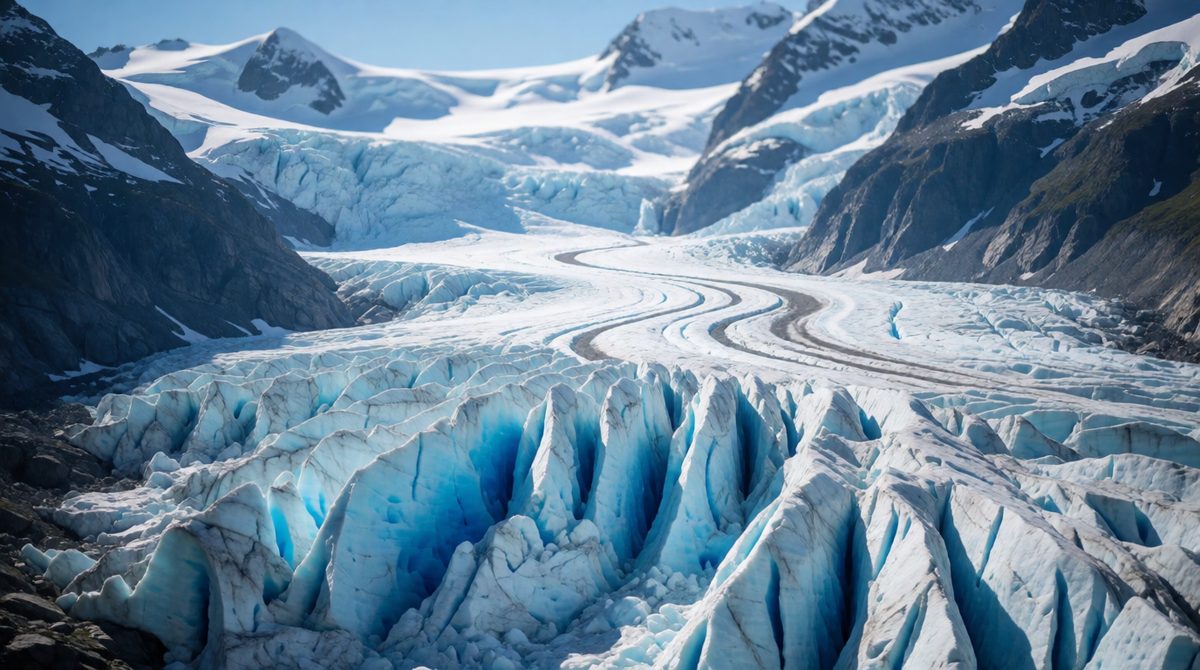
During the last ice age, glaciers like this covered much of the UK
The UK has not always looked the way it does today. Ice was a powerful force in shaping its physical landscape. Over the last 2 million years, the climate swung between cold glacial periods and warmer interglacial periods. During the cold periods, huge sheets of ice grew and spread out across the land.
The last ice age reached its coldest point about 20,000 years ago. At the maximum extent of ice cover, ice covered almost all of Scotland, Northern Ireland, Wales and the north of England. It reached as far south as the Midlands and the Bristol Channel. In places the ice was over a kilometre thick. Southern England was not buried, but it was freezing cold and treeless.
The ice began to melt about 11,500 years ago. It left behind the dramatic scenery we see today in places such as the Lake District, Snowdonia and the Scottish Highlands.
Key terms:
Glacial landscapes are full of steep, bare rock. Much of it was broken up by freeze-thaw weathering. You met this process in the lesson on waves, weathering and mass movement. Here it works on mountain sides above and around the ice.
Freeze-thaw is common in glacial areas because temperatures often go above and below freezing. The broken rock falls and gives the glacier more material to work with.
Glaciers are not just sitting there. Their weight and slow movement make them very good at wearing away the land. The spec names two main processes of glacial erosion.
Rocks and stones are frozen into the bottom and sides of the glacier. As the ice moves, they scrape along the valley floor and walls like sandpaper. This smooths the rock and leaves scratches called striations.
Meltwater seeps into cracks in the rock beneath the glacier and freezes. The ice sticks to the rock. When the glacier moves forward, it pulls chunks of rock away. This leaves a jagged, rough surface.
Abrasion smooths and plucking roughens. Together they make valleys deeper and wider, and they shape the steep, rocky landforms you will study in the next lesson, Landforms of Glacial Erosion.
Key terms:
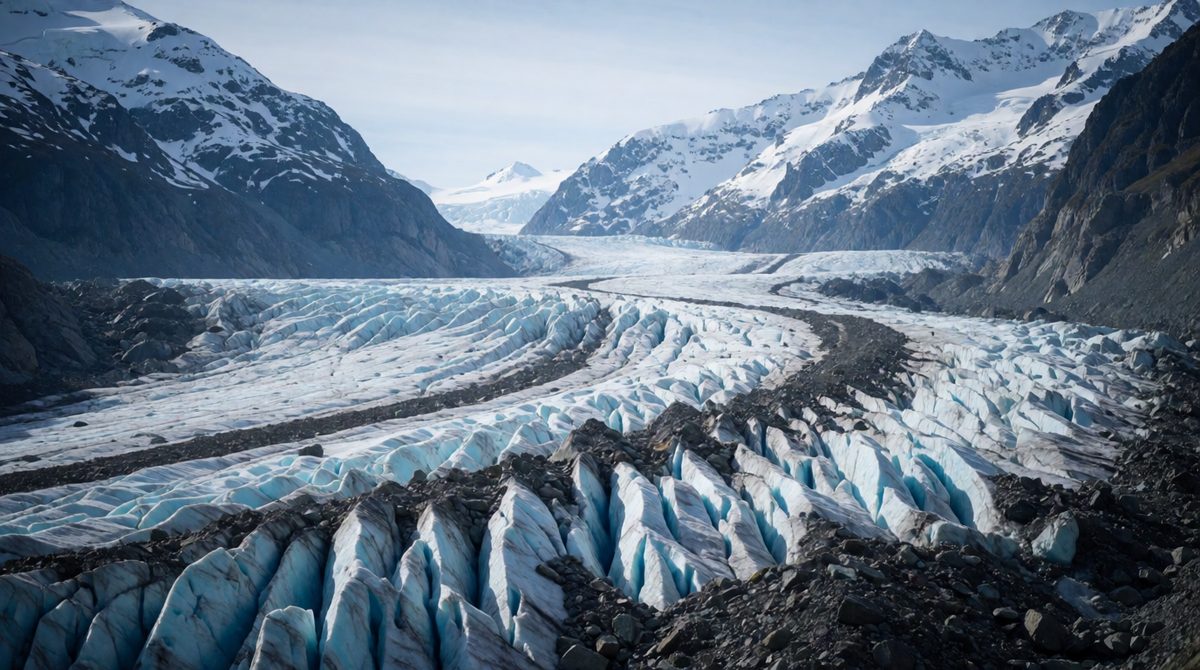
Glaciers transport rocks of all sizes as they move downhill
A glacier moves because of gravity. It slides slowly downhill, usually only a few centimetres to a few metres a day. The spec names rotational slip, which is how ice moves in a hollow, and bulldozing, which is how a glacier pushes loose material along as it moves.
In a hollow on a mountainside, the ice moves in a curved, circular way. It turns and slides downhill, a bit like a wheel turning slowly. This deepens the hollow.
The glacier pushes loose material such as rocks, soil and stones out of its way and in front of it, just like a bulldozer.
As the glacier moves, it carries material with it. This is transportation. Rock can be carried on top of the ice, inside it, and frozen into the bottom. A glacier is so strong that it can carry huge boulders, not just small stones.
Key terms:
A glacier cannot carry its load for ever. Deposition happens when the ice melts. This usually happens when the climate warms up or the glacier reaches lower, warmer ground. The ice loses energy and can no longer carry its load, so it drops the material it was holding.
There are two kinds of glacial deposit.
Dropped directly by the ice. It is a mix of clay, sand, stones and boulders all jumbled together. The pieces are angular (sharp-edged) and not sorted by size.
Carried and dropped by meltwater streams flowing out from the glacier. The water sorts it into layers, with the heaviest pieces dropped first. The pieces are smoother and more rounded.
You will see how this material builds landforms such as moraines and drumlins in the lesson on Glacial Deposition and the Lake District.
Key terms:
Saying that plucking and abrasion are the same thing. Abrasion is scraping and smoothing. Plucking is pulling away chunks of rock. Another mistake is to say glaciers deposit sediment because they get tired or stop. The real reason is that the ice melts, so it can no longer carry the load.
(a) Describe the maximum extent of ice cover across the UK during the last ice age. [2 marks]
(b) Explain how plucking erodes the landscape in a glaciated area. [3 marks]
(c) Explain why glaciers deposit sediment. [2 marks]
(a) Ice covered most of the north of the UK, including Scotland, Wales and northern England (1). It reached as far south as the Midlands and the Bristol Channel, while southern England was not covered (1).
(b) Meltwater gets into cracks in the rock at the bottom of the glacier and freezes (1). The ice becomes stuck to the rock (1). As the glacier moves, it pulls pieces of rock away (1).
(c) The ice melts when the climate warms or the glacier reaches lower ground (1). The glacier then loses energy and can no longer carry its load, so it drops the sediment (1).
For a 3-mark explain question like (b), write a short chain of steps: what happens first, what happens next, and the result. One point for each link in the chain.