⛰ Corrie
A bowl-shaped hollow with a steep back wall and a rock lip at the front. Often a small lake (a tarn) sits inside after the ice melts.
Sign up to access the complete lesson and track your progress!
Unlock This Course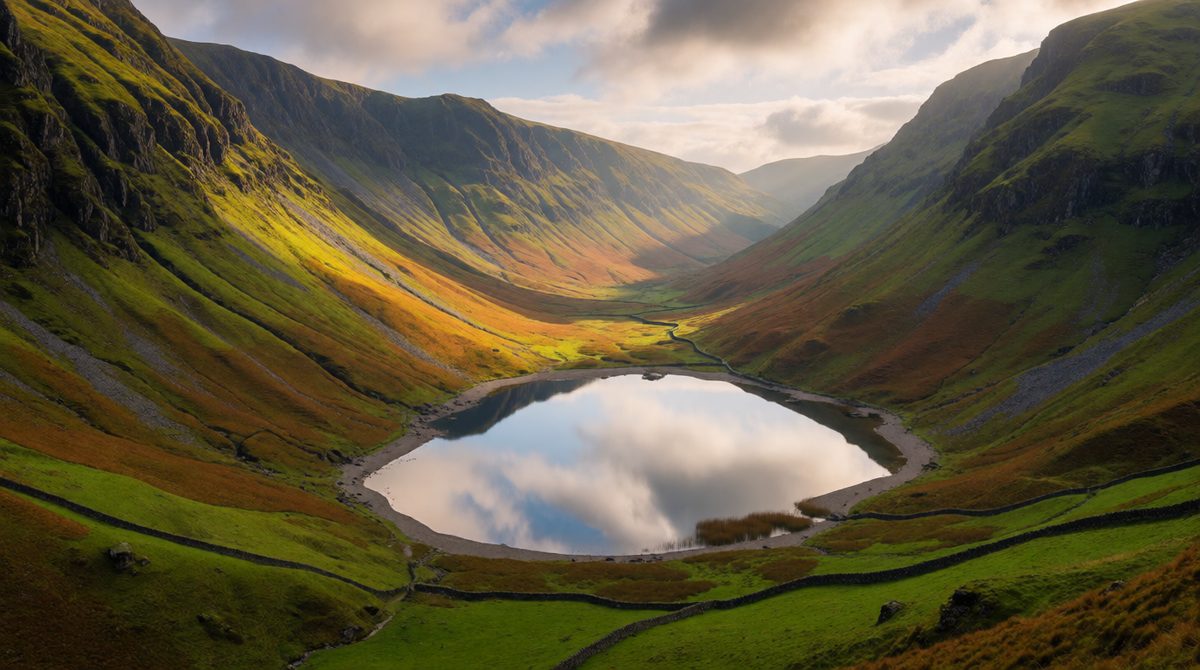
Glaciers carve wide U-shaped valleys with steep sides and flat floors
Ice is a powerful force. As glaciers moved through UK uplands in the last ice age, they carved the land into dramatic shapes. These landforms are all made by erosion, so they are cut out of the rock rather than built up from dropped sediment. Seven landforms are on the spec. You need to know what each one looks like (its characteristics) and how it formed.
Remember, glaciers erode by abrasion and plucking, and freeze-thaw weathering shatters the rock above the ice. Each landform below is built from these same processes in a different place.
Key terms:
These three landforms are found high in the mountains, and they often link together.
A bowl-shaped hollow with a steep back wall and a rock lip at the front. Often a small lake (a tarn) sits inside after the ice melts.
A knife-edge ridge with steep sides, found where two corries have grown back to back.
A sharp, pointed summit with steep faces, formed where three or more corries cut into the same mountain.
If two corries form next to each other, plucking and freeze-thaw weathering cut back their walls. The land between them gets thinner and thinner until only a narrow, jagged ridge is left. This is an arête.
If three or more corries form around one mountain top, their back walls cut into it from different sides. The mountain is left as a steep, pointed peak with arêtes running down it. This is a pyramidal peak.
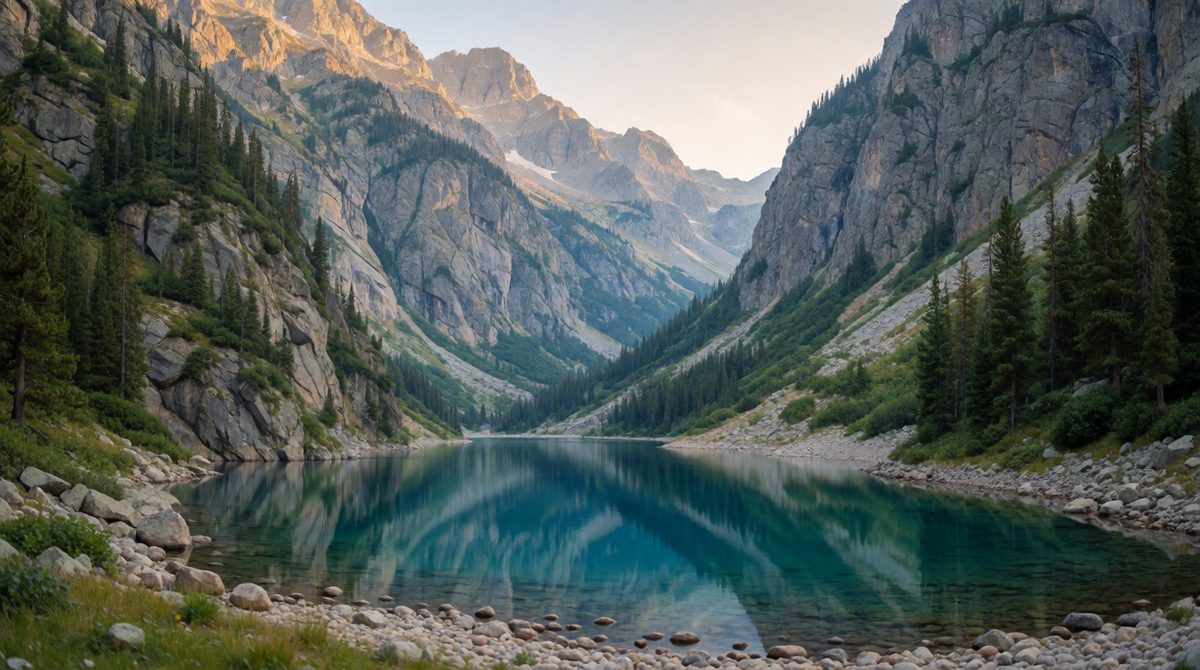
Ribbon lakes fill the long hollows carved by glaciers
These landforms are found lower down, where ice flowed along a valley.
Before the ice age, rivers cut V-shaped valleys. When a glacier filled one, it was far bigger and heavier than the river. The glacier did the following.
When the ice melted, it left a wide valley with a flat floor and steep sides: a U shape. This is a glacial trough.
A V-shaped river valley is made of spurs that stick out like interlocking teeth. A glacier is too big and strong to bend round them. It cuts straight through, so the ends of the spurs are sliced off by abrasion and plucking. What is left is a steep cliff-like face on the side of the trough. This is a truncated spur.
A glacier does not erode the same amount everywhere. Where the rock is softer, or where a tributary glacier joins and adds extra ice, erosion is stronger and the valley floor is gouged out deeper. After the ice melts, water collects in this hollow. It is long and thin, because it sits in the bottom of a trough. This is a ribbon lake.
Small valleys that join a main valley had smaller glaciers, or rivers, than the main one. The big glacier in the main valley cut down much deeper. When the ice melted, the side valley was left high above the main trough floor, so its end looks as if it is hanging on the valley side. This is a hanging valley.
The stream from a hanging valley now often drops into the trough as a waterfall.
High up: corrie, arête, pyramidal peak.
In the valley: glacial trough, truncated spur, ribbon lake, hanging valley.
Say where the ice was, name the process (plucking, abrasion, freeze-thaw), say what the process did, then say what was left after the ice melted.
Mixing up an arête (a ridge) and a pyramidal peak (a point). Saying the V-shaped valley was made by the glacier: it was made by a river, and the glacier changed it to a U shape. Saying a ribbon lake is made by a river: it is made by glacial erosion.
(a) Name the landform shown by a long, thin lake lying on the floor of a U-shaped valley. [1 mark]
(b) Explain how a corrie is formed. [4 marks]
(a) A ribbon lake. (1)
(b) Snow collected in a hollow on the mountainside and turned to ice (1). The ice moved by rotational slip and plucking pulled rock from the back wall, making it steep (1). Abrasion deepened the floor of the hollow as rocks in the ice scraped it (1). When the ice melted, a deep armchair-shaped hollow with a rock lip was left, often with a lake (1).
On a "how was it formed" question, include at least two named processes. Plucking on the back wall and abrasion on the floor each earn a mark when linked to the corrie.