⛰ Scenery and activities
Walkers climb Scafell Pike, the highest mountain in England, and mountains such as Helvellyn. Others go rock climbing, mountain biking and fell running. The glacial troughs and ribbon lakes give beautiful views.
Sign up to access the complete lesson and track your progress!
Unlock This Course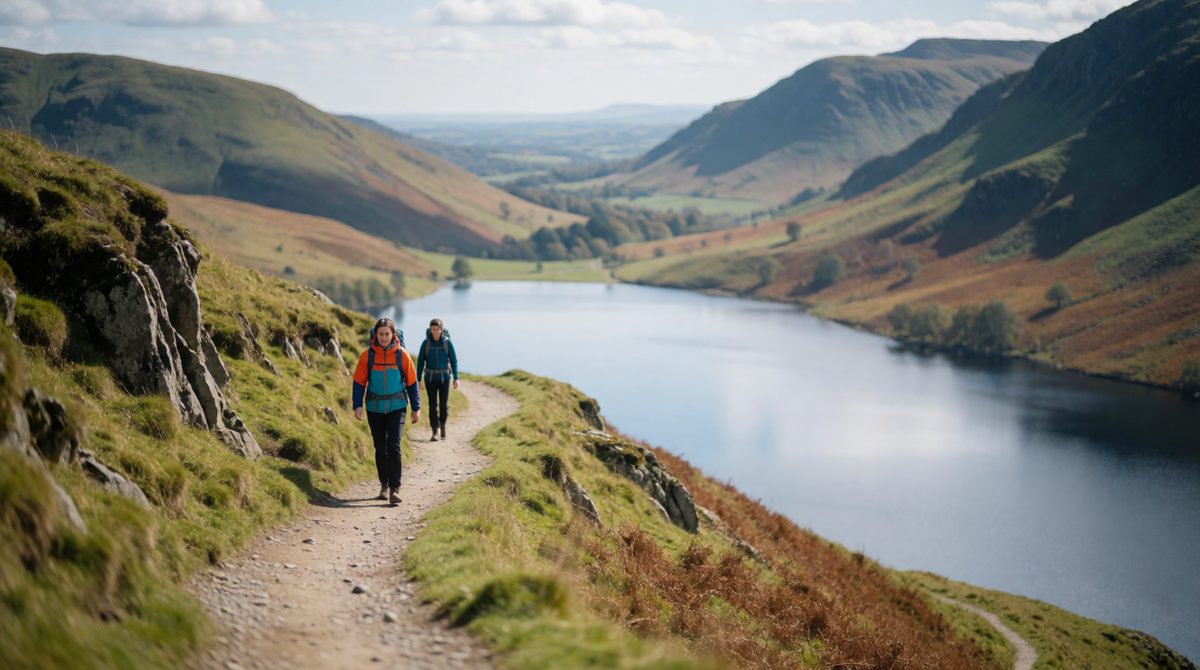
Millions of visitors come to the Lake District each year for its lakes and fells
The Lake District is a glaciated upland area in Cumbria, in north west England. Ice carved its deep valleys, rocky peaks and long lakes. Today, that dramatic scenery is the reason millions of people visit. The Lake District National Park receives around 15 million visits each year, and the area became a UNESCO World Heritage Site in 2017.
In the last lesson on land use, you met tourism as one of four main economic activities in glaciated uplands. Here we take the Lake District as a full example and look at what tourism does to the place.
Key terms:
Most of the attractions come from the glaciated landscape itself, plus the history and culture that grew up around it.
Walkers climb Scafell Pike, the highest mountain in England, and mountains such as Helvellyn. Others go rock climbing, mountain biking and fell running. The glacial troughs and ribbon lakes give beautiful views.
Lakes such as Windermere and Ullswater are used for sailing, kayaking, paddleboarding, swimming and boat trips.
Visitors come to see places linked to the poet William Wordsworth, such as Dove Cottage in Grasmere, and to Hill Top, the home of the author Beatrix Potter.
Keswick, Ambleside and Bowness-on-Windermere offer shops, cafes, hotels and campsites, so visitors have somewhere to stay and eat.
The area is also about two hours' drive from large cities such as Manchester and Liverpool, and it is close to the M6 motorway. This makes it easy for millions of people to visit.
Tourism brings both benefits and problems. Geographers sort these into three groups: social, economic and environmental.
Writing "tourism is bad for the environment" is too vague. Name the impact (such as footpath erosion), say where it happens, and explain how it is caused (such as thousands of boots wearing away the soil). Also remember that tourism has positive impacts, and that an impact can be economic and social at once.
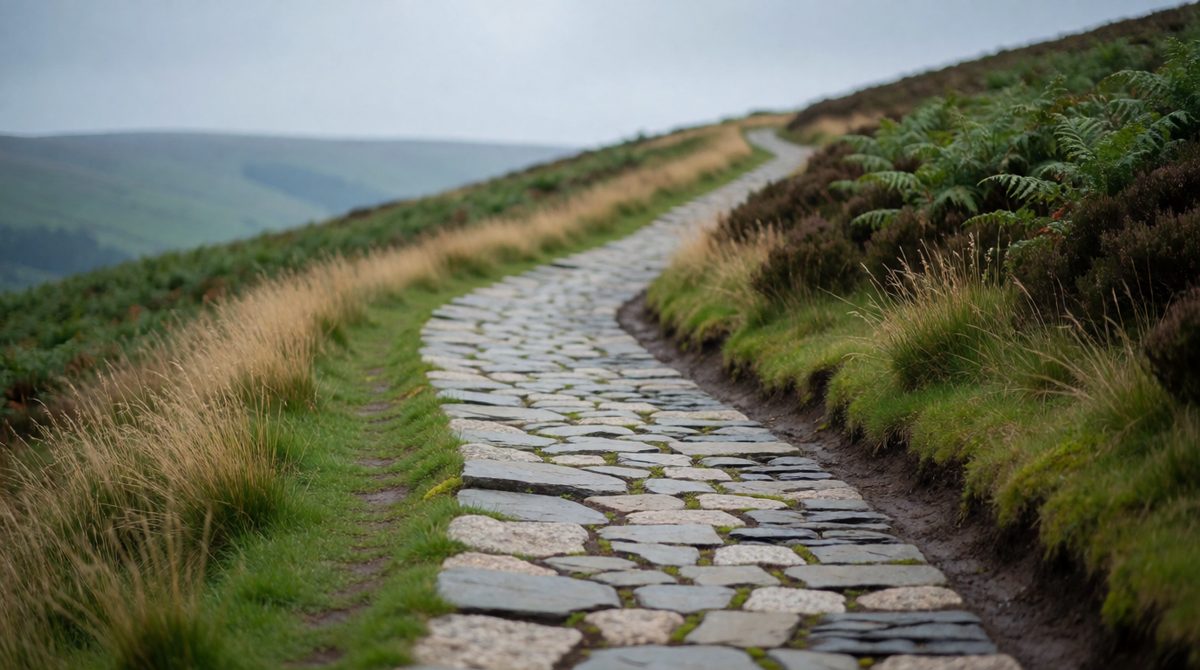
Footpath repairs stop erosion from millions of walkers' boots
Several organisations, including the Lake District National Park Authority and the National Trust, work to keep tourism sustainable. The strategies match the problems above.
Eroded paths are repaired with stone steps and surfaces, and volunteers and workers carry out the repairs. The Fix the Fells project looks after many mountain paths. Repair stops erosion spreading and keeps walkers on one route.
Bus services, cycle hire and car park charges encourage visitors to leave the car behind. Parking restrictions stop cars blocking narrow roads. This cuts congestion and pollution.
A 10 mph speed limit has applied on Windermere since 2005. It reduces noise and wake damage to the shoreline, and it makes the lake safer for swimmers and kayakers.
Visitor centres and signs teach people to follow the Countryside Code and to take their litter home. This cuts litter and damage to farmland and wildlife.
Question: how can footpath repair help to manage the impact of tourism?
Step 1, name the problem: walkers cause footpath erosion on popular routes.
Step 2, give the strategy: stone steps and surfaces are built on the worst paths.
Step 3, explain why it works: the path holds firm, so the soil is not worn away or washed down the hillside, and walkers stay on one narrow route rather than spreading out.
Tourism is very important to the Lake District's economy, so it cannot simply be stopped. Managers must balance the needs of visitors, residents and the environment. Honeypot sites such as Windermere and Keswick get the most pressure, so they get the most management. Some strategies cost money, and not everyone agrees on them. For example, some residents welcome visitors while others want fewer cars and less noise.
(a) Give two reasons why tourists visit the Lake District. [2 marks]
(b) Explain two environmental impacts of tourism in the Lake District. [4 marks]
(c) Describe one strategy used to manage the impact of tourism in the Lake District and explain why it is effective. [3 marks]
(a) Any two: the mountain and lake scenery for walking and climbing (1); water sports on the lakes such as sailing (1); cultural attractions such as Wordsworth's Dove Cottage (1).
(b) Footpath erosion: thousands of walkers wear away plants and soil on popular routes (1), leaving scars on the hillside that rain makes worse (1). Traffic congestion: many visitors arrive by car (1), which fills narrow lanes and causes noise and fumes (1).
(c) A 10 mph speed limit on Windermere (1) reduces noise and disturbance to wildlife and shoreline damage (1), and it makes the lake safer for other users (1).
In a "describe and explain" question, always link the strategy to the problem it fixes. Use a word like "so" or "because" to show you are explaining, not just naming.