The world is becoming urban
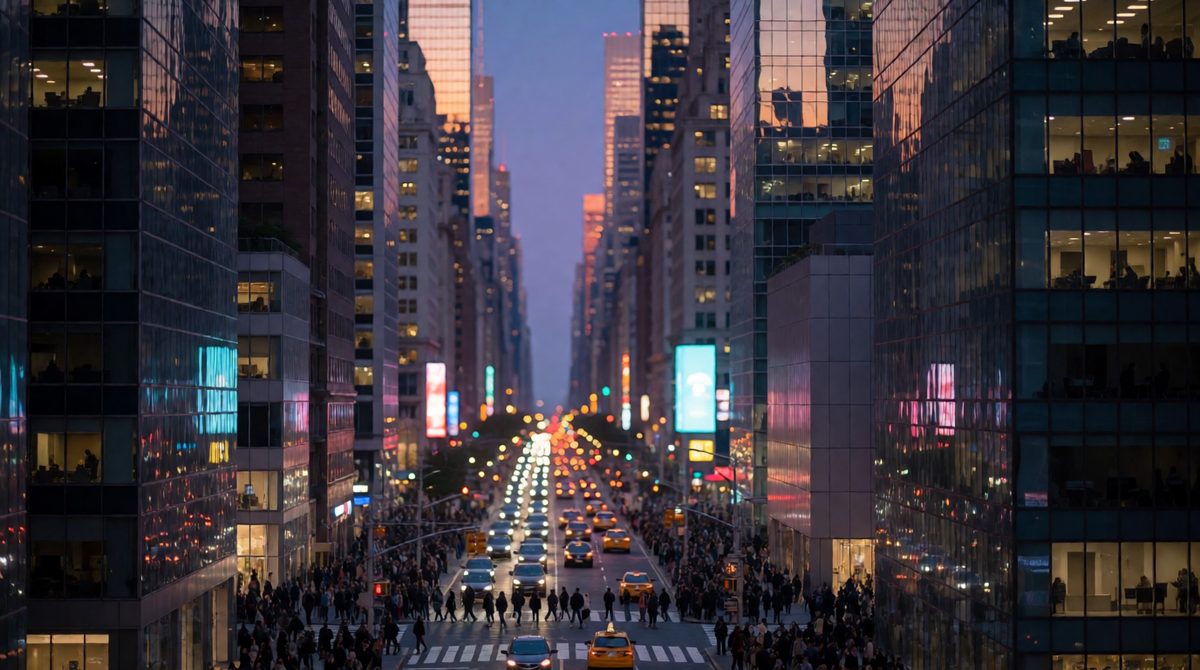
More than half the world's people now live in towns and cities
For most of history, most people lived in the countryside and worked the land. That has changed. In 2007, for the first time, more than half of the world's people lived in towns and cities. Today the figure is well over half (about 55 to 58 per cent) and it keeps rising. The United Nations expects about two thirds of people to be living in urban areas by 2050.
This growing percentage of people living in towns and cities is the starting point for the whole of this theme.
Key terms:
- Urban area: a built-up area such as a town or city, with many buildings, roads and people close together.
- Rural area: countryside, with few buildings and a low population, often used for farming.
- Urbanisation: an increase in the percentage of a country's population living in urban areas.
Be careful with the wording. A city can grow bigger without urbanisation happening. Urbanisation means the share of people living in urban areas is going up.
The global pattern of urban change
Urban change is not the same everywhere. The pattern across the world looks like this:
🏢 Already highly urban
Most of Europe, North America, South America and Australia already have a large majority of people living in cities. In the UK, around eight in every ten people live in an urban area. Their percentage is high and it is now rising only slowly.
🌱 Urbanising fastest
Most of the fastest urban growth today is in Asia and Africa. These continents still have many people living in rural areas, and each year millions of them move to cities.
This means that nearly all of the world's extra urban population now appears in cities in poorer countries, not in richer ones.
Urban trends in HICs and LICs
Higher income countries (HICs) and lower income countries (LICs) are at different points in the story. You will see how countries are grouped in the lesson Measuring Development.
- HICs: urbanisation began first. In the UK it happened mainly during the Industrial Revolution in the 1800s, when factories in towns pulled in workers from farms. Today most people in HICs already live in cities, so the rate of urbanisation is slow. Some people even move out of the biggest cities to smaller towns and villages.
- LICs: urbanisation started later but is happening much faster. Cities in many LICs are growing quickly and often cannot build homes and services fast enough. A lot of this growth is recent, so the rate of urbanisation is high.
Newly emerging economies (NEEs) are in between. Many have urbanised rapidly in the last few decades.
Compare, do not just list
An exam answer should say when urbanisation happened and how fast it is happening now. For example: "Urbanisation in HICs happened earlier and is now slow, whereas in LICs it started later and is much faster."
Factors affecting the rate of urbanisation
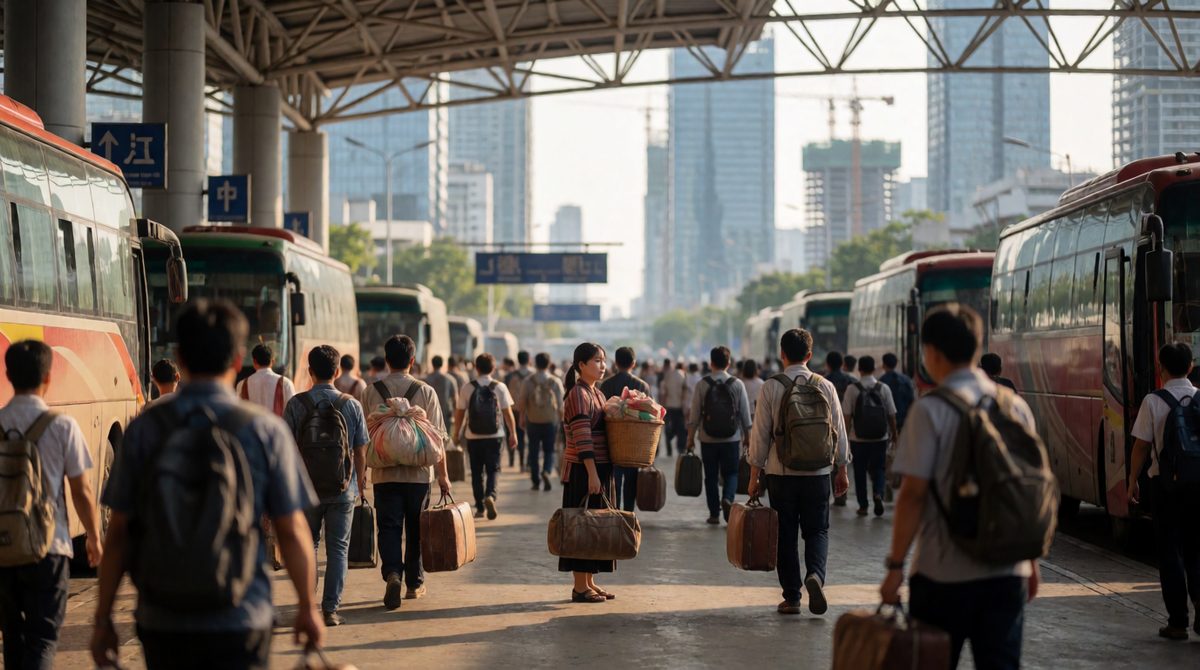
Rural to urban migration is a big reason cities grow fast
Cities grow in two ways. People move in, and people are born. These are migration and natural increase.
1. Migration: push and pull factors
Key terms:
- Migration: the movement of people from one place to live in another.
- Rural-urban migration: the movement of people from the countryside to towns and cities.
- Push factor: something bad about where you live that encourages you to leave.
- Pull factor: something attractive about another place that draws you there.
The push-pull theory says that migration happens when push factors from the rural area combine with pull factors from the city.
🚫 Push factors (the countryside)
Few jobs and low farm incomes. Poor or no services such as schools and hospitals. Drought, floods or crop failure. Land that is too small to feed a family. Conflict or war.
🧲 Pull factors (the city)
More jobs and higher wages. Better schools, hospitals and shops. Better water supply and electricity. The hope of a better quality of life. Friends and family already there.
When many people make this choice, the city's population rises fast. The more people who leave rural areas, the faster the rate of urbanisation.
2. Natural increase
Key term:
- Natural increase: the growth in population when more babies are born than people die.
Migration also boosts natural increase. Most people who move to cities are young adults. They go on to have children there, so the city's population keeps growing even if the number of new migrants falls. In many LICs, health care has improved so fewer people die young, which adds to natural increase.
Worked example
A city has 2 million people. In one year 60,000 babies are born and 20,000 people die. Natural increase is 60,000 minus 20,000 = 40,000 people. If 30,000 migrants also arrive, the city grows by 70,000 people in total.
The emergence of megacities
Key term:
- Megacity: a city with a population of more than 10 million people.
In 1950 there were only two megacities, New York and Tokyo. Today there are more than 30. Tokyo, Jakarta and Dhaka are among the largest, each with more than 30 million people. Most megacities are now in Asia, with others in Africa and Latin America.
- In HICs: megacities such as Tokyo and New York.
- In LICs and NEEs: megacities such as Delhi in India, Lagos in Nigeria, Sao Paulo in Brazil and Mexico City in Mexico.
Most new megacities are in LICs and NEEs, because those are the places where urbanisation is fastest. You will study one of them, Rio de Janeiro, in the next lesson.
Common mistakes
1. Saying "urbanisation" when you mean "a city got bigger". Urbanisation is about the percentage living in urban areas.
2. Writing "people move to the city because it is nice". Always give specific push and pull factors.
3. Thinking all cities are growing fast. In HICs the rate is slow.
4. Mixing up push and pull. Push comes from the place people leave; pull comes from the place they go to.
Exam-style question
(a) Explain what is meant by the term urbanisation. [2 marks]
(b) Explain how push and pull factors lead to rural-urban migration. [4 marks]
(c) Describe one difference between urban trends in HICs and LICs. [2 marks]
Model answer
(a) Urbanisation is an increase (1) in the percentage of a country's population living in towns and cities (1).
(b) Push factors are problems in rural areas that make people leave, such as few jobs or drought (1). Pull factors are attractions of cities, such as more jobs and better hospitals (1). People are pushed away from the countryside and pulled to the city (1), so they migrate there and the city grows (1).
(c) Urbanisation in HICs happened earlier and is now slow (1), whereas in LICs it is happening fast and cities are growing quickly (1).
Exam tip
In "explain" questions, use a linking word like "so" or "because". In part (b) each push or pull factor needs a result: "few jobs, so people leave to find work in the city".