↑ Push factors (rural areas)
Few jobs and low wages on the land. Poor farmland and droughts that damaged crops. Poor access to schools and healthcare. Machines replacing farm workers.
Sign up to access the complete lesson and track your progress!
Unlock This Course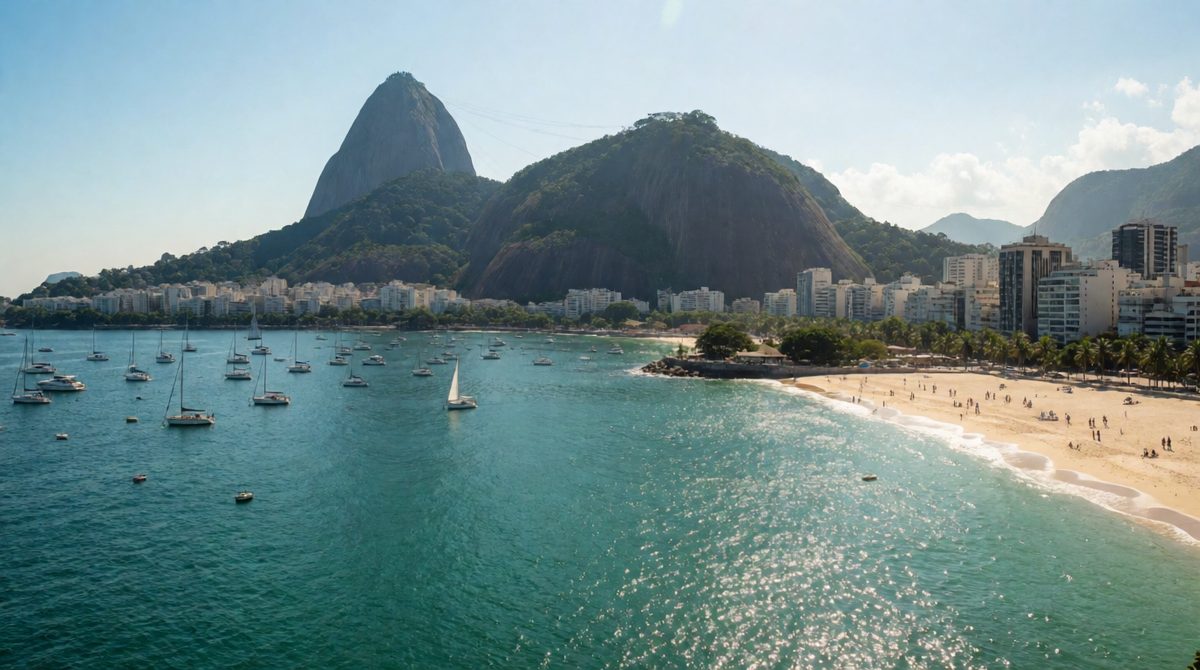
Rio de Janeiro grew fast as people moved in from the countryside
The spec asks you to study one major city in a low income country (LIC) or newly emerging economy (NEE). Our case study is Rio de Janeiro in Brazil. Brazil is an NEE: its economy has grown quickly, but many of its people are still poor. Rio shows both sides of that story.
Over the next few lessons you will learn about Rio's opportunities, challenges and the way planning is helping the urban poor. This lesson sets the scene. It covers where Rio is, why it is important and why it grew so big.
Key terms:
Rio de Janeiro is in the south east of Brazil, on the coast of the Atlantic Ocean. Brazil is the largest country in South America. Rio sits on a sheltered bay, with steep, rounded mountains rising straight out of the city. Sugarloaf Mountain and the Corcovado mountain, topped by the Christ the Redeemer statue, are famous examples.
The city has about 6 million people. The whole urban area around it, including the nearby towns, is home to around 13 million. Rio is also the name of the surrounding state, Rio de Janeiro state.
Rio's position helps to explain its importance:
Geographers talk about a city's importance at three scales. Learn one clear point for each.
Rio is one of the major cities of South America. Its port and international airport link the continent to the rest of the world.
Rio was the capital of Brazil until 1960, when the capital moved to Brasilia. It is still the second largest city in Brazil after Sao Paulo.
Rio hosted the 2016 Summer Olympic Games, the first held in South America, and the 2014 FIFA World Cup final. Its Carnival and the Christ the Redeemer statue attract visitors from all over the world.
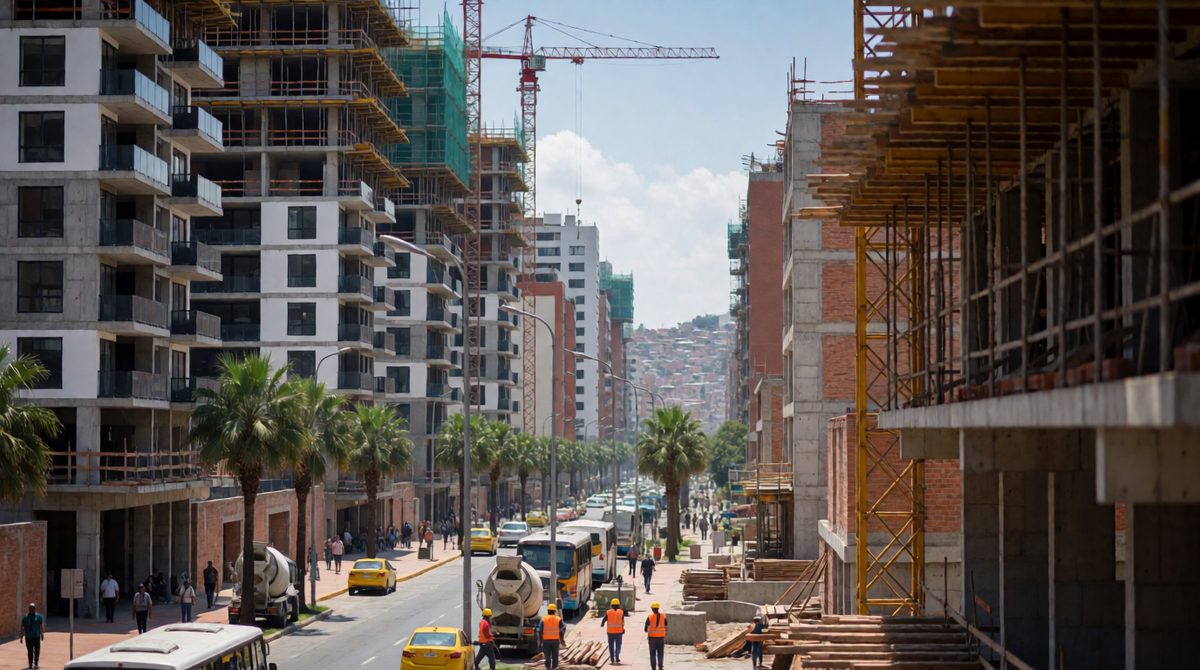
Migration from the countryside made Rio grow quickly
In the last century Rio grew from a small city into one of millions of people. Two things caused this growth: migration and natural increase. You met both ideas in the lesson on urbanisation around the world. Here we apply them to Rio.
Many people moved to Rio from the countryside of Brazil, especially from the poorer north east of the country. This is rural-urban migration. It was driven by push and pull factors.
Few jobs and low wages on the land. Poor farmland and droughts that damaged crops. Poor access to schools and healthcare. Machines replacing farm workers.
The hope of a job in industry, building, services or tourism. Better wages. Hospitals and schools. A chance of a better quality of life.
Many migrants were young adults who hoped to find work and send money home. Some migrants also came from other towns and cities in Brazil.
There were not enough homes for everyone who arrived. This is why large areas of informal housing grew on the steep hillsides. You will study this in a later lesson, so for now just remember that fast migration put pressure on the city.
Migration did not only add people. It also changed the population. Migrants were mostly young, so they started families in the city. Birth rates were high. At the same time, better healthcare in the city meant that fewer people died, so the death rate fell. When births are higher than deaths, the population grows by natural increase.
In other words, the growth of Rio fed itself. Migration brought young people. They had children. Those children grew up and had children of their own.
Imagine a part of Rio with 100,000 people. In one year there are 3,000 births and 1,000 deaths. The natural increase is 3,000 - 1,000 = 2,000 people. If 4,000 people also move in and 500 move out, the population grows by 2,000 + 4,000 - 500 = 5,500 people. This is made-up data to show the method, not real figures for Rio.
Writing about Rio without naming it, such as "a big city in Brazil". Examiners want place specific detail. Another mistake is mixing up the scales: the 2016 Olympics show international importance, while being the second biggest city in Brazil shows national importance. A third mistake is saying that natural increase means people moving in. It only means births minus deaths.
(a) Describe the location of Rio de Janeiro. [2 marks]
(b) Explain two reasons why Rio de Janeiro has grown. [4 marks]
(a) Rio is in the south east of Brazil (1) on the Atlantic coast, on a sheltered bay (1).
(b) Rural-urban migration (1): people moved from poor rural areas, such as the north east, because there were few jobs, and were pulled to Rio by the chance of work and services (1). Natural increase (1): many migrants were young and had children, and better healthcare meant fewer deaths, so births were higher than deaths (1).
In an "explain two reasons" question, make each reason a separate paragraph and add a linking word like "because" to earn the second mark.