Growth brings problems too
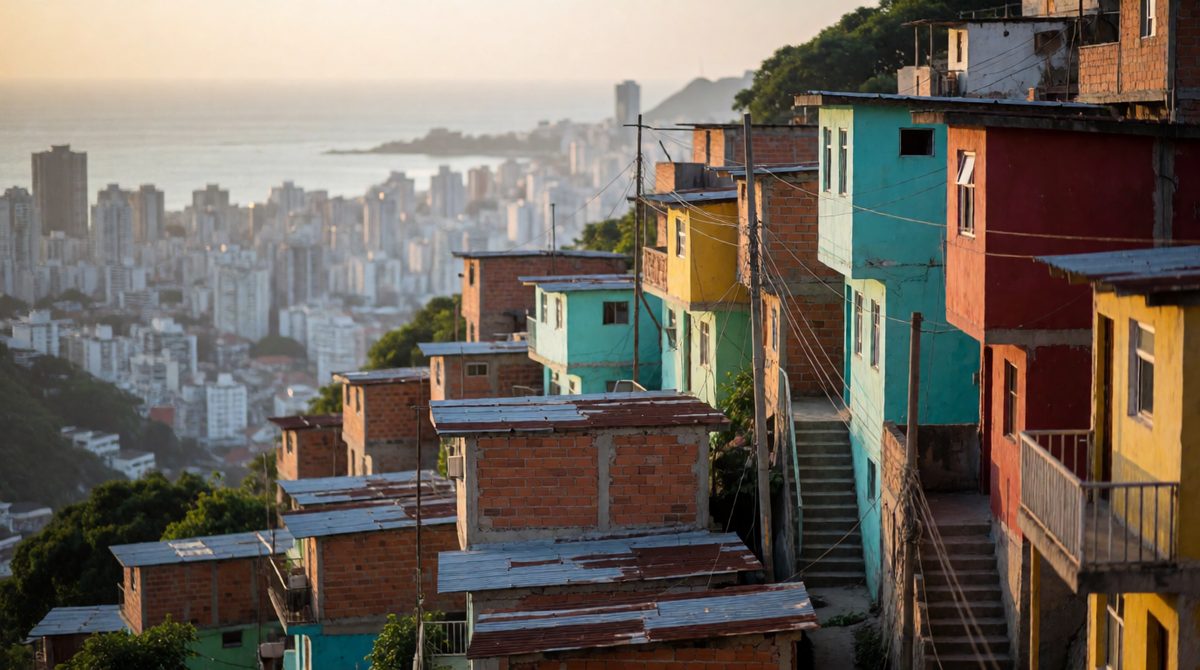
Favelas are squatter settlements that often lack good services
Rio de Janeiro has grown very fast. People came from the countryside for jobs and a better life, and many families have had large numbers of children. The city could not build homes, roads and services quickly enough. The result is a set of urban challenges that many cities in LICs and NEEs share.
In this lesson you will learn the main challenges in Rio. Remember, the benefits of growth were covered in the lesson Rio de Janeiro: Opportunities, and the plan to improve life for the poor comes in the next lesson.
Key terms:
- Slum: an overcrowded area of poor quality housing with few services.
- Squatter settlement: homes built on land that the people do not own and have no legal right to use.
- Favela: the Brazilian name for a squatter settlement or slum.
- Sanitation: systems that take away human waste and sewage and keep drinking water clean.
- Informal job: work with no contract, no tax and no fixed wage, such as street selling.
Managing urban growth: slums and squatter settlements
Rio's cheap, legal housing ran out long ago. Many newcomers could not afford a home, so they built their own on any empty land. Much of this land is on steep hillsides or beside busy roads and rivers, which are places nobody else wanted. These are the favelas.
The houses are often made from brick, wood and scrap metal. There are big problems with this:
- Homes are crowded and built very close together.
- Steep slopes are at risk of landslides in heavy rain.
- There are no legal records, so people have no rights to the land and can be moved on.
- Narrow, unplanned streets make it hard for fire engines and ambulances to get in.
The city cannot plan well when new homes keep appearing without permission. That is why managing urban growth is the first big challenge.
Clean water, sanitation and energy
Favelas grew faster than pipes and cables. Many homes were built before any services reached them.
💧 Water and sanitation
Many favela homes have no safe piped water or sewers. Families may share a standpipe or collect water in containers. Raw sewage can run down open channels between the homes. This spreads disease, and it ends up in rivers and the sea.
⚡ Energy
Some homes have no official electricity supply. Residents join cables to the power lines illegally. These connections are dangerous because they can cause fires and electric shocks, and the supply is not reliable.
Providing these services is difficult and expensive. Engineers must lay pipes and cables through steep, crowded streets with no space for machines.
Access to health and education

Access to health care can be hard for people in poorer parts of a city
Where services are weak, health and education suffer.
- Health: poor sanitation and dirty water lead to illness. Clinics can be far away or overcrowded, and some areas are hard for doctors to reach.
- Education: schools in poorer areas can be crowded and short of teachers. Children may leave early to earn money for the family.
This makes a cycle. With less education, it is harder to get a well paid job, so the family stays poor and stays in poor housing.
Reducing unemployment and crime
Rio does not have enough formal jobs for everyone who arrives. Many people work in informal jobs, such as street selling, odd jobs or cleaning. These pay little, are not secure and bring in no tax for the city to spend on services.
Unemployment and poverty are linked to crime. Some young people with no work join gangs, and drug gangs have controlled parts of some favelas. Violence and fear of crime make life hard for local people. They also put off visitors and businesses, which makes it harder to create jobs.
Managing environmental issues
🗑 Waste disposal
Rubbish collection does not reach every favela, so waste piles up in streets and drains. It blocks drains, causes floods and attracts pests.
🏭 Air and water pollution
Exhaust from traffic and industry pollutes the air. Untreated sewage and rubbish flow into rivers and into Guanabara Bay, which is the bay beside the city.
🚗 Traffic congestion
Many people live a long way from where they work and the roads are crowded. Congestion wastes time, adds to air pollution and costs businesses money.
These problems are linked. More people mean more waste, more traffic and more pressure on water, and all of it lands on the environment.
Common mistakes
Do not say that the favelas are "illegal because the people are criminals". Squatter settlements are built without legal permission because people had no other way to find a home. Also, do not write about improvement projects when the question asks for challenges. Name the challenge, then explain the effect on people.
Summary: how the challenges link
Fast growth leads to squatter settlements. These lack water, sanitation and energy. That causes poor health, and poor education limits the chance to get a job. Unemployment is linked to crime. Meanwhile, waste, pollution and traffic damage the environment.
Exam-style question
(a) Explain two challenges caused by the growth of squatter settlements in Rio de Janeiro. [4 marks]
(b) Describe one environmental problem caused by urban growth in a named city in an LIC or NEE. [2 marks]
Model answer
(a) Challenge one: many favela homes have no sewers or clean piped water (1). This means disease spreads easily because sewage is not removed safely (1). Challenge two: favelas are built on steep hillsides (1), so heavy rain can cause landslides that destroy homes and put lives at risk (1).
(b) In Rio, rubbish is not collected from every favela (1), so it blocks drains and can cause flooding and spread disease (1). Alternatively, untreated sewage flows into Guanabara Bay and pollutes the water (1).
Exam tip
In an "explain" question for 4 marks, make two clear points and add a "this means..." link to each. Name Rio or a favela to show you can use a case study.