🔧 Basic services
Water pipes, sewers and drains were laid. Rubbish collection and street lighting were added. This made homes cleaner and safer and cut the spread of disease.
Sign up to access the complete lesson and track your progress!
Unlock This Course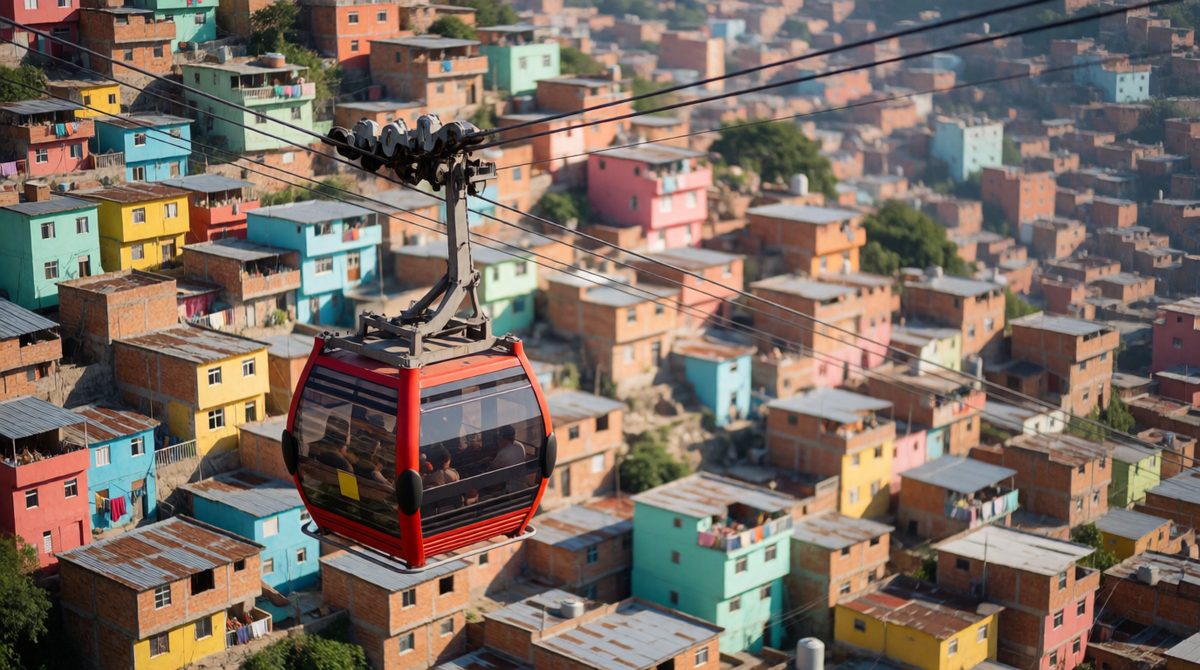
A cable car helped people in a hillside favela reach the rest of the city
In the last lesson you saw that many people in Rio de Janeiro live in favelas with poor housing, little clean water and few services. For years the city mostly ignored these areas. Some governments even tried to knock them down. That did not work, because the people had nowhere else to go.
Later, Rio began to take a different approach. Instead of removing favelas, it planned to improve them. This lesson looks at one example of how urban planning is improving the quality of life for the urban poor: the Favela Bairro Project, with a closer look at Complexo do Alemao.
Key terms:
The Favela Bairro Project started in 1994 and was run by Rio's city government. It was paid for partly by a loan from the Inter-American Development Bank, which lends money to countries in Latin America. The name says the aim: to turn favelas into proper neighbourhoods that are part of the city.
The main idea was to improve the favelas where they already were, working with the people who lived there.
Water pipes, sewers and drains were laid. Rubbish collection and street lighting were added. This made homes cleaner and safer and cut the spread of disease.
Steep, muddy paths were paved and widened so that ambulances and bin lorries could get in. Some of the most dangerous homes were rebuilt or moved.
New nurseries, community centres, sports areas and public squares gave children and families places to learn and meet.
Many residents were given official addresses and more secure rights to their homes. This made families feel safer and helped them to get services.
The project covered many favelas across the city, so it helped a large number of people. Success varied from place to place.
Complexo do Alemao is a group of favelas in the north of Rio. It is built on a steep hill and tens of thousands of people live there. For many years it was cut off from the rest of the city. Roads were poor, crime was high and the police rarely went in.
The area was improved as part of a national programme called the Growth Acceleration Programme (PAC), which paid for new infrastructure. The changes included:
Each change helped a different part of quality of life. Transport gave people access to work, sanitation improved health, schools and clinics improved education and care, and less crime made families feel safer.
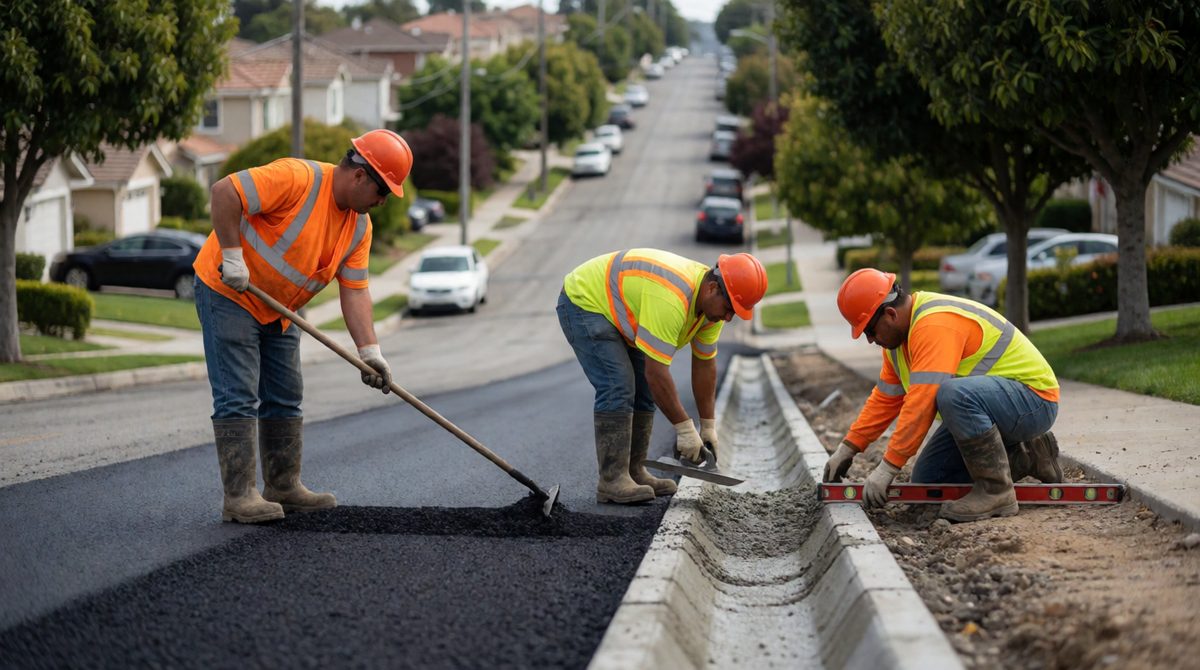
Upgrading roads and drains improves a favela without knocking it down
Planners learned that moving people out of favelas caused new problems. Families were often sent to estates far from the city, away from their jobs, friends and schools. Many could not afford the travel, so some simply moved back or built new favelas. Improving the favela in place avoids this.
In an exam you need to say what was done and then explain how it helps. Use this chain: feature, then change, then benefit.
Question: Explain how a cable car can improve life in a favela. Answer: The cable car links hilltop homes to the rest of Rio (1). People can reach jobs and schools faster and more cheaply (1). This gives them more chance to earn money and to be educated (1).
Planning has made a real difference, but it has not solved every problem.
Cleaner water, better health, safer paths, easier travel to work, better schools and more secure homes for many families.
Some improvements were not looked after once they were built. The cable car has needed repairs, and some people said it did not meet their most urgent needs. Many families still lack jobs and good homes.
Students often write that the favelas were knocked down and replaced. In these projects the favelas were improved where they stood. Another mistake is to name the project without saying what was done. Always give features such as sewers, paved roads, official addresses or a cable car.
Describe how urban planning has improved the quality of life for the urban poor in a named example from a city in an LIC or NEE. [4 marks]
In Rio de Janeiro, the Favela Bairro Project improved favelas instead of knocking them down. Water pipes and sewers were built, which improved health (1). Steep paths were paved so ambulances could get in (1). Many residents were given official addresses and more secure rights to their homes, so they felt safer (1). In Complexo do Alemao a cable car was built, which links people to jobs and schools in the city (1).
For a "describe" question, name your example first, then give a specific feature and say how it helped people. Aim for one clear point per mark.