🏔 Sparse areas
Upland areas are cold, wet and steep, with thin soils. Farming is hard, roads are difficult to build and there are few jobs. People have moved away or never settled in large numbers.
Sign up to access the complete lesson and track your progress!
Unlock This Course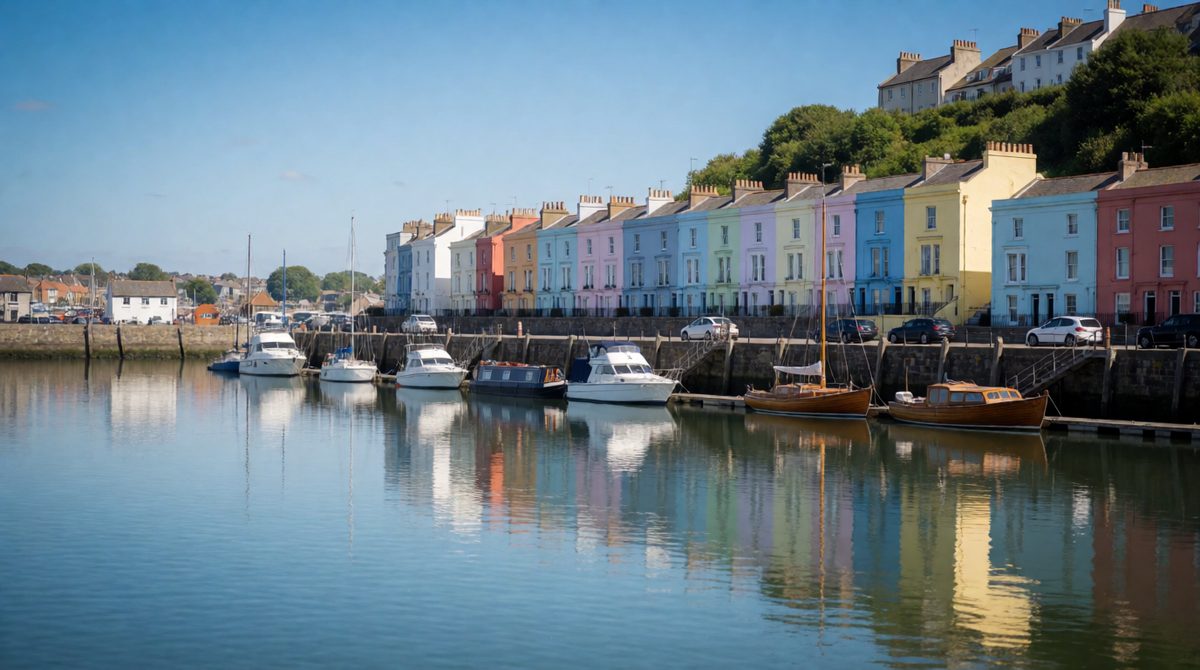
Bristol is a major city in south-west England
The UK has a population of around 67 million people. They are not spread out evenly. Population distribution means where people live across an area, and in the UK it is very uneven.
Key terms:
Some parts of the UK are densely populated. Others are sparsely populated.
More than 8 out of every 10 people in the UK live in towns and cities, so the pattern of cities matters a lot.
Upland areas are cold, wet and steep, with thin soils. Farming is hard, roads are difficult to build and there are few jobs. People have moved away or never settled in large numbers.
Lowland areas are flat, with good farmland and easy transport. Many are near the coast, with ports for trade. Industries grew here, and jobs drew people in.
Remember, the UK's upland and lowland areas were covered in an earlier lesson. Here the key idea is that people follow jobs, transport and easy living.
The UK's major cities are spread across all four nations:
London is by far the biggest, with around 9 million people. Most of the other major cities sit in the lowland areas and on or near rivers and the coast, which is why so many people live there.
Do not say that nobody lives in the north or in Scotland. Large cities such as Glasgow, Manchester and Newcastle are in the north. It is the uplands that are sparsely populated, not the whole north.
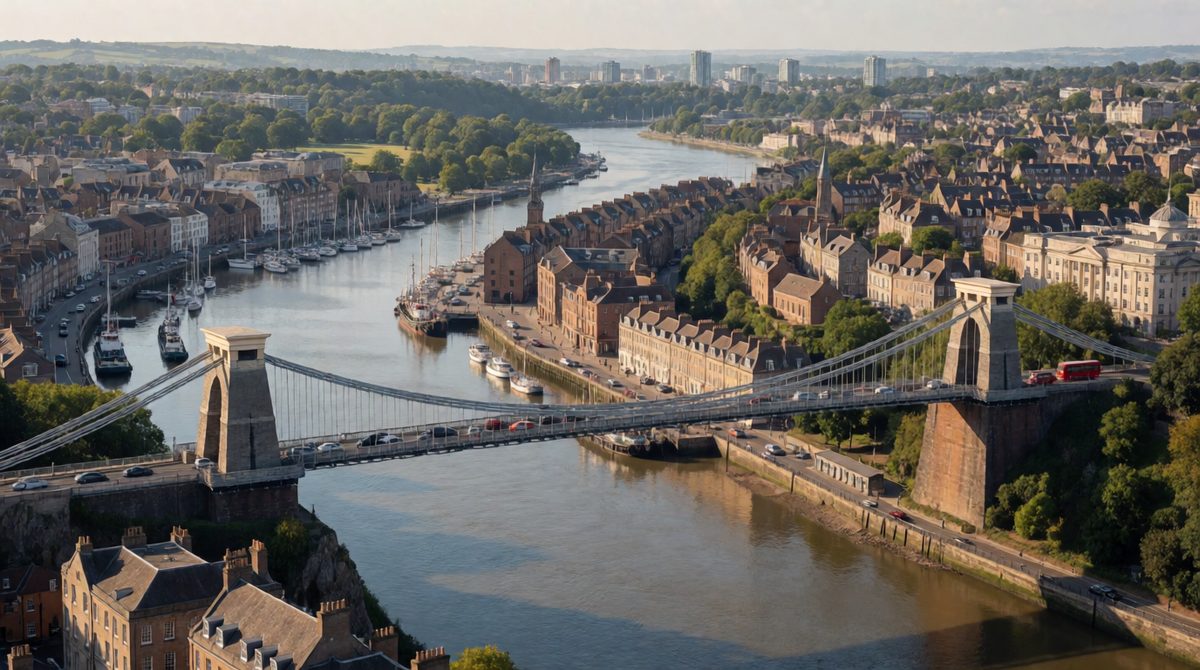
Bristol is one of the largest cities in south-west England
For the UK case study you need to know about one major UK city. Here it is Bristol.
Bristol is in the south west of England, about 120 miles west of London. It sits on the River Avon, a few miles from where the river flows into the Severn Estuary and the Bristol Channel. It is the largest city in the south west, with a population of around 470,000 people.
It has good links. The M4 and M5 motorways meet close to the city, and trains run from Bristol Temple Meads station to London, Wales, the Midlands and the south west. Bristol also has its own airport and a port at Avonmouth.
Always give the level: regional (the south west), national (the UK) and international (the wider world). A fact with its level named scores better than a fact on its own.
Key terms:
Bristol has grown from roughly 380,000 people in 2001 to roughly 470,000 in 2021. Migration is a big part of this.
Young people from across the UK come to study at Bristol's universities, and many stay for jobs. People also move from London and the south east for lower house prices and a good quality of life, bringing skills and spending.
After the Second World War, people from the Caribbean came to Britain to work, many settling in Bristol. Later groups include people from South Asia, Somalia and, after Poland joined the EU in 2004, Poland.
The character of a city is what makes it feel the way it does: its people, food, music, buildings and events.
Point: international migration has changed the character of Bristol. Evidence: Caribbean communities in St Pauls. Explain: they brought food, music and a carnival that make the area distinctive, and the city's population is now much more culturally mixed.
Do not describe migration as only good or only bad. Here you only need how it has changed the growth and character of the city. The opportunities and challenges are covered in the next two lessons.
(a) Describe the distribution of population in the UK. [2 marks]
(b) For a UK city you have studied, explain how migration has changed the city. [4 marks]
(a) The population is densely concentrated in south east England around London (1) and in other urban areas such as the West Midlands and the north west. Upland areas such as the Highlands are sparsely populated (1).
(b) Bristol has grown because national migration brings students and workers from other parts of the UK and from London (1), which increases its population and demand for housing (1). International migration, such as Caribbean communities arriving after the Second World War, has made Bristol more culturally mixed (1), shown by areas like St Pauls with its carnival and food and by the many languages spoken (1).
In (b) you are told to explain, so each fact needs a 'which means' link to growth or character. Name Bristol and a place, such as St Pauls, to show case study knowledge.