💧 Using less
Paying for the water you actually use encourages people to save it. Low-flush toilets, showers instead of baths and fixing leaking pipes all cut waste.
Sign up to access the complete lesson and track your progress!
Unlock This Course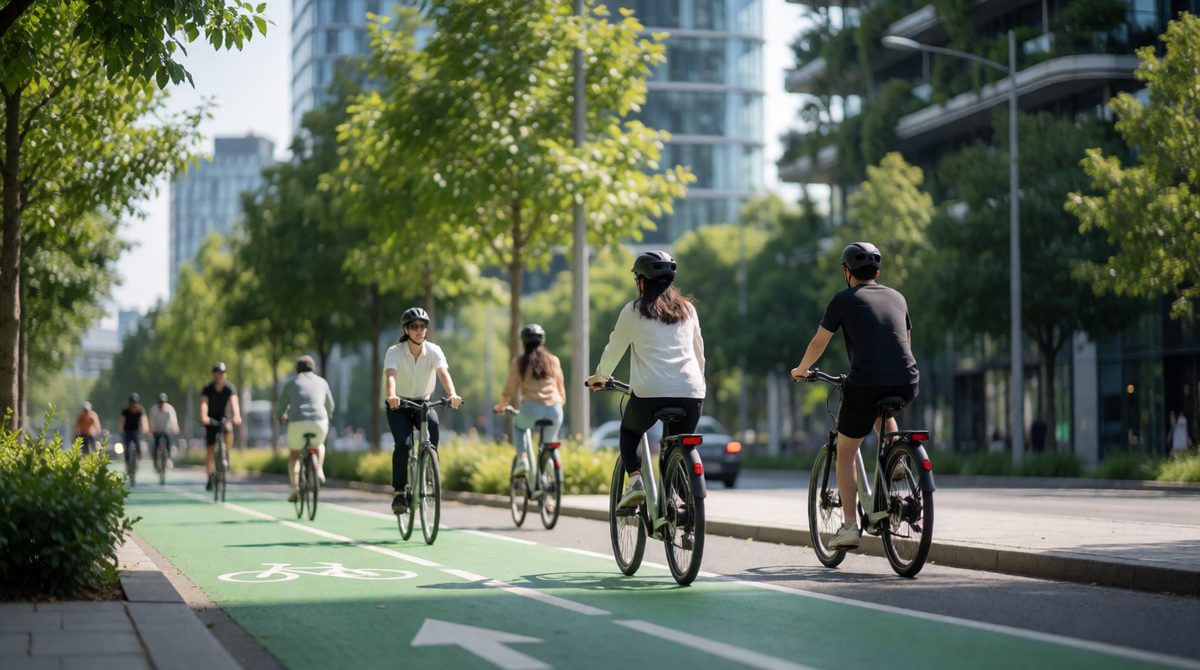
Cycling and public transport make city living more sustainable
Cities use huge amounts of water, energy and land, and they produce huge amounts of waste. If a city carries on like this, it can use up resources and damage the environment for people in the future.
The spec says that urban sustainability requires the management of resources and transport. In this lesson you will see how a city can do both.
Key terms:
People in cities use water for drinking, washing, cooking, cleaning and flushing toilets. Much of that water is treated to a drinking standard, so wasting it wastes money and energy too.
Paying for the water you actually use encourages people to save it. Low-flush toilets, showers instead of baths and fixing leaking pipes all cut waste.
Rainwater can be collected from roofs and used to flush toilets or water gardens. Grey water (used water from sinks and showers) can be reused for jobs that do not need clean drinking water.
Most of the energy a city uses for heating, lighting and transport comes from burning fossil fuels, which adds carbon dioxide to the atmosphere. Sustainable cities try to use less energy and to get more of it from renewable sources.
Waste from cities is often buried in landfill sites or burned. This takes up land, can pollute air and water, and wastes materials that could be used again.
A sustainable city encourages people to reduce, reuse and recycle. Households sort paper, glass, plastic, metal and food waste into separate bins. Recycled materials need less energy than making new products from raw materials, and less waste goes to landfill.
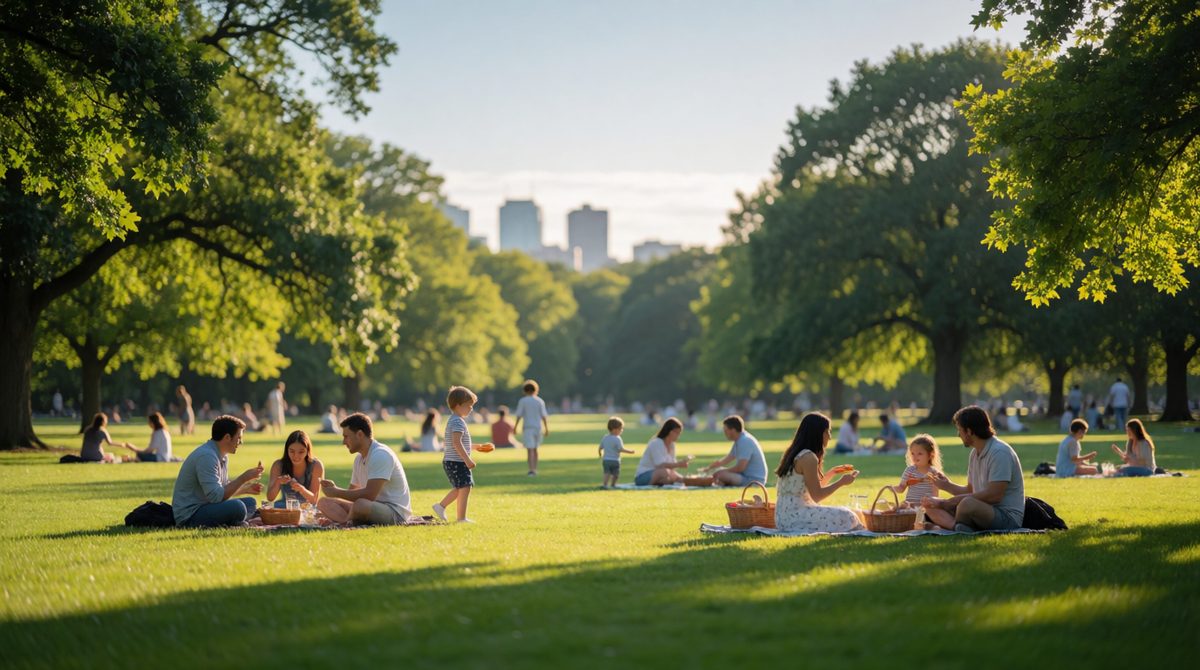
Green spaces make cities healthier and more pleasant places to live
Green space makes a city a healthier and more pleasant place to live.
Parks give people places to relax and exercise, which helps health and wellbeing.
Trees, gardens and wild areas give homes to birds, insects and other wildlife.
Trees take in carbon dioxide and give shade. Soil and plants soak up rain, which reduces flooding. Green roofs and street trees can help cool a city on hot days.
Freiburg is a city in the south west of Germany, close to the Black Forest. It is often described as one of the greenest cities in Europe. It shows how all of these ideas can work together.
It does not rely on one idea. It cuts energy use, recycles waste, protects green space and makes it easy to travel without a car. This mix is what makes the city more sustainable.
Traffic congestion wastes time, harms business and makes air pollution worse. It is also a problem for people's health. Cities use several strategies to reduce it. The best plans mix them together.
London has more people and more traffic than any other UK city. It uses many of these strategies.
Strategy: park and ride. Effect: fewer cars drive into the city centre. Result: less congestion, less air pollution and faster journeys for buses and people who still need to drive. Always give the strategy, then the effect, then the result.
Writing only "it is good for the environment" without saying how. Mixing up conserving (using less) with recycling (reusing materials). Naming a place but giving no details of what it does. Name a real feature, such as the Congestion Charge, or solar homes in Vauban.
(a) State two features of sustainable urban living. [2 marks]
(b) Using an example you have studied, explain how a city has reduced traffic congestion. [4 marks]
(a) Any two from: conserving water by collecting rainwater (1); conserving energy by insulating buildings or using solar panels (1); recycling waste (1); creating green space such as parks (1).
(b) London introduced the Congestion Charge, so drivers pay to enter the centre (1). This gives people a reason to leave the car at home and use another way of travelling (1). The money raised can be used to improve buses and other public transport (1), so fewer vehicles are on the roads and traffic moves more freely (1).
In a 4-mark "explain" question, use linking words such as "so", "which means" and "because" to turn a fact into a full explanation.