Why measure development?
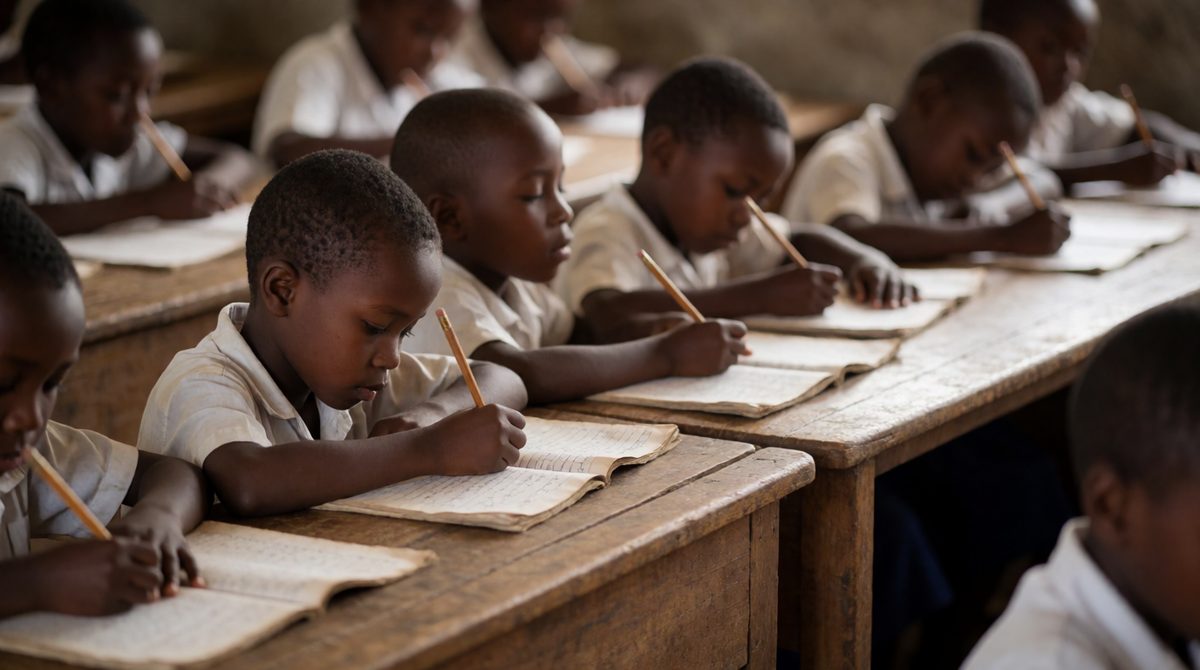
Literacy rate is one way to measure a country's development
Countries around the world are very different. Some have strong economies and long, healthy lives for most people. Others have much less money, fewer services and more hardship. Geographers describe these differences as global variations in economic development and quality of life. To compare countries fairly, we need numbers we can measure.
Development means how far a country has progressed in its economy and in the wellbeing of its people. There is no single perfect way to measure it, so geographers use several measures and look at them together.
Classifying countries: HIC, LIC and NEE
The main way to sort the world is by how much money a country earns and how its economy is changing. Countries can also be sorted by quality of life, using the social measures and HDI score you will meet below. The two usually go together: HICs generally have a better quality of life than LICs, with NEEs in between and improving.
Key terms:
- High income country (HIC): a country with a high average income and a well developed economy, for example the UK, Japan and the USA.
- Low income country (LIC): a country with a low average income and a less developed economy, for example Niger, Chad and Afghanistan.
Remember, a newly emerging economy (NEE) sits between the two. Countries such as Brazil, India and China have fast growing economies and are moving towards high income. They are changing quickly, so their position on any list keeps moving.
Economic measures
Economic measures show how much money a country makes.
Gross national income (GNI) is the total income of a country in a year, including money earned from abroad. GNI per head divides this by the number of people. It is usually given in US dollars so countries can be compared. A high GNI per head suggests a richer country.
Social measures

Infant mortality is a social measure of development
Social measures show how well people live. They are not about money directly. In general, LICs have higher birth rates, death rates and infant mortality, and lower life expectancy, literacy rates and access to safe water, than HICs.
- Birth rate: the number of babies born per 1,000 people per year.
- Death rate: the number of people who die per 1,000 people per year.
- Infant mortality: the number of babies who die before their first birthday, per 1,000 live births per year. A high figure suggests poor health care, nutrition or hygiene.
- Life expectancy: the average number of years a person is expected to live. It is higher where health care, food and water are better.
- People per doctor: the number of people shared between each doctor. A high number means poorer access to health care.
- Literacy rate: the percentage of adults who can read and write. It shows how good education is.
- Access to safe water: the percentage of people who can get clean drinking water. Unsafe water spreads disease, so this affects health.
You will see in the lesson on The Demographic Transition Model how birth and death rates link to development over time.
The Human Development Index (HDI)
A single measure never tells the whole story. The Human Development Index (HDI) is a combined measure. It brings together three things: how long people live (life expectancy), how well educated they are, and how much they earn (GNI per head).
Each country gets a score between 0 and 1. The closer to 1, the higher the level of development. Because it mixes economic and social information, HDI gives a more balanced picture than GNI alone.
Worked example
Country A has a GNI per head of $45,000, life expectancy of 82 years and infant mortality of 3 per 1,000. Country B has a GNI per head of $900, life expectancy of 55 years and infant mortality of 70 per 1,000. Country A is clearly more developed on every measure. Country A is likely to be an HIC and Country B an LIC. (These figures are made up to show the method.)
Limitations of the measures
Every measure has weaknesses. You must be able to explain these.
⚠ Averages hide differences
GNI per head is an average. In a country with a few very rich people and many poor people, the average looks better than life really is for most people. The same is true of life expectancy and literacy, which can differ between cities and rural areas.
📊 Poor or missing data
Some countries find it hard to collect accurate figures, especially where records are poor or many people live in remote areas. Work done informally, or food grown to eat at home, is often not counted in income.
🔄 One measure is not enough
A country can have a high GNI per head from oil but poor health care and education. An economic measure alone can be misleading, which is why social measures matter too.
🏢 Even HDI is limited
HDI is still an average, and it leaves out things such as the environment, freedom and how equally wealth is shared.
Common mistakes
Students often say a high death rate always means a poor country. It does not. A country with many older people can have a high death rate even if it is rich. Another mistake is to say GNI per head is what every person earns. It is only an average, so many people earn far more or far less.
Exam-style question
(a) State what is meant by infant mortality. [1 mark]
(b) Explain one limitation of using GNI per head to measure development. [2 marks]
(c) Explain why geographers use the HDI rather than GNI per head alone. [3 marks]
Model answer
(a) The number of babies that die before their first birthday, per 1,000 live births (1).
(b) GNI per head is an average (1), so it hides the gap between rich and poor people in a country (1).
(c) HDI combines economic and social measures (1): income, life expectancy and education (1). This gives a fuller picture of development and quality of life than income alone, which can be misleading (1).
Exam tip
In part (c), the command word is explain, so give a reason and then a developed point. Name the three parts of HDI to earn the marks.