☔ Low pressure: wet
Rising air cools, and clouds and rain form. Places under low pressure belts are wet. The equator has very rainy climates, such as tropical rainforests. At about 60° the weather is cloudy and changeable. The UK is near this belt.
Sign up to access the complete lesson and track your progress!
Unlock This Course
Air rises at the equator and sinks around 30 degrees north and south, shaping the weather belts
The Sun does not heat the whole Earth equally. At the equator the Sun is almost overhead, so its rays are concentrated on a small area and the ground gets very hot. Near the poles the Sun is low in the sky, so the same amount of energy is spread over a much larger area and it is cold.
Warm and cold areas cannot stay that different for ever. The atmosphere moves heat from the hot equator towards the cold poles. It does this in a regular pattern of moving air, called global atmospheric circulation. This pattern helps to decide where it is wet, where it is dry, and which way the wind usually blows.
Key terms:
The general atmospheric circulation model splits the air movement in each half of the Earth into three giant loops, called cells. Each cell works like a conveyor belt of air.
From the equator (0°) to about 30° north and south. It is driven directly by the Sun's heat.
From about 30° to 60° north and south. It is the middle cell and is pushed along by the cells on either side of it.
From about 60° to the poles (90°). It is driven by very cold air at the poles.
Key terms:
Take the Hadley cell first. The steps below show how the air moves.
The Polar cell follows the same idea. Very cold air sinks at the poles, giving high pressure. It moves along the surface away from the pole and warms a little. At about 60° it rises, giving low pressure.
The Ferrel cell sits between them. At the surface, air moves from the high pressure at 30° towards the low pressure at 60°. These are the westerlies. At 60° this warmer air meets cold air coming from the poles. The warmer air is lighter, so it rises over the cold air.
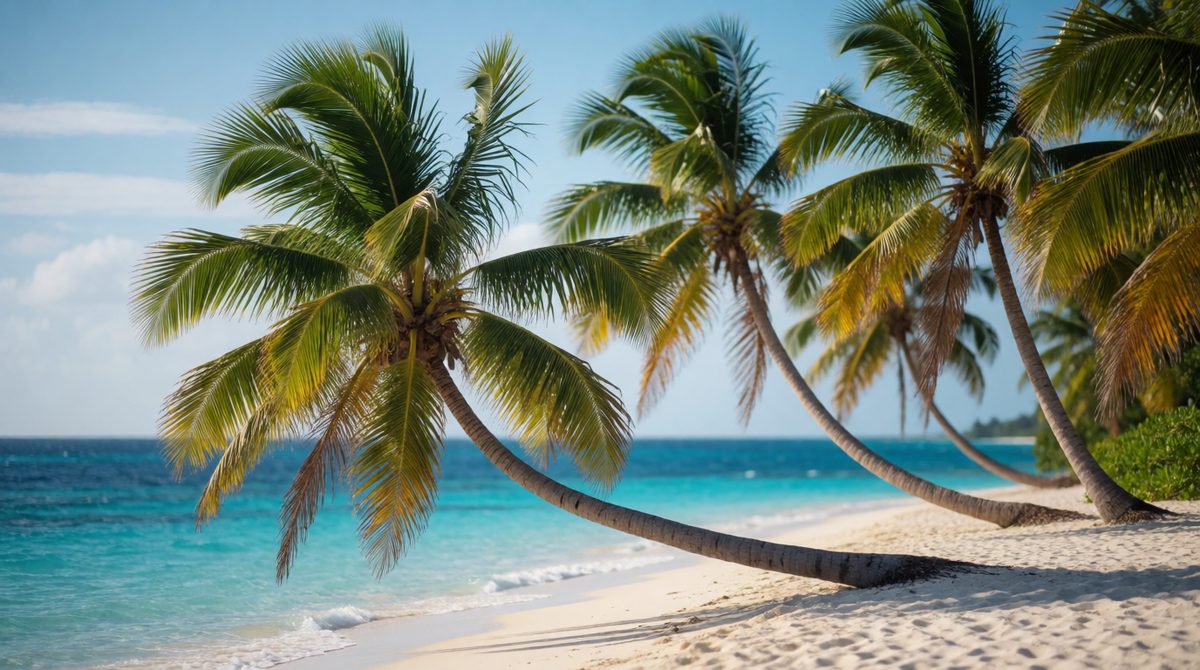
Trade winds blow from high pressure towards low pressure at the equator
Putting the three cells together gives alternating belts of low and high pressure around the Earth.
The surface winds blow between these belts, from high pressure to low pressure. The spin of the Earth bends them, so they do not blow straight north or south.
Key terms:
Rising air cools, and clouds and rain form. Places under low pressure belts are wet. The equator has very rainy climates, such as tropical rainforests. At about 60° the weather is cloudy and changeable. The UK is near this belt.
Sinking air warms up and clouds do not form easily. Places under high pressure belts are dry, with clear skies. Many of the world's hot deserts, such as the Sahara, lie at about 30° north or south.
The winds matter too. Westerlies cross the Atlantic Ocean and pick up moisture. They bring this mild, damp air to the UK, which helps to explain why UK weather is often wet and changeable.
The belts are not fixed exactly in one place. As the position of the overhead Sun changes through the year, the belts move a little north and south. This is why some places have a wet season and a dry season.
Circulation also matters for weather hazards. The winds and pressure belts you have learnt here are the background to how tropical storms develop and move, which you will meet in the lesson How Tropical Storms Form.
Many students say that air "rises because it is low pressure". It is the other way round: air rises, and this creates low pressure at the surface. Another mistake is to say that wind blows from low to high pressure. Wind always blows from high to low. Finally, do not say the trade winds blow away from the equator. They blow towards it.
(a) Name the three cells of the general atmospheric circulation model. [3 marks]
(b) Explain why there is low pressure at the equator. [2 marks]
(c) Explain why many hot deserts are found at about 30° north and south of the equator. [3 marks]
(a) Hadley cell (1), Ferrel cell (1), Polar cell (1).
(b) The Sun heats the ground strongly at the equator, so the air is heated and rises (1). Rising air leaves low pressure at the surface (1).
(c) Air has risen at the equator, cooled and lost its moisture as rain (1). This cool, dry air sinks at about 30° (1). Sinking air creates high pressure and clear skies with very little rain, so deserts form (1).
In "explain" questions, link your points with words such as "so" and "because". For part (c), say what the air is doing (sinking), what that creates (high pressure) and what the result is (dry weather).