📅 At independence
Nigeria mainly sold farm products. Britain was its main trading partner.
Sign up to access the complete lesson and track your progress!
Unlock This Course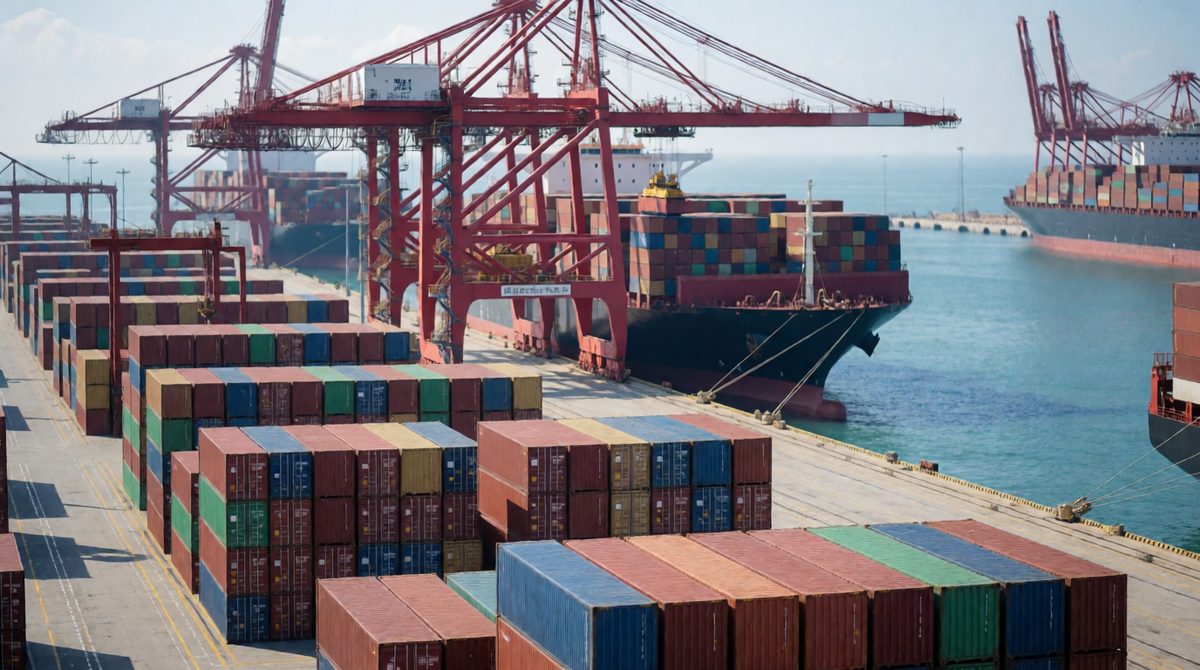
Trade links help Nigeria's economy grow
Since independence, Nigeria's relationships with the rest of the world have changed a lot.
Trade means buying and selling goods between countries. Goods sold abroad are exports. Goods bought from abroad are imports.
Key terms:
Nigeria mainly sold farm products. Britain was its main trading partner.
Crude oil is the main export, sold to customers in Europe, India and the USA. China has become one of the biggest sources of Nigeria's imports, such as machinery and vehicles.
Nigeria's trade has therefore moved away from one old partner, Britain, towards many partners across Asia, Europe and the Americas.
China also invests in Nigeria. Chinese companies have helped to build railways, including the Abuja to Kaduna line and the Lagos to Ibadan line. Better transport helps businesses move goods and people.
The problem is that Nigeria still depends on oil. When the world price of oil falls, the money coming into the country falls too, and the government has less to spend on services.
Aid is help given to a country, in money, goods or expertise. Remember from Strategies to Reduce the Development Gap that aid is one way of closing the gap. Here we look at the types and what they do for Nigeria.
Key terms:
The UK government funds health or education projects in Nigeria.
The World Bank lends money for projects such as roads and electricity.
A charity such as WaterAid helps communities to build wells and toilets.
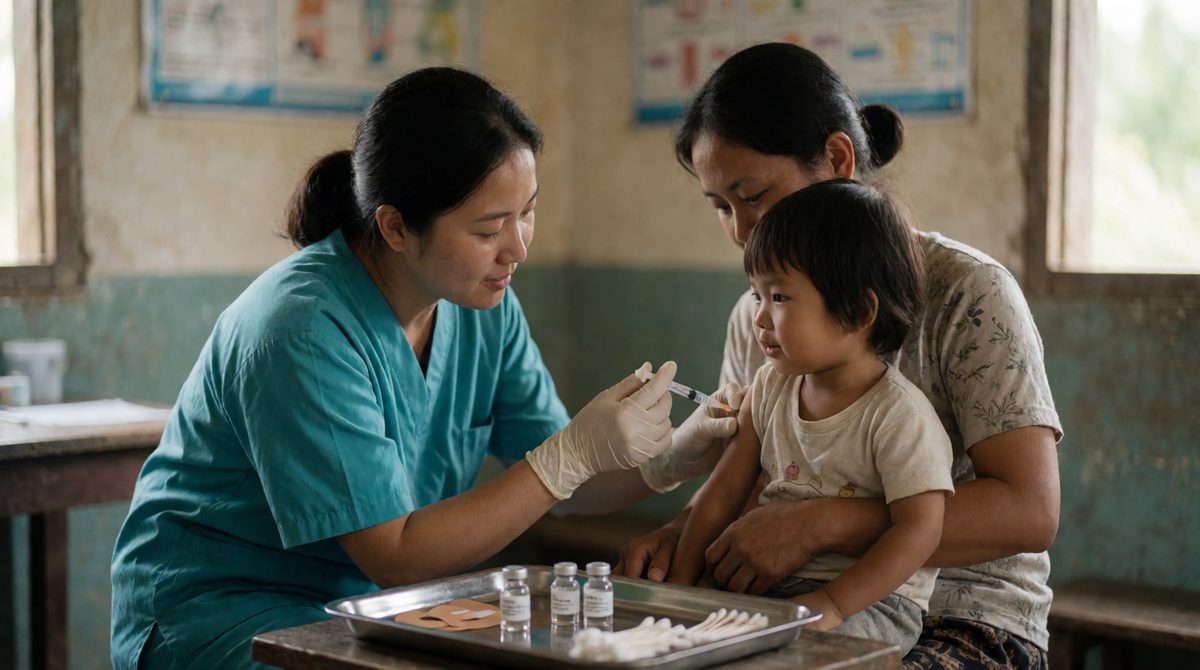
Aid can fund health projects like vaccinations
Vaccination campaigns, supported by international organisations, helped Nigeria to be declared free of wild polio in 2020. Aid also pays for clean water, schools and clinics in places the government struggles to reach.
Money can be lost to corruption and never reach the people who need it. Tied aid can mean the donor country gains more than Nigeria. People may also come to rely on aid instead of building their own jobs and services.
Aid is only a small part of Nigeria's income compared with oil, so it helps with particular projects rather than changing the whole economy.
As Nigeria's economy has grown, the environment has paid a price.
Key terms:
Quality of life means how good people's lives are, including income, health, education and surroundings. Development has changed it, but not equally for everyone.
More jobs in services and industry bring higher incomes. Mobile phones and the internet are widely used. Vaccination and better hospitals have improved health, and more children go to school.
Many millions of people still live in poverty. Power cuts are common, so people and businesses use generators. Rich cities and poorer rural areas in the north have very different access to doctors and schools. Millions of children are still out of school.
Oil income has mostly benefited a minority of people. This is why average figures such as GNI per head can hide big differences in quality of life inside Nigeria.
Saying that aid is always good, or always bad. Both are wrong: say what the aid does and who gains. Another mistake is writing only about oil spills when asked about the environment. Name at least two different impacts. Do not confuse the types of aid with its length: bilateral and multilateral are about who gives, short-term and long-term are about how long it lasts.
(a) Give one example of voluntary aid. [1 mark]
(b) Explain one way aid can help the people of Nigeria. [2 marks]
(c) Explain how economic development has affected quality of life in Nigeria. [4 marks]
(a) A charity such as WaterAid building wells (1).
(b) Aid can pay for vaccination campaigns (1), which protect children from diseases and improve health (1).
(c) Development has created jobs in services and industry, which has raised incomes for some people (1). Better hospitals and vaccination have improved health (1). However, many people still live in poverty because oil money benefits only a few (1). Power cuts and poor services in rural areas show that quality of life is still unequal (1).
In a 4-mark "explain" question, make two clear points and add a reason to each. Showing both the improvements and the problems gets the marks.