How industry affects the physical environment
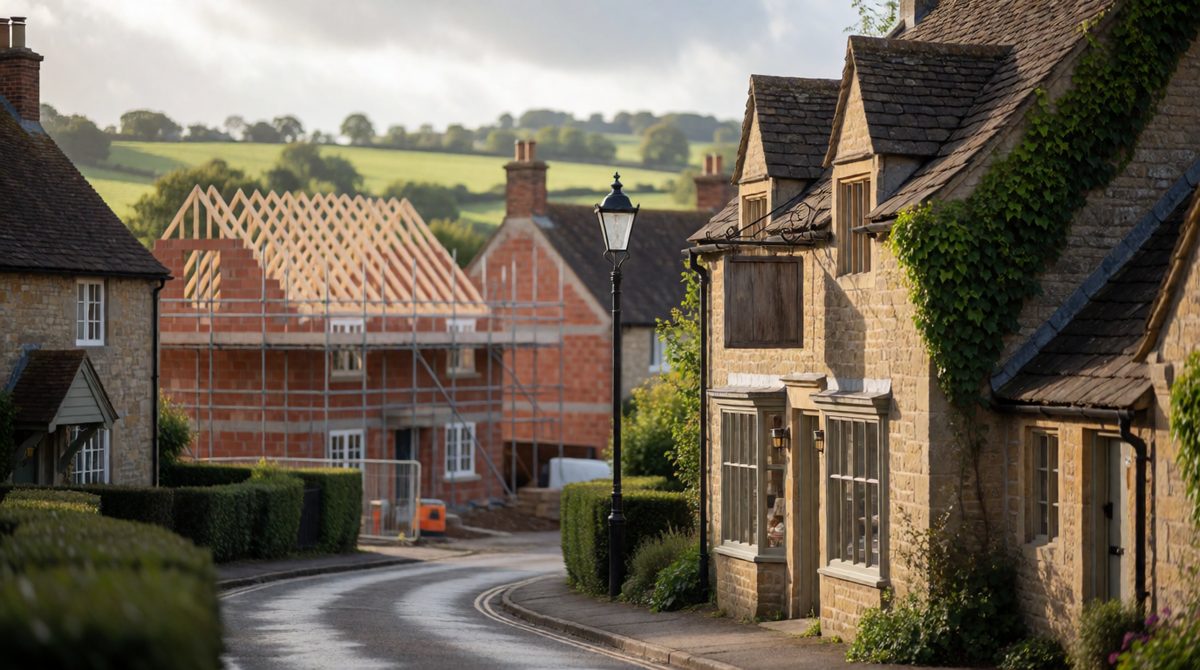
Rural areas change as people move in or out
Industry gives us jobs, money and the things we use every day. But it can also damage the land, air and water around it. Examiners want you to give a clear impact and explain it in a sentence.
- Loss of habitats: quarries, factories and roads take over land, so wildlife loses its home.
- Visual damage: a quarry can leave a large scar on a hillside and spoil views.
- Air pollution: dust from quarrying and fumes from factories and lorries can harm health and wildlife.
- Noise and traffic: blasting, machinery and heavy lorries disturb people and animals.
- Water pollution: waste and chemicals can wash into rivers and groundwater.
- Climate change: burning fossil fuels in factories and transport adds greenhouse gases to the air.
Key terms:
- Environmentally sustainable: meeting today's needs without badly damaging the environment for future generations.
- Quarry: a large open hole in the ground where rock is dug out, often to make roads and buildings.
Torr Quarry: more sustainable industry
Torr Quarry (also called Torr Works) is a limestone quarry at East Cranmore, near Shepton Mallet, on the Mendip Hills in Somerset. It is run by Aggregate Industries and is one of the largest quarries in the UK. The rock is crushed and used as crushed rock (aggregate) for building and road making. It shows how modern industrial development can be more environmentally sustainable.
🚂 Moving rock by rail
About 80% of the stone leaves the quarry by train rather than by lorry. Each train carries about 1,500 tonnes, and the rail link takes hundreds of thousands of lorry journeys off the roads every year. That means less traffic, less noise and fewer exhaust fumes.
🌿 Landscaping
Of the 205 hectares of the site, around 60 hectares have been landscaped so that they blend in with the surrounding countryside.
🌊 Planned future use
When the quarry closes it is planned to flood the site to create a large reservoir, which can be used for leisure and wildlife.
💼 Jobs
The quarry employs over 250 people, so it still brings economic benefits to the local area.
Common mistakes
Do not say a quarry has no impact. Torr is only more sustainable because it reduces damage. Always say what is done and what the benefit is, for example "rail instead of lorries, so fewer fumes and less noise".
Social and economic change in rural areas
Rural areas are the countryside: villages, farmland and small towns. Some are growing fast, while others are losing people. Both bring social change (changes to people's lives and communities) and economic change (changes to jobs and money).
Key terms:
- Population growth: when more people move into an area, or are born there, than leave.
- Population decline: when more people leave an area, or die, than move in or are born there.
- Rural: to do with the countryside rather than towns and cities.
South Cambridgeshire: population growth
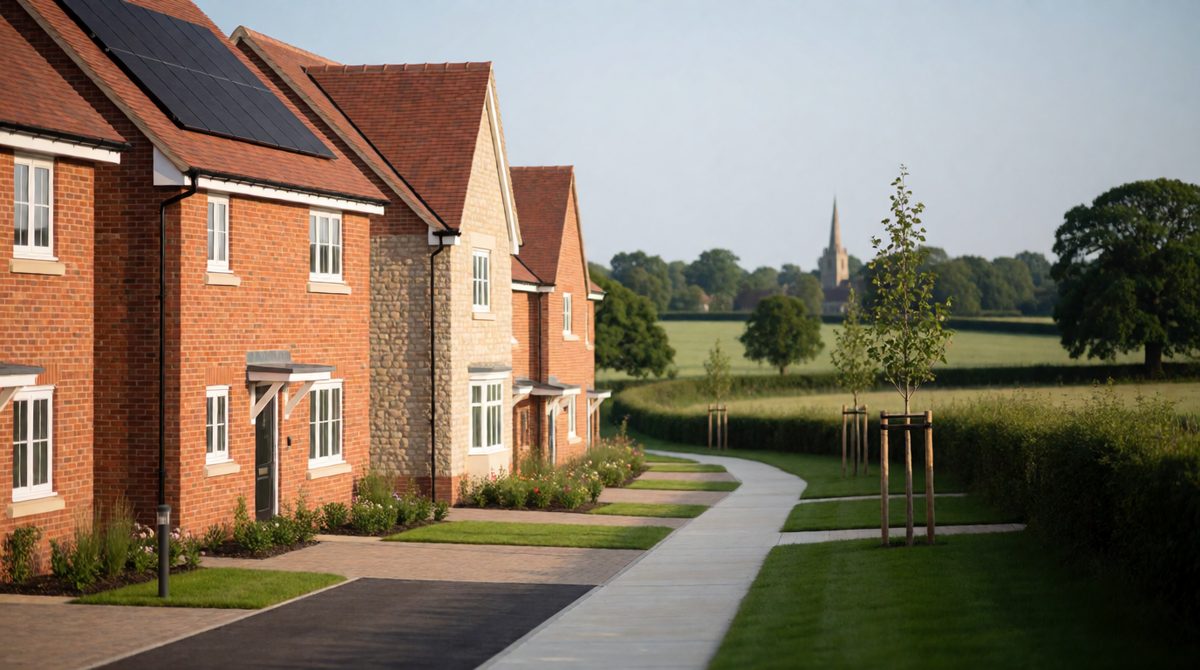
New housing estates bring more people into rural areas
South Cambridgeshire is a mostly rural district around the city of Cambridge, in the east of England. It has more than a hundred villages and hamlets. It is an area of population growth because people want to live near the jobs in and around Cambridge, but in a quieter, greener place.
Cambourne is a good example. It was approved in 1996 as a brand new settlement. Building started in 1998 and the first residents moved in a year later. It is now the largest village in the district, with more than 12,000 people.
👥 Social changes
- New housing estates, schools and shops open.
- Villages grow and more people commute to work.
- House prices rise, so young local people can find it hard to afford a home.
- Roads, doctors and schools can become busy.
💰 Economic changes
- More jobs in building, shops and services.
- More money is spent in local businesses.
- Farmland is lost to new homes.
- Strong job growth in the district: about 22% between 2003 and 2013.
Worked example
Describe one social change in South Cambridgeshire. Answer: New settlements such as Cambourne have been built (1), so villages have grown and more people travel into Cambridge to work, which makes the roads busier (1).
The Outer Hebrides: population decline
The Outer Hebrides (also called the Western Isles) are a chain of islands off the north west coast of Scotland. They are remote, windy and reached by ferry or plane. The population is about 26,000 and is falling. Between 2009 and 2019 it fell by about 700 people (2.6%), and local plans expect it to keep falling.
The main reason is that young people leave for university, training and better jobs on the mainland, and many do not come back. The people left behind are older, so fewer babies are born and the population keeps shrinking.
👥 Social changes
- Falling school rolls (fewer pupils), so small schools can be at risk of closing.
- An ageing population needs more care, but fewer people are there to provide it.
- Fewer young families, so communities lose people and services.
💰 Economic changes
- Fewer workers, and fewer customers for shops and services.
- Jobs depend on crofting (small farms), fishing, tourism and weaving.
- Few well paid jobs, which pushes young people to leave.
- Poor transport links make it harder for businesses to trade.
Common mistakes
Do not just say "people leave". Explain why (jobs, education), then the effect (ageing population, falling school rolls, shops closing). And do not mix up the two places: South Cambridgeshire is growth, the Outer Hebrides is decline.
Exam-style question
(a) Describe one way industry can damage the physical environment. [2 marks]
(b) Explain how an example of modern industrial development you have studied is more environmentally sustainable. [4 marks]
(c) Compare the social changes in one rural area of growth and one rural area of decline. [4 marks]
Model answer
(a) Quarrying destroys habitats (1), so wildlife loses its home and food supply (1).
(b) At Torr Quarry in Somerset, about 80% of the stone leaves by train (1), which takes lorries off the roads (1), so there are fewer exhaust fumes and less noise (1). Around 60 hectares have been landscaped (1) and the site is planned to become a reservoir after closure (1). [Any 4]
(c) South Cambridgeshire has grown as new homes such as Cambourne have been built (1), so schools and shops have opened (1) but house prices have risen (1). In the Outer Hebrides, young people leave for jobs and education (1), so the population is ageing (1) and school rolls are falling (1). [Any 4]
Exam tip
In a 4 mark "explain" question, use the pattern point, then "so", then "which means". Each link in the chain earns a mark, and naming the place (Torr, Cambourne, the Outer Hebrides) stops your answer being too general.