Why transport matters to the UK economy
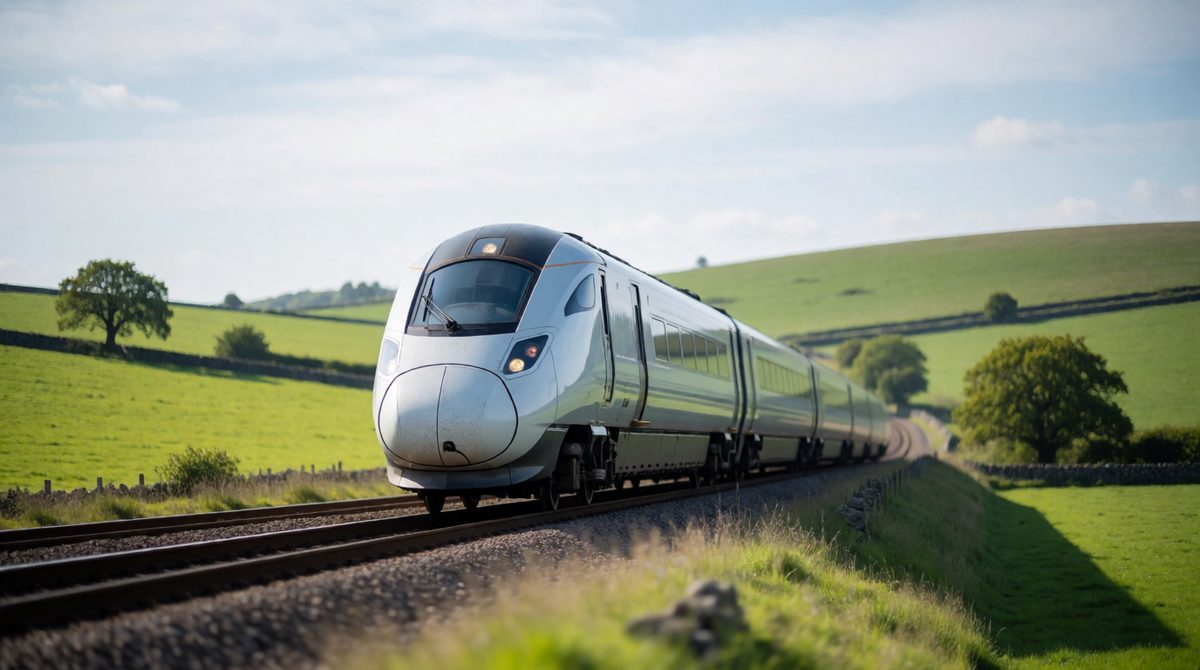
Better transport links can help close the north-south divide
A modern economy needs people and goods to move quickly. Workers need to reach jobs, businesses need to deliver products, and companies choose where to build offices and factories partly by how easy it is to get there. Remember, infrastructure means the basic services and structures a country needs, such as roads and railways.
The UK has a problem: many parts of its transport network are very busy. Roads are congested, trains are crowded and the biggest airports are close to full. Building new links or adding to old ones is one way to keep the economy growing.
Key terms:
- Capacity: the maximum number of vehicles, trains, ships or passengers a route or terminal can handle.
- Bottleneck: a point where a route narrows or becomes overloaded, so traffic slows down.
Road improvements
Most goods in the UK travel by road, so busy roads cost businesses time and money. Improvements aim to add capacity and remove bottlenecks. Typical schemes include:
- widening motorways by adding extra lanes
- building bypasses so through traffic avoids town centres
- improving junctions that jam at busy times
- new bridges and tunnels where a river crossing is a bottleneck
A smart motorway uses technology, such as variable speed limits and cameras, and sometimes turns the hard shoulder into an extra running lane. It adds capacity without needing more land. Concerns about safety led the government to cancel new smart motorway schemes in 2023.
The A14 between Cambridge and Huntingdon was upgraded and reopened in 2020. It is important because it links the port of Felixstowe to the Midlands, so lorries carrying goods from ships can travel more easily.
Rail improvements
🚆 HS2
High Speed 2 is a new high speed line planned to run from London to Birmingham. Faster trains mean shorter journey times, and moving fast trains onto a new line frees space on the old lines for commuter and freight trains. Costs have risen and plans have been cut back. The Birmingham to Manchester section was cancelled in 2023.
🚇 Elizabeth line
This line opened in 2022 and runs east to west under central London. It carries many more passengers across the capital and cuts crowding on the Underground.
Other rail improvements include electrifying lines so trains run faster and cleaner, buying new trains and upgrading stations. Many people living in the north of England say that rail services there are slower and less frequent than in the south east.
Port and airport capacity
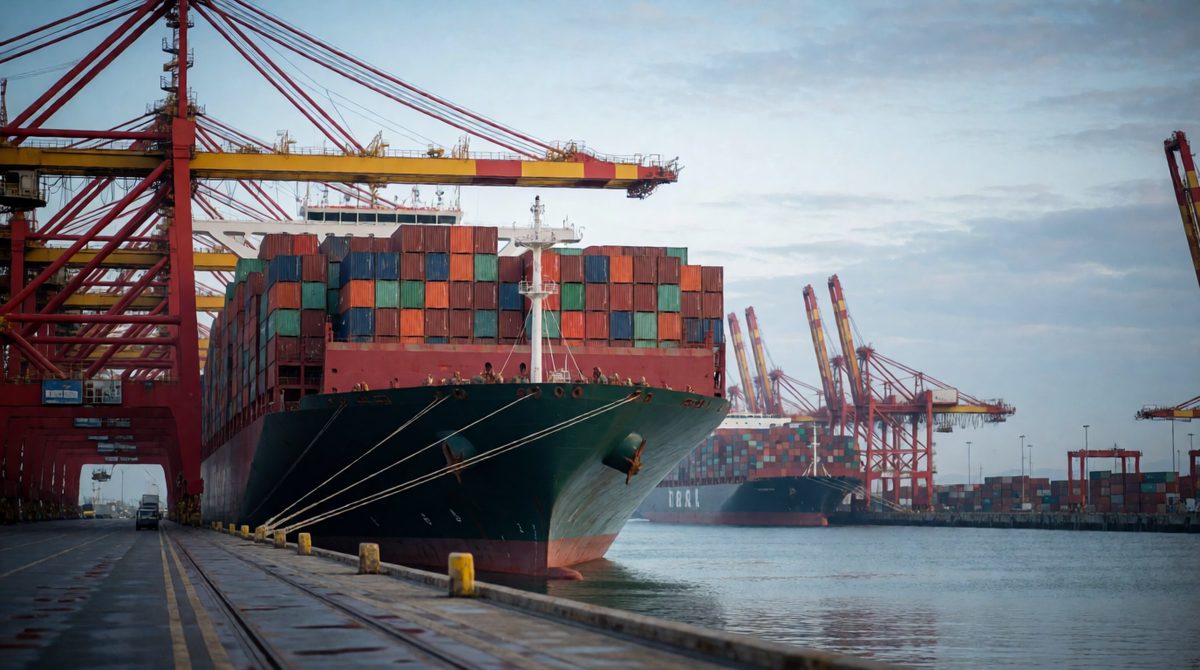
Expanding ports helps the UK trade with the world
Most of the UK's trade by weight comes through its ports, so port capacity matters for the whole economy. Modern container ships are huge, and ports need deep water and large cranes to handle them.
- London Gateway on the Thames estuary opened in 2013 as a deep-water container port that can handle some of the largest ships in the world.
- Liverpool2 is a deep-water container terminal that opened in 2016 so that the biggest ships can reach the north west of England directly.
Airports also need more capacity. Heathrow is the UK's busiest airport and runs almost full. Plans for a third runway have been argued about for many years.
✈ For expansion
More flights, more jobs, more trade links and more routes to far-away markets.
🍃 Against expansion
More noise, more air pollution, more carbon dioxide and homes affected or demolished.
The north-south divide
The north-south divide is the gap in wealth, jobs, health and opportunities between the north of England (and parts of Wales and Scotland) and the south east of England, especially London. It is one example of regional differences, which are differences in economic and social conditions between areas of the same country.
Typical differences are:
- Average incomes and house prices are higher in the south east.
- Unemployment is often higher and wages lower in parts of the north.
- Life expectancy is generally lower in many northern towns and cities.
- Many head offices, banks and new technology firms are in London and the south east.
The divide grew because the north's economy relied on traditional industries such as coal, steel and shipbuilding. When these declined, jobs disappeared and many areas did not replace them. The south east gained from finance, services and new technology, which attracted investment and skilled workers.
Common mistakes
The divide is not a neat line, and not every northern town is poor or every southern town rich. There are deprived areas in the south and prosperous areas in the north. Say that the divide is a general pattern.
Strategies to reduce regional differences
Governments have tried many ways to spread growth more evenly. Remember that enterprise zones, which you met in the Bristol lessons, are one of them.
- Transport investment: faster rail and better roads help northern cities reach customers, workers and each other. Northern Powerhouse Rail aims to link big northern cities with better trains.
- The Northern Powerhouse: a government plan from 2014 to boost the economy of northern cities by investing in transport, science, culture and business.
- Devolution: handing more power and money from central government to local areas, such as elected mayors in Greater Manchester and Liverpool.
- Relocating organisations: in 2011 the BBC moved a large part of its operations to MediaCityUK in Salford, bringing jobs and new businesses.
- Levelling up: a government policy from about 2019 that aimed to spend more on places that have been left behind, for example on transport, skills and regeneration.
Worked example
Question: how could a new rail link help a northern city? Point: it makes the city easier to reach. Explain: firms can get goods and workers in and out more easily. Result: businesses are more likely to invest, so more jobs are created and the north-south gap narrows.
Not everyone agrees these strategies work. Spending on London transport schemes is often far higher per person than in the north, and big projects take many years. Improving transport helps, but it does not solve the divide without good schools, skills and jobs as well.
Exam-style question
(a) Give two reasons why UK ports need to improve their capacity. [2 marks]
(b) Explain how improving transport in the north of England could help to reduce the north-south divide. [4 marks]
Model answer
(a) Modern container ships are very large and need deep water and big cranes (1). Most of the UK's trade comes through its ports, so a lack of capacity slows the economy (1).
(b) Better rail and road links make northern cities easier to reach (1). Firms can then get goods and workers in and out more quickly (1). This makes companies more likely to invest and open new offices or factories (1). More jobs and higher wages in the north would reduce the gap with the south east (1).
Exam tip
For a 4 mark explain question, write a chain of reasons: transport improves, firms invest, jobs grow, and the gap narrows. Each link in the chain earns a mark.