🌿 Benefits for the producing country
Farmers and farm workers earn money and the country earns foreign income. Jobs are created in packing, storage and transport.
Sign up to access the complete lesson and track your progress!
Unlock This Course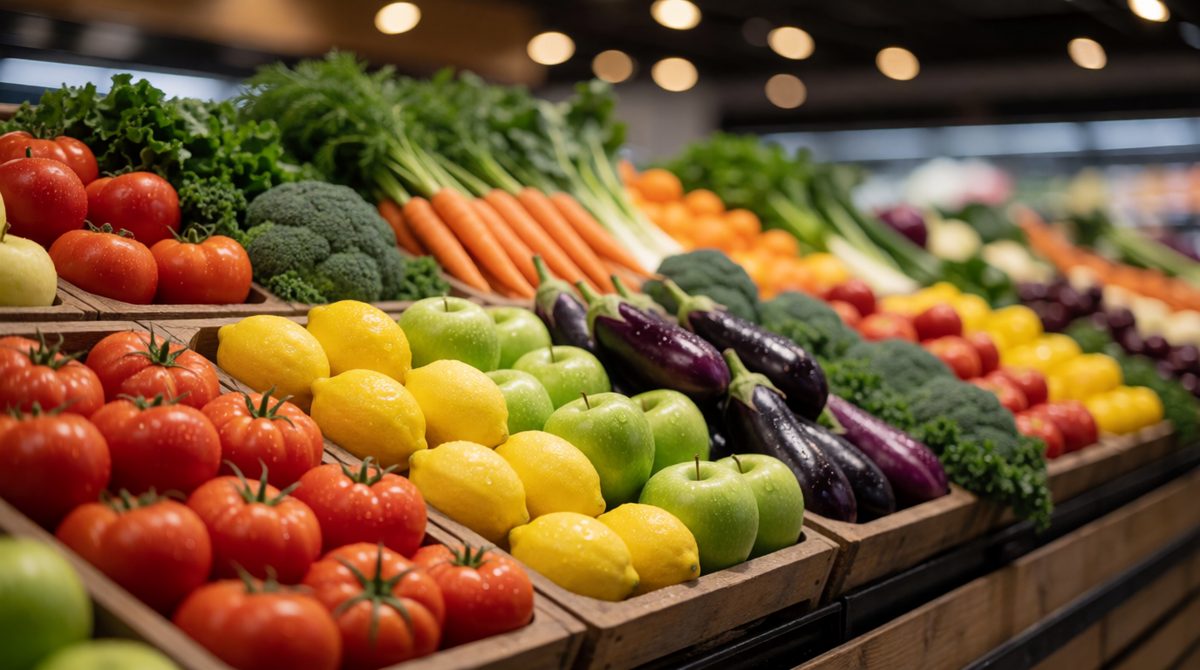
The UK imports lots of food so we can buy it all year
The UK needs a steady supply of food, water and energy, just like every other country. Demand for these resources changes over time, and so does the way they are provided. This creates both opportunities and challenges. In this lesson we look at food. Water and energy come in the next lesson, Water and Energy in the UK.
The UK grows a lot of its own food, but not all of it. Our climate is cool and wet, so we cannot easily grow bananas, coffee or tea. We also want some foods all year round, even when they are out of season here. So a large share of the food on UK shelves is imported. This brings choice, but it also brings challenges for the environment and for farmers.
Key terms:
Many people in the UK want fresh fruit, vegetables and flowers that cannot easily be grown here. Many of these come from low income countries, where the climate is warm and labour is cheaper. These are called high-value food exports because shoppers will pay a high price for them.
Farmers and farm workers earn money and the country earns foreign income. Jobs are created in packing, storage and transport.
Good farmland and water can be used for export crops instead of food for local people. Workers may be badly paid, and farmers depend on UK supermarkets for their sales.
One example is green beans grown in Kenya and flown to UK supermarkets. They arrive fresh within a day or two, but air freight gives off a lot of carbon dioxide.
In the past, people in the UK ate foods when they were in season. Strawberries came in summer, and apples and root vegetables in autumn. Today, supermarkets sell most foods all year round. Shoppers expect strawberries in December and asparagus in January.
This gives shoppers choice, but it increases imports and energy use.
More people now want organic food. Organic farmers avoid artificial fertilisers and chemical pesticides. Instead they use natural methods such as animal manure and crop rotation. Many shoppers choose organic because they think it is better for the environment, for wildlife and for animal welfare.
Organic food usually costs more, because yields are often lower and more labour is needed. Supermarkets now sell large organic ranges, and some of this organic produce is imported.
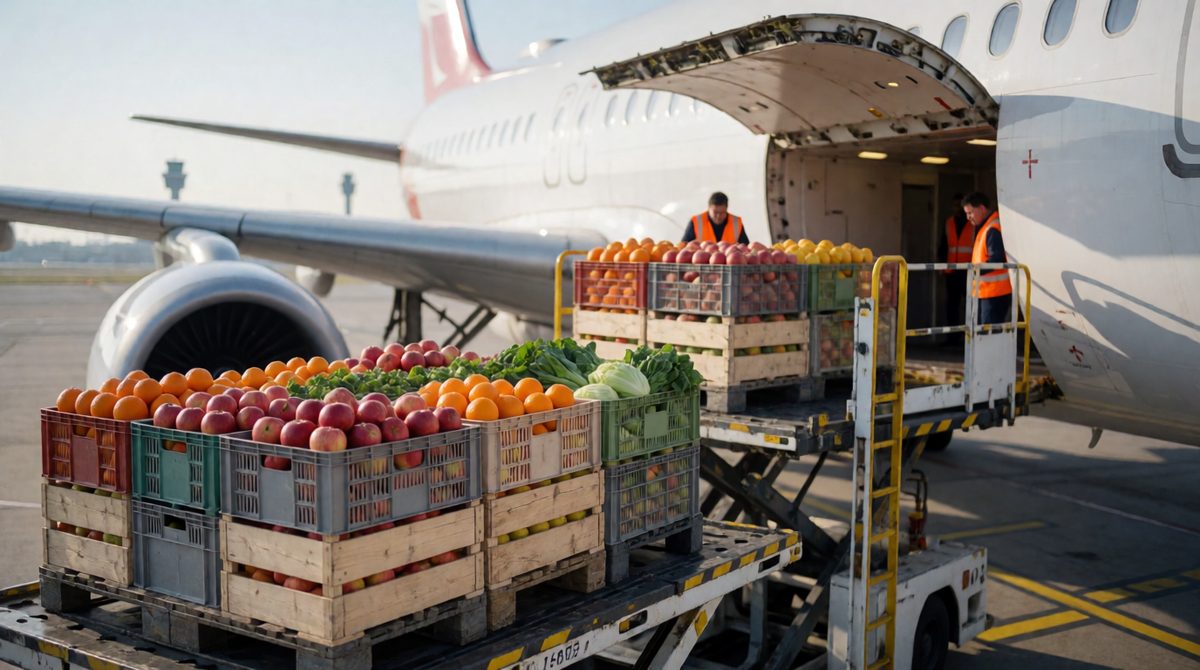
Food miles measure how far food travels from farm to plate
The more food is imported, the more food miles it travels. Food travels by lorry, ship, train and plane, and burning fuel for this transport releases carbon dioxide. This adds to the food's carbon footprint, so a rising number of food miles means larger carbon footprints.
Air freight gives off much more carbon dioxide than shipping for each tonne of food moved. A product flown in from another continent usually has a larger carbon footprint than one grown nearby. For more on greenhouse gases, see Causes of Climate Change.
Because of these concerns, there is a move towards local sourcing. Examples are farmers' markets, farm shops, veg box schemes and supermarkets labelling British produce.
Local food is not always the best choice for the environment. A tomato grown in a heated greenhouse in the UK can use more energy than one grown outdoors in a warm country and shipped here. Food miles are only part of the story.
Farming in the UK has become more like a business. Farms have grown bigger, and many are owned by companies. This is called agribusiness. Agribusiness farms usually have these features:
Agribusiness can produce large amounts of cheap food, which helps supply a growing population. However, small family farms can find it hard to compete. Removing hedgerows to make bigger fields can harm wildlife, and chemicals can pollute rivers.
Saying that local food always has a smaller carbon footprint. It usually does, but not always. Also, do not mix up organic with local: organic is about how food is grown, local is about how far it travels.
(a) What is meant by food miles? [1 mark]
(b) Explain why the UK imports food from low income countries all year round. [3 marks]
(c) Explain why some people choose local sourcing of food. [2 marks]
(a) The distance food travels from where it is produced to where it is eaten. (1)
(b) Shoppers want seasonal foods, such as green beans, all year round (1). When they are out of season in the UK, they are imported from warmer countries where they can be grown (1). Fruit, vegetables and flowers that cannot be grown easily in the UK climate are also imported, and shoppers will pay a high price for them (1).
(c) Local food travels fewer food miles, so it has a smaller carbon footprint (1). It also supports local farmers and keeps money in the local economy (1).
For an "explain" question, give a point and then a "because" or "so" to develop it. Each developed point earns a mark.