✓ Advantages
Higher yields. Crops can be grown in dry areas. More than one harvest a year is possible. Farm incomes and local food supplies rise.
Sign up to access the complete lesson and track your progress!
Unlock This Course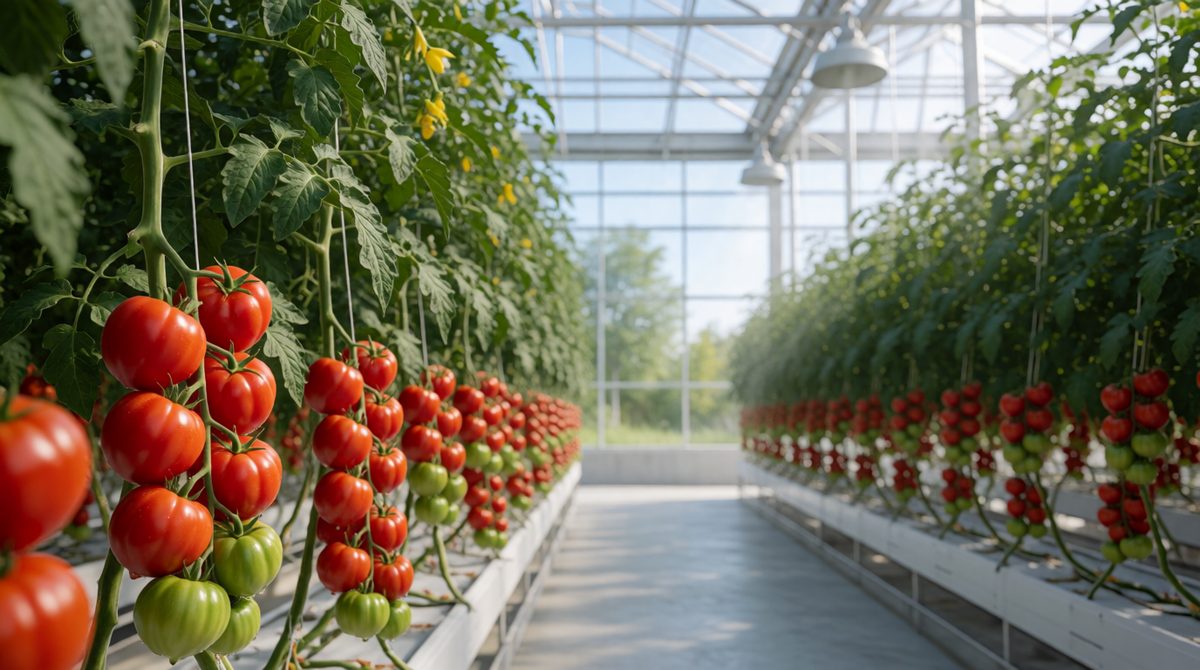
Big glasshouses can grow more food in less space
The world has a growing number of people to feed, and many of them live in places that already have a food deficit. Farmers can only produce more food in two main ways: by farming more land, or by getting more food from the land they already have. Most good farmland is already in use, so many of the strategies in this lesson are about getting more from the same space.
Each strategy has benefits and costs. Geographers need to be able to weigh these up, not just describe how a method works.
Key terms:
Crops need water to grow. In dry places, or in dry seasons, rain alone is not enough. Irrigation brings water from rivers, reservoirs or underground supplies to the fields.
It can turn land that is too dry for crops into productive farmland. It also lets farmers grow crops all year round and protects them in a drought, so harvests are more reliable.
Higher yields. Crops can be grown in dry areas. More than one harvest a year is possible. Farm incomes and local food supplies rise.
Large amounts of water are used, which can leave rivers and wells short. Poorly managed irrigation can leave salt in the soil, which harms crops. Pumps, canals and pipes are expensive to build and run.
Some farmers do not use soil at all. In hydroponics, plants sit in trays or channels and their roots are bathed in water containing all the nutrients they need. In aeroponics, the roots hang in the air inside a sealed space and are sprayed with a nutrient mist.
These systems are usually run indoors, in greenhouses or buildings, so the farmer controls the temperature, light, water and nutrients. Plants can be stacked in layers, so a small floor area gives a very large harvest.
Food can be grown where the soil is poor or there is no farmland, such as in a city or desert. Water is recycled, so far less is used. Fewer pests and diseases get in, and crops grow quickly all year round.
Set-up costs are high. Electricity is needed for pumps, lights and heating. Technical skill is needed, and the system can fail quickly if a pump stops. It suits salad, herbs and vegetables better than staple crops such as wheat or rice.
Do not say hydroponics and aeroponics use no water. They use much less water than normal farming because the water is recycled, but plants still need it. Do not mix the two up: hydroponics roots sit in water, aeroponics roots hang in the air.
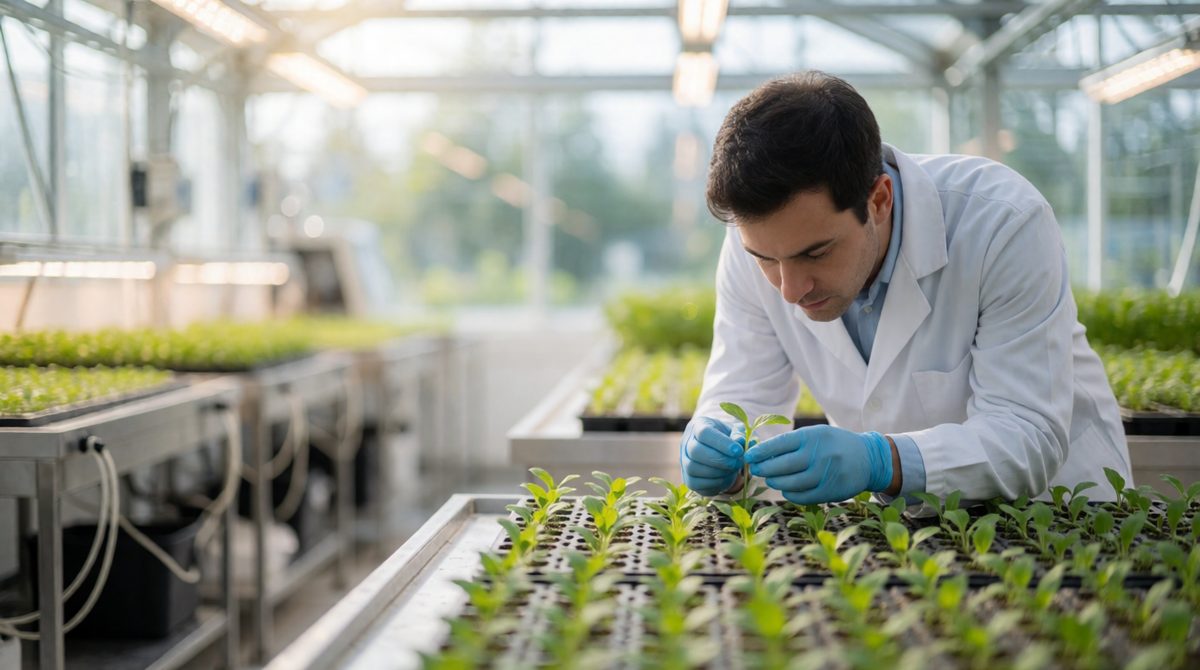
Biotechnology aims to grow crops that give bigger harvests
The first green revolution, in the 1960s and 1970s, spread high yielding crop varieties, fertilisers and irrigation across Asia. It raised yields in countries such as India. The new green revolution aims to do the same again, using modern biotechnology.
The best known example is genetic modification (GM). Scientists change the genes of a crop to give it a useful trait. Examples include:
Higher and more reliable yields from the same land. Less crop loss to pests and drought. Healthier food in places where diets are poor.
GM seeds can be expensive, and poor farmers may not afford them. Some people worry about effects on wildlife and health. Companies that own the seeds can gain a lot of control over farmers.
Remember, appropriate technology is technology that suits the skills, money and needs of the local people. In farming it is simple, cheap, easy to repair and uses local materials.
Many small farmers in low income countries cannot afford big machines or expensive seeds, so appropriate technology can help them grow more food:
The strength of appropriate technology is that local people can build, run and mend it. The weakness is that it usually makes smaller gains than big projects, so it cannot feed a whole country alone.
Thanet Earth is the biggest greenhouse complex in the UK. It is on the Isle of Thanet in Kent, in south east England, and it first produced crops in 2008. It grows tomatoes, peppers, cucumbers and aubergines for UK supermarkets.
It is an example of a large scale agricultural development because it brings together huge investment, vast greenhouses and modern technology. The crops grow in hydroponic systems, so the roots sit in nutrient solution rather than soil. The greenhouses are heated and lit, so crops can be grown all year, and rainwater is collected and reused. Combined heat and power plants on site provide heat, electricity and carbon dioxide for the plants.
Large amounts of fresh UK produce are grown all year round, so fewer vegetables are flown in. Jobs are created in an area that needed them. Water is recycled and fewer pesticides are needed because pests are kept out. The crops are grown close to UK shoppers, so food miles are lower.
The huge glass buildings change the look of the countryside and use up farmland. Bright lights at night cause light pollution. Heating and lighting use large amounts of energy. Lorries add traffic to local roads.
Question: Give one advantage and one disadvantage of Thanet Earth.
Answer: One advantage is that it grows fresh vegetables all year using recycled rainwater, so the UK needs fewer imports. One disadvantage is that the heated, lit greenhouses use a lot of energy, which adds to costs and carbon emissions.
Do not describe a case study in general terms. Name Thanet Earth, say it is in Kent and add a detail, such as hydroponic tomatoes or combined heat and power. Also remember that a point is only an advantage or disadvantage if you say who it helps or harms.
(a) Explain how hydroponics can increase food supply. [2 marks]
(b) Explain one disadvantage of using biotechnology to increase food supply. [2 marks]
(c) Using a named example of a large scale agricultural development, assess its advantages and disadvantages. [4 marks]
(a) Plants grow with their roots in nutrient-rich water instead of soil (1), so crops can be grown in places with poor soil or little land, and in a controlled environment all year round (1).
(b) GM seeds can be expensive (1), so poor farmers in low income countries may not afford them and cannot benefit from higher yields (1). (Accept: companies owning the seeds gain control over farmers.)
(c) Thanet Earth in Kent grows tomatoes, peppers and cucumbers in huge hydroponic greenhouses. An advantage is that it supplies fresh vegetables all year round, which reduces imports and creates jobs (1 for advantage, 1 for development). A disadvantage is that the heating and lighting use a lot of energy, and bright lights and large glass buildings harm the countryside (1 for disadvantage, 1 for development).
In a 4 mark question that asks for advantages and disadvantages, give at least one of each, name the example, and develop each point with a reason such as "which means...".